Interviews
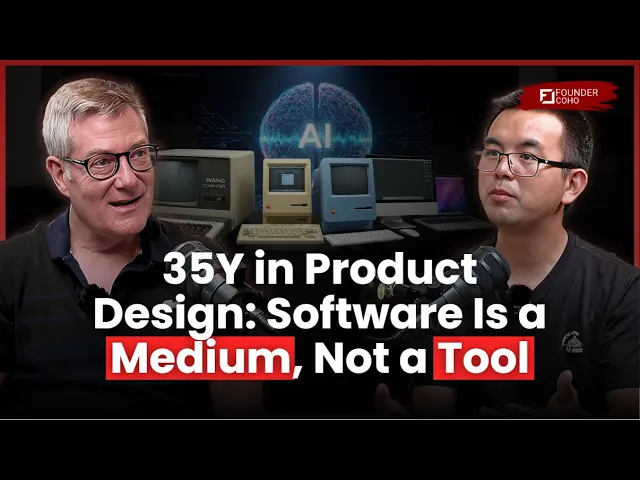
Bob Baxley takes us inside the real Apple culture as he reflects on the moment the first iPhone appeared on stage

|
Executive Design Advisor, ex-Apple, Pinterest, Yahoo!, ThoughtSpot
Bob Baxley, one of Silicon Valley’s most respected design leaders. For thirty five years, Bob has shaped products used by hundreds of millions of people. At Apple, he led design for the Online Store during the company’s leap from underdog to cultural force. He helped launch the first Apple Store mobile app and worked inside a design culture where taste, iteration, and craft defined everything—not just what the product looked like, but how it was made. Before that, Bob helped build Yahoo! Answers into one of the earliest social platforms, and later guided the design team at Pinterest through rapid scale. Today, he’s the Senior Vice President of Design and Experience at ThoughtSpot, and an advisor to leaders at Google, Apple, Dropbox, Atlassian, and more.
In this conversation, Bob Baxley takes us inside the real Apple culture as he reflects on the moment the first iPhone appeared on stage—and how in under 40 minutes, Steve dismantled an entire industry and reset everyone’s expectations of what technology could feel like. Bob also connects this to the bigger story of tech. From early PCs to the internet to AI, he sees it all as one long evolution. And he offers a simple lens for today: treat AI with curiosity, the same way he felt the first time he saw a computer come alive.
References
Bob Baxley's Linkedin – https://www.linkedin.com/in/bbaxley/
Bob Baxley's X - https://x.com/thisisbobbaxley
Jing Conan Wang (Host) – https://www.linkedin.com/in/jingconan/
FounderCoHo – https://www.linkedin.com/company/foundercoho/
Timestamp
00:00 Highlights
01:22 Introduction and Interview Focus
03:08 Apple's internal secrecy before the iPhone
05:45 The magic of the 2007 Keynote and Steve’s humor
10:33 What makes Apple, Apple
16:09 Apple’s culture and mindset
27:11 Evolution of Computing and Bob's early days
36:42 Bob's Artistic Pursuits
40:42 Bob's Career Path
45:16 Evolution of GUI/UI Design
52:39 Design Philosophy
56:01 AI VS Human interactions
1:03:08 Personal Computing and Finding Your Medium
1:07:22 How new Media/AI would affect Us
1:10:54 Impact of AI in Design
1:15:20 Bob's Advise: We are all Makers
1:16:18 Outro
Full Transcript
My colleague kind of pauses, he doesn't answer immediately, and then Steve just kind of goes, "Well, don't show me something if it's not your best work." Bob Baxley designed products at the company that set the standard everyone else is still trying to reach. Is that unique to Apple or many companies in the Bay Area? I've never seen another company work like that. I've tried, I mean I tried to do that at Pinterest, but it didn't really take.
Apple as a company is founded on the idea that personal computing can have a transformative effect on the lives of individuals. And I choose those words carefully, a transformative effect on the lives of individuals.
But what he learned there, he couldn't replicate anywhere else. You literally couldn't think of how to make it better because you thought through every last angle. There are some big companies that have that founder who has taste and drive and desire and ambition and is trying to create something that they are proud of and put it in the marketplace. And for me, it's just as a designer which environment do I want to work in and clearly I want to work in this one. In an era where everything is powered by AI, I've seen ChatGPT do some amazing stuff and it absolutely blows me away. But it never, it's never touched me at a human level in the same way that some of these other interactions have. And then I was like oh, I'm in software because it's a medium and I love this medium. So when I come to work on products, I think of them like I'm working in a medium. I don't think of software as a tool. I think of it as a medium.
Today we're joined by Bob Baxley, one of Silicon Valley's most respected design leaders. For thirty-five years, Bob has shaped products used by hundreds of millions of people.
At Apple, he led design for the Online Store during the company's leap from underdog to cultural force. He helped launch the first Apple Store mobile app and worked inside a design culture where taste, iteration, and craft defined everything—not just what the product looked like, but how it was made. Before that, Bob helped build Yahoo! Answers into one of the earliest social platforms, and later guided the design team at Pinterest through rapid scale. Today, he's the Senior Vice President of Design and Experience at ThoughtSpot, and an advisor to leaders at Google, Apple, Dropbox, Atlassian, and more. What does it feel like to sit inside Apple when the most important product in modern history is being built, and you don't even know it exists? In this conversation, Bob Baxley takes us inside the real Apple culture as he reflects on the moment the first iPhone appeared on stage—and how in under 40 minutes, Steve dismantled an entire industry and reset everyone's expectations of what technology could feel like. Bob also connects this to the bigger story of tech. From early PCs to the internet to AI, he sees it all as one long evolution. And he offers a simple lens for today: treat AI with curiosity, the same way he felt the first time he saw a computer come alive.
Let's hear his story.
You joined Apple eight months before they released iPhone. So iPhone has completely changed people's, the way they communicate, they connect. There's so many communities formed because now everyone has a computer in their pocket. What does it look like for the Apple team before iPhone, iPhone just about to release?
Well, of course, when I joined the company, I had no idea the iPhone was going on. It was very protected. No, nobody at Apple knew what was going on. It was just the people working on it. It was very, very secretive, insanely secretive. And Apple at that point and in my entire experience at Apple, it was very, very siloed. So when there would be a new product release, I worked on the online store. I didn't work on any of the products that you would buy or that you would buy a Mac to run. We had no idea what was coming out. So we would go over to Cafe Mac.
And sit and watch WWDC or the keynotes, we would sit and watch them like every other fanboy and be like, what are we going to release today? We had no clue what was coming out, which was super fun, actually, in retrospect. We didn't know what the new iPods looked like or what the new iMacs were going to be. It was super fun to have that level of surprise.
What was your feeling when you looked at the WWDC, the first iPhone was released?
Yes, so the iPhone was announced at the Macworld in 2007, I think, in January 2007. And then because of all the FCC regulations and all the different government checks that has to happen, Apple had to pre-announce the product, and it actually goes on sale like six months later, which was one of the few times that had happened. I think it might have been the first time in Steve's tenure at Apple that you'd had that big a gap. Because usually, Steve would come on stage, he would announce the new product, and by the time he got off stage, they would have completely put the product down to Apple retail stores.
The website would be updated like the whole thing would be ready to go. There was something incredibly magical and amazing that they could pull it off logistically. But the phone there was this bigger gap. So yeah, I remember, I remember again sitting at Cafe Mac watching Steve present, watching that amazing keynote, which everybody should go watch. It's probably the most amazing product introduction in history. There's so many great lessons for founders and leaders to take away from how he took people into that audience and they knew something was going on and when you walked in.
Like all these journalists, they all had the Palm Pilot Treo and devices like that and Blackberries and stuff. And they all think that is state of the art. Like that just felt like Star Trek going into the Moscone with that stuff. And then 30 minutes later, Steve just makes you think that stuff's total junk. And then you end up leaving 30, 45 minutes later with your mind just completely shifted. There's really, I don't know if there's ever been a product announcement that shifted people, that many people that quickly, that clearly.
I remember some of my colleagues were at Comdex in Vegas at the time and they were like, I feel like I went to the wrong party. And that this one company could disrupt something the scale of Comdex was just phenomenal. And I mean, I remember watching Steve's announcement in real time when he first showed pinch and zoom. I mean, when you first see pinch and zoom, that was very much like the first time I saw a computer. Like you watched it and you're like, wow. Like it was so natural and so obvious once you saw it, yet profoundly magical because you had never seen anything like it before.
Yeah, and also Steve Jobs is such a fantastic storyteller. I watched that video probably a hundred times myself. It's so magical, both like amazing products of iPhone, but also the way he presented it, just like you mentioned, he's basically turning people's minds just in that 30 minutes.
I just interrupt you there for a second. So one of the things I don't think Steve gets enough credit for is he's actually really funny. Like there's moments in that that are just laugh out loud. I don't know if you remember at one point he crank calls Starbucks and orders 5,000 lattes or something like that. And he's just trying to show you can make a phone call with it. So he calls up a nearby Starbucks in real time in front of the whole audience. Like, "Yes, I'd like to order 5,000 lattes." And you can hear the person on the other end kind of go, "What?" And he's like, "I'm just messing with you." And then he hangs up, right? I mean, it's kind of a funny prank, you know?
And he just did her, at one point he talks about his stylus. "So we got the device and we got a stylus." And he talks about, he's like, "No, we didn't get a stylus. That's stupid." He kind of throws the stylus. "You were born with the best stylus you'll ever have. It's your finger." And then he shows the finger thing and there's just a sense of fun and playfulness and levity to it all that I think actually is missing from almost all of tech today. Like I can't identify a single tech leader that I think is entertaining on stage. Craig Federighi at Apple's probably the closest. But when you think about the major CEOs, they're just not entertaining.
So you mentioned about the Steve Jobs, he's funny, he's entertaining on stage. On the other hand, there's many other technology visionaries and some of them is like less entertaining on stage. Does that mean they are less great than Steve? How do you see the connection between this entertainment factor and also the impact of the leaders?
Yeah, I don't think in any way you can criticize Gates or Bezos or any of these people who are, you know, or Tim Cook for being less entertaining on stage. Like, I don't mean to use that as like a whipping stick. You were asking about what was that experience like working at Apple or seeing these announcements? And it's just one of those things that stands out, which is just like there was a level of showmanship and a sense of fun that was unique. Right? And it was something that was really distinct about Apple. Like, many of those keynotes had like moments of humor in them. There was like a whole campaign they ran around Windows and like the geeky Windows guy and the Apple user.
And they kind of made fun of the Windows guy for a while, which was very popular. It was very well done. So there was a sense of, like, humor to it or fun to it, which I always felt added to the experience. I mean, what those events would become was a whole moment where again, it was a broader experience. Like, Steve, I mean, if you watch him and you go watch Steve's University of Virginia speech, like, he's, you can tell he loves the Beatles and Bob Dylan and the poetry and the sense of narrative and storytelling and expression and emotion. And he just brought that to a totally different category of products and made it super human and super fun. But I think there were a lot of leaders that were incredibly successful without that showmanship. Gates didn't need it. Bezos didn't need it. These other people didn't need it.
And I also think, like, I don't think it's particularly important. But like if you didn't want to go to a Steve Jobs event, that would be sad. Whereas, like, if I don't go to an Nvidia event, like, I don't really care. Jensen Huang's not going to get on stage and do something fun. Like, he may, he's not going to entertain you. He might educate you. He might give you some information. But, like, it's very rare that you'd go to an Nvidia or an Amazon event and come out and be like, I'm so glad I was in that room because Jensen was so funny and interesting and entertaining and kind of uplifting and fun, you know?
Yeah. I can see your point. So when you reflect all these years, looking back, you just mentioned about people like Steve Jobs, he's so genuine, and some of his work is like you can feel the human, there's that human emotion. Looking back at all these great products you have built and experience, what make things human versus not human?
Oh, man, if we knew the answer to that, right? We'd probably, the world would be a much better place. I mean, I think in my experience, just, you know, first of all, go back to, I've seen some of the most magical experiences I've ever had were extremely simple. One was going to the parking lot and playing a video game on a computer for the first time. That was just the most, it was just extraordinary. The next one was when I saw that Mac and that guy drew the picture of Steve Jobs using the mouse. That computer and I, we were in love. Like, we just had a connection instantly. And it was simple. It was not complicated. Like, he just drew the picture. Seemed unbelievable. And then when I walked into that Apple store in LA, there was nothing, I mean, it was beautiful, it was remarkable, but it was really just a room with tables and products on them.
Like, there wasn't really anything more complicated than that. There were just some people there to help you and there's some tables and there's some products and you could play with them and you could wander around. So I think to come back around to your question, like, I think some of the best things are simple. And I would go and look at people like, I mean, Johnny Ive, who was the lead designer at Apple, is very much he has a very minimalist sense of design. Everything starts with, like, make it simpler and make it again and make it simpler again and make it simpler again. And Jared Sinclair, who I mentioned, the designer of Unread, he took that same philosophy. And when I look at all the software I love, it's simple software that just does a couple things really, really well.
There's a couple notes apps I love. A guy named Christian Selig wrote the Reddit app, Apollo. My favorite Reddit app. It's gone now because of some dispute with Reddit. But he took, like, the whole experience of Reddit and really simplified it. And it was a beautiful, simple piece of software that had that level of human touch to it. My personal, I would say personal philosophy is simplicity. And when I coach people, younger designers, I'm always like, what can you remove? Can you make it even simpler? Can you reduce the amount of text? Can you reduce the number of things you're asking me to do? Can we strip it back even more? And then what happens is when you strip it all back, you're left with the essence, and the essence is what's really important. And it's like getting a block of marble and kind of chipping away at it until all you have left is the David or whatever, you know, the statue that was always in the marble.
And I think that's what technology tends to do. When you get it to like great technology, just, it just strips away all the stuff that it doesn't need to do and it only focuses on that one thing that it's meant to do. And it does that one thing incredibly well. So when you look at the iPhone, especially the first few versions of the iPhone, there's really not a lot on the screen, especially compared to what there is now. The first time Steve showed the phone up there, it was, I think it was, what did it launch with? It had like 16 apps. It wasn't even an App Store on that phone initially. You know, so it was just the apps that Apple thought you needed on your phone. And they just did a beautiful job with them. So I'm not smart enough, I think, to put this all together and give you like an academic answer to your question, but I think simplicity is a big, big part of it.
Yeah, that makes sense. I think simplicity is also a recurring theme in many interviews I did at the show. About making technology human, I think simplification is one key point. The other point is like maybe emotion or some creativity, like some playfulness that you just mentioned. Because if you think about a lot of AI applications of today, sometimes I look at it and I felt like it did the job. For example, it can generate maybe a good memo, but it never touched me like human level, like the way you feel about the first iPhone. So I wonder what makes these differences? Like how can we make technology feel even more human and touching?
I mean, I think we're in the very early days. I mean, I've seen ChatGPT do some amazing stuff and it absolutely blows me away. But it never, it's never touched me at a human level in the same way that some of these other interactions have. And I don't know what the missing piece is. Maybe the missing piece is when an AI draws a picture and knows why they drew that picture. Like when you had that guy draw a picture of Steve Jobs on that Macintosh or some artist draws a picture or creates a song, they know why. They have some intention behind it. They understand why they're doing it. And I think the AI today is just sort of churning out stuff without intention.
Now we kind of give the AI intention by giving it prompts, but I still feel like the AI doesn't fully understand what I'm asking it to do. I'm not really convinced of that. I don't think the AI is sentient enough. But maybe, maybe that's where we're going. Maybe in five years, we'll get, in 10 years, we'll get to the point where the AI can become sentient enough and understand, like, I need to draw this image because I'm trying to express this emotion and this emotion is meant to convey, you know, this feeling and this feeling is meant to make you feel this way. And when the AI has that full loop and you can talk about it with you, then I think, wow, I don't know what's going to happen then, but it's going to be unbelievable.
Yeah, it's going to be even more magical. I think you just touch a very good point, which is a intentionality. Like when things show this intentional or this emotion or really the reason why this is being created, I think that resonate with human much more than if you feel like this is being churned out by some engine, some machine without any thinking and care.
Yeah. We have this museum in the Bay Area called the Computer History Museum, and I'm actually a docent there and I go and give tours a couple times a year. And we have an exhibit there on robotics and robots, and there's a robot there. I don't remember the scientist's name, but she's from MIT. And she built a robot called, it's a social robot. It's called Kismet and it's got big eyes, and the whole purpose of the robot is that it's like a little baby and it needs to learn. And so the robot is trying to connect and communicate with you and trying to have its needs met by you. And what this researcher found is that human beings could not stop responding to Kismet. If Kismet looks sad, you immediately feel like you want to make it feel better. You want to reach over and do something to make it feel happier.
And so I think that's, again, I don't have a good answer to what makes things human, but I think if we're able to build that kind of sense of care and empathy into AI, and if the AI was able to understand empathy and emotion and actually have empathy and be able to have emotion, like then we're probably going to connect to AI at a very deep level. Now, of course, that opens up a whole other set of problems around can we be so deeply connected to AI that we've lost our human connections? And that opens up a bunch of social issues and social concerns. But I guess what I'm trying to say is, like, I don't think we've cracked the nut yet of what it is that makes AI really human. But I do think we're on a path to finding it.
Yeah, agreed. Another question I like to hear your thoughts on is on the topic of I think like you mentioned, we may or may not be able to crack it in the next a few years. But if you think about yourself in the 1970s when the first computer just come out, would you believe there would be iPhone? Or would you believe like this is just a machine that can have some basic computation? What would you think at that point?
Well, I can tell you exactly what I thought. The first computer I saw was my high school biology teacher who convinced the school to buy a computer, and it was an Apple II Plus. And I went over and I started watching people play games on it and I signed up for the after school sort of computer club. And I remember vividly sitting down at that computer and running the snake game in BASIC where you type in "RUN" and this snake starts moving across the screen and you're like, oh my God, like this is incredible.
And my whole thought process at that moment was that was the most exquisite 20 or 30 minutes I'd ever had in high school, and all I wanted to do was keep doing that. I could not envision what an iPhone would be. I could not envision what would happen. All I knew was that moment was incredible and I wanted to repeat it. And then you start, now I made the connection at that moment that I wanted to do computers and I've been doing computers for 40 years now. But I've just been chasing that feeling. It's that feeling that when you look at the screen and something happens, that is just you go, wow. That just feels special and interesting and unique and fun. And I just want to keep replicating it.
And now, obviously I've replicated it over and over and over again and yet I keep wanting to come back to it. And then I was like, oh, I'm in software because it's a medium and I love this medium. So when I come to work on products, I think of them like I'm working in a medium. I don't think of software as a tool. I think of it as a medium. The same way a painter uses paint or a sculpture uses marble or bronze, I work in software. I work in human computer interaction and I just love it. Like it never goes away. It's just special and unique and powerful and it is always surprising and it's always confounding and it's always exciting. And you know, I just hope I get to keep doing it for as long as possible. But no, I never could have envisioned the iPhone. I never could have envisioned where we'd be with all this amazing AI stuff that we're seeing today.
But you asked me at 14 years old, do you think you could have imagined it? I can't really say no. I was 14 years old. Like I'm just trying to figure out what I was going to have for lunch tomorrow, you know? But I knew in that moment that I wanted to do that. And then, you know, what was interesting is by the time we got through high school, none of my friends, not a single one of them, kept doing computers. They all became accountants and lawyers and dentists and, you know, like all those people sort of fell away. And I was the only person that sort of kept going like, no, no, I really like this. I really like this. And I got into college and I started designing interfaces and, you know, the rest is kind of history. But again, I come back to this idea of like, you have to pay attention when you get those goosebump moments in your life.
Like I describe them as, like, the hair on your arms just stands up and you feel those chills down your spine and you're like, this is amazing. And you have to pay attention to that. And if there's a way to incorporate that into your life, you should. And I think I was lucky in that moment that the computer was at the right place at the right time, and I could actually connect to it and make a career out of it. I mean, you know, for other people, like, maybe their goosebump moment is seeing a beautiful sunset and that's great. I mean, you should, like, if you love sunsets, you should figure out how to incorporate sunsets into your life, you know? And maybe that's, I don't know, maybe you become a photographer or a painter or something. I don't know. Or maybe you just travel and you go to all these places around the world where you can watch sunsets. I don't know.
But the point being, you got to hold onto it. You got to pay attention to those things that light you up. And what I've seen in my career working with tons and tons of people is a lot of people lose that. They forget what that feeling is. And I see it a lot in like really senior people. They just forget that feeling of being excited about something. It's really, it's really sad to see actually. It's disconcerting. Like I'll talk to them and they'll be like, I don't really care anymore. And I'm like, well, when did that happen? And they're like, I don't know. I think I just realized I didn't care a year ago. And I'm like, when did you realize you didn't care? Or when did you stop caring? And they can't put their finger on it. It's a very sad conversation, right? And I just go like, but at one point you cared enough to start a company or start this thing or, you know, to pick this as a career.
Like this was interesting to you. And I always want to remind people that you can get that spark back. You can reignite it. Like, don't lose it. Like figure out what it is that turns you on and then go do that. And I hope like if anybody's listening to this and they watch this and they get to the end and they take one thing away from it, I hope that's the thing they take away is, like, figure out what gives you the goosebump moment and then chase it. You know, I mean, then chase it because that's the thing that's going to feed you for the rest of your life.
I love that. I think that's a beautiful insight, about paying attention to those goosebump moment and hold on to it and it will guide you to many beautiful discoveries and opportunities. So last question about the AI topic, I think we are in, like, you mentioned, the early era of this revolution and you also, like, have seen a lot of revolutions over your lifetime, PCs, internet, iPhone. So I'm curious, what would be your advice for all the young generation designer, founder, and how they should think about AI versus other technology evolution as they pursue this career?
I mean, it's just a new tool, and the way I'm trying to think about AI as a tool, not as a replacement, and you can extend that a little further and you can ask, is AI more than a tool? And maybe it is and maybe it's not. My sense for the design community and the design area of the companies I'm working with is that you will be able to work faster with AI and you will be able to be more productive with AI, but AI is not going to make you a better designer. Meaning, like, if you have 10 mediocre designers and you give them AI, you're going to have 10 mediocre designers with AI. If you have 10 great designers and you give them AI, you're going to have 10 great designers with AI. I haven't seen enough evidence that AI makes mediocre designers better. It makes them faster.
So I would encourage designers to learn AI, to experiment with it, to understand what it can do and what it can't do, and then use it as part of your toolkit to solve problems. And I would actually use AI in a lot of places where you don't need to, like spend a bunch of time iterating on design ideas. I find it actually quite effective as a brainstorming tool where I can talk to AI and say like, hey, I'm working on this design problem and here's all the things I've thought through. Like what other things should I be thinking about? And then it will give you a list of things and most of them aren't going to be very good, but then you'll find like one or two things on that list that will be like, oh yeah, I should be thinking about that or I haven't really thought about that enough. So I try to use AI as a co-pilot the same way you would use your teammate.
Like in a great design organization, you have people you can pair with and brainstorm with and critique with and talk to and you review designs together and they'll look at your design and be like, have you thought about this or have you thought about that? And they'll give you feedback and AI can do a lot of that really well. Now, I tend to think AI is not going to be as good as a human being for a while, but it's better than nothing. Like, if you can't bounce your idea off anybody else, go bounce it off of AI and it will at least, you know, generate some ideas and it will get you maybe out of your own way and get you thinking in a different direction. But yeah, treat it as a tool, don't treat it as a replacement. I think the other thing to think about is AI today, what we see as AI is an amalgamation of everything that came before it.
It's trained on all this data. It's trained on all these billions and billions of data points. But then the question is, what is it producing that's net new? And I'll be honest with you, I have yet to see AI produce anything that is net new. It produces things that are combinations of things that were done before. It remixes things. It can combine things in novel ways. But has it ever produced something that is truly net new? Truly original? I have yet to see it. And I don't know if it's capable of doing that. And I honestly don't know the answer to that. Maybe some AI engineer can answer that question. But I think that's the thing that I would worry about as a designer or as a maker or as anybody who's creative is, like, I don't think AI yet has cracked the nut of being able to produce something that is truly original.
And I also think that, you know, the role of the designer is evolving. Like, it's not the same role that it was 10 years ago or 20 years ago. And I think designers have to adapt to that. And I think part of adapting to that is learning new tools and learning new ways of working. And I think AI is one of those things. Like, AI is going to be part of the toolkit. And I think designers who don't learn how to use AI are going to be at a disadvantage. So I would encourage designers to learn it, to experiment with it, to understand what it can do and what it can't do. And then use it as part of your toolkit to solve problems.
That's well said. So I think the way you put it is like treat them as a tool in your toolkit. It's not a replacement. It's not like they're going to take your job, but you should understand them, like you understand Photoshop or Figma or other things that you need to use. So another question related to AI, a lot of people talk about language-based UI, like the ChatGPT, everything chatbot now. What is your take about the impact of this AI on the design?
Yeah, this is a very hot topic in the UI community. Everybody's convinced that the chat-based things are going to go away. That can't be the final expression of AI. And I don't know. Maybe, maybe not. Like, the chat-based thing seems to be working now. Talking to AI either verbally or through text seems like a very natural way to interact. I haven't seen too many other models of people using a blending of AI and a GUI. My personal sense is that's probably where we end up, that you use AI to do core screening things and we're talking about like generative stuff. Like if you want to generate a photograph or something, can you use a chat-based environment to create the original image, but then you can quickly dive into the GUI and make adjustments. But then go back to the chatbot and have the chatbot know the adjustments you made and then be able to make changes on top of it.
So I don't personally, I don't think the GUI stuff's going away. I don't think the phone's going away. I don't, again, I don't have too many, there's not too many examples in history where a new technology completely eliminated an old technology. Mostly what happens is new technologies come out and they force the old technologies to get more specific. So yeah, radios didn't replace newspapers. You know, film, movies didn't replace radio. Movies didn't replace, TV didn't replace movies. The internet didn't replace TV. Like, everything just gets more specific.
That's great mental model.
And so I don't think the chatbot thing goes away, but we may over time figure out that it's good for these things and not good for these other things. And we just haven't worked it out yet. We're just in a period of massive experimentation. Like, I don't see anybody, there's nobody out there that's describing exactly what it should be that we all recognize and say, "Oh, that's what it should do." There might be some people squirreling away inside different companies. Maybe there's some group of 10 people inside Apple that are figuring this all out. They're going to have another iPhone reveal type moment.
Yeah, well, it's going to be a small group of people. Like, there's also, you know, I think you also have to wonder when people are looking at what everybody else is doing, are you able to stay in your own thoughts long enough to be able to produce something completely different? Are you constantly reaching out and seeing what others is doing, which is constantly watering down your own ideas? That's a different thread. But if you go back and you look at the iPhone, so the iPhone was invented by 24 people. That's 24 people on the patent. The Mac was 20 people, 20 people, you know, involved on that team, very, very small teams. So maybe there's a small group of people somewhere that's figuring out what the future of AI is going to look like and it's going to be a big reveal.
Like you mentioned, we are still in the era of experimentation. It's like the 1970s when the computer just come out. There's these keys that everyone's playing, what exactly that leads to, what is the best way people interact with the equipment. You mentioned about that early time it was typing and some numbers show up. At that point, people wouldn't imagine there would be GUI showing up now and all the games and all the applications down the road. So we are kind of like back in 1970s. Like that's the interesting thing, there's a chatbot, but is that the final thing? I think five years or 10 years from now, we will see a bigger, like more clear pattern.
You see it in natural history as well. If you go back and you study stuff like the Cambrian explosion, you know, we have this plethora of new forms of life show up all of a sudden on Earth. And then there's just all these random species with all kinds of really interesting and different forms. And it's just this period of intense experimentation and innovation by nature that then results in a lot of the life forms we see today. So these periods of intense, and you see it in art too. Like the Impressionists were obviously a big explosion. If you look in New York City in the late, was it the late 1970s, early 80s when you've got Jean-Michel Basquiat and you've got like Keith Haring and Andy Warhol and David Hockney. You got Talking Heads, B-52s, Blondie. There's like an art movement that's happening there, and there's just a lot of experimentation happening in a very short period of time. And I think you're seeing the same thing with AI now. I mean, there's so many startups in Silicon Valley. There's so many people running different experiments. There's thousands upon thousands upon thousands of them. Like, we'll see what emerges.
A lot of our audiences are also doing that. Yeah, yeah, awesome. Yeah, so looking back at your 35 years of careers and experience, you have seen a lot of different patterns, amazing products and amazing careers and jobs. What would be the one thing you will go tell a younger version of yourself?
The thing that has served me best is trying to make stuff that I'm proud of. Just try to create something that you truly believe is your best work and that you think is doing good in the world and something that you can take. The way I describe it is we're all makers. All of us in the room here, we're all makers. Everybody watching this at home is a maker. And I believe in my heart that the number one thing that motivates a maker is they want to create something cool and then they want to take it home and show it to their parents and say, "Look at what I made at school with my friends today." That is the number one thing that I think drives all of us. And I just hope and wish that people would hold onto that, that childlike desire to create something that is meaningful and useful and powerful to you.
Exactly. Create something we are proud of. That's well said. And we are all makers. Thank you so much for joining the show and sharing your life story. It's incredibly helpful and I learned a ton today.
Awesome, thank you so much. Thanks for the opportunity. Thank you. This is great.
Thank you.
Thanks for watching the full interview. If you got value from this conversation, please like, drop a comment and subscribe to FounderCoHo. We've got more founder insights and deep dive interviews coming your way, so don't miss them. See you in the next one.