Eric Ries, creator of the Lean Startup method and New York Times bestselling author of The Lean Startup, which defined how a generation of founders build companies.
Speaker:
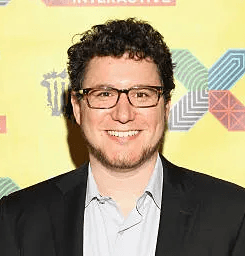
|
NYT Bestselling Author | Founder, LTSE
Takeaways:
1. Companies "Murdered in the Name of Profit": Vectura's board felt legally obligated to sell to Philip Morris for just 10 extra pence per share. Within three years, the company was sold for parts at a $650M write-down, setting back an entire field of inhaled-therapy research.
2. 5x More Likely to Reach Year 50: Research on foundation-controlled companies like Novo Nordisk, IKEA, and Hershey shows they are 500% more likely to survive 50 years than conventional peers, yet most founders are never told these structures exist.
3. AI Is a Governance Problem, Not Just a Technical One: At a Vatican AI panel, Eric realized every major AI lab had rejected standard shareholder governance. He shares how he helped Anthropic design its Public Benefit Corp and Long-Term Benefit Trust.
4. The Todd Park Rule: Every sacrifice for a customer is a deposit in the "culture bank." Devoted Health's rule is simple: only make deposits, never make withdrawals.
5. The Spiritual Holding Company: Novo Nordisk's Nobel laureate founders foresaw that a life-saving cure could one day be used for extortion, and built a structure to prevent it 100 years ago.
6. AI Made Developers 20% Slower While They Felt 20% Faster: In METR's study, AI users believed they were more efficient but actually performed worse. Eric's fix: instead of "make me an MVP," say "teach me how to make an MVP."
7. Tokens Are the Ultimate Vanity Metric: Token-maxing doesn't make anyone's life better. Measure whether real customers use your product and whether it delivers on its promise.
References
Eric Ries's LinkedIn – https://www.linkedin.com/in/eries/
Eric Ries's X – https://x.com/ericries
Incorruptible – https://incorruptible.co
How Is Incorruptible Going – https://howisincorruptiblegoing.com
Jing Conan Wang (Host) –
https://www.linkedin.com/in/jingconan/
Timestamps
00:00 Intro
01:44 From The Lean Startup to Incorruptible
05:51 Why "best practices" keep failing founders
11:48 Lean Startup 15 years later: speed + uncertainty
13:35 The one line Eric regrets: "change the world… for the better?"
15:24 Is AI racing toward good or bad? AI as a governance problem
17:22 Why frontier AI labs chose Public Benefit Corporations
20:52 What a PBC actually protects: the Vectura / Philip Morris story
25:04 Who should be the mission guardian?
29:20 "Don't rock the boat": why mission-guarded companies last 5x longer
31:18 Inside Anthropic's Long-Term Benefit Trust
33:38 What to say when a VC asks you to remove the structure
35:19 Culture & coherence: staying mission-driven day to day
37:04 The Todd Park Rule & the "culture bank"
43:37 Scaling the mission: Mary Parker Follett & the invisible leader
49:28 The spiritual holding company: Novo Nordisk's founding story
54:08 Should every AI company have a spiritual holding company?
54:57 Lean Startup in the AI era: MVPs vs. slop factories
57:56 The METR study: AI felt 20% faster, made devs 20% slower
01:01:23 Don't ask AI to make it; ask it to teach you
01:02:45 Token-maxing & vanity metrics: innovation accounting for AI
01:06:42 Closing & where to find Incorruptible
Full Transcript
You want your company to last 50 years or only five years? You tell me. A company with this structure is five times — we're talking 500% — more likely to live to year 50 compared to conventional companies. I have seen the worst that this industry has to offer — people being fired from their own company. I've seen investors take control of companies. I've seen founders screw over investors. I've seen a lot of dark stuff too.
Eric Ries is the creator of the Lean Startup method and the New York Times bestselling author who defined how a generation of founders build companies. As a founder himself, he built the Long-Term Stock Exchange — the first new U.S. stock exchange to list companies since NASDAQ. He's spent two decades at the intersection of innovation, governance, and institutional design. And now, in his new book Incorruptible, he's asking: why do good companies go bad the moment they succeed — and how do you build one that stays great?
I have many, many, many examples of companies which have been murdered in the name of profit. What's crazy about these murders is that oftentimes the murder is not even any good for investors. Often the thing that is destroyed is the very engine of value creation that was at the heart of the organization.
Are we in the right direction in AI development? Are we racing for the good, or worse?
AI is far too dangerous of a technology to be organized this way. It just cannot work. The idea that any nation state, any foreign actor, any large company — anybody who wants, if they're rich enough — they should be allowed to control this technology just like that? No way. The people that used AI said it made them on average 20% more efficient. But they judged their actual performance and realized that the AI made them 20% less efficient. Instead of asking the technology to 'make me an MVP, make me a website', you have superpowers. You say: instead of make me a thing, teach me how to make a thing.
Eric, welcome to the show. you have such huge impact in my own entrepreneurial journey. And I know a lot of founders know you from the Lean Startup, which defined how to find a product market fit. This defines a whole generation of entrepreneurs, myself included.
Thank you, thank you very much for that work. I also know that you have been keeping doing research and bring new insights to the community. And recently you published a new book called Incorruptible. And this seemed to have a different topic, it's about structural survival. what is this topic about? I'm very curious.
Sure, yeah. Happy to talk about it. Yeah. Thanks for the kind words. Look, the privilege of my life, truly, is you read a book, The Lean Startup, and millions of people read it. And that means that so many people like you who got their inspiration from the book used it in their entrepreneurial journey. And some of those people call me. You know, I get to meet them. It's such an incredible honor. And I've probably helped, I can't even keep track of how many hundreds or thousands of startups I've helped people start over the years.
It's been fifteen years since that book came out. So I've had the real it's been a joy to me to get to be part of the very best that our ecosystem, our civilization has to offer. I mean, think about how many great companies have been created using these ideas. I really I am nothing but proud of all the work that we've done together as a movement, a global movement, to say, look, you don't have to go work for some exact existing bureaucracy. You don't have to just do what some person tells you to do. You can strike out on your own.
And really create something beautiful in the world. Okay, wonderful. It's wonderful. And also, I have seen the worst that this industry has to offer to. I have seen people where their company was ripped away from them, people being fired from their own company. I've seen people where the company deviates from its principles, no longer is almost unrecognizable from what it started out with. I've seen investors take control of companies. I've seen founders screw over investors.
I've seen a lot of dark stuff too. And for me, this is not different than what we were talking about before. People say it's a new direction, but not to me. To me, this is the same question I've been obsessed with all these years. How do you build a great company? And to me, it's not enough. I'm not satisfied if we build a great company, but then it's destroyed. what's good about that? I know so many people personally who have become
Richer than you can possibly imagine, you know, who have more money than they'll ever need in their lives, and yet are truly miserable because their life's work was taken from them, or because they're ashamed of how the money was made, or even worse, their kids and their grandkids are embarrassed. that's how the family money was made, grandpa. Really? You made the world worse? You made a few bucks off it? Like, that's not great. So I think we can do better.
And also so on the one hand, I'm sick and tired of watching these companies be destroyed. But more importantly, it's the same question I've always wanted to know the answer to. How do we build truly great companies? And to me, that's what the new book is about: like a trying to help fix a thing that so many of us were naive about. We didn't really understand how money works, the power that capital wields. We didn't understand what I call financial gravity.
the values that are transmitted through our financial system. So as a result, we weren't geared up for we weren't prepared for the fights that came for the last generation of founders. And I don't want that for the next generation.
A lot of the audiences community that are tech founders, they a lot even myself included, we saw the building startup, it's building cool technology, it's writing code, it's changing the world.
The real world situation is often more complex than that. it requires some navigations, it requires some financial knowledge. And for a lot of us we're not familiar with that. So this is definitely would be really useful book. And I'm also very curious, like, looking back at your past so at a what specific experience convinced you that the traditional ways of building startups or building companies is not working?
Yeah, so I have a lot of experience with this because I've seen how it can go wrong, but I've also seen how it can go so right. I've been a founder myself. I've created a whole bunch of companies, including the long-term stock exchange, a company that I built to try and reform the the financial markets from the inside. So I feel like I've really seen this phenomenon up close. And the reason I'm so confident that we can do better.
Is first of all, I have had the privilege to learn from some really extraordinary companies. And I tell a lot of those company stories in the book. Companies ranging from, you know, Devoted Health, which, you know, is one of the fastest growing healthcare companies in America, classic companies that everyone in the world knows about, like Costco and Patagonia, new companies that, you know, I've had a chance to play a small part in their evolution, like like Anthropic. And as a result of having seen the choices that founders make, how consequential they are.
That's one studying from companies, that's one way to be to gain confidence. The other reason I'm so confident in these prescriptions is because of all the evidence. There's so much research that has been done on these questions going back decades now. And yet most of this evidence is not known to most founders. I've actually been surprised. You know, I've been on BookTour now
for a few months. So I've had a chance to speak to audiences about many of the techniques in the book they've literally never heard of. They didn't even know it was an option. And I think for people who are not founders, who look up to founders and say, wow, what bold risk takers, you know, I could never do that. That seems so risky, so difficult. You know, you have friends who are like, why would you do that? they can't really understand that when you're a founder, it's a struggle for your life. You know, it's every day you deal with, you have to live with the discomfort, the anxiety.
And so you come to rely on your advisors, your lawyers, your bankers, your investors, right? These people become your lifeline. And so it's very unsettling, I think, to most founders, especially the ones that have gone to business school or law school, who've pursued a professional degree of some kind. So they have so we add to that list of advisors professors, teachers. How can I have all these people I rely on? And yet they never told me about this evidence.
And yet. They never told me I had an option, a choice to build the company like this or like that. So a lot of the book is about a set of so-called best practices that as an industry we have conformed to. Everyone agrees these are the best. It's hard to believe they might not be the best because best is right in the name. You know, they're the they're literally called the best practices. How can they be bad?
But it turns out we have extensive evidence that they're quite poor and we could do a lot better.
Although the name is called best practices, but when the situation changes, it's no longer a best practice. And I can share for me my first my experience when I started to leave my previous job and started to do my first startup.
I was so eager to learn. It's just like I read every single book about business buildings. And I actually find I follow the exact guideline. How many founders you need, what's the equity speech, what you know you need to do. I follow every single best practices and I failed very miserably.
Yeah, yeah. I mean, look, don't feel bad. Many of us have made these mistakes. It's very common. And that was true for Lean Startup. What people don't realize now that Lean Startup has been around for such a long time, it was very controversial in the early days. So I've been through this before. You know, I've gotten used to the idea of putting ideas into the world that people reject, people think are crazy, you know, that they seem like they're too, too different from how things are today. And then I've watched those ideas become,
Part of the new conventional wisdom. You know, now many young entrepreneurs can't imagine that anybody had to invent a idea like minimum viable product. Surely everybody already always knew that. Well, guess what? Not really. We've messed it up plenty of times. So I think the same thing is happening here where we just we have this these dogmas, these things that we've inherited, but we don't really have the evidence to back them up. And so what I like about entrepreneurs is the generations come quickly.
We're like the fruit flies of business, you know, short-lived. So, first of all, for an idea to have longevity in among entrepreneurs, like to me, the fact that lean startup is still current today, 15 years later, it's not like an idea that's being promoted by, you know, a university or a long lived institution. There's no like lean startup academy that everybody goes to to learn lean startup. No. Every generation of founders has to choose it for themselves.
And it's only the word of mouth from one generation to the next. People ask founders that just started a company, hey, what did you find helpful? People hand them the book. That transmission is what keeps the idea alive. So I'm very grateful to everybody who's ever handed a copy of Lean Startup to somebody else and said, You got to read this. You have my undying gratitude. But I also have seen as a result of that how quickly entrepreneurs can embrace new ideas. So it might seem like these ideas are unbreakable because they're everywhere. You, you know, investors love them.
Lawyers love them, everyone loves these best practices, but I've seen how quickly the practice can change. Because at the end of the day, our economy needs entrepreneurs more than we need anything else. Capital is not the most scarce resource. I know for a lot of entrepreneurs it can seem strange raising money is so hard, but capital is not scarce. The opportunities are not scarce. It is the entrepreneurs who are scarce. So we as a collective group, if we can choose to change our minds about what we think companies are all about, how we think companies should be built, we can have any economic system we desire.
Many things have changed in fifteen years. And if you would say like if there was adaptation needs to be happened for like a lean startup concepts or you know, maybe a new framework, what would that be?
Well, they've had held up very well. I'm very pleased. You know, I I it's funny. I when I first started doing interviews for the new book, people, a couple people asked me the question like this. They'd say, Do you feel vindicated by lean startup? Vindicated? What do you mean? They said, Well, you said some pretty controversial things now that are universally held to be true. You know.
You made all these predictions. Did the predictions come true? It seems like they did. And I was like, what predictions? I don't even remember that. You know, that's not, I don't think of Lean Startup as a prediction book. It's really a book about practice. But they said, No, you said,
and I people have quoted it back to me. You said that the world was going to change on two axes. 15 years ago, I said, the world's going to become more and more uncertain. Uncertainty will be the driving thing.
But the thanks to the technology of that is creating that uncertainty, we will things will also get faster. Cycle times will collapse. So we're going to see the combination of speed and uncertainty. That's really where lean startup thrives. And I was like, ooh, that that is that summarizes the last 15 years pretty well. I wasn't even thinking about AI. You know, I didn't know what it was what the technology was going to be, but that really is the the effect of technology on our business, especially software, because of its intangible nature and because of its malleability. It just tends to have this all pervasive quickening.
And therefore, a driving of uncertainty. So I feel pretty good about that. The one thing I would change, yeah, the one mistake I made that I wish I could go back and change. It's not worth doing a whole new edition just to make this tiny little change, but I do regret it. I don't know if you know the Reddit meme for the better right.
So on Reddit, you'll sometimes see this meme. It's a comic. There's four panels, and it's Anakin and Padme. Okay. Anakin says.
I'm gonna change the world. Padme says, for the better, right? Then in the third panel, Anakin says nothing. He just smiles. And in the fourth panel, Padme says, for the better, right? I used to think that was the funniest joke on the internet. And now I don't find it that funny anymore. I kind of feel like the whole technology industry failed this very simple test.
We bragged about our ability to change the world, but we didn't specify for the better. And so many technology companies have changed the world for the worse. So what happened? Anyway, I didn't think I was responsible for this. I told people very clearly to change the world for the better, or did I? And so I had this moment where I went back and I grabbed a copy, it's just out of reach, or I would show you, grabbed a copy of the lean startup. And I was I was saying, Did I ever say in the book that you should change the world? Did I use that phrase?
It turns out I did. At the end of the introduction to the book, the last sentence, you can pull out your old copy and you'll see. It says, you know, is my hope that the next generation of entrepreneurs will have the tools they need to change the world. Period. It doesn't say for the better. I thought it was so obvious it didn't even occur
to me to write it down. So now, now I think we all have a reckoning with the fact that we had this blind spot that we didn't specify what the values and goals of all this change should be. And I do think that's something we have to pay more attention to going forward.
Related to that, I actually want to get your ideas about what's happening now. Like you mentioned, The principles of the whole environment is have uncertainty. It actually holds more even true than 15 years ago because now that we are in the AI era, everything changed rapidly fast. We have anthropic, openai release models like almost every few weeks. and there's a whole bunch of discussions about should we're pacing for AI, is this too scary? And there's like attacks. Do you think that are we in the right direction in the AI development? Are we out racing for the good or worse?
I covered this in the book, so people can read the whole story because like I the the anthropic story is in the book. Yeah, I think we're right. I think people are right to be concerned. I think that fundamentally AI is a governance challenge. And the companies that make this AI, they have to see that governance is not a purely technical question. People talk about the alignment problem. How do we align the technology to human values? But
Who decides what those values should be? The human beings that make the technology and who's aligning them. If we have these companies that are strictly self-interested, profit seeking, I think we're in for a real dangerous time. And this is something that the people who build the technology all view to be very obvious. If you followed the Sam versus Elon trial of OpenAI, you know, one of the details that came out in that trial is how shocked everybody was when Sam Altman, I think.
Flippantly at the time just suggested that the technology could be auctioned off and sold to the highest bidder. This idea that this is a technology that should be governed for the benefit of humanity, not for the benefit of a select few, is very, a very universal perception. So a large part of this book is about how do we create institutions that can be aligned to human flourishing as their goal. And once we understand how to do that, it's very natural to apply that same framework to the people that create artificial intelligence.
We all have observed a fundamental shift in the frontier AI in terms of governance. Like companies like Anthropic, OpenAI and the newly founded discovery loops, they are intentionally rejecting traditional C-CORP structure. So they are using this structure called PBC or public benefit corporations.
Why do you think they do that?
It's necessary. It's a hundred percent necessary. yeah, and I cover public benefit corps extensively in the book. I so here I'll give you a funny story. I was last summer, I was invited to an event, a conference at the Vatican of all places, where we were talking about AI governance. And they had invited a range of technology companies and a bunch of academics and press and then me. I don't know why I was there, you know. And I was on this panel. It was literally me.
And representatives of all the other major AI companies on this panel. Literally, I was sitting in this panel with it was me and then OpenAI, Anthropic, Cohere, Google, Meta, Palantir, everybody on this giant panel. And I looked down the row of people sitting next to me and I had this realization. Every single one of those companies has somebody who plays the role of what I call a mission guardian. Not a single one of those companies has standard governance. They they have all rejected.
The idea that shareholders should be able to force the company to do what they think. The mechanisms they've used are different. Some are a public benefit corp, some the founder has control and is a mission guardian that way. At the time, OpenAI was still a nonprofit. So there's very different mechanisms. Public benefit corp is one of those mechanisms. And it's so important because the way in the last 40 years in the United States and increasingly around the world, we have come under the sway of an idea that they call shareholder primacy.
This is the idea that the purpose of a corporation is just to be a financial instrument to enrich shareholders. It has no other goals or purpose. So when we talk about having an organization that is seeking human flourishing, shareholder primacy makes that impossible. Impossible. Because if you ever do something for the benefit of humanity that shareholders don't like, they could decapitate you like that. And in the book, I have many, many, many examples of companies which have been murdered in the name of profit.
What's crazy about these murders is that oftentimes the murder is not even any good for investors. Often the thing that is destroyed is the very engine of value creation that was at the heart of the organization to begin with. So I want to be super clear. Like, it's not like investors are benefiting from this ideology. But AI is far too dangerous of a technology to be organized this way. It just cannot work. I just nobody thinks that's a good idea. The idea that any Nation state, any foreign actor, any large company, anybody who wants, if they're rich enough, they should be allowed to control this technology just like that? No way.
So the public benefit corp is a chance to write into the corporate charter of a company what its purpose actually is. So in the case of Anthropic, they've written into their charter that they have to use the technology in a safe and responsible way for the benefit of all humanity. I think pretty much every company that cares about quality or design or their community or their employees or the environment. If they have any human concerns whatsoever, they should be a public benefit corp. Otherwise, they are really rolling the dice, saying that they do not know what will happen to them someday in the future.
What is exactly this legal protection, or this what exactly is additional structure that the PBC provides, that traditional C-Corp doesn't provide that allows the founders to have the ability to be mission driven?
Yeah. You know, by itself, it doesn't, it's not like a magic trick. You know, by itself it doesn't solve every problem. It it really solves a very specific problem. So let me tell you a story about a company called Vectura. So this was a university spin-out from the University of Bath in the UK. They made inhaler therapies. So for asthma, for COPD, lung diseases, where the medicine is inhaled, a very particular scientific specialty. The technology worked.
The university professors who invented it went on to take the company public on the London Stock Exchange. The company was doing very well. And one day, I wish I was making this up. One day in the early 2020s, Philip Morris International decided they would like to buy a healthcare company. Already, I hope people feel the ominous music playing, like if this was a movie. Like, what a bad idea. Okay.
But they had a strategy. The strategy was to diversify beyond nicotine, they called it. And you could just see how some consultant probably told them, well, they're all about inhaling things. You have a lot of synergy because you know about inhaling things. You know, it's a match made in heaven. Anyway, they got talked into it. They showed up with a London stock exchange and they offered to buy the company for 1.1 billion pounds, which sounds like a lot of money, but we're only talking about 165 pence per share. At the same time,
A private equity firm had offered 155 pence per share. So the board of Vectura had a choice to make. And I want to be clear, they had three choices because choice number one would have been to do nothing. The company did not need to be sold. It was fine. There's no business problem that this M&A would solve. So it could just do nothing. Option two, sell out to private equity. Option three, sell to Philip Morris and gain that extra 10 pence per share for the shareholder.
Because Vectura was embodied as a standard corporation, the equivalent of the Delaware C-Corp, the board met and they had a unanimous vote. They said, We have no choice. We have no choice. We must sell the company to Philip Morris. Even though everyone could see this as a terrible idea, the sale went through. Within three years, Philip Morris had sold the remains of the company for peace parts and taken a $650 million write down.
The idea it was just the whole thing was preposterous. It was another company murdered in the name of profit. And for what? Like who benefited from this transaction? Nobody actually made any money from this. Yet the directors of the company felt they were legally obligated to do this thing. Now the human costs of this are real. This is where I think we tend to make this about dollars and cents and managers versus investors or whatever. This has human costs. I was just in Cambridge. I was at Cambridge University.
Giving a lecture about this topic. And some one of the scientists in the audience came up to me afterwards. He said, Well, I actually work in the field of inhaled therapies. I'm working on a new startup trying to do that. And he's like, This transaction in our field, we consider this to be a major tragedy. This set back the whole field of research by years. A bunch of the patents are still owned by Philip Morris, a bunch of the people that
You know, would used to work at Vectura. Now they're a pariah. They can't work anywhere because nobody will touch them because they used to work at Philip Morris and they're seen as the bad. Like it caused all these human consequences, including, like, let's not lose sight of the actual purpose of Vectura, which was to advance the science of the curing these diseases. So these are not abstract concerns. This is not just some philosophical debate about the nature of the corporation. These have really practical human consequences. And I think founders need to protect themselves.
To say, look, we need to make sure that this can never happen to you, or your company is likely to be a future cautionary tale in some future book that somebody writes about how this keeps happening.
You mentioned also earlier about the mission guard in the company. Do you think like where this who should be this mission guard guardian in for the for the company? Should it be founder, should be someone else? How exactly this structure work?
Yeah. Yeah. So there's a there's a a number of structures that are possible. But it seems like almost all of them work. That's what's so interesting. People get so tangled up on who should be the mission guardian. So let me just walk you through some of the options. Okay. So in the case of founder control, like Mark Zuckerberg, the founder can be the personal emperor for life, you know, the central of power.
I that has all the same problems you would expect from studying dictatorships throughout history. You know, like when you make one person the absolute ruler, the psychologists call it hubris syndrome. It goes to their head and bad things can happen. Okay, but that is one possible option. And if you look at that for all the problems with it, it does seem on average, companies with founder control tend to outperform standard companies like that. So it has a real, real economic value.
Then you have employees can be the mission guardians. We have examples of things like the Employee Ownership Trust or the ESOP. There's a number of these different situations where you have like long-tenured employees who serve as the mission guardian, sometimes even as the owners. Think about John Lewis, John Lewis Partnership has tens of thousands of employee owners that run that chain in the UK. there's many other examples where the employees act as a mission guardian.
Interestingly, It's not always because the employees own the company. In the case of Alibaba, they have something called an employee voting trust, where in order to serve on the board of Alibaba, a a committee of very long-tenured employees have to vote to approve that appointment to the board. So employees have a variety of ways they can serve as mission guardians. Then you have all kinds of cooperatives, including employee cooperatives like Mondragon in Spain with 80,000 employees and I can't remember how many billions of euros in revenue right now.
Where it's composed of a number of independent small employee cooperatives. Very interesting, interesting model. Something very similar is going on, you know, when you look at other forms of cooperatives around the world. And I think cooperatives collectively employ something like 250 million people worldwide. So like again, quite a significant economic force. Another possibility is that a nonprofit foundation acts as the mission guardian.
So this is the case if it could be a charitable foundation, like in the case of companies like Novo Nordisk that have a scientific research ethos. The nonprofit foundation protects the for-profit subsidiary. In the case of Novo Nordisk, the for-profit is a publicly listed company. It trades, I think, two million shares a day on the New York Stock Exchange with a hundreds of evaluation of the hundreds of billions of dollars. So again, this is not a charity. It's just a nonprofit serving as the mission guardian. This is a very common structure if you know IKEA or Rolex.
Hershey Chocolate here in the United States, all have this structure. the German optics company, Zeiss, who makes glasses, lenses, but also a lot of the optical equipment necessary to make chips and all kinds of things, they've had this structure since 1885. So it's not exactly new. but then you also have companies, other kinds of cooperatives like customer or member ownership. This is companies like Vanguard or REI in the United States. So it goes on and on. you have nonprofit operating businesses like credit unions.
We're talking about trillions of dollars of valuation, you know, hundreds of of millions of employees. Like these are a very significant class of enterprises. And yet, most people have never heard of this structure. Most founders, when they start a company, the lawyer doesn't say, Would you like to be an employee cooperative or you want to be a Delaware C Corp? Everyone just defaults, like, this is the best practice. And if you say, Hey, I heard that a Nobel laureate figured out the structure of Novo Nordisk a hundred years ago and it's still going strong.
Can I have the Nobel laureate idea? Most lawyers will pat you on the head and be like, no, no, no, that's some old-fashioned thing. We don't do that anymore. So it's like, this is a known thing that most of us don't know about. So I call it an open secret. Like, it's not like IKEA is a secret. Everyone knows these companies exist, yet we don't realize the power of the structure that makes them possible.
Many early AI founders, or any founders essentially, are worried about making other people unhappy. If your advisors tell you, just make things simple, don't make don't make troubles, just like delaware C-Corp. And a lot of the founders would be, maybe let's not worry about. Let's get the money first. Let's focus on product first. And I think this dynamic happens every single day to like hundreds of thousands of million thousands of founders every day. Do you think that should be normalized? And as founders, how do you escape these dynamics?
Yeah, we have to think for ourselves. You know, you have to have the courage to think for yourself. Now, people who are encountering this for the first time, I know many of your listeners will be like, hold on, I'm not gonna rock the boat. I just need to get product market fit. I can't be worried about this, right? I understand. But you have to realize that we have the evidence that these structures work. For example, there's a whole branch of academia that studies these structures to see how they perform.
So each actually each structure has its own branch of academia, because you know how academia is. there's people who study, for example, the industrial foundation structure. This is Novo Nordisk, you Hershey Chocolate, IKEA, right? Where the nonprofit foundation is the controller. There's so many of those companies in the world that they form a data set. And academics have looked at their performance over the long term compared to peer-matched conventional companies. Most founders are shocked when I tell them that a company with this structure,
Is five times, we're talking 500% more likely to live to year 50 compared to conventional companies. So when someone says, Don't rock the boat, don't worry about it, you want your company to last 50 years or only five years? You tell me. If you tell me I don't care, okay, you don't care. I can't help you. But if you care, you might want to consider the structure.
I know that you in the early stages you actually help anthropic design a long term verify trust. Would you would you please share some of those experiences and what you learn from that experience?
Yeah, yeah, happy to. I want to be super clear for the record that I'm not taking credit for anthropic’s success. Okay. Obviously, that has everything to do with their technology and the brilliance of the people that have chosen to work there. I played only a very bit part in the story. But yes, I did, I was one of the people that they consulted when they first left OpenAI to try to figure out what the right structure of the company should be. And I gave them the same, told them the same scary stories I'm telling you about the dangers of our conventional way of thinking about corporate governance. And to their everlasting credit, they took it seriously. So they didn't just build a Delaware C corp and do it the same way as everybody else. They did a public benefit corp, like we talked about, but they added another really vital ingredient, which is for the mission guardianship, they didn't want to just be emperors. They didn't just say, well, we'll have founder control. That would be enough. They wanted to go beyond that. And they created something they called the long-term benefit trust or LTBT.
Which is yet another form of mission guardian that we haven't talked about yet. LTBT is is like a charitable foundation in that it's an outside entity with trustees who oversee it, but it's not an economic entity. It's what's called a purpose trust under Delaware law. So it is a perpetual purpose trust, meaning it exists forever and it has the sole responsibility of defending the mission of Anthropic to make sure that the company stays aligned to its principles.
So now we'll see. I'm sure that the details of all this will be revealed publicly when they file their S1 to go public. So we'll have to see how much of this is still what it was, you know, the last time I saw it. But this was a very important part of the early story of Anthropic, that they were willing to fight for this. they actually implemented it at the series C officially. That's when it was added to the governance for real. But before that, we were constantly looking at term sheets to make sure that every term sheet said, hey.
Just so you know, we're going to do this, we have the right to do this. Investors had to consent to this way of thinking in order to be part of the journey. And by establishing that precedent early, I think they have given themselves the best possible chance to be a strong company that can stand up for their principles going forward.
how should a founders have this conversation if a leader VC comes and say, Hey, I saw you have this additional structure that is not standard, could you just like convert it back to standard so I could I could otherwise I wouldn't like lead the investment.
Yeah, yeah, yeah. Look, I won't lie and say that that kind of thing never happens. It does happen sometimes. But I don't think that it's very common. Most most investors understand that the founder is the one who has to decide what the strategy of the company is. And so for founders who really under who really make this a key part of the strategy, like the anthropic founders did the investors accepted it. And the truth is, I hate to say this, but it’s very much the truth. Most venture rounds cannot close at all.
Okay, most people can't raise venture money. Most investors can't invest in most companies because there's not enough leverage there. Investors are always worried about being the only ones who want to invest. What is that? Is there something wrong with the company? So a lot of deals never close. It's extremely rare for something like this to blow up a deal. It's just not important enough to most investors. Now they might use that as the excuse when they say, well, come back to me with this thing taken out and then I'll invest. I can't think of a single time when investors said, if you just make this one change, then I'll invest. You make the change, then they actually invest. When an investor has conviction, when they really believe in a company, in a founder, they'll overlook all kinds of warts. You know, like they'll be well, let's invest and then we'll fix it later. You know, like they really want to be part of the journey. That's why that's how they make their money. So yeah, I think it's a very common fear that founders have that this will somehow cost them access to venture, but that really hasn't been my experience so far.
By having this structure, it's not just about putting a term in your chapter and lock this in the closet and never read it. It's about how to actually use that to creating an internal structure that is also mission driven. What what would be your advice?
So half the book is about these structural things like we're talking about, public benefit corp and boards and very complicated stuff. But the other half of the blueprint in the book is really about culture and operations. How do we run a company in such a way that it remains mission-driven? I was just talking to somebody who was a very long-time employee of Patagonia. And he was really emphasizing to me how important it was. He said, Look, yes.
They have a purpose trust. Yes, the ownership and Yvonne Shenard and the leadership are wonderful. I mean, the all the things that Patagonia is famous for are all true. But he said an underrated factor that people don't understand is how aligned the middle managers were at Patagonia. Everybody who came to work there bought into the mission and were really strongly committed to seeing that purpose through. I call that state of affairs coherence of a company. Every resource the company commands is being directed towards the common purpose.
This coherence can be engineered. It can't be commanded. You can't just stand up and say, everybody be on the same page. That's not how it works. But if you cultivate it, if you work at it, if you as a leader, are exceptionally consistent in articulating and defending your principles, you can cultivate this emergent property of the organism that you command. And that I think, in some ways, is an even more important element of staying mission driven than the formal legalities of things like mission locking and board control and things like that.
And you also introduced this rule in the book called Todd Park Rule.
In order to understand this, you have to know something about a leader named Todd Park. He is an exceptional founder. He was a healthcare founder. He had taken several companies public, and he was recruited by President Obama to serve as the chief technology officer of the United States. And so he did a long stint in public service. And then after public service, he created this company that I mentioned before called Devoted Health.
And I won't get into all the details of devoted health unless you want to, but it's a very cool company, a private health insurance company. And it's rare. It's rare among health insurance companies because customers love them. Can you imagine loving your health insurance company? Most people can't imagine what I'm talking about. But that really is the ethos.
That is the ethos of devoted health. the customers, I'll just give you one little quirky tidbit. The customers themselves.
Call the customer service agents, the people you call on the phone to get help. They call them their guardian angels. Because if you call in at devoted, the person on the other end of the line will do whatever they can to solve your problem. They are directed, their actual, like employee handbook, the thing it says to do is to when someone's asking you for something, when a customer's asking you for something, you picture the face of someone you love, like a parent or a grandparent. And you imagine what I would do if that person was asking me this question. And you do that. You love every person that calls in. So that's a very extraordinary company having a remarkable results, a multi-billion dollar evaluation. They've raised a lot of money, had a lot of success. But the reason they're so successful is how consistent they are at this. And here's how Todd Park taught it to me. I call this principle the culture bank.
Because the trust that you engender when you make a sacrifice on behalf of customers, it's like an asset. The most underrated and valuable asset in all of business is to be trusted by another person. So whenever you make a sacrifice, so someone calls into the customer service agent and says, I have a problem. The agent could say, listen, you know, I tell a story in the book, someone called it and they said, I have toxic mold in my apartment. That's why I keep getting sick.
Customer service agent in a normal company would say, Well, I'm so sorry to hear that. What do you want me to do? You know, that's not my job. I can schedule you for your next appointment at the hospital. But that's not what happened. The customer service agent thought to themselves, if it was my mother who had toxic mold in her apartment, I wouldn't schedule her for a visit. I'd get her out of that apartment. And so the company arranged for this person to get into new housing. That is not something they had to do. It's something they chose to do.
Thus built this trust, this loyalty with the customer. That's the culture bank. The Todd Park rule, I remember talking to Todd about this when he explained it to me. And I God, Todd, this sounds so hard. He said, Well, it's actually very simple. It is hard in the sense that it's extra work we have to do. But we have a very simple rule that actually makes decision making much simpler. And the rule is this. I mentioned before that when you do the right thing, you're making a deposit in the bank.
If you do the wrong thing, if you do the reverse, you're making a withdrawal from the bank. The Todd Park rule is only make deposits, never make withdrawals. Just don't make withdrawals. Don't do it. Always try. Like sometimes you're going to make a withdrawal by accident, but never do it on purpose. Always try to do the right thing for every customer, every employee, every investor. Be consistent. And when you follow that, yes, it makes life harder because now you have extra things you have to do.
But it actually creates huge unexpected benefits that make life easier in the long run. Because now you don't have to have a hundred meetings about whether to do the right thing or not. You don't have to have any meetings at all. Everybody knows what you're supposed to do and does it. It's very powerful.
one thing I really like what you mentioned about is about how to use a metaphor to make this thing so concrete. Like would you do this when grandma has in the same situation? Would you do this thing when your friend are in this situation? Because I come from China, actually Confucius has a has a sentence for that, which I think this is actually exactly like that. If you don't want yourself or your family to be treated like this,
Don't treat this like other people. Treat other people like your families. I think that's the exact same rule. Yeah.
100%. That so this is the most surprising thing to me about having written this book and how people respond to it. There's so many ideas in the book that people treat like they're very radical. People are like, my God, how did you come up with this idea? Or how dare you suggest such a thing? And it's funny, many of them, this is what you just said is not unusual. Many of these ideas are some of the most
Ancient teachings we have in our human civilization. You know, like think about all the ancient spiritual leaders whose texts and words are still relevant today. Can you think of a single one who said, you know what, to live a good life, try to make as much money as you can. To live a good life, you know, screw over all your family and your neighbors and your friends and your community. No, we have these we have this ancient wisdom that has guided us for a long time. And somehow we think modern business, like somehow we're exempt from these principles.
But I just think that is profoundly backwards. In some ways, all we're trying to do is bring that ancient wisdom and bring it into people's actual daily practice, not just to make more money, not just to create more shareholder value, certainly those things, but also because we know from every spiritual tradition on the planet that this is the path that will lead to more satisfaction and happiness in your own life. So among the many reasons you might want to work at devoted health, yes.
People who went to work there early have made quite a lot of money. Their equity is worth a fortune. Yes, they've been able to have positive impact in the world and change the world. But like a huge part of it is just like I know so many doctors who've gone to work there who are like, finally, I can just do my job. I'm not working for I'm not I'm not being like pressured to do the wrong thing for my patients. So they sleep well at night. They feel like I'm actually doing good by doing my job. What a great feeling. And I just think that is not to be underrated.
I also want to touch another point is that oftentimes founders are very mission driven and they can live on this. But as they scale these organizations, they will hire, have more peoples. They would need some ways to ensure everyone knows that and that could be performance review or maybe some other structures. So what would be what would be your advice on that?
it's very common for companies to lose this dimension as the company scales. like frankly, most mission-driven companies fail the test of founder succession. Like they never get there. The company falls apart once the founder's gone, or even while the founder's still there. I know so many companies that atrophy because the next generation of leaders under the founder don't really care about the mission.
So creating that alignment and consistency of purpose is really important. one of the people who I studied for this book that I think more founders should know about, should study. There's this incredible woman. Her name is Mary Parker Follett. She was a pioneering management thinker from the 1920s. She was a contemporary of Frederick Winslow Taylor. And everybody who's ever taken a management class ever on this planet knows Fred Taylor.
He's in he became, you can't imagine how famous he was in his own life. He was a rock star. I mean, just an incredibly famous person. And Follett was completely erased from history. I mean, her work was not preserved. She was erased. And it's very sad. A whole like multiple generations of managers forgot about her and didn't learn about her in business school. And her work actually was not rediscovered and republished until the 1990s.
So you can guess why he was celebrated and she was forgotten. That's our world. But I'm glad she's been rediscovered because some of her ideas are so far ahead of her time that if I told you that I came up with them, you'd be really impressed. If you saw them on social media and you saw someone quoted one of her quotes, you'd be like, yeah, sure. Like, of course that's contemporary. I'll give you some examples. She said, the purpose of a leader is to make more leaders.
Come on, that if you saw that on Instagram, you'd be like, yeah, sure, of course. That's probably some business influencer from the 2020s, no, from 1920. She said that the when she was asked once, should the subordinate obey the superior? She said, no. The subordinate and the superior together should obey what she called the law of the situation, meaning they should work together to figure out what the situation requires, and they obey that.
She talked about power with rather than power over. She had this idea of collaborative power instead of hierarchical control. Very advanced thinker. And one of her most important ideas was what she called the invisible leader. Because one of the most common pieces of confusion that founders have is if you own your company, you founded it, you own it, you control it, everyone works for you. You start to think.
That you are the leader of the company. It's very natural. But Follett said no. She would give this example based on the Roundtree family, the famous chocolate making family of the 20th century. She would say, Mr. Roundtree is an excellent leader of the Roundtree Chocolate Factory, but not for the reasons that you think. Because she would say, Mr. Roundtree is not the leader of the Roundtree Chocolate Factory.
People would say, you just said he was excellent. He's like, he is an excellent leader, but he is not the one they follow. The reason he's an excellent leader is he's so good at instilling in his employees a sense of common purpose. And it is this sense of common purpose rather than the man himself that is their invisible leader. In the heart is understood an idea about what this company stands for.
And the vast majority of decisions that a company makes are made when no manager is present. So you're the founder, you think you're in control. You're like a kid who's like, wait a minute, I can control my body. How do you know? I command my arm to go up, it goes up. What a discovery. But then you say, Well, really, can you command a cut to heal itself? Can you command your body to be healthy or thin?
Or what not to have energy? No, you can't command those things. Just like an organization, a manager says, I tell people what to do and they obey me. So I'm in control. No, congratulations. That means you have a functioning nervous system in your company. Very important. But can you command your company to do the right thing? Can you command it to be agile or slow? Can you command it to be ethical or no? Those are all emergent properties of the organization that can be cultivated but cannot be commanded.
So if founders really understood this idea of Mary Parker Fallon, they would be able to see that their job is not to tell everybody what to do. The solution to the succession problem is not to pick, hand pick the right managers. No, the right way to solve the problem is to instill in everybody this sense of common purpose. This is what the company stands for. This is our ethos. This is what we're all about. And the more the company can understand that, the more likely they are to be successful.
You also introduced this fascinating concept in work called the spiritual holding company as the key to the next era of the business. What is this? What is spiritual holding coupling?
Yeah. So the spiritual holding company is my term for that second entity that holds the spirit or the animating essence of a company. We're talking about the anthropic LTPT or the Novo Nordis Foundation or the Employee Ownership Trust at John Lewis. It's funny, in the in the literature, there's not a common term for all these different alternatives. So we need to invent a term to be able to talk about it. And the goal of the spiritual holding company is to turn a company into what I call a mission locked constellation.
So that the entities that make up the corporation legally are all locked together to keep the mission at the center. That's really the goal.
And how can a founder use a spiritual holding company to model that this model to spawn multiple mission aligned operating entities?
Yeah, yeah, that's really that's really all it is. Like it's actually a very simple, simple idea. So for example, when Nova Nordisk was founded in the 1920s, this is now Novo Nordisk is more than 100 years old. The founders were a Nobel laureate and his wife and a few of their colleagues. The wife, Marie Krog, had just been diagnosed with diabetes. Now, this is at a time when that's a fatal diagnosis. There's no known cure for diabetes at this time.
despite her diagnosis, she goes with her husband, August. He just won the Nobel Prize to travel to North America to give a lecture, a lecture tour about his Nobel Prize. So they're traveling around North America, and Maria is sitting next to a scientist at one of the dinners. And the scientist tells her that in Canada, a scientific research breakthrough has occurred where people have figured out how to isolate insulin for the first time, a potential cure for diabetes.
So she convinces her husband to go to Canada and investigate this breakthrough. When they get there, they put it through its paces, they become convinced that this could be the cure to diabetes. And of course, this is going to save Marie's life. They're excited about that, but they're far more excited about the possibility of bringing this technology to the world. So they want to first bring it to their home country of Denmark. That's where they're from. And they make an agreement with the Canadians to license the technology, but they all have a concern. They have the spiritual holding company concern.
Every founder listening should pay attention to this story and should understand how far-sighted they were in thinking about this. They realized that if a technology is truly transformative, that is, if it could be life-saving, then it's too dangerous to be held by a single for-profit company. Because
they wrote about this. You can read what they wrote. They wrote that one day in the future someone might use the threat of withholding the life-giving cure as a kind of extortion. Because if you depend for your life on my technology, I can, I can demand whatever I want of you. There are so many people listening to this right now who are sitting there being like, I have a vendor that treats me like that. Right? In SaaS software, we called it vendor lock-in. We celebrate it like it's something good.
we in consumer products, we actually often refer to it as addiction. We have a customer who's addicted to my product. So it's really sticky. So my economics are good. Well, an addict can no longer consent. So if you have this power relationship with somebody, you're right to be worried about this. Now, listen, we've had scandals here in the United States. you know,
80 to 100 years after they foresaw this possibility, where private equity guys, remember Martin Screlly, like we've had people that actually tried to do this extortion. It's a feature of our modern economy. The founders of Novo Nordisk saw this clearly from such a long distance away, and did the right thing. They built the company so that it would have a spiritual holding company from its earliest incarnation. Even though they wanted it to be a for-profit company, even though they wanted it to have investors, even though they wanted to make money and make money for their investors, they thought this structure was ultimately going to lead to greater longevity, to keep scientific research at the center of what the spirit of the entity would stand for. And it worked. Now, in the book, I tell the story.
Of a time when the spiritual holding company saved for the investors of Novo Nordisk more than $500 billion of shareholder value. You'll have to read the book to get the whole story. But like, it's not just a charitable thing. It actually serves a very vital strategic purpose for the companies that have it. Can we just pause for a second to do a quick time check? Because I I'm I'm hoping maybe we do a few more questions and then and then wrap up. Does that sound good?
Yeah, sounds great. I think we are about seventy minutes. So can probably wrap like about fifty minutes with that. Okay,
Yeah, perfect. That sounds great.
What do you think about the principles of this spiritual holding company should be applicable in current AI companies?
Well, it seems like that's worked out pretty well, you know, for anthropic anyway. You know, we'll see. I think
I personally think every AI company has to grapple with these issues. And the more successful it is, the more valuable it becomes as a target for someone to want to control it and take it over. So I really think that AI companies should be the most concerned with these kinds of issues.
Unless they're true sociopaths and they don't really care about the consequences. But most people get into AI, especially at the foundation research level, because they have a real care for humanity. They want the technology to be used to cure disease and not cause it. So yes, I think every one of these companies should be built, you know, with some form of mission guardianship and ideally with a spiritual holding company.
For the last part of conversation, I actually want to also go back a little bit about the beginning part of the lean startup, the concepts that in the AI era, I there
was a lot of breakthroughs like coming from here and the building speed has been like the fastest ever we can we can observe. The frontier labs are releasing so many models so fast. And the question here is like everyone says go fast, fast, fast.
How do we founders think adopt an AI as a principle? Like especially if for example if we think about building AI in the spirit of building MVP, a lot of those MVP become what people call Slop factory. Do you agree with that?
yeah, of course. Look, I think in some ways the problem that Lean Startup was designed to solve is worse than ever. Because AI makes it much easier to build things, but it doesn't necessarily make it easier to learn things. So how many people do you know? I mean, just be honest with me now. I have so many friends that this is true of. They're vibe coding like crazy. They're vomiting out tens of thousands of lines of code a day, but they're not shipping anything.
They're getting customer feedback. They're not getting revenue. They're just convincing themselves that they're doing a good job. I even had, I was talking to a founder the other day who said, I found the ultimate solution to lean startup. yeah. I have a series of simulated agents that pretend to be my customers and give me customer feedback. So I don't have to waste time talking to customers.
This is not going to end well for a lot of people. So I happen to be of the belief, and look, I'm a co-founder of an AI research lab called Answer AI with the great Jeremy Howard. He's a real pioneer in deep learning, as you well know, and has had a mission to bring this technology to the widest possible, you know, audience. He spent many, many years teaching deep learning to to engineers at a time when that was not considered a really reputable thing for him to do. He did it for free for for such a long time.
And one of the things I've learned from him is that the way that most of these harnesses are built, they're training people to treat the LLM as if it's something you delegate your work product to. So what happens is you say to the LLM, build me an MVP. And then you
say, Did I do a good job? And it says, yes, you did a great job. Would you like me to build more? Like you substitute its judgment for yours. Now we have early research, it's not conclusive yet, but some of the early studies that have been done show
that when the AI is used in this way, two things happen. First of all, your own skills atrophy. You get worse at your job because you're outsourcing your thinking to the machine. And the second thing is this I think is even more insidious.
You start to lose your ability to judge the quality of your own work. So just to take one study, Meter did a really famous study where they asked open source contributors to
Next time they had to solve a certain project, certain problem in their software, half of them were asked to use AI, half not use AI, and then report back what happened. And the people that used AI said it made them on average 20% more efficient. But meter, the reason the study is so great, meter judged their actual performance and realized that the AI made them 20% less efficient.
So it's this combination of I think I'm making progress when I'm actually making the situation worse. And we're seeing this over and over again with companies that go all in on vibe coding, their claude maxxing, their token maxxing, they're this max, right? They're all into it. And at first they get this rush of performance. And three months later, they're in big trouble because now the complexity of their software is so high, no one can understand it, can't debug it. The models can easily write code that they themselves do not understand.
And cannot debug, they get themselves into big trouble. And we've had all these examples already of people who laid off a bunch of humans and had to hire them back because it's like, oops, we don't know what we're doing anymore. This whole crisis is being kicked off by a simple misunderstanding of what LLMs are good for. And you know it. LLMs are wonderful when they're acting in the training distribution. They're incredible. If you ask them an in-distribution question, they're amazing. Even like the
Big math breakthroughs that we're having, like the whole Navier Stokes thing. Like in those cases, generally speaking, what we're seeing is that AI taking some human's work where someone got it a certain amount, but couldn't get it all the way to the finish line because it was so complicated. Like finishing something, like going in the direction that a human like paved the way for, they're really extraordinary. But take them out of distribution and they behave bizarrely, in some cases, like randomly or worse. And we see that, you know, what we
colloquially called hallucinations. We see that in the sycophancy. We see that in so many, so many direct directions. My favorite demonstration of this is the people who have created LLMs that are trained only on works up to a certain date. Like someone made an LLM that's like only on Victorian English texts. So you can ask it anything you want to know about Victorian England and it's like it knows everything. You can ask it about any math or science up to the date it was trained. There's another one I think that was done for texts up to like the 1920s. And I saw someone saw a paper where someone had
Asked it questions about things that were known to humanity like one year before the cutoff and things that were about to be discovered like one year after the cutoff. Ask it something before the cutoff, it's a genius. Ask it whether human flight is possible, it'll say, Absolutely not. Of course not. What are you talking about? That's the dumbest thing I ever heard. Even though we know what was about we know it was about to be discovered. We know it's right after the training cutoff, you see? So we have to really internalize this idea that this Technology is incredible when it is used as a way to augment or supplement human creativity. And it is terrible when it is used to as a substitute to replace human creativity. we have this problem at a social level. Like this technology is trained on all this human creative work. If the humans don't do creative work anymore, what are you going to train it on? Like that's a huge problem. We're going to see massive model collapses. These models are trained on their own slop. Ugh.
But it's also really important as at an individual level. If you're a founder, you're an engineer, you're an artist, you're a writer, you should use this technology in a different way than most people are saying. Here's my contrarian take, okay? Instead
of asking the technology to make you an artifact, make me an MVP, make me a website, make me an image, make me this. Every time, if you can, if you have this discipline, you will become a super, super, you have superpowers. You say, instead of make me a thing, teach me.
How to make a thing. Every time just say, hey, I'd like to understand how to make an MVP. Teach me how to make a website. tell it what you know and tell it to be really rigorous in explaining things to you one baby step at a time and quiz you as you go. Like it's a wonderful, infinitely patient tutor. And as long as you're trying to learn something that's in the training distribution, it's amazing at teaching it. So let it teach you. But then you're increasing your skills, increasing your own set of agency and learning, mastering the domain.
That you're trying to collaborate with the LLM on. So, for example, at Answer AI, one of our big ideas is that we're really bullish on software engineering. Everyone else seems to think software engineering is going the way of the dodo, and we only have nine months left of software engineering. I think that's exactly backwards. As these agents become more and more capable, software engineering becomes more and more important because thinking intelligently about the structure and architecture of applications, that's where the real value is, not in the pounding out the code.
So I'm very excited for what this new era will contain, but only if people learn to use this technology correctly.
And another thing related to that, I know in the in startup you introduced this innovation accounting. So it's
really that innovation that matters. It's not like we we shouldn't care about the vanity metrics. I know a lot of founders they they they boast about I use like 200 million tokens a day. That's it. Yeah. Yeah. And
yeah, the ultimate vanity metric. Isn't that funny? Yeah, I find that very, very amusing.
that's very amusing, but I see like so many people post on the social media. How many tokens were used? I know that a lot of founders are falling into that trap. Do you have any advice to them how to get out of that trap, how to identify what is really what is really the right way to do the innovation accounting in the AI era?
Yeah. So it's funny. I mean, I warned about vanity metrics 15 years ago and people are still doing it. It's very funny. So what is a vanity metric? Vanity metric is a number that makes you feel good, but doesn't give you the advice or the action about what to do because it's not measuring what customers are doing. It's measuring what you are doing. Or if you are measuring customers, it's measuring it in a non-actionable way. Like you're looking at big aggregate numbers, you know, tokens and hit web page hits or whatever, something big number that make you feel good.
The innovation accounting has always been the number one technique for combating this, for using metrics for the sake of understanding customers and what they're doing to figure out if you're helping make their lives better step by step. That's really the essence of it. So if I was, you know, using AI, if I was in a startup trying to figure out how to use AI or, you know, trying to figure out if I'm making progress, that's really like the number one lesson of lean startup going all the way back to the beginning is that we need what we call validated or scientific learning.
What does it look like in practice? So imagine I have Claude make me an MVP. Okay. And I put it on my website. First question is, did anybody use it? You know, did anybody use it? So does anybody click on it? No, if I get no clicks, well, then I don't have, I don't have to worry about, you know, what happened. Like, so did anybody use it? So very simple question. Do people use it? Okay. Then what were they supposed to do with it? People always make these websites. Okay, people go to the homepage, they sign up, they log in.
They do a transaction, then this happens. So we parcel out the individual steps of what's supposed to happen and then we measure is that actually what's happening. I can't tell you how many MVPs people make with Claude have no analytics at all. So then even Claude doesn't know if it's doing a good job. But it's okay. It'll tell you it's doing a good job. Its job is to make you happy. So if that's what it takes, but it's very easy. It's just as easy. Now, like all the excuses people used to give me why they didn't want to measure, do innovation accounting are all gone. People say, it's extra work, it's too hard.
I have to integrate all these libraries. I have to understand all this statistics and math. And I have to make a spreadsheet. It's like, well, guess what? Guess what Claude's really good at? Downloading libraries and it's really good at integrating stuff across systems. And it's really good at making spreadsheets. And it's actually pretty good at statistical analysis. So what's your excuse? I would say kind of, I know we're we're we're kind of running low on time, but I would say that entrepreneurship, if you really understand it.
You would realize that it is one of those truth-seeking disciplines in the world. Just like being a scientist or an artist, like we're trying to get at the truth of what really works and doesn't work. That's why it's, I think, a noble calling. And so the number one solution to get, to get rid of vanity metrics, to get all these problems, token maxxing, if you want to get away from all that stuff, you just have to be really committed to understanding the truth. And what is it that's important to you? Why, if someone's token maxxing, I always say, like maxxing to what end?
And it's always something simple. It's like, well, I wanna make customers' lives better because they're gonna use my product and love it. It's like, Okay, great, good.
Why don't we make our analytics about that instead of tokens? Tokens don't make anybody's life better. Let's go measure if the actual product is delivering on its promise for real human beings or not.
It's so much fun to have the conversation with you and thank you very much for sharing knowledge and insight. Yeah.
it's my pleasure. Yeah. Thank you for your kind words and I really appreciate it. I wanna wish everyone in your community, you know, I know entrepreneurship is a scary thing, it's a bold thing. I honor everyone who takes the leap and hope that your journey goes really well. And hopefully you've these ideas will be of a small part in helping.
yeah thank you. Thank you very much for making that journey much easier by writing the lean startup and also your new book, Incorruptible. And we'll leave the link in the video so anyone who watching this they can they can find go and find the book. And
Thank you all so much. Yeah, obviously for you who want more information about it, incorruptible.co. we made a Claude Code maintains a separate website for called howisincorruptiblegoing.com. You can see all the reviews and social media comments. If you leave a comment, if you write a review about it, Claude will find it and you will find it on that website. And then for those, yeah, in the book itself, we have QR codes you can scan for templates and worksheets and all the details of how to implement these things. And obviously, there's an incorruptible community people can join. So we're trying to create all the resources people might need to be able to do this and so really invite everybody to come on the journey with us.
Cool, awesome. Thank you. Thank you very much, Eric.
Much appreciated. Take care.