Interviews
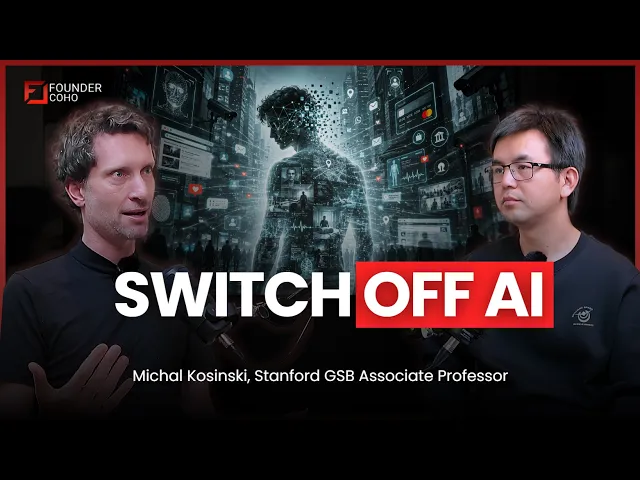
Professor Kosinski explains why modern privacy is becoming an illusion. He breaks down how tech platforms profit from user data, why anonymity is disappearing, and why regulation often falls behind the speed of technology.

|
Stanford Professor | Frontier AI Evaluation, AI and Human Psychology, Psychometrics I Public Speaker
What happens when our digital traces reveal more about us than the people closest to us? And what happens when AI gives anyone the power to exploit that knowledge instantly? In this conversation, Professor Kosinski explains why modern privacy is becoming an illusion. He breaks down how tech platforms profit from user data, why anonymity is disappearing, and why regulation often falls behind the speed of technology. He also warns that Large Language Models already have psychological profiling abilities built in, making manipulation easier, more scalable, and harder for even AI creators to fully control.
References
Prof. Michal Kosinski's Linkedin – https://www.linkedin.com/in/kosinskimichal/
Prof. Michal Kosinski's Website - https://www.michalkosinski.com/
Jing Conan Wang (Host) – https://www.linkedin.com/in/jingconan/
FounderCoHo – https://www.linkedin.com/company/foundercoho
Timestamp
00:00 - Highlights & Intro
02:33 - Journey from Mathematics to Psychology
09:02 - Interdisciplinary Innovation and Research Philosophy
12:06 - Predicting Psychological Profiles from Digital Footprints
26:43 - The Cambridge Analytica Scandal and Data Harvesting
36:54 - Big Tech Incentives and Advertising Platforms
50:57 - The Illusion and Paradox of Data Privacy
1:01:37 - The Threats of Generative AI and LLMs
1:11:06 - The Conflict Between Science and Activism
1:20:19 - Advice to Younger Self
1:21:05 - Outro
Full Transcript
Privacy is gone, there's no privacy. And the consequences of this is identity theft. It's blackmail. It's manipulation. Those privacy issues, they really translate in very often life and death situations. So what should we do as a society?
Well, I think good regulation, like a building code, should try to protect us from privacy as much as possible. Also, let's not forget that privacy is very often a kind of a crude solution for much deeper societal problems. So you were the first press article warning against Cambridge Analytica, right?
Michal Kosinski is a Stanford GSB professor who pioneered predicting psychological traits from digital footprints. With over 80 peer-reviewed papers and more than 28,000 citations, he ranks among the Top 1% of Highly Cited Researchers, and his work has been featured on the cover of The Economist. He regularly advises government agencies and leading companies on AI's ethical and practical implications, and has testified before the FTC and EU Parliament. His research exposed the very privacy risks Cambridge Analytica would later exploit — he sounded the alarm years before the scandal broke, and his work led to Facebook's record $5 billion FTC fine.
So what happened is that Cambridge Analytica hired a professor working at the same department as I did. I started essentially hearing through the grapevine that they're doing fairly unethical things.
they were essentially collecting data from people that didn't even know that the data is being collected. Now we have AI. AI is wonderful and I'm using generative models a lot, both for work and for becoming a better scientist and in training and in information seeking. And yet, if you ask me, I would say, well, we should switch it off today. It’s extremely dangerous
I'm Jing. As a founder myself, I learned something about this journey. The best way to build a startup is not to read a manual, but to learn from your fellow founder stories. That is the reason why we compile those unfiltered raw founder stories and share with you in this channel. Before we dive in, I have a small favor to ask from you. If you find value in conversations in this channel, please hit subscribe button and turn on notifications. It helps us keep the mission going. And this will be the only favor I will ever ask of you.
Really excited to have you, Professor Michal, and you have fantastic journeys and you originally was studying from Cambridge So you started with mathematics and then switched to psychology and ended up reshaping privacy law. How did you end up with your journey?
Well, I think I'm naturally attracted to mathematics. It may sound a bit nerdy, it's just, it's kind of entertaining actually for me. But then when I started studying mathematics, kind of couldn't really see the immediate relevance of the science to my life or to my future. And of course it was just so short-sighted. Like now today, I could really easily tell you how useful mathematics finishing this degree for me but at that time.
I was of a bit frustrated. I'm kind studying all those concepts and you know matrix multiplication and multi-dimensional spaces that you know as like an 18 year old kid you just don't really know what the hell you're going to do with it in your life. And then I actually went on a date and the date started with a lecture.
My date said, hey let's, know, before we go out for dinner, let's just go, you'll sit with me through this lecture. And was social psychology 101. And it just blew my mind. Suddenly, you're like sitting through content that it's immediately applicable. Like I was sitting there thinking like, wow, I'm going to change this in my life. And at the time I was running a startup, I was thinking like, wow, okay, now I think I know how to better manage the relationship with my clients. And so essentially it was just 90 minutes of being constantly surprised and kind of happy and just wow, just take this knowledge and apply it in practice and it was just so contrasting with maths where I studied things that I couldn't really figure out at that time. So I just decided to switch and just a few months later I was studying psychology and that's what I did the degree I graduated with. But then my PhD was in between computer science and psychology so I kind of retained my interest in mathematics and it's kind of rare actually still too rare among social science students those are usually folks coming from humanities so kind of equations and measurements and functions are not really kind of the most exciting things for most social science students so it was always kind of whenever it was a group project or whenever someone needed to compute something or collect some data, usually it was me, so was kind of always on the more quantitative side of psychology. So then when I started my grad school, I kind of naturally started hanging out at the computer science department and ultimately actually was co-supervised by folks at the computer science and psychology. So I kind of worked on the crossroads between those two disciplines. And I must say it wasn't always easy. Because from the point of view of computer scientists, I was not really one of them.
I was just this trained social science person talking about things that they engineers didn't really find obviously interesting and vice versa I would just talk about data and training models to folks in the psychology department who are kind of way more useful, used to, familiar with conducting small scale experiments with, you know, people coming to the lab and there being some kind of complex or not so complex experimental manipulation. And suddenly there's this guy who says like, Hey, let's, you know, just build this massive regression model based on this huge data sets that we can obtain or collect somewhere in the digital space. So this was also kind of not immediately obvious to a typical psychology professor how the hell this has any relevance to their science. I was kind of in this in between and
Now from the perspective of time, I actually see that it's easier this way. Because, know, if you are a hardcore psychologist, you usually study things that other hardcore psychologists have been studying for decades. And now if you're young and you don't have experience, you don't have access to funds, you're still learning. It's kind of difficult to compete with your supervisor that has been there for 50 years and has millions of dollars in the research fund. But if you're in between disciplines, very often can essentially find research niches, you can find questions that no one has really ever seriously looked at before, which has some challenges. You don't often know how to attack the question. You cannot really just say, I know how to deal with this problem because there's so many other people that dealt with this problem before, but on the other hand it's like this kind of new environment that you're exploring that oftentimes has not been really explored much.
Such a great point of innovations, which it often comes in the interdisciplinary areas. I had actually very similar experience as you do. And I'm curious your experience there as well is I was in the system engineering department, but I was the one who knows computer the best. So they always treated me the computer person when when the system department talk. But when I go to the computer science department, I'm the system person over there. So it always feels a little bit of misfit in every environment, but end up very well because these two fields eventually connects and becomes one field. The research area was doing a measuring, reinforcement learning was mostly only down in system back then. And back in computer science doesn't really put a lot of emphasis on this field, but 10 years later or 15 years later, the merge comes together and it just like feels interesting. Do you have similar feelings?
So I think actually we both probably were lucky in a way that this kind of being a weird misfit maybe in both places, in both disciplines that we came from or kind of being a bit unusual and unconventional actually translated into you know, some form of success. But of course, it doesn't mean that it's always like this, right? There's many kind of unconventional, unconventional, weird ideas that are unconventional and weird and do not really go anywhere or are really, you know, many decades ahead of their time. And by the way, I think it works the same for startups, right? If you're working on a problem or many other people are working on and it has been known for a long time, well, it may be that you have a solid business, but the likelihood that you will kind of explode into a new unicorn is probably somewhat more limited. Whereas folks that work in areas and problems that have not really been explored much before, you know, many of them fail, it's going in the wrong direction. But some will have this tremendous success.
Because in the research we often talk about what is your idea? Idea is very very important for any researcher And then when you have an idea and the innovative idea other people have not thought about then the next part of executions and getting done of course is also very very important, but it all comes from ideas
But even here there's a trade-off, meaning if you have an idea that you think it's very good and you have it too early, I mean it's good to believe that your idea is good. But I would also say, sometimes maybe you should have kind of a rough idea. That you are just interested in going in a given direction and be kind of open-minded to changing it. I see with students, when you have a PhD student that applies to program, and they come with a very well-formed research idea, and they're really adamant that this is the thing they're going to be researching. Look, I worry. that if they kind of came with a tentative idea and were open-minded to learning, exploring, trying different other things, maybe failing a few times, probably, you know, that's the whole idea of your studies or of running your startup. You know, just explore the space and hopefully after a few months or a few years of exploring, your idea will become even better. So I think we should have, you know, ideas that are, what do they say, ideas that you strongly, very firm ideas that are weakly held, right?
Yeah and back to your journey I feel a trend that you have is like you actually are exploring different fields and identify the direction you want and have you find the processes but what made you actually enter into the more citing the closer the privacy shaping the privacy law.
I would love to say that there was a plan, but as we already did before, I was just kind of exploring a particular direction and then was surprised to see what I found there. Many things I found actually absolutely surprised me and I was definitely not planning to find those. So I started my graduate studies by working on designing better questioners, personality questioners, IQ tests. And the subfield of psychology is called psychometrics and the idea is that you want to use mathematics to try to extract as much information as possible from people's responses to questionnaires and you try to design questionnaires that are as great as possible and as accurate as possible at extracting useful, psychologically useful, diagrams. diagnostic information. It's used not only in psychology, when you have a well-designed test at school. it's supposed to be measuring your knowledge or your skills that you were supposed to learn. You have psychiatric questionnaires that are supposed to diagnose potential psychiatric issues and so on. So it's actually very practically applicable field when you hire people, they very often go through detailed and they should go through detailed assessment process. And then while working on those questionnaires, I developed quite a few in my first years, I realized that we're asking questions such as, hey, do you enjoy poetry? That's one of the questions measuring how open-minded people are.
Or do you keep a calendar, which by the way many young people don't, but it's an item measuring how well organized you are. And I realized that instead of asking those questions, we could really record this data in a much better and faster way. At that time, social media was exploding, so people were really more... It was 2008 and...
When was that?
It was 2008 and 2009. So we were migrating to those online spaces and as they were migrating there, they were leaving behind digital footprints. They would like something on Facebook or they write a status update describing the day of the life or the opinion or preference. And my thought was, hey, know, instead of asking people questions, we can just look at those digital footprints and conduct this measurement, try to extract information, useful information about people's preferences, hopes, their strengths and weaknesses in essentially much faster, cheaper, better way. Of course this would be done in a psychological context with a person's consent. A person comes to an app or a platform and says, okay, I want to share this information with you and then please tell me things about me that I may not know. For example, giving my personality profile or tell me what careers I would find most meaningful and entertaining. So that's what we started doing and we're just very surprised to find that those seemingly trivial digital footprints such as Facebook likes, people like very trivial things on Facebook, a video of a funny goat or some restaurants that they visited in the recent week. And we found that if you take those digital footprints and use very simple machine learning methods, you can predict people's scores on those conventional, carefully designed psychometric questionnaires, such as personality questionnaires, with an extremely high accuracy, while circumventing many of the problems of traditional questionnaires. Traditional questionnaires are expensive.
You very often have to pay royalties, meaning if you're hiring your CEO or your engineer, you can afford paying a few hundred dollars for psychological assessment. But people who really would greatly benefit from understanding the psychological profile better. People who just graduated or people who are not privileged enough to get education at all, but maybe wondering whether they should become a salesperson or pursue a different career. Hear this feedback could really change a lot. know, if you're privileged and educated enough to be a software engineer, you will do fine, regardless of whether we can, you know, hire a consultant who studies your personality and gives you even better, you know, career advice. It's useful, it's great, but you're already thriving. Now somebody who is struggling in life, they're poor, underprivileged. Hear, a cheap and fast psychological measurement could really make a huge difference. Also, it's great for misrepresentation. Many people kind of lie even to themselves about what their real preferences are. You know someone may have been raised in a family where everybody is telling them look being a medical doctor is what you should do and being an artist is like just for losers and a person like this coming to a psychological assessment would answer those questionnaires. in ways that suggest that they actually want to be a medical doctor because they were socialized, they raised, they were kind of brainwashed to believe that this is the only possible career. Whereas if you actually look at their behavior, look at the things they're interested in, look at the books they read, suddenly you may realize, wow, this person actually probably would enjoy much more and thrive much more being an artist. So due to all of those benefits, we thought, wow, that's just an amazing technology where people now can just come to this app and for free or for like a very low, it's very scalable this technology, they can essentially learn more about themselves. But as we're working on developing those measurement tools and writing papers reporting on their accuracy, we realized that the same technology can be used of course to abuse people.
anybody at that time actually people's Facebook likes were public so whoever had a Facebook account by default all of the likes were just visible to anybody else so we even without a Facebook account you could just go and say facebook.com user ID equals and just put you know any user ID you want like just come up with a big number it would show you a profile picture name sometimes email address and all of the likes of the person now Facebook likes are extremely revealing about people's lives and preferences even without using any algorithms. People like their favorite politicians, people like the church that they attend. People may like statements that are really revealing about their personal lives in an obvious way without using any machine learning. But our studies were showing that you can take those Facebook likes that on the surface do not reveal anything like, I like this picture of a funny cat or a funny goat and then process it using machine learning algorithms and those algorithms would return information about your personality, intelligence, political views, religiosity, your sexual preference. It would reveal whether you take substances or not. It would reveal whether your parents were divorced or not. So just an extremely intrusive type of assessment. So on one hand you have this technology that people can use to really improve their lives.
I didn't mention it before, but you could use it to diagnose very early certain psychological disorders and problems. if I may not be, you know, I may not know or may have no money to go to, you know... therapist, but here I could have an app that gives me a very accurate prediction for free. So on one hand, there's those huge benefits, but on the other hand, anybody with an internet connection, not to mention Facebook itself, who actually owns this data, now can have very detailed psychodemographic intimate profiles of virtually anybody on the internet. So we started essentially writing and warning people against those huge privacy risks kind of built in into the system, right? There's just no, in some ways there's no way around it. If you want Google search engine to work well, it needs to record. people's clicks because it shows me search results and it needs to record what website I chose so the page rank can work so you can give better search results to the next person that comes to use this product. So it's good, it's kind of, one could think of sharing data in the same way we think about taxes. No one really loves paying taxes, but our taxes are beneficial to others, to community, to society. The same with data. I don't really particularly want to share my Google search or geolocation data, but if I do, then other people can have better products and services. And of course, they're also sharing their data, so I have better products and services.
Your Google Maps works based on an idea that we all share our location So it knows where the traffic is it knows how you can get from point a to b It knows when the road is closed because we will kind of stop using it. Yeah, so this beautiful cheap free Technology that saves time saves fuel so saves environment It allows people to go to places. They've never been before you know today You can immediately start your life in a new town that you don't know at all But on the other hand, because we share by default, by definition, we have to share this data, suddenly we exposing ourselves not only to Google knowing where we are, but also Google knowing who we are at the level that you know before, know, even your spouse may not know you as well as a big tech platform now knows you just by looking at your digital foot.
When you were initially doing this research and you realize first is how powerful this technology is, I think you mentioned about it could be psychology. It's like also there's a lot of personalization technology. in the category we talk about, and it can do some benefits, but also time has some consequences. At what point of time you realize that, should, this is something we should take very seriously.
Very early. So actually the first paper that we ever published on it was 2013. It became extremely popular. So the first paper was already framed not as hey guys, there's this new technology. By the way, it's not just us. Facebook patented predicting personality from likes in I think 2011 or 2012. So very early as well.
Yeah. Yeah. By the way, when I was working at Google, was actually working ads for three years, working on personalization, predicting people's persona. Here you go. And then YouTube will also do that job.
Exactly. Most of the big tech companies were doing it at the time. And all of them were thinking, wow, this is a great technology. We can show people better ads and we can make them more engaged with the content. everybody was focusing on the app side. And frankly, when I first kind of stumbled upon it, when we first found, wow, those predictions are really accurate. I also, my initial thought was, wow, this is great. You know, we can bring all of those benefits to so many millions of people. But then, know, days, weeks, months after we realized all the risks here are tremendous. So our first ever publication was framed as folks its really dangerous and we have to do something about it. The reaction was guys, it's a joke. What are you talking about? You know, really liking a funny goat on the Internet is really so revealing. And also people at that time still were like, what is what is Facebook even? Who cares? It's like something for the high school kids, for college kids, we don't care. Regulators, policymakers, they were just not using this technology at the time, so they didn't appreciate how potentially important and pervasive it was. Facebook dismisses those finding entirely. There's actually it's kind of upsetting because I do not see many people who are privacy researchers like me or kind of academic researchers like me kind of see big tech as those evil companies that you know, we have to curb and control. I absolutely don't see it this way. Those are companies that produce wonderful technologies and doing the best they can to well make their living but also bring those new technologies to us and while I'm focusing on the risks of those technologies, as you said, same technology that can be very dangerous can be also very useful and positive and it all depends on how we use it and how we regulate it. But the initial reaction of Facebook was to this paper was like, this is absolutely not true. You cannot predict anything from people's Facebook likes, said Facebook. While just a year earlier, they essentially patented the very technology that we were now auditing, essentially showing, hey, this technology that Facebook patented, know, it's really, predictive power is extremely high, to which Facebook was immediately, well, maybe we have patented it, but it completely doesn't work. By the way, the same story with Cambridge Analytica. So our findings were kind of not really taken seriously.
So you were the first behind the first press article warning against Cambridge Analytica, right?
So what happened is that Cambridge Analytica hired a professor working at the same department as I did. And the professor, Alexander Kogan, actually came to me and suggested that we collaborate on this project. And by the way, at that time, it was absolutely not clear. I don't think it was even clear to Alexander Kogan what the project was about. I think that... you know, the whole political marketing and working for the, for Ted Cruz at the beginning those things came later. But in any case, I wanted to stay in academia. I wanted to go to take my postdoc position at Stanford and Alexander was planning to start a startup to deal with this project. So I didn't go anywhere. didn't, I didn't join. And moreover, very quickly, I was kind of in the department and he was recruiting some of the students to work for him. And I started essentially hearing through the grapevine that they're doing fairly unethical things. They are using university logo to collect data that later ended up as essentially Cambridge Analytica models. they were essentially collecting data from people that didn't even know that the data is being collected. At that time, for example, you could recruit a Facebook user to join your study and then you can ask this user to give you access to their own accounts, but also account of all of the friends.
Which essentially
Both their own account and also account of their friends?
Facebook was thriving on it because nobody kind of remembers it today, Facebook's business model was let's essentially farm users. They created a wonderful social media platform. Everybody wanted to be on it, but then there was no content. People were posting pictures and so on, but there's just only so much time that you will spend watching pictures from a recent party. So Facebook wanted to have more content. So Facebook figured out the following model. I'm not making it up, you can just read the documents from the time and how they were pitching to the developers. said, look, if you want to develop a game, Zynga was one of the big companies at the time, if you want to develop a game or produce some interesting content, you can come and show it to our users on Facebook. We, Facebook, will not pay you for this, but we will give you data of the users that are using your product. So when you were installing Farmville or Gang Wars or whatever app you were installing on Facebook, the deal was a user can use your app if they share the data And because Facebook wanted to really encourage as many app developers as possible, so Facebook said not only users will be able to share their own data with you, but they will also be able to share all of the data that they can see on Facebook. So essentially whatever I can see, I can go to my friends profile and see their picture, their political orientation, their likes. If I can see it, I can also share it with the app that I'm joining.
And by the way, after we started writing articles about this, Facebook changed this policy. I was one of the scholars who was pushing Facebook to essentially close this privacy threat.
Great job. I think no one wants to live in a world where their information is shared to random app developers.
That's true though, actually let us go back to this in a second because I have thoughts about this. So what was happening is that I noticed that they're collecting this data in ways that was not ethical in the context of the university. So we wrote a letter to the head of our department saying look this is just not fine what this professor is doing and again at that time they were just what are you talking about they're just collecting some data on this social network for kids you know who cares essentially the response was no one was taking it seriously and of course once Cambridge Analytica so essentially what he was creating he was creating the foundation the algorithmic foundation for what Cambridge Analytica was doing later and once it exploded everybody was like hey dude you know you were studying it for so many years, why didn't you tell us that this is so potentially dangerous? And I'm like, guys, go and read my papers, go and read my interviews. You know, I've been talking about it for years, trying to warn you that there's this huge privacy threat. And there was some feedback. So, for example, after our original paper was published, saying that those likes have this huge predictive power, Facebook came out officially and made a press statement saying, this is all not true. You cannot really predict anything from Facebook. forget about our patents for it. But then two or three weeks later, they actually switched off public access to Facebook likes. So there was after some time, you could only, you couldn't just type in a random user ID and get all of their Facebook like so there was some kind of movement and adjustment but no one really took it seriously until Cambridge Analytica scandal which is also interesting because they started saying hey guys you know they would approach politicians go and present at conferences and they would say look we have this wonderful ways of manipulating voters we just look them up on Facebook we estimate their personality then we target them with ads they're really you know going to be persuasive to a person with this personality type and you know just we will help you to to be elected or or discourage people from going to vote or whatever other thing they were promoting and once the thing exploded while Hillary lost and suddenly everybody well
What I think actually happened is that as Hillary lost to such a super, to candidate that was just so dismissed and treated as like, hey, he will never win. Hillary is going to be such a, such a, you know, success here. And then she lost. And let's not forget that they kind of stole this.
this nomination from Bernie Sanders, that the Democratic Party was kind of really not playing a straight game. Many of the Democratic voters were really upset because they wanted to vote for Bernie and they felt like it was essentially stolen from them. But not only Bernie was kind of stolen from them, but then this candidate that was selected instead, Hillary Clinton, who is, you know, extremely competent, but maybe doesn't really have this warmth and ease of communication that Bernie had.
So now she lost they needed essentially the escape goat. So they said, look, we lost because he hired this company that was doing this unethical thing. And by the way, I completely agree that the company was doing a completely unethical thing. I've been writing articles about it for such a long time.
But also let's not forget that you don't win an election or lose an election just because of one company. Let's not forget that Hillary was also using similar companies, not as unethical and not as of crude companies, but still she was also targeting people on Facebook and trying to tailor messages to be as persuasive as possible to a particular person. And in fact, Democrats started doing this way before the Republicans, simply because on the internet, there's more democratic voters. So when Obama, four years earlier, was essentially doing like a simpler and more crude version of what Cambridge Analytica did later. By the way, presumably without also doing, you know, an ethical data collection. But you can collect data, by the way, you can collect similar data that Cambridge Analytica did, fully ethically, it would just cost you more money. So Cambridge Analytica just took some shortcuts and broke the law to get this data more quickly. But what's kind of really not discussed is that you could achieve the same outcome legally buying data from Facebook and Google, it would just cost you more.
When the technology develops and evolves to a point where this technology is possible, then people gonna use it. So the problem here, like you mentioned, is both Democratic Party and the Republican Party are using this. The problem is what is the right way to use it? What is the way to use it that is ethical and also fair? And to your question..
And we shouldn't be letting big tech companies or marketing companies or politicians make this decision. We should have regulators. We as a society should make sure that there is regulation in place.
One point that you mentioned on a completed grade is that it cannot completely rely on the markets to determine itself. Which one data point I can share you which is very aligned with what mentioned about I was working in Google and about also doing personalizations. But there was certain policy that bind us, we couldn't use any social data in order to Google on the product data, it's doing that. And as a result of that, the prediction accuracy of that we did was way much worse than our kind of part of Facebook.
What's kind of interesting is that it's another issue here, aspect of online marketing that people tend to get wrong. While it is, if I'm a politician, it is in my interest to target ads as well as possible. If you are a marketing agency, it's in your interest to target ads as well as possible. But if you have a platform, like if you're Facebook, you do not want to target ads as well as possible. People was like, what are you talking about? Well, Facebook organizes an auction, auction for eyeballs. Advertisers bid real time for eyes of the people that are using Facebook. Now organizers of auctions thrive on friction. So if I do not know who is going to buy my product? Then I have to ask show my ad to as many people as possible because I don't know who is going to buy my product and then I'm competing for those eyeballs of as many people as possible with all of the other producers that also don't know who is going to buy their product.
So the less the advertisers know about the targets, the more money they have to spend on Facebook to show their stupid ads to essentially, or not a stupid ad, but an ad to as many people as possible. Now, Facebook knows tons about people and it could leverage it way more effectively. I know for a fact, I worked on those algorithms. I consult sometimes in both governments but also corporations about how to do targeting more ethically. And they just don't try to match people with products in the best possible way because this would greatly reduce their profits. By the way, the same applies to dating websites. Dating websites very often they boast, we have this magical algorithm that matches you with the best person for you. How do they find best. If you are a dating website, you define the best person for you as a person that you really want to go on a date for, with, then you go on a date and then after three days you're back on the platform and keep paying the subscription. If they actually found a spouse for you that you get married with and you like live happily ever after, they just lost two customers. So no, if you're running a dating website, you definitely don't want people to find the true love. That's not your business.
Great point about for the motivation for all these big companies is all they call it North Star of their own company is actually the profits of their shareholders. That's actually the overall money they can make. Oftentimes, even if in the case as well, they want to predict the users more accurately, those are just proxy of their final north star. which is making more profits for shareholders. That's how the big corporations work.
If you're selling something, I don't want you to find the customer. I want you to keep looking for the customer because then you'll pay me most money.
Exactly. And another point related to is that the best way to change the behavior of big corporations is not to purely say don't do this, but to align the incentives so that it is more profitable to do right things.
Well, actually, interestingly, the fact that it's actually not in Facebook interest to target people too accurately, with ads that actually maybe there's a positive aspect to it, right? Because they're kind of less, slightly less motivated to invade your privacy than they would otherwise be. And also even here, I, you know, like I spent some time kind of ranting against how the system works. But even here, this technology has both advantages and disadvantages. when I said a few minutes ago that Facebook is farming users, that really if you think that the product of Facebook is the Facebook platform, or maybe ads that it's showing, it's absolutely not. The product of Facebook is the Facebook user. The product of Google. is the Google search engine users. Essentially the Google is saying, look, come here. You have this free thing, free social network if you have Facebook.
Everything has a cost if you are not paying
Exactly, you are the product. But people say, well, that's awful, it has to end. But wait a moment. We have still economy where you as a consumer, you're not a product, you go and pay for it and buy something. it's a great economical system when you pay the producers for your car, then you get your car and drive your car around, it's great. But that did not benefit anybody apart from you and the producer. Now, if you have a platform where person is a product, but you farm them by essentially offering them something nice and useful and powerful, something that makes them happier, better connected, better educated. you know, live longer lives, then essentially it's a win-win situation as well. And it's a win-win situation even for people who have no money. Like once you created Facebook platform, and once you started farming Americans, and then essentially selling the eyeballs of those Americans to advertisers, you know what you can do next? You can now say, hey, everybody in India, we would never have developed this platform for you. It would be too expensive. You guys don't have enough money. But you know what? Now that we developed this platform for Americans come and use it no problem at all the same with Google is just a world-changing technology that lifted many more people from poverty that probably any other technology in recent years yeah and this technology was offered for free to everybody virtually on this planet who could buy you know a cheap phone of a connection even if this person was not really worth much for Google yet
A lot of people will take a service like Google for free for granted. But imagine that if you have to pay $100 for Google search, then many people in the developing country will never be able to access these tools that will potentially allow them to learn new topics or lift them out of poverty. One of the team I worked with, team called Retargeting Ads, is the most intrusive type of ads, which basically idea is that if you go to a website and you don't know it, it have not opening anything, but there are some pixel in the website, we are putting into something. And now in the future, the ads will follow you. And this turns out to be very effective. Especially imagine how your Facebook information likes, that it will be even more effective. But Google was also doing the exact same thing.
And Microsoft and Facebook and all sorts of companies and people many times it's just the technology is a little bit intrusive. when it's used by its original publisher But very quickly it becomes just tremendously intrusive if you actually combine it with all sorts of other mildly intrusive technologies So to give you an example if you start tracking people across different platforms Then you may just reveal your email in one of those platforms then you may reveal your Social Security number, we'll do another platform. You may reveal, you know, whatever other data, your age and gender to get another platform. But then because you attract across all of those platforms, maybe even those platforms are like very ethical and they would never buy, know, never try to learn more about you. But now someone else can just buy data from those platforms that they sell always anonymous data. It's just this anonymous pixel tracker, which is going to sell you some data about this user. now it can start combining data of a user from across different platforms and while each of those pieces of data individually maybe is not really revealing about you or allowing anybody to now match this tracker anonymous tracker with a real person suddenly if you combine the data from three or four platforms it becomes you know I can I can essentially find you I know your email I know your IP address I can now track you and combine this data across platforms. And then of course, also people say, well, but you know, if companies follow the law, then just everything will be fine. And big companies do follow the law and try to do their best to follow the law, but. Like with money, where people launder illegally obtained money, with data, data laundering is even easier. The company may, you know, company may fold, go bankrupt, there's a huge database of users. It might be that CTO just carries it out on a USB stick and then sells it somewhere online. Illegal. But they will sell it under a different name. They would say they collected this data in some legal way, which is just a lie. And suddenly this data entered this market of data and starts being combined with other data sets and so on is just essentially like with laundered money, you would just kind of lose control over it. And it's also those kind of unobvious at the beginning ways in which privacy can be invaded. Let me give you an example. Facebook will assure you that they never reveal your profile information to an advertiser. If I'm Unilever, I cannot just go to Facebook and say, you know what, there's this guy, please give me their data. Facebook will say, no, we'll never do this. Not entirely true. Actually, they share the data with some partners. And you as a user, by the way, can donate your own data to a partner on Facebook, an app on Facebook as well. But Facebook does a different thing, which is Unilever can go to Facebook and say, please show my ad to all of the single men in San Francisco that are interested in meeting other men. Look, sexual orientation never mentioned, but implied.
Now, if you see this ad... You do not know that this ad, this version of an ad was only shown to 49 to 51 single men living in San Francisco. They are gay and liberal and also were divorced two times before. You can actually specify those kind targeting, targeting rules very specifically. And Facebook says, well, the minimum population size, whatever it is, thousand or 5,000 people, right? But now the moment you click on an ad and you take to some website. This website says, well, why don't you register with us? You know, why don't you buy this product? Whatever the website says. You have never shared with this website your political orientation, your age, your sexual orientation, your address. You've never shared any of those details with the website. But because this website showed this particular version of the ad only to people that are in the subpopulation, they immediately know those traits of yours. And by the way, they will immediately record in the database along with your email or whatever other data you provided them with and very often this would be just sold next day on some data market so now your email is marked tagged with all of this extremely intimate information essentially originated from your Facebook profile
A lot of times the company will say, all these data is anonymized and I would never know your name. But one thing I often forgot about is that we don't have to identify a person just by their name. But just have a lot of attributes combined together, we can achieve the goal. For a lot of the things we talk about, whether it's doing marketing, we influence people's political opinion, they don't necessarily need to the particular identifier of the person. They just need to identify the particular tact in the group and can achieve the goal.
You are very right, but also you can just always identify, not always, but if you have three random facts about the person, if you know this person lives in San Francisco, he's 49 year old, works for big tech companies, too many people, works for, let's say even big tech company and studied at Harvard, suddenly there's not thousands of people anymore. It's just four people. And then if you also know that they use a credit card from a given company or if you also know that they actually were born in Reno, Nevada, suddenly it becomes just one person. So it turns out that if you know three, four, five facts, even random facts about a person, sometimes you know their birthday. actually people say, it's an anonymous user, but I can tell you they were born on the 8th of May of 1982. In this zip code, there may be just only one person born on this date, right? So just with having those few on the surface anonymous pieces of information, if you actually combine them, they're becoming sufficiently unique that you can then just pinpoint the person.
Now internet has been here for more than two, three decades. Do you think the problem has been solved? Or we are still a long way from that?
Well, I don't actually think the problem, some of those problems are just not solvable. Some of those problems we kind of wish that they were solvable and I certainly wish they were solvable. Problem of privacy, for example. I spend a lot of my time and many years of my career trying to identify privacy risks and then suggest ways in which we could fix them. And the longer I work on this, the more I become convinced that while we should continue the good work and try to limit people's exposure, we should also accept the fact that the internet and the digital environment just permanently deprived us of ability to stay anonymous. You may try to stop using credit cards, you may throw away your phone, remove your electronic watch, but still you're going to be walking the streets. on your face is going to be visible. Like, okay, you can wear a mask, but then, you know, sooner or later you have to take off your mask. And even if you don't have a phone, someone will take a picture of you. So you start leaving digital footprints, even if you try not to use digital devices. But first of all, it's increasingly impossible to have an acceptably easy life without those devices.
So the problem without. Yeah, it's very hard to be completely disconnected nowadays. Yeah.
The moment you're a little bit connected. It's really four, five, six digital footprints are first of all enough to identify you, but then also very often enough to discover very intimate facts about you. And now people say, well, but I'm really limiting my digital footprint. Well, you cannot fully limit it. And also what usually happens is that the more you limit your footprint, you essentially stop liking, you know, funny goat pictures and doing like trivial things on the internet, but still like really important things like banking is going to be digitalized. This data is somewhere out there and many people think, it's just, you know, okay, so I'll have some targeted advertising. Well, Cambridge Analytica, not just targeted advertising. You can change the results of elections.
So what do we do as a society?
Well, I think... I think about it a little bit like building code regulations that prevent us from suffering from too many fires. We should build houses as inflammable as possible. We should use devices in those houses that do not really start fires really easily. But let's remember that even with all those protections, every single house out there can actually suffer from fire. So let's first of all keep those hospitals and fire stations running. Let's keep educating people, okay, even if you live in the building that was built two years ago and follows the code and the fire seems to be virtually impossible, you know what? From time to time, it will still keep happening. So be cautious. I think we should essentially instead of demanding full privacy protections and hence kind of suggesting to people falsely that it's possible to give full privacy protection. Let's better say, hey, let's protect privacy as much as we can but also keep reminding people privacy is gone there's no privacy and however much
Just like the fire, we can never completely eliminate.
A motivated third party, be it your neighbor or Russian intelligence services, be able to know things about you that you do not even know. And the consequences of this is identity theft. It's blackmail. It's manipulation. It's in the context, blackmail, you know, like... to blackmail me, there's not much to be gained from it, but we have government officials out there. We have people responsible for buying, procuring products for the government or for the local community. We have diplomats and soldiers who, when travel to other countries, they can be blackmailed or recruited to work for other intelligence services simply because somebody just knows a little bit too much about them. those privacy issues, they really translate in very often life and death situations.
This is very similar to like fire, which we will live with it, we need to be vigilant about it. And you mentioned about the fire station hospitals. What do you think are the fire station hospitals for the data privacy?
Well, I think good regulation, like a building code, should try to protect us from privacy as much as possible. Good education should keep reminding people that, you know, if you write a message or an email, by the way, this by default is not just you, also the person who received an email now has access to information, so he's no longer private. So if you write your messages and emails, I think not only will be safer, also, you probably would be a better person when you write those emails if you assume by default that they are public. So whenever you're sending a message, writing an email, saving file on your hard drive, I try to live by this. I assume. I always have this mental experiment, thought experiment. Would I put this document on my website and this email and this message? And if the answer is no, maybe you should not send it. Maybe you should not save it on your hard drive. Now, interestingly, people don't realize if you type a message in many of the instant messaging apps, even if you delete it later, it's becoming part of your profile. It's going to be saved and probably specifically, it will be even more analyzed because it's something strong, something you decided. not to send. So public awareness that privacy today, sadly, is an illusion. But then also, let's not forget that privacy is very often a kind of a crude solution for much deeper societal problems. It's like a fig leaf that we cover sometimes. We cover with privacy much more serious problem.
I'm a privacy researcher, I spend a lot of time studying threats to privacy and trying to figure out ways and I believe that people have rights to privacy if they choose to do so, to keep their privacy.
Privacy is basically indications of more deeper problems in society. Since 2016, there's a lot of things happening here in the US. Do you think that the fact that the new normal privacy has been different has played a role in this.
Well, has been some privacy protection regulation that GDPR in Europe, in the US, we also in California, especially is one of the leading environments for new regulation and enforcement for privacy protection. But there's also been a technological progress. So it's it's an arms race. You get better regulation one side, you get companies, startups, hackers, trying to kind of figure out ways around it. And I'm afraid that, again, I'm saying it with sadness and lack of satisfaction, that we are losing this race.
Why do you think we are losing?
Well, because regulation will never keep up with progress and there will always be step or two behind. because there's also just some, there's not much money in protecting privacy. There's much money, there's a lot of money in invading and people's privacy. And not only that, by the way, I was talking about potential downsides of privacy. Another very underappreciated downside of privacy is that it helps us to protect vulnerable people. It helps us to, you know, offer us citizens what I believe is our right to be able to choose what information we share with others or not. And again, so it's a trade-off here. If we give folks signal that is good at protecting peer-to-peer communication, the same technology is going to be used by people that want to harm the society and harm us, right? So not only companies can earn too much money on invading privacy, but even the government, you know, on one hand, tries to protect the privacy of its citizens and its own employees, but on the other hand, the government could do its own, can do its own job better, protecting the society. you know, unfortunately today much too often the job of the government seems to be invading other countries. All of those actions of government can be performed better if the government is able to invade people's privacy. So it's actually not... It's not government is a complex, multi-determined organism that doesn't just have one, you know, one intention and one, you know, there seems to be one leader, but the system works in many different directions, very often conflicting. And this one of examples, on one hand, the government is trying to protect people's privacy. On the other hand, the government is trying to invade people's privacy. So even here, it's not really clear that our protections are. Even here we have a factor that essentially works against our privacy.
This is actually a race. There's like technologies like this evolving. There's a lot of new technology happening. A lot of the data collection happens in the internet time. And now we're also fast forward. Now we have AI. AI actually allows certain parties like anyone who has the data to actually analyze it and to create more sophisticated analysis of those data, particularly with large-language models. Recently, there was also lot of discussions about what happens when this AI technology is used in governments. What is your take about this race of technology development, particularly after we have large-language models?
AI is wonderful and I'm using generative models a lot, both for work and for becoming a better scientist and in training and in information seeking. You know, it's really changing my life and many other people's lives for much better. And it just, let me also add that like I'm not a technophobe, I think it's clear. I hope it's clear from our conversation. And I'm definitely not AI-phobe. And yet, if you ask me, I would say, well, we should switch it off today. It's extremely dangerous. It's probably the most powerful technology that we humans have ever developed and while it's just serving us in so many wonderful ways, it's just also extremely dangerous and one of the very minor ways in which it's dangerous, just the dangers are so larger than that, but a very minor way in which AI is dangerous is that it democratizes access to tools that enable people to invade others privacy. well, you can look at your neighbors Facebook likes and you can figure out a lot from them. Like they probably like a political party or a politician and so on. But there's some things that you need an algorithm for. Like if you want to estimate, you know, the probability that your neighbor is depressed or that they are extrovert or introvert or suffer from some psychological condition or that they would be susceptible to a particular marketing message. All of those things can be estimated but you need training data. So essentially you need a data scientist, need to collect data from thousands and hopefully hundreds of, not hopefully, but preferably hundreds of thousands of people, train your models and then after some work you can now deploy this model to essentially invade the privacy of your neighbor. So that's how it has been done before LLMs. Now unfortunately LLMs and this is widely missed fact that LLMs encapsulate, they contain already models allowing to predict those traits. So what you can literally, unfortunately do is you can take Facebook likes of your neighbor, copy paste them into an LLM and say, okay, what's the political orientation of this person? And by the way, LLM, well-censored LLM would say, well, I cannot tell you this, but just look out there. there's just so many festivals you can use and less censored LLM open source model or unfortunately you can very easily jailbreak a model where you essentially you know find ways of eliciting response from the model predicting personality, religiosity or whatever of the person whose likes you just collected you know circumventing the kind of the censorship rules that are there. So unfortunately we can see now people, even individuals, engaging in invading other people's privacy or finding ways of manipulating them without needing to train a model as it was necessary just a few years ago.
AI is making things more powerful. It has its pros and cons. And I would love to learn more about your journey on the other part. But before going that, I actually would love to get your advice as well. Now that AI is here, like what are the one thing every one of us should do to ensure we have a bright future?
We're focusing on privacy because if you ask me just in general, would say that's all and vote for switching off AI, not because this technology is not extremely beneficial. It is extremely beneficial, but it's also extremely dangerous and it's progressing and developing at the breakneck speed that it is impossible to understand. It's impossible to understand what those models are capable of, including people who design those models. I'm taking it back. Models of the past were designed. Generative AI is not designed by engineers. It's been trained. Even the training, the word training suggests that engineers have some influence over where the training goes. When a coach trains you how to play tennis, they explain to you how to play tennis and then they supervise you as you're gaining experience. Now, engineers training those models is engineers set up a petri dish for evolution. of the model. And then they let the model evolve just by kind of scoring its performance. And the model achieves its performance and this performance could be, what's kind of measured is how great the model is at recreating language of humans or how great it is at keeping a user engaged or user buying stuff or user voting for a given politician, whatever the training objective is. But the ways, the strategies, the tactics that model discovers in this evolutionary-like training to achieve this goal, this is absolutely outside of the control of those engineers.
In the Silicon Valley everyone's something vibe coding right you can use those models to creating website but before the vibe coding was a thing the whole model was creating a very vibe the way yes that's putting some data here let's just train it and then something happens and if you ask the person who trained this model how exactly it works no one can tell you
And maybe they have even no way of knowing. The whole power of those models is that in the past we would explain to a model how to achieve something, so the model essentially would do what we humans would do just faster. But that's limiting because then the model can essentially just do what humans do just faster. It won't develop a new strategy that is superhuman and very different. So it's superhuman in terms of speed, but it's not superhuman in terms of new ideas or the smartness, the creativity or the quality of the strategy that it's using. But a new model... those new models, they are given a goal to achieve, and then they figure out how to achieve this goal. And in the process, they discover strategies, ways, approaches that are unknown often to humans, essentially very creative.
Do you think its already happening?
You know, if you take Alpha Go, so the first kind of popular generative model, it learned how to play Go without ever observing a human playing Go. It was just playing with itself. By self-play, not only it rediscovered many of the strategies that we used to play Go, but then it also came up with strategies we never thought about. And what's really key here that's often missed is that you may think you're training the model to generate the next word in a sentence. To say, how dangerous could that be? What's the problem with that? It's the language model. It's predicting the next word in a sentence. But what you're missing is in order to predict the next word in a sentence, you need many abilities that are extremely powerful, extremely useful and extremely dangerous. To give you an example, humans very often reason when they generate their sentences. So in order to predict the next word in a sentence originally generated by a reasoning person, it's not sufficient to just model the language, the grammar and the meaning of words. You also need to model reasoning. you actually need to reason. If you really want to be really good to anticipate what this very smart person that is reasoning now is going to say next, you really have to start develop the capability of reasoning. Now, how do those models reason? How to create a machine that reasons? We do not know how to exactly create a machine that reasons. Sorry, we do not know how this machine should work. We do not know how humans reason exactly. We have some ideas, I'm a psychologist. We don't know really that much about how humans reason. We do not really know that much about how large language models reason. We wouldn't be able to design a model like this manually, let's say. But you can use a trick. The trick, by the way, that evolution is using in biological world, which is define the goal. And if the goal requires reasoning, the machine that is evolving and trying different ways over millions and millions and millions of cycles of training, which is an evolutionary like process, and if this goal, achievement of this goal could benefit from the capacity to reason, sooner or later, reasoning may emerge.
Yeah. Thanks for sharing. I would love to also get back to your journey as a researcher and also as such a keen observers of the trend of the industry. You're starting with your research on behavioral psychology and computer science. Now, you also are deeply rooted in how the future of the society in data privacy and all technologies. Do you sometimes feel like there is a conflict between you as a researcher or a desire that you have that has more impact of the society through advocating more on topics like privacy.
I think it's an extremely difficult one and this is because first of all it's very hard to know whether your work as a scientist is going to have a purely positive impact or a negative impact on the world. And in fact if you're a scientist and you think that the job you are doing is just positive, then you're probably blind or silly or like didn't really think it through. I just cannot imagine technology or a scientific finding that is not a dual use one. Meaning, just if you are doing some scientific work, you essentially making us as a species more powerful and this power can be used and abused. even if you look, even if you study, you know, something coming, what comes to mind social justice, you're like a scholar of social justice and you study, you know, ways in which the society can be more. made more just. Guess what? There could be someone out there that would take your research on how to make the society more just and just do the exact opposite to make it less just. So even the most well-intended research can be then abused by others. You think you develop vaccines to help us fight flu? Well, by developing vaccines that help us fight flu, you're probably learning something about flu that somebody ill-intended could then flip around and you know design an artificial virus that is going to us all out. Every sword has two edges essentially so that's my first point. It's just extremely difficult so of course I personally try to spend time on research that I believe would bring most benefits and part of it is just trying to pick up issues that I feel could bring most benefit to society, but also trying to pick up issues where I can actually make meaningful contribution. It's true, by the way, that probably one of the most important things now, AI safety, but maybe the second most important one is sustainability of the environment. It's just, I don't know that much about it. So I try to focus on things that my talents, my training predispose me to work on and kind of just pick up this slack.
So very difficult to know whether your findings are going to be used for better or for worse. But you try to be, you know, I'm trying to be as responsible as possible. To give you an idea, a lot of my privacy research is aimed at warning people, hey, there's this privacy flaw, risk, threat. But of course, when you publish information about privacy threats, somebody can say, wow, it's amazing, know, there's this threat, let me just abuse this threat now and it invades people privacy. So my personal strategy here is that first I try to share my results with regulators, consumer groups, groups protecting privacy. So they essentially have advantage over potentially bad players. And in fact, I would do another thing, which is there's some privacy flaws. that cannot be that easily addressed. And here I would actually, even if I find a flaw like this, I would wait with the publication until I have evidence that there's already actors out there, corporations, governments that already discovered this flaw as well. And I start quietly start abusing it. So then what I would do is say like, guys, this is a paper. Look, this threat exists. We should do something about this. That's of course only if you cannot, let's say, notify Facebook first that they had this privacy flaw. But even there, what's frustrating is that in my work, few times I found a privacy flaw in a big tech company like Facebook. And I would send them an email saying, guys, not telling anybody because I don't want to put anybody at risk. Could you please fix this? I'm not telling it to anybody else, just to you, so we can fix this flaw. And only after you fix this flaw, know, let's maybe write an article, maybe not even, like who cares? Like, let's just leave it between us. And you would expect that we're like, hey, thanks a lot, let us fix it. And very often the reaction is like, let me send a lawyer to like try to slap you back. It's just silly. But then on top of this, the part of your question was about activism. Meaning, should scientists then try to go and, you know, try to actively use their findings to change the world? And here I'm extremely careful. So I think that as a scientist, I should be communicating my findings responsibly, but also not keep them private. Right? Like ultimately, if I, thanks to the society investing in my education and then very often investing in my research through government grants or tuitions paid to my university, if I find something, ultimately, it shouldn't be my decision what to do with those findings. This should be the decision of society, of the community of scientists, maybe of government agencies. Again, I'm not saying you found something, you found like information about how to kill entire humanity, just go and release it immediately. No, don't do it. But maybe just don't keep it just to yourself because maybe in collaboration with other scientists or governments or with policy makers you can actually neutralize the threat. If you found this threat, very likely somebody else will find it sooner or later, very often sooner rather than later. But then going back to activism, I think we have to be extremely careful because when we become activists, we bring our ideology to the table. And I think science should be as much as possible ideology free. otherwise many bad things happen when science is used for ideology. And you know, we all believe, everybody believes, I'm a good guy, you know, I'm in the good camp of good guys. But then look at all of the murderous regimes and awful ideologies. They had scientists out there, they were like all in supporting the system and guess what? They didn't think they were evil. were they are supporting the good cause. So when you're supporting the good cause, maybe you are. Or maybe you're wrong. So the bottom line is maybe stop supporting good causes. Another risk is even if you truly support a good cause, and now, you know, I heard people coming saying, well, I will use my research to fight, you know, those Democrats or those Republicans. Like, I'm sorry. If you as a scientist come out and say, well, we psychologists now are going to support Democrats against Republicans, you are just disconnecting with half of the population. How they can trust you and your science? If you were telling them I'm going to use my science to like against you essentially against your stupid candidate I may agree that candidate is stupid or may not agree But I cannot mix my science with it because then guess what will happen? People would start taking vaccines because like look at those scientific elites They all are out against me and telling me that you know, I'm stupid So guess what? Maybe they also tell me to take vaccines. I don't trust them. So now I don't trust vaccines you psychologists so much damage with the ideology of taking ideological stances when now you it's not I'm not making it up you ask an average Republican in America who historically Republicans were really into science actually the Democrats were not that into science and now an average Republican would be like I do not trust science if they tell me take vaccines I don't trust it.
I think there's a purpose of science which is about intellectual curiosity, trying to share it out to society, call it out responsibly. But there should be a distance before science for science and the society has its own cause. Yeah, really appreciate you sharing athat. So one last question I have is that you have went through the whole journey and if you go back, travel back in time and give you one advice to young version of yourself, what would be that advice?
Well, one advice that I would give myself, I think I'll tell myself that the problems of that day just don't really matter that much long term. I feel we all sometimes so crushed by whatever happens on a given day or a given moment in our lives. And then at the same time, I would ask the same person, hey, look. at what happened to you 10 years ago. Look at those problems. you know, not that big, not that big of an issue. And I think just keeping in mind that whatever you're struggling with now, 10 years from now, it's probably not going to be much of an issue. I think that would be the advice I would give to myself.
Great advice, great advice. Cool. Thank you, thank you Michal. Thanks for sharing.
Thanks for watching the full interview. Don't forget to subscribe to our YouTube Channel and turn on notifications so you never miss the next one.