Interviews
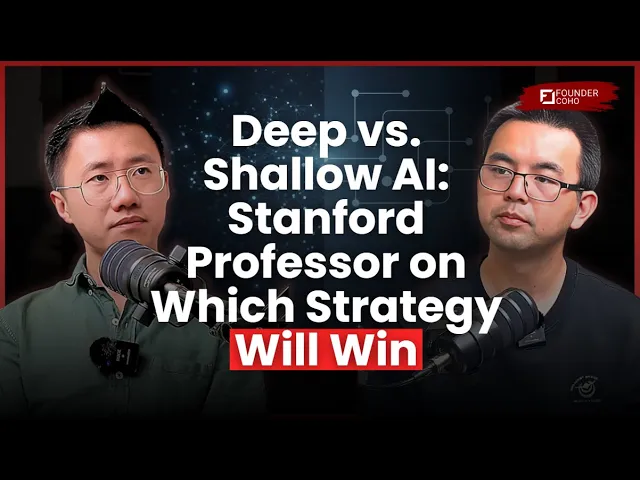
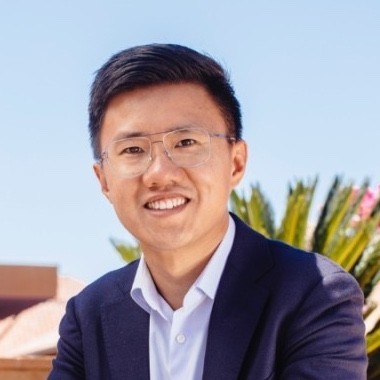
Professor Kuang Xu, Associate Professor of Operations Research at the Stanford Graduate School of Business and one of the leading minds shaping the intersection of AI, data science, and decision-making.
|
Associate Professor at Stanford GSB, Ex AI & Science Lead @Uber
Professor Kuang Xu, Associate Professor of Operations Research at the Stanford Graduate School of Business and one of the leading minds shaping the intersection of AI, data science, and decision-making. Prof Xu recently returned to Stanford after a full year at Uber, where he served as Senior Staff Scientist building next-generation AI and data products, which gave him a rare view into how ideas from research translate into large-scale systems that shape millions of real-world interactions. Beyond his work in industry, Prof Xu is a tenured researcher and award-winning scholar, recognized by the ACM SIGMETRICS Rising Star Award and the INFORMS George Nicholson Prize. He advises startups, Fortune 500’s, and global leaders on how to build strategic AI capabilities — and how to design systems that make better, more human-centered decisions.
In this conversation, Professor Xu offers a powerful new lens on the future of AI— what he calls deep versus shallow decision-making. He explains that intelligence isn’t just about bigger models — it’s about how deeply they can act through structured reasoning. Some systems think deeply and execute complex goals end-to-end, while others think shallowly, guiding each decision step by step with human oversight. Professor Xu argues that both forms will shape the next decade of AI — the deep models driving creativity, and the structured, “shallow” ones powering reliability and real-world scale. He also explores the rise of agentic systems: AI that can use tools, collaborate, and automate work at every level — unlocking industries from gaming to healthcare to personalized design.
References
Prof. Kuang Xu – https://www.linkedin.com/in/kuangxu/
Prof. Kuang Xu's X account - https://x.com/ProfKuangXu
Jing Conan Wang (Host) – https://www.linkedin.com/in/jingconan/
FounderCoHo – https://www.linkedin.com/company/foundercoho/
Timestamp
00:00 Highlights
01:30 Introduction and Interview Focus
03:49 Deep vs Shallow AI decision-making
10:45 Agentic systems and the super Turing test
12:34 Gaming industry transformation
17:11 Making luxury accessible through AI
19:34 Student journey and electrical engineering
23:43 Discovering operations research
26:24 Decision-making under uncertainty
29:11 Glucose tracking and real-time decisions
32:41 The role of feeling in decisions
36:23 AI and the physical world interface
38:27 First-person experience in product building
42:24 Startup learning culture
44:31 Outro
Full Transcript
There should be a test called the super Turing test. Can you tell it's a human or it's something better than human? Professor Kuang Xu, Associate Professor of Operations Research at Stanford GSB, believes we're asking the wrong question about AI. The most interesting thing is often somewhere in between. You know something, but not a lot. It's uncertainty. That area still remains my core focus: how would you allocate resources with information that might be limited? The real measurement, the reward function in reinforcement learning, is often the feeling. It's probably only the feeling. But his own research revealed an unexpected truth about AI and human decision-making. I don't know why this glucose thing hit me so deeply. That's one of the examples where your decision immediately impacts a data collection process which you see in real time. The shallow versus deep use of AI, I'm not quite decided on what is the best thing right now. The particular task is not that complicated. You don't need to do a PhD research on all sorts of crazy things. You just want to get it done reliably and well. Now he's imagining a future most of us haven't dared to dream. I would love to see agentic stuff, super intelligence, which is essentially just allowing us to dream about things that wasn't even possible with human. Maybe it was possible, but way too expensive to do. What if every single rare disease has a drug? Take something that only 0.1% of the world has access to today and say, now 100% of the world will have access to. It's insane. It's completely crazy.
Today, we're joined by Professor Kuang Xu, Associate Professor of Operations Research at the Stanford Graduate School of Business and one of the leading minds shaping the intersection of AI, data science, and decision-making. Prof Xu recently returned to Stanford after a full year at Uber, where he served as Senior Staff Scientist building next-generation AI and data products, which gave him a rare view into how ideas from research translate into large-scale systems that shape millions of real-world interactions. Beyond his work in industry, Prof Xu is a tenured researcher and award-winning scholar, recognized by the ACM SIGMETRICS Rising Star Award and the INFORMS George Nicholson Prize. He advises startups, Fortune 500s, and global leaders on how to build strategic AI capabilities and how to design systems that make better, more human-centered decisions.
In this conversation, Professor Xu offers a powerful new lens on the future of AI: what he calls deep versus shallow decision-making. He explains that intelligence isn't just about bigger models, it's about how deeply they can act through structured reasoning. Some systems think deeply and execute complex goals end-to-end, while others think shallowly, guiding each decision step by step with human oversight. Professor Xu argues that both forms will shape the next decade of AI: the deep models driving creativity, and the structured, shallow ones powering reliability and real-world scale. He also explores the rise of agentic systems: AI that can use tools, collaborate, and automate work at every level, unlocking industries from gaming to healthcare to personalized design. Let's begin.
Hi Professor Xu, welcome to FounderCoHo.
Thank you.
Do you think that the large language models that currently is very hot here will fundamentally change the field?
Absolutely. For sure.
And how would you imagine that the change will look like?
I'm not working in a company that is kind of like developing these core, core, core, ChatGPT style things, but I'm more speaking on behalf of a consumer, right, of this being applied. At Uber, we have a lot of very exciting AI initiatives that I'm part of, but mostly, obviously, it's for mobility, for delivery, and use for that. So at the high level, I think there are two things, maybe more than two things, but I'll start with two that I find very interesting. So the first is the question of the depth of penetration of the AI model itself. Let me explain what that means. I call the model deep if by a simple prompt, it will execute a very deep sequence of actions. Let's say you say, hey, book me a ticket to blah. If this model, which I'm sure currently we're already able to do that in some of these reasoning models that goes around like, where are you trying to go? Is there an airport? Where's the airport? Which airline API should I call? But at the end, it's basically a 10, 20 step until at the end you get a ticket. That's very, very deep. This is called a kind deep thinking. But there's another kind of penetration that's a more shallow penetration, which is maybe you have a question. You actually guide, you have your own decision process. You're like, oh, let's pull this data, organize it, analyze it, recommend to the user and do something. And in every step of the way, you use AI to do some more local tasks. Like, hey, like pull this data for me and organize into JSON. Search this to me and give me the top two choices or something like that. And then you chuck them into these kind of like interleaved structure processes. Right now I find both are fascinating, right? The first one is obviously what people think of as super intelligence is like you just say something that AI does it for you. If that's true, I mean, great for the company that have the capability. Then I mean, that's actually quite amazing. What I'm also very interesting is the second category, like sure, by definition, whatever you cannot do with just a single prompt, you probably want some structure around it to allow authentication permission to access certain data set, or maybe you have business criteria that you're not currently building in explicitly right into the prompt. So you need to guide it. So as we build the second kind of, which I call it sort of a deep decision-making, but shallow AI, so to speak, you start to wonder, huh, like, you know, is AI currently at a stage of even supporting that use case? The first use case is obviously much more expensive. You're talking about sort of like the Gemini deep research and stuff like that, right? Even the second use case, you realize it's already, it's already amazing. It's already way beyond what you would do classically. The very obvious case, let's say I have a decision making process in which I need to know, I don't know, some kind of structured weather data for a city. What would you do now? I mean, you will have to spend time having a vendor, making sure their API is coming the right way with a JSON, exactly the right label. And one day if they change the name from capital L to lowercase L, you have to recode the whole thing to make sure that thing is not error. Now you just take whatever you want to say, hey, the output should look like this. Give me that. Right. And that to me is just, it's mind-blowingly convenient. Now is it computation efficient? No, it's not. It's much more expensive to do that and to just actually have the right format. But how powerful it is, you don't even care. AI will figure it out. They will tabulate it. And that kind of use case sounds mundane. It's all sure. Yeah. All it does just take an HTML and put it into JSON. What's the big deal? That's the lubricant of the data science technology, right? So now suddenly your AI with a click of a finger can do everything, can ingest any kind of data. And I don't know the latest Claus model, but suppose this is actually right now it's pretty cheap to do with like Gemini Flash or something.
Yeah, you mentioned about a very interesting concept which is like deep decision making, shallow AI. Can you elaborate more about that concept?
The depth of the shallow, both are deep in the decision making process. Actually, let's just use the ticket booking as an example, right? What would you do to book a ticket, typically? Well, you probably first decide where to go. Let's say you already decided that. Okay, then you might want to figure out when to go that is cheap, right? It's convenient for you. Which airlines fly there? What tickets are available for each airline? How much they cost? And do they have leg room, blah, blah. Then you go through a payment and then a confirmation email. So this may be 10 steps, let's say. My question is simply that in that 10 steps, are you doing the, is there a structural code that executes each steps? So in the way, you think like statistically, it's kind of like a regularization. If you have code that executes every step, that regularizes what kind of input and output can come in and out. And therefore, if the code that does each step is structural or coded by humans, then AI only enters as some kind of auxiliary input to each step. So for example, maybe AI will tell you the weather of that day, or AI will tell you these vendors have these tickets that day, but still you are doing that whole thing yourself. Versus the deep version, so I call this a shallow version because AI is sort of entering a shallow way. AI just produce your price, give you a recommendation, but it doesn't really do the whole thing. The deep version is where you say I want to go somewhere and AI figures it out that there are 10 steps. Figures out which step to take after one step. Figures out the data every step. It's the whole thing is AI calling. Maybe they're not fundamentally different, but in my mind that is a deep sort of like a deep AI use case. Right now I'm not quite decided on what is the best thing right now. Personally, I feel a lot of things you still need that shallow steps. Why? Because first of all, it's cheaper. It's much, much faster. And second is like the particular task, for example, buy me a ticket to go somewhere, is not that complicated. You don't need to do a PhD research on all sorts of crazy things. You just want to get it done reliably and well. And using a deep AI might risk you having some weird hallucination or just taste a lot. Hey, but in the future, I don't know how the industry is going to play out. Next year is everything going to be deep AI with no human coding at all involved? Or you will see a bifurcation, right? Like clearly there's kind of like a more creative stuff now that seems to be more deep AI, like generate image and all that versus business processes. Hey, like send the train, send the trucks, send a car somewhere seems to still require a lot of structure embedded. So yeah, I don't know that answer your question. That's kind in my mind that the shallow versus deep use of AI, but I have to say, I think both cases will see crazy amount of use of AI though, right? It's not by amount of usage. Maybe even a shallow one uses more AI as possible.
Yeah, you mentioned a very interesting framework to think about the usage of AI. One is like end-to-end, AI controls most of the thing, and otherwise like...
End to end will be the correct fancy word for that. E2E.
And there's another way which is like there's an overall process already. AI is like lubricant to make the whole process easy and that also made me think about the current discussions many people have about the agentic system.
Yes.
There is an argument about whether we should have end-to-end LLM or we should have more agentic system all the way through like workflow defined system. I think there's a spectrum here.
Yes.
But one nature of the agentic system is they can use tools and a tool is very well defined, well-defined input and output. I wonder what is your take about the evolution of agentic system right now.
Yeah, definitely have my take. Not sure that's popular, but my thinking is a very simple question. You know, we have a Turing test. What is a Turing test? At the high level, it's that a computer passes a Turing test if the other subject conversing with it can't tell if it's a computer or a human. I think someone probably already coined it, I might have forgotten, I probably took it somewhere. This idea that what's the next test? There should be a test called the super Turing test, right? Again, I might be even stealing someone's words. I'm not sure if it's novel, but the simple idea is that you talk to this thing. Can you tell it's a human or it's something better than human? That simple. Can that thing, can that person impress you so much that you think this is not a normal human being? It's like, wow, this is like a genius. So I want to bring it to the agentic stuff, right? So I do feel there is the argument for agentic stuff for automating boring things, which I think it's all good. Somehow like, I would love to see agentic stuff, maybe that's what they call it, super intelligence, which is essentially just allowing us to dream about things that wasn't even possible with human. Maybe it was possible, but way too expensive to do. What are the examples about these dreams? I mean, for example, people talk, I'm sort of a casual gamer, right? And if you look at gaming as an industry, it's the good games come very, very slowly. Like, I don't know, from Soft, like after Elden Ring, the next game is, I don't know, X number of years out. We have Black Myth Wukong, right? It's a great accomplishment for the Chinese gaming community. I don't know when the next one is gonna come. Because it takes like a hundred person team, five years to do the drawing, to do the development, five years, like, what happens at this level, the time scale these days, five years, it's crazy. Like you will have one project, one game, and you plan five to seven years, I think GTA V, it's like how many decade long project. So now people are saying, wow, with AI, with agentic, whatever, you might be able to see masterpieces from indie studios within two, three years span. And they will make games so tailored to their taste. So another interesting thing is nowadays if you make a game with a hundred, with like a seven hundred million dollar budget, which these triple A games, right? You cannot afford to just cater to some weird fascination or something. You can't afford it because you raise so much money. You have to make sure this game sells to everyone. Everybody won't want to buy that game. And then the game ends up being a certain shape because of that, because we want to make sure everybody buys a game. The other extreme will be some game that's kind of like a very indie, very small, but they're not so much fun because they don't have time to polish it and they don't have the money. What do you have these two combined essentially you can now have an economy where expensive products like gaming. Actually, think gaming is great example. It's a digital product, right? Technically you can make it today if you know how to, all the bits line up. You don't need any physical goods, but they're so expensive that thing takes like 800 million dollars, 700 million dollars. Maybe tomorrow you have a game at the production level of like a triple A game but design out of passion of someone who loves I don't know flying a plane. They want to build a plane just for a game for the best helicopters in Malaysia. I'm not a but I imagine someone will be obsessed with helicopters. And that to me is amazing. Sure, someone could in theory make an amazing helicopter game and only had helicopters there, but who's gonna pay for that? Nobody's gonna fund a game like that because there'll be like a thousand people buying that game. Therefore we don't see a game like that. But next year we might see it.
You think that agentic system will have a big application on that as well?
Correct. Exactly. I think that's already not will, but for sure will. That is actually exciting. Meaning the agent system itself might not be the smartest yet, but it lowers the cost of production for some of these mundane steps so much that a small team of 10 people can now innovate and hit the mark with that system. Like you mentioned earlier, there now is a proliferation of apps. It's probably hard to compete.
I have a more maybe somewhat optimistic take on that, right? Because the demand side is also unclear. There could be huge hidden parts of the economy that we can't even serve. I just want to pay $10 to play a helicopter game for like a weekend. I can't pay that $10 anywhere. I have time. I would just spend five hours playing that game for 10 bucks. I would love to buy that game. I can't find it.
So you know I really unlock a lot of niche use cases which was not possible before because no one built those things.
Yeah. Maybe it's not even niche actually, right? We just don't know. We just don't know. Yeah, like we were talking about like every year the world releases, I don't know, like 30 AAA games or maybe a hundred. What if it's 30,000 AAA games? It could change everything. I don't know. It's kind of like each, imagine each YouTube video you watch today, some creator pumped out, is one entire movie or experience that is not like AI garbage, like AI aided beautiful creation with human ingenuity, with ideas, with really interesting things there. That's a cool world. And talk about medicine and stuff saving lives. You apply that, people talk about personalized medicine and drugs. Yeah, it is. What if every single rare disease has a drug? It's insane. It's completely crazy.
Yeah. So healthcare is another thing that, like you mentioned, could be hugely impacted. I wonder outside of game, healthcare, what are the, like, any other field that you're most excited about, about the impact of the agentic system?
So I will probably repeat the kind of somewhat of cliche, but I like this cliche a lot. When Uber started, right? I remember the company lores, like they call it something like the black car for everyone or something, right? They started by doing black car for like, only rich people can afford a black car because they can call their own black car and, you know, like normal people have to hail a taxi. So now everybody has their own black car. And I think that's still a good idea, which is kind of going back to the beginning. I think what excites me about agentic system is not just that, you know, something that boring for me to do now, I can have the computer do it. Fine. I can also do it myself. It's really not that bad, right? Therefore, in the use case of like, like, hi, a system, what's the weather today? Sure, it's cool. But you can just look at the weather. It's not that hard, right? But the area I think I find exciting, maybe on the consumer side, is actually pretty simple. It's exactly the same kind of philosophy that people have been using to start companies, which is take something that only 1 or 0.1% of the world has access to today, which typically means a lot of people, man hour and money, getting you plenty of vacation and fly somewhere or give you some kind of food, and take that and say, now 10%, 30%, 100% of the world will have access to. That is exciting. And I think that's a natural consequence of automation, of productivity increase. But somehow it's serving up a goal that is beyond what most people can dream of today. So it's not about just like, let's say you're an ordinary person, instead of checking weather on your phone, you can check weather on your glasses. Okay, that's cute. That's cute. But really, it's just changing your life to be able to see the weather on your glasses, not on your phone. I don't think so. But that technology that enables that might allow you to now have catered banquets in your house or plan trips or have medical care that is so tailored to your needs and all that, only very wealthy people today have.
So you are very passionate about the future in which AI will make this technology, which currently only available to small group of people to be available for the mass.
I would love to go back to the early days when you started this search of the passion. Tell us about your student life in America.
I was just studying a lot. I don't have much, unfortunately I don't have that many interesting tales to share, but I just remember being very lonely, honestly. I think I was like maybe one, no, we were two students, me and my friend, that year in the department of electrical engineering. I went to U of I for electrical engineering. And yeah, just trying to fit in, trying to learn English. I wish I had a smarter thing to say about how people can choose their majors, but I remember at the time I liked physics in high school. So I was like, okay, what's something like physics, but I can get a job instead of like going to physics and not get a job. Now, fate loves irony. If I had gone into physics, probably I'd be working at OpenAI like all the other physicist.
I wonder how did you choose electrical engineering?
Because of the versatility, I actually don't regret that. It's such a beautiful major. It's the kind of thing that, I still think maybe I'm biased, is one of the broadest majors there is, right? Like if you're a kid likes math and physics, I'll say, hey, electrical engineering is great because you can go into computer science if you want, obviously involves coding, some computer engineering stuff, but you can also, you're into the hardware aspect, the physical aspect. So I always feel, I mean, to be fair, I don't have any athletes to share as far as like building a robot in my professional life, but that kind of engineering mindset is always with me and affords me such a broad kind of intellectual spectrum to explore and I really appreciate it. I started not knowing anything and I did all my lab courses and ended up studying information theory and control theory, probability theory in grad school. Technically I'm still operating under the same umbrella of engineering and now I'm a business school professor.
How did you come up with ideas you want to work with?
I love decision making. I mean, we talk a bit. You worked on reinforcement learning.
Yeah, we're working in similar major.
Exactly. So you're also doing OR. Honestly, I think that's a, OR is a somewhat of an undervalued community, right? If you trace the roots of this field back for those audiences who don't know, OR means operations research. It's still on my pipe dream to start the podcast about this, but it's like hard to, hard to motivate people to think about it because people don't know. The history comes from, you know, sort of World War II, post-World War II, there's a lot of a military to civilian transfer of personnels. Technology they use for optimizing logistics during conflict, one to civilian use for optimizing trucks and delivery and supply chain. So I think at the time I was thinking, I really love these theories of how using data to make decisions, but where we landed? I mean, at the time I was studying computer clusters, so once I graduated, I said hey, there's actually a whole other area of the universe of the world that uses similar principles. Cars go around, planes fly around, goods flow. And you can use similar tools to study them. And that's actually the field of operation research.
Did you realize that field because of some class or some people you know?
I mean, yes and no, I guess at the abstract level, everybody understands. Yeah, sure. Like, you know, you got to have planes land and take off. I think the nature of the field and what's exciting and how difficult it is, all that kind of texture comes much later. At the beginning I didn't know. I mean, practically I was excited about the theory I was doing. I was excited about the algorithm I was developing. I was very optimistic. There'll be some use cases and I was just learning. I mean, by the time you finish your PhD, I think you're just starting to get that depth, right? Beyond the little, a few like topics that you've been studying during your PhD. So I think I was there.
Yeah, you mentioned that you were doing electrical engineering in the University of Illinois and you went to MIT for PhD. Did you start at MIT with the operation research major?
No, I was in engineering as well.
So you applied to MIT with the engineering major. And can you tell us more about your days in MIT and how that helped you transform to a different major?
I never changed actually. I got my PhD in engineering all the way through. First of all, yeah, overall fantastic experience at MIT. At the time I felt it was such a special place to be, to be an engineer. I had wonderful research mentors and students. As far as like transitioning later on into doing OR, I think it's part of it's just the time was right. I did an internship. I remember in some company that later was acquired by McKinsey. And at the time they were sending us to like optimize pricing for different clients. So I thought, that's interesting. Right. That's not the kind of stuff I thought an electrical engineer would do. I thought I'll be working in some warehouse data center for Google or something like that. So that was very refreshing. And I think maybe I will touch upon one thing that I think it may be a blessing or a curse of my field, which is that OR and the operational research in general is very broad. It's very, very broad. You have a set of tool, a set of key ideas that you apply to vehicle routing, you apply to pricing, supply chain, all of that. So in some way that is great because you do get to interact with a lot of problems. And then I said it's a curse because sometimes it is difficult to develop deep expertise because oftentimes a company will only have one problem, not all of them, and then that problem has a certain contained scope. So you might have this problem where your tools might be applied to a million things, but it's harder to really build scalable solutions for each one. Now that is arguably changing, right? For example, I'm working at Uber this year, been collaborating with that company on and off for many years. It's a crazy, exciting place to be for people of OR backgrounds. I mean, you literally have so many cars moving around. Dishes being delivered and all that stuff. So from a scientific perspective, it's quite interesting.
After graduating MIT, you worked through a couple of research institutes and you end up starting your academic career in Stanford. Can you tell us more about your research area?
I think I can tell you I got into this field because I'm interested in decision making. I think it never changed. Maybe to make it more concrete as far as my research is concerned, I felt from the get go, what I'm interested in is not just making decisions, right? Like if you're given two buttons, you gotta push one. That's called decision making. But what's more interesting is why did you push one? Based on what information did you push that button? And that's what I ended up focusing on, which is the interplay between information and decision making. Decision making is not hard when you have the information. Usually the hardest thing is decision making with uncertainty.
With uncertainty, with little information, with, actually, if you think about it, it's like a gradient. If you have no information, the decision making is not hard. Well, you just do the best you can. You know nothing. If you have all the information, it's maybe harder because you have more information, but it's also not really that hard, right? The most interesting thing is often somewhere in between. Like you have, you know something, but not a lot, right? And then that's probably what you're referring to is uncertainty. It's not like no information. It's not certainty.
It's uncertainty. It's somewhere in between.
Yeah. So that area still remains my core focus, which is how would you allocate resources with information that might be limited? Or maybe the other way around, like some of recent work is about how would you extract information with limited resources? You can ask the opposite question, right? You're making decisions, but maybe you're collecting data for trained AI. In the case of many tech companies these days like Uber, Airbnb, Google, these platforms, we want to perform experiments and to figure out which product engages better with users. And those are very expensive, right? If you mess up, you might damage the reputation of your brand. So you want to be very, very careful when you launch these experiments. And that's the kind of reverse questions. Like how would you actually curate the right amount of information that will inform your decision later on? You're not making the decision right now, right? You're making decision on how to collect information and data so that you can decide which product to launch, how to scale it, how to price it, how to design it, and how do you prepare that? So this is called experiment design, and I also find it super interesting.
You did a research in a very fascinating area of decision-making and I would love like to play the hat of our audiences who had a little background of the decision-making theory that for average people like us, like if we do the decision-making, like and we will understand this theory, like how does this impact our life? What are things we can use in our everyday decision-making?
I mean, right now I'm kind of like, recently I've been slowly getting to health, for example, right? Everyday life and my wife had a bout of this so-called gestational diabetes, which you get diabetes when you're pregnant. And as a result, I started to track my own glucose. Because initially I thought, well, I must be so healthy. And I found an interesting full disclosure, I'm not being paid by any of these companies, but they make these little plastic sensors and they put it on your arm. So my wife had one of them leftover. And the other day I just stick it into my own arms, like, well, I'm so curious. And I was sure I have no problem at all. And then sure enough, I start seeing, I started seeing data coming in and I'm like, my God, like my glucose, my blood sugar is just going up and down like crazy. Then I started realizing, hey, what I eat, well, obviously causes glucose to change, but then that change causes my mood to change. I feel warm. I feel angry. I feel like anxious when I have high glucose. And if you ask me like what kind of decision there is, to me, this is super interesting. Like once you're, you have that kind of data, I guess people also have experience with Apple watches, right? You track like how you while you sleep. I don't know why this glucose thing hit me so so deeply because it's so interesting is because that's one of the examples where somehow your decision immediately impacts a data collection process which you see in real time. I guess for like when I use my Apple watch I feel maybe it's a little delayed. You sleep and then you wake up you're like I had three hours of sleep. You might do something about it but that would be 10 hours later. You take a pill or you drink some water. Whereas for measurements like glucose, there must be something else. I don't have any other sensors. It was a moment I realized, wow, it influences your decision simply because you have two things. Really actually one thing. One, actually two things, sorry. The two things are so important. It's a great example to illustrate what I just said before, right? Which is before I had no information, I had no context. I might be feeling all sorts of things, but I no idea it's related to anything. I say, okay, I'm tired today. I don't feel well. Now you put the glucose meter on, then suddenly two things become obvious. You now have the measurement and the context. You know what your body is going through. But that's not enough. That's all you have is, interesting. It's like a stock market that you don't own, right? It's just up and down, up and down. But then you also have feelings. You feel tired, you feel warm, you feel cold. These two things together. It makes your mind just go like clicking through gear. I don't even think you need to be a mathematician, right? You just start measuring and start feeling it. So I actually had my mom try one of these sensors immediately. I don't have to say anything. She's like, Oh, wow, this is awful. Like I ate this bowl of rice and I just feel terrible because I was like, wow, that's unbelievable. And then soon after your decisions start to change, right? Your decision, you did a research in reinforcement learning, right? So one of the core tenets is this idea of look forward policy. You don't just think about the future tomorrow. You think about three days ahead. You're like, if I go left, what would happen after tomorrow? And then I think the same thing happened to me after seeing these kinds of data sets coming in and be like, wow. Yeah, yesterday I ate a lot of bread. I did not feel well. So I need to budget how I eat today. So I avoid that kind of like feeling a peak and so on. So yeah, long one that way of giving an example, but that's something like right now I'm thinking about. I said, that's interesting. It really kind of a showcase of some example of these principles of how to plan your life around, have good nutrients, very reminiscent of how we think about supply chains and pricing as well.
Yeah, exactly. And our health is also a very complex systems and requires a lot of decision making. So a fantastic example you gave. Can you share a little bit about when you talk about the feeling? Like how does this feeling has played a role in the decision making?
So let's, let's contrast this with, let's say a hypothetical startup. Okay. Let's say you have a startup, a business is somewhat generic. Let's say it's about, I go to a company, I take some data. I analyze the data. Right. And I give them recommendations. Hey, if you, if you use this software, not that software, you save a million dollars. Let's say this is the kind of company I'm talking about. Now you might, you might think, okay, how can I showcase that my analysis is adding value? I'll probably have to show the CFO say, Hey, you used to spend $10 million, now he spent $5 million. As far as I know, in my own experience working with people, that's sort of on the surface, right? That's not really what's happening. What's really happening is there's somehow a pain point that CFO is really experiencing. It might not be the five to 10 million. It might be that he's not sure whether his projection is gonna be right and his job will be on the line if he projected wrong. Something, I don't know what it is. And eventually the real click with people happens not because they intellectually understand it might be saving them two million, that too, maybe that's good, but deeply they have to integrate within their own feelings. That's the real reason they will go for, you know, buy a company, use a service, buy a certain snacks, eat a certain food. It's never at intellectual level, intellect definitely matters. But the real measurement, right, the reward function in reinforcement learning is often the feeling. It's probably only the feeling, right? It's never the, so that's a good point. So I was thinking as I was speaking, like, okay, your audience is listening to this whatever conversation. I'm not a doctor. How do I know for sure? You know, this meal leads to that. I don't know for sure. Actually, I don't even know if doctors know for sure, right? How do they know this feeling correlates with a certain chemical in the blood? Do they need to know? I'm not sure. And in my case, it felt like such a reality because it's so clear to me. Wow, like it literally, yeah, I can't explain that feeling. It's the moment you see a spike in your glucose app. And then you just feel this like, this is like, I'm so tired and I feel so warm. You knew that was the case. So anyway, maybe going back to your question, I'm not sure where you're going, but I do find it interesting that, that's exactly the stuff we were talking about before, which is why is it so exciting to think about all these mathematical models and not in isolation, but in touch with reality because it's such something so simple as in reinforce learning, we call the reward function or in operational research, we call the objective function. It's just number, right? That was your revenue at seven dollars, not eight dollars. But what is that number? Where do you measure it? Do you measure it in some kind of Newtonian physics sense? Or is it really sitting in someone's head? If it's sitting someone's head, how do you know the magnitude? How do you extract that? Yeah, I think that's totally fascinating. But yeah, you're right. I think the feeling is a huge part of this decision-making process.
Yeah, yeah. You mentioned about a great thing, like one characteristic about the operation research is that it's very broad field. And my department, I actually got a PhD degree from system engineering department, not engineering department. And my advisor was from electrical engineering. So we're in the opposite direction. But one thing you mentioned about is that it gives you an opportunity to touch many fields. To hear about your takes about the several most exciting applications of operation research that get you most excited about.
Good. So I'll probably throw out a few ideas, some of which I work with, some of which are just like me thinking about it, you know, kind of feels interesting. I mean, one of them, I think it's, I tell my students, I think still remains true, maybe more true this year than before, is the interface where the data, the intelligence touches the physical world, right? I think this became like much hotter this year when people think about, you know, robotics for AI. Remember on Nvidia earnings calls, you have people talk about using AI in your factories. I think that broad space of basically it's all fun and game when it's in the computer, right? We can do, we know we can do RL, we can do simulation. The moment that simulation touches the floor where, you know, kind of cars have to move, robot have to move. I think that remains a very exciting area and it's harder to iterate, harder to scale. I mean, in part, that's why I think companies like Waymo, Uber, Tesla, we're grappling with these things, right? And to me, that's just beautiful because in some way, as beautiful as your models are, your data, your datasets are, they don't really touch the real world. They don't touch the reality in some way. Once they do and then the whole thing is different. The whole thing is different. You will interact with real people, you're interacting with real physics. So that I would say as an umbrella area is the most exciting to me, which is how this kind of interface works.
One thing about operation research is that I also really like that because most of the AI right now is just in the software in a box. But a lot of the real operation research actually has a concrete impact to the real world, like the vehicle optimizations and resource allocations. And I would love to also hear about the impact of your operation research that you see. How did you influence the real world through your consulting work.
Absolutely. I think that's sort of the choice you have to make maybe as an academic, whether they're coming in different shades. Like part of my work is more methodological, right? Maybe for a more technical problem, you know, how do we push your boundary? You learn more efficiently, use data more efficiently and all that. But another part of the work to me, what I find interesting is when I go to a company, I can help with the technical things, but I don't think that's the most interesting value add for an academic. I think the most interesting kind of a more like a bilateral type of relationship will be, it helps me to go deep and understand the problem they're really facing, not just at the technical level, but how it would fundamentally impact their business. And then maybe choose the right tools, the right approaches, the right MVPs to help push the boundary on the sort of like a product experience aspect. And that's what I try to do.
You mentioned about that when you present a business case to the companies, it is usually the decision is driven by the feeling, feeling of losing the job, or getting a promotion, or other things. Can you tell us a little bit more experience, your experience about how you do, how you apply this framework in the business consulting cases when you work with your clients.
Let's say, I don't know, let's say hypothetically again, if you're a company, trying to recommend, you build recommendation systems, right? Let's say I have a new idea for recommending water to people and I want to get a PhD or get an intern or get a smart high school student, whoever it is to come build this product for me, right? Or I wanted to onboard this person together, we want to do it, or even I want to do it myself. Yes, maybe I can pour through the literature of how many water recommendation websites have been built. What are the lessons they learned? I think that's good. But instinctively, I feel somehow you can only build it if this person who comes or myself really imagine how ordering water will be like from first principle, right? Forget the fact that you know RAG and AI.
Learn by...
Learn by experience.
Learned by first-person experience, first-person experience, not experience of a manager. I think a lot of people think like a manager, right? They think like, you know, like in my old company, we set it up with this backend, this frontend, you know, we did an experiment to try these two different water recommendation systems. They don't think at the level of like, what if I design an app with this box? Like would the people actually go on the app and buy water? Because I do think a lot of people have experience that's compartmentalized, right? They never really built an app that sells water. They probably went to a startup that worked for the machine learning department of the water recommendation. They're like, yeah, in my department, we have abstraction that, you know, query comes in, I do a rack search, I rank the results and I serve the results. That's not wrong. It's fantastic. It's very useful. But if you truly want to have the context, you need to go beyond that. You need to think about why did a person come to your app? Why are they not buying water in safe way? Why are they on your app? They do after they see the results? Do they convert? If they convert, are they happy? Did they get water by car? Did they go to the shop? It's overwhelming. I understand that. And not many people want to think like that, right? They're probably I think a lot of people, and no judgment at all. I think that they're right to try to focus on the technical things. I see a lot of such example across like many tech companies where people want to be that MLE machine learning engineer that that that's really specialized in the fastest recommendation. Like I don't care if you're selling water or selling snacks or selling food or selling houses. I'm going to give you the fastest way to look for that house, serve it. And rinse and repeat, I'll go to the next company and do the same thing. And yeah, that's like no judgment, but that's a different kind of style.
Yeah, so what would be the best way for people to gain more experience?
Do you want that experience? I think that's an interesting question. What kind of people want that experience? I don't know, what do you think? You're a startup founder. Do you think all your employees should have that kind experience? Or you actually want them to focus on what they're good at?
For startup environment, it is critical for people who are learning that experiences because the whole startup process is about searching the product market fit. So you don't really know what they are building for. It's very different than when you work at a bigger companies. Then you already know what product you want to build, so you just want to execute. But in early stages, you don't know. So everyone needs to be learning. The whole startup is a learning machine.
Do you all talk together like do you would just sit down with your like VP of engineering would be like how should this water front end look like depending on what we're trying to build or would you would you sort of like do it like compartmentalize like you know I designed that with my front end product engineer.
The compartmentalized way probably is an anti-patent for startup. The startup really depends on the stages. I would say before Series B, if there's a lot of compartmentalized decisions and people don't talk to each other very frequently, that is usually a red flag. Because the really important thing is that we want to accelerate the learning and want to make sure everyone gets the learning as well. So figuring out the organization in which people can share those learning quickly to each other is crucial as part of the organization design of the startup. And oftentimes the challenge is that as you have more people, you don't have time to think and talk to each other and how to make sure that they are all aligned with similar thinking is very important. Like you align by vision, quarterly planning, and by founders convey the whole learning and summarizing and delivery to the team. But the whole idea is that everyone needs to learn.
Thanks for watching the full interview. If you got value from this conversation, please like, drop a comment and subscribe to FounderCoHo. We've got more founder insights and deep dive interviews coming your way, so don't miss them. See you in the next one.