Interviews
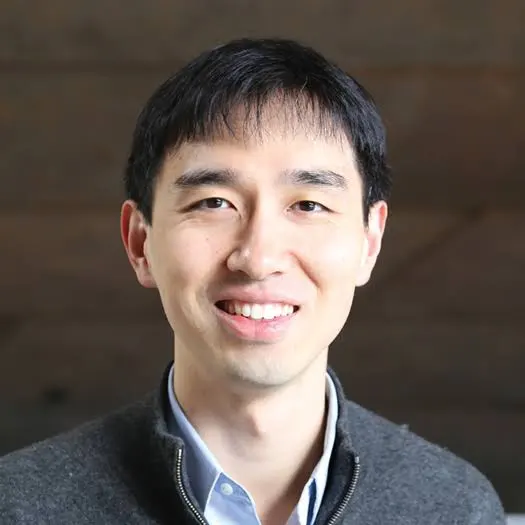
Le Cong, Assistant Professor at Stanford University School of Medicine and co-inventor who proved CRISPR gene-editing could work in humans.
|
Associate Professor at Stanford University Co-Inventor of CRISPR, Ex-VP of Moderna
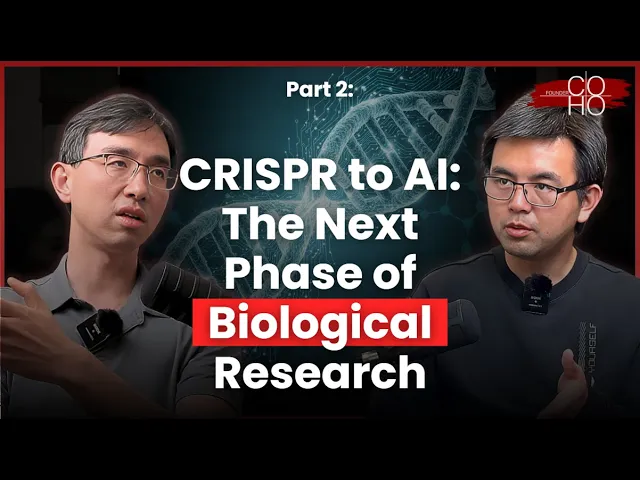
Le Cong, an Assistant Professor at Stanford University School of Medicine. Professor Cong was one of the co-inventors who proved CRISPR gene-editing technology could work in humans. After gaining industry experience as VP at Moderna during the pandemic, he returned to Stanford, where he's developing AI agents that can design experiments, analyze results, and even replicate the capabilities of world-class researchers. He's now building something even more ambitious: AI systems that can automate scientific discovery itself. He's also built a 20,000+ member global community that's becoming the epicenter of AI-driven scientific breakthroughs.
In part 1, Professor Cong revealed the untold story behind CRISPR's breakthrough. In part 2 we cover his remarkable journey from hands-on CRISPR research to leading the AI for Science revolution. We dive into his three-level framework for AI in scientific discovery - from AI co-pilots to autonomous AI scientists to complete virtual research environments. Professor Cong shares his vision for multimodal biological models that can understand DNA, RNA, proteins, and clinical data simultaneously. We explore why he left pure research to gain industry experience at Moderna, his work building specialized AI agents like CRISPR-GPT and StemCell-GPT, and how he's created one of the largest scientific AI communities in the world.
References
Le Cong – https://www.linkedin.com/in/lecong
Prof Cong's Lab Website - http://genomics.stanford.edu/
Jing Conan Wang (Host) – https://www.linkedin.com/in/jingconan/
FounderCoHo – https://www.linkedin.com/company/foundercoho
Timestamp
00:00 Highlights
01:32 Introduction and Interview Focus
03:00 Post-CRISPR Journey to Moderna
04:06 From Lab Bench to Keyboard
05:26 Why Industry Experience Matters
06:57 AI for Science: The Three-Level Framework
08:18 Level 1-3: Co-pilots to Virtual Research
12:08 Three Core Projects: Models, Agents, Benchmarks
16:35 RNA Foundation Models & Multimodal Biology
19:21 Building Agent Ecosystems for Science
20:38 Creating a 20,000+ Global AI Science Community
22:21 Conferences and Collaborative Breakthroughs
26:05 Balancing Academic and Industry Work
29:17 Advice for Young Researchers: Fail Fast, Act Now
32:42 Community Support and Future Collaboration
33:19 Outro
Full Transcript
What if we can make biology almost more like computer science, where you can run an experiment and the next day you know the results? Professor Le Cong pioneered the use of CRISPR gene editing in human cells, proving this revolutionary tool could work in living systems, but his next breakthrough might be even bigger.
Instead of having one me working in my lab, wouldn't it be nice if we can have 200 AI scientists in your team that only costs you hopefully just GPU compute?
But getting there meant abandoning everything he knew.
I really moved completely from doing experiments in the lab with my hands to typing on the keyboard. Sometimes it's really hard. I learned it from my own mistakes, the hard way. The lesson that changed his approach to innovation forever: failure is great, but most of the time it's great if you fail fast. If this thing takes you less than three minutes and you think it's interesting, do it right now. Don't wait.
Now he's building something that could accelerate every medical breakthrough by decades. What if I can model the whole cell or a genome or a disease purely in computational way that makes the whole process almost eventually as quick as writing code? We have already built a large community with over 20,000 people. Everybody comes together, builds a community, and then talks about how you really improve AI for science. The race to cure cancer, Alzheimer's, and aging itself just got exponentially faster.
Today, my guest is Le Cong, an Assistant Professor at Stanford University School of Medicine. Professor Cong was one of the co-inventors who proved CRISPR gene-editing technology could work in humans. After gaining industry experience as VP at Moderna during the pandemic, he returned to Stanford, where he's developing AI agents that can design experiments, analyze results, and even replicate the capabilities of world-class researchers. He's now building something even more ambitious: AI systems that can automate scientific discovery itself. He's also built a 20,000+ member global community that's becoming the epicenter of AI-driven scientific breakthroughs.
In part 1, Professor Cong revealed the untold story behind CRISPR's breakthrough. In part 2, we cover his remarkable journey from hands-on CRISPR research to leading the AI for Science revolution. We dive into his three-level framework for AI in scientific discovery - from AI co-pilots to autonomous AI scientists to complete virtual research environments. Professor Cong shares his vision for multimodal biological models that can understand DNA, RNA, proteins, and clinical data simultaneously. We explore why he left pure research to gain industry experience at Moderna, his work building specialized AI agents like CRISPR-GPT and StemCell-GPT, and how he's created one of the largest scientific AI communities in the world.
Let us get started!
I would love to also dive into your life after CRISPR. So you did this great work in CRISPR. In 2022, you started taking a job as VP at Moderna. You started doing more industry experiences. Tell us more.
Yeah, I think maybe I'll share two stages of my career after the CRISPR moment. In many ways, like we were talking about, CRISPR is a scissors, but what actually are the targets? For them, like, yes, I can fix many things, but what are the genes that can help me to cure cancer, cure diabetes, cure Alzheimer's, right? So that's why I moved into computation AI, because I think we needed the ability to really scale our understanding of the data and biology in order for us to identify this is the way you can edit the genome to cure disease and to prevent aging, right?
So you first invented the scissor, and now you are looking for and now starting to solve the search problem.
So I think that's why I worked with Aviv Regev, who basically was my PhD advisor and she was a computational biologist. And I really moved completely from doing experiments in the lab with my hands to typing on the keyboard to try to write codes and to do computational biology and machine learning.
So you started connecting with your childhood dream of computer design.
Yeah, but which is not necessarily the exact same thing as programming a game. And then with Aviv, I really started to really appreciate the power of computation. The iteration is just faster, right? You write a program the same day or almost the next day, you will know the results of computation. Of course, so the whole cycle of feedback iteration is way faster in computational biology. So that has been really fun. And that's why I later started to focus more on AI, AI for biomedicine, AI for science. And basically, that's how after working with Aviv when I moved to Stanford here in the Silicon Valley, San Francisco, I really started a group where we do experiments on one hand and then do computation AI on the other hand. And then, so that's one thing. And then the second, why I worked, I spent some time with Moderna is because when during the pandemic, there were a lot of restrictions. And of course I really respect what mRNA technology was doing, but then my motivation is not about particularly mRNA or something. It's really about getting to understand the industrial scale of things because actually even my own advisor Aviv before I started a kind of a leave a sabbatical at Moderna. Aviv first actually moved from MIT to become the head of preclinical research at Roche Genentech. So that inspired me to think about if you wanted to understand what actually it takes to make a drug and to be able to scale a technology from lab to business to really life-saving medicine, I think I need exposure. I need to get more exposure to industry.
You have been really passionate about how to turn some idea or scientific ideas into something that is really practical and can be scaled so that it can be used in the industry. And you also briefly mentioned about this AI for science initiative that you have been focusing on in past decade. Can you tell us a little bit about what does AI for Science mean?
Yes, thank you. Basically, as you mentioned, one thing that I've become more passionate about in the past couple of years has been essentially trying to accelerate the whole process of discovery. What if we can make biology almost more like computer science where you can run an experiment and the next day you know the results, right? Or something like that. I think AI presents probably the most reasonable opportunity for us to accelerate science because like you said, AI can write an email for us, can write a paper, can write a poem, but also can generate images, can generate a movie. So I think AI really accelerates a lot of the process right now in text, in image. So what we think are going to be most helpful for us as a scientist is if AI not just helps me write an email, but actually helps me to be more efficient, more amazing at doing science. By applying the AI technology and the concept, well, you just mentioned scaling laws, we can also basically achieve three things in science. Number one, we can have AI essentially on the first level be a co-pilot or be a partner for all the scientists where if you need to find information to design experiments to run something or to run data analysis, AI will help you do that. And the second level is called AI scientists where basically I can replicate myself. Like I can build an AI that basically is at least as good as myself or Feng Zhang can replicate a scientist as good as Feng Zhang or Jennifer Doudna. So basically instead of having one me working in my lab, wouldn't it be nice or maybe not necessarily just me, but maybe all my students? Like we can have a lot of the students and all you need is not to recruit 200 people to your team. You just need 200 AI scientists in your team that only costs you hopefully just GPU compute. And then you can have all of them work together to not just - so it's not just AI helping one person, but it's AI replicating the capacity of scientists so that you can have very quickly a team of people working on CRISPR, working on Alzheimer's, aging, stem cells, right? But this is the second. And the last level, I think is what we can call virtual research or we can call, like you said, like you can generate a video that's completely by AI. You don't need to actually shoot in a camera, right? So what if eventually, I think the last level of AI for science is what if you can say I can model the whole cell or a genome or disease purely in computational way. So then when I do research, it's not even just I have a team of AI scientists, but also I can just simulate a lot of the disease in silico. And that really becomes exciting to me because that makes the whole process almost eventually as quick as writing code or testing code. Like you can build an app.
There's actually a lot of similarity between the knowledge discovery process in biology, but also a lot of the things that are happening in AI industry. So the pattern that you put is such a beautiful summary of the three stages of AI evolution. You're putting the terminology with just biology, but I also observed these patterns for all the industries. And it's basically the kind of evolution of AI for automating the knowledge discovery process and also applicable for many knowledge workers. Like if you are managers, you are coders, they also work very similarly. And these three phases mark the different levels of agency.
Yeah, it's almost like the L1234 of auto driving.
The lowest one has less agency so needs more human involvement. The highest level is completely autonomous. So it's just discovery launched automatically by itself. Exactly. Yeah. So that is a very cool mission for you to have AI to enable the science or the scientific knowledge discovery processes. Right. Yeah. Can you walk through us some of the exciting projects you did in that direction?
Yes, so specifically we have in the past year released I think three different sets of progress that I think can all help us to get to this, maybe we can call it level one, two, three of AI for science. So the three things to give a quick overview is one, models, right? We've been building large RNA models. For example, one of the models we are leading to build is RNA Genesis which is basically one of the most capable RNA models that can model different types of RNA. For example, if you wanted to design a small RNA drug, an mRNA drug, you can use our model to give you a quick AI-driven design that hopefully will work very well. So you can call it's almost like the same thing. Like you have ChatGPT or Claude for language generation. We also need models for biological generation or generative AI in biology. So the first thing we've been building is these models, we have foundation models in biology and because there are a lot of people already working on proteins and DNA, so we have more focus on RNA, but I think eventually there will be a suite of models and that's number one, models. Second is called agents. That is the next sort of component when your models can give you some simple output. But like you know if you want to do coding or web browsing you need an agent that is driven by Claude or GPT to do the task. So I think in biology like you were saying all the agents are going to be more capable to complete human tasks or help humans with completing it. And so the first agent we built is called CRISPR GPT, which is a specialized agent that can automate design, execution and analysis of gene editing, CRISPR gene editing experiments. And so that's number one. And we are now building also Stem Cell GPT for stem cells and also like an aging agent for aging study. And then we'll have hopefully many more eventually maybe an ecosystem for that. So that's second, agents. And the last thing I want to quickly mention, we're also building benchmarks and safety sort of guardrails that are part of the requirement for AI for science, right? So when you think about how do I really know the AI scientist is actually working? So we need benchmarks, datasets. So we have been releasing just actually this week, Genome Bench, which is a large benchmark for genomics sort of biology research. And basically the idea is that we can release a benchmark and we can see how different models, different agents are performing on the benchmark and have everybody improve. So the Genome Bench is one of the things we're also going to release. Stem Cell Bench, a lot of other measurements. So the final part of our work is establishing AI for science benchmarks and also be able to also help people to understand the performance as well as the safety of these different things. So that's the three things we're doing.
Those things, for people who are familiar with AI research, actually are the exact same terminology described for AI research. Foundation models, you need an agent and you need a benchmark. And I also realized that your model names have GPT inside, CRISPR-GPT, Stem Cell-GPT. It's not a coincidence and for our audiences, they may not have enough background to connect, what is the relationship of the models to generate DNAs or the RNAs with the model that generates the emails? What's the relationship between them? In fact, what you put in early ways that they're all sequences and a lot of the AI, what we call the large language models is basically a very powerful sequence processing machine and we just happen to apply this to our natural language sequence first. That is a pretty complicated sequence because the token size is big but our DNA and RNA is also a sequence. In some sense it's even simpler than the human language because there's like certain patterns there's not that many codes, we can write it smaller vocabulary. So a lot of ideas can be shared among the two. What would be your take? What are the areas that you're most excited about? You pursue about like the research in the biology side. Yeah.
Yeah. I think the most exciting to me are, again, basically focused on the three things we were just talking about. On the model side, I think it's multimodality. So instead of just say, there's a model for generating a protein or CRISPR RNA. Can we have a sort of multimodal? It was almost like why, there are what you call vision language models or these multimodal language models where you can take an image, understand image, but also give you a text description. So they understand both language and also images and videos. I think in biology we also need that, understanding, for example, the DNA RNA protein sequences and understanding all the, for example, the biology, physiology or clinical data, right, in patients. I think this multimodality is super exciting to us and we're doing some of the work.
I want to paraphrase just make sure my understanding is correct and also help our audience to understand this. When you mentioned about multimodality, you essentially referring the data sources or sequences that have different nature.
Yeah, sometimes not even sequences. Like, anything that can be tokenized, like you said, images, maybe electronic recordings of heart, heart sort of, we can call like cardio sort of measurements through like different types of devices, even like, or personal health data, in the form of like your brainwave data, your like, Apple health data. So a lot of these personal health imaging data, x-ray, all this stuff, or even sometimes the various forms of molecular data is all gonna be capable of being connected through this multimodal.
You actually mentioned such an interesting point because previously there was many data in biology, was DNA data, which is an independent research area. There was protein data and there was independent data.
Now it's all connected.
It's all connected. And there was clinical trial data, or there's even nowadays the medical note-taking system.
There are a lot of things we can connect these days.
They are independent before.
And now we can merge them.
You want to merge them. Yes. And I also realize you recently published a paper that even like you can infer the, you basically doing a lot of analysis of these clinical data even like discussion from the medical forum. Is that aligned with this?
Yeah, and this is exactly I think, but that's more on the agent side. We're like maybe very quickly going through the other two areas. I'm still excited about one side. We're trying to build ecosystems for agents where you can have hundreds of tools and databases in almost like an operating system for AI for science or AI for biomedical agents, right? It's actually you build an operating system like iOS or macOS or Windows and then you can allow these agents to explore different types of data and this is I think going to be what we can call the agent moment for biomedicine where like you can now have the agent is powered by biomedical database and then maybe learn from by themselves, also like we can call autonomous evolving agents. I think this is the second part. And the last part, like I said, why we're getting some really interesting work done in the benchmarks and like extracting information from online discussions that we think once you have a lot of the good models and agents you need really really scientific benchmarks to help everybody contribute and evaluate and this is where we think we need a community together. So that's why we're for the benchmark and the safety side of things. We're engaging not just a small amount of scientists where we have already built a large community with over like 20,000 people on the Slack group where we wanted to have everybody come together, build a community and then to talk about what do you want to see in a benchmark, how do you contribute to the data and how do you really improve AI for science. That's kind of the three things that I think are super exciting.
Those are very, very cool directions to push forward. So what I hear you say is that in these three area layout, each side you actually have one area that you're most excited about. For the model layer, you're very excited about this multimodal capability, which is merging the data from different sources, connecting those together. In the agent side, you want to create this platform so that other people can build more useful agents and inject the knowledge into the platform. And also, the last part in the benchmark, benchmark side, you realize that it's actually more and more critical to ensure that we're moving to the right direction, which needs more sophisticated evaluation. Yes. Requires the benchmark, and you also mentioned about the community, because that's also a thing in like... that even in the non-biology side people are talking about that a lot. By the way, everything talk about sounds like music to me because that's also exactly what AI research is pushing forward in the normal AI field. And specifically, I want to dive into the benchmark side you mentioned about you build this AI for science community, which already have 20,000 members in that. That is incredible. Can you walk through us, like, why did you do that, and how does that relate to other efforts, like benchmark efforts and other.
Yeah, I think this really connects to like you said we need better ways in at least for AI for science I think the data and the benchmark limitation because like a lot of public information is more about like can you be smart at exams like GPT is our GRE or all these exams or you know, but exam taking is not scientific discovery. Scientific discovery is about learning new stuff, discovering new ideas never happened before. So it's very hard for one lab or even a small group to be able to cover the exciting frontiers of science. And then you actually need something really challenging that's not just pattern matching what's already on the internet. Sometimes these need to come from private data, private domain. So that's why we believe that we need a bigger community. I just want to mention that this is not a personal effort, led by a few example professors like Meng Di Wang, even like Yann LeCun, George Church, a lot of people that I know are all coming together. So this is a big effort by many leaders and I'm really just one part of it. The idea is that it needs to come from scientists doing the science because it's not one group has all that expertise. So we needed to have a global network of people. So we are building this community that come together to do three things. One, we can pull our data expertise together to build really good benchmarks. And two, we're organizing a conference. The first one will be October this year, actually at Princeton, tentatively, where we can bring people together to talk about where we are in AI for science, how can we make AI more intelligent, have higher reasoning capacity? What are the things we need to do, like benchmarks, evaluations? So I think the second is conference. And the last thing is, I think, with all this coming together, we can also essentially build some consensus on how we can move forward. We hope that we can come from these community and conferences some cool ideas that maybe not necessarily just in the form of research can be, I don't know, maybe a new company, new company spin-off from the discussions. It can be a new collaborative, scientific reasoning model that really is a global collaboration and makes everyone do science better. I think there are many possibilities, like you said in the beginning, we'll bring a lot of cool people together, you can have magic happen. So that's what we hope. So I don't know what will happen, but we hope that this community can really be a centerpiece of what can come for AI for Science.
Exactly. I think that many people have been talking about when we have the AI how do you ensure that we humans as a species still advance. We responsibly develop this new technology. I think it's as powerful as a nuclear weapon and how do we make sure that it's developing responsibly? I think the only way is cooperation and like you mentioned international cooperation with scientists from all over the places contributing on these ideas and in that way we will collectively know what is good and what is bad. So you have done a lot of amazing work, some CRISPR, and AI for Science, and building community. How do you balance all this work and still live a healthy life?
Thank you. Well, I think, yeah, two thoughts. Of course, sometimes it is very hard to have work like that in academia, which is part of the reason why sometimes it's nice to take a break at a company for some time. I do think, the number one thing I want to share is definitely like one, this is not necessarily happening all at the same time. Like for example, I did CRISPR as a student and then did computational biology as a postdoc. And now first in my lab, we did more of the AI for science, AI for biomedical stuff. I think it does take time. So we think this, a lot of work are connecting. And also for example, the reason we started AI agents with gene editing was because my earlier work and the accumulated knowledge know-how, right, from gene editing and stem cell research that helped me to build the AI agents for CRISPR and stem cells. So I think the nice thing is, even though it seemed to be different work, but I felt like they're all connected and we're also building on our previous work to really enable the AI agents' models and benchmarks. And the second thought is, like, I do think a lot of work are really collaboration and community. Like, we work on AI agent ecosystems with Jure Leskovec, here at Stanford, computer science, also Aviv Regev, my previous advisor, but who's now at Genentech. So I think on the model side, work with Meng Di Wang, Russ Altman, lot of the people, here in the community. And then, with gene editing, we also talk to get great benefits from Feng Zhang and then security community. We got support from George Church, Feng Zhang, even Jennifer Doudna, a lot of people in the field. So I think the second one is really like, ideally we can all work together and pull the efforts and that makes everyone's time amplifying, right? It's like one plus one more than two. That's also the power of community.
But I do think like, yeah, like you said, maybe it's easier to do in science because everybody is not always looking for a single person's credit. It's more like if we can make things happen together, it's benefiting everyone. So I think it does help to work on AI for science.
And I also feel that throughout our conversation, it gives a lot of credit to the collaborators, the fellow researchers who are researching the similar problems as you do. It is actually the spirit of scientific spirit. It's like, the credit, we are doing this together to push the frontier for humans, not for individual of us. And that makes the collaboration easy and makes each of us feel more empowered. The very last question I want to ask you is that what would be your advice for the younger generations who want to follow your path or take you as role model to do the research push the frontier and empower other people and have the real industry impact what would be your advice to them.
Thank you. Maybe I can share two quick thoughts that I think really helped me in some way, but sometimes it's really, I learned it from my own mistakes the hard way. Number one is, it's always okay, and sometimes maybe even really great that you fail, but only if you fail fast. So I think this is really important. Like failure is great. But most of the time, it's great if you fail fast. So do not spend like a year doing something that you don't know if it's something you believe in. You kind of want to iterate faster. And this is part of the reason I think we needed to have young people really embrace AI in science because AI can accelerate things. And I think so the first thing I really want to share is that I think failure is really good. You learn so much, but you want it to be able to fail fast. Either through, either through using AI, either through just doing things harder, right? Like you said, working hard is not always useful, but you kind of want to at least work hard sometimes so that you can gain more from your work and experience. I think that's number one. And then the second thing I want to share is, like you said, I think there's always the idea that timing is important for doing everything. But to me, I think the key thing here is timing is also about doing things early. So my advice for a lot of my own students is that if you believe in something, there's kind of this. I have this three-minute rule in my lab. Or like, if this thing takes you less than three minutes, I just think it's interesting. Do it right now. Don't wait. The power of now. So if you think, this is a cool person I just met in like, a sort of scientific conference, maybe actually email this person. It just takes less than three minutes to email someone. Just do it right now. Don't wait. And I think if you get to know someone early, you know some more people in the early stage of a career, it actually pays more dividends in the long run. So in some way you want to act faster when you're young, and that give you in some way more likelihood of getting the right timing.
It's also like maximize the curiosity, maximize inspiration.
I think... Yeah, it's almost like, Buffett or Warren Buffett's point about if you have like, 5% cumulative return, over time you will be a billionaire or something. Anyway, so I think that's the two things I think I really want to share is like, right, fail fast and then really be willing to act now.
Act now yeah exactly. Wow, what beautiful advice. I think all our audiences will benefit from it. It's such a great pleasure, such an honor to have a conversation with you, so insightful. Thank you. Thank you so much for sharing in the community. Is there anything that the Founder Code community can help with you?
A ton. I love to meet with more people from the community. I wanted to learn from everyone, especially given that I'm more from an academic background. We're interested in learning from industry, startup leaders, people who have done startups. How do we...
We will also have you to join one of our events, to show in the community. We will leave you a comment in the video below so they can reach out. But would love to have you join our event.
And learn from everyone who are doing cool things.
That would be fantastic. Thank you. Thank you so much. Looking forward to chatting more.
Thank you.
Thanks for watching the full interview. If you got value from this conversation, please like drop a comment and subscribe to FounderCoHo. We've got more founder insights and deep dive interviews coming your way, so don't miss them. See you in the next one.