Interviews
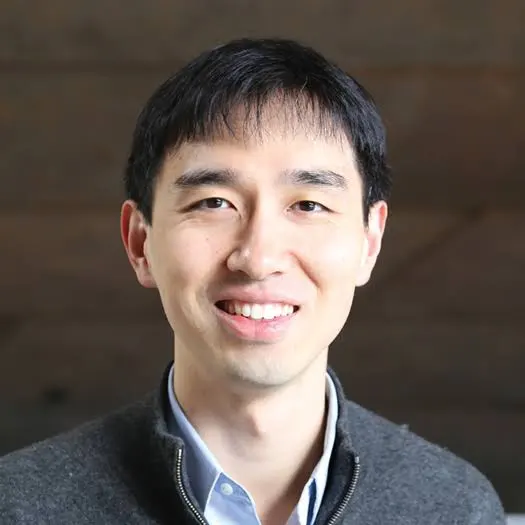
Le Cong, Assistant Professor at Stanford University School of Medicine, pioneering the fusion of AI and gene editing to treat cancer and immune diseases.
|
Associate Professor at Stanford University Co-Inventor of CRISPR, Ex-VP of Moderna
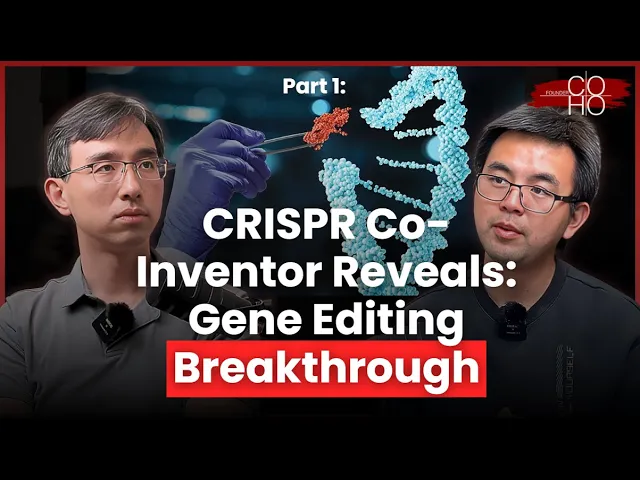
Le Cong, an Assistant Professor at Stanford University School of Medicine, where he's pioneering the fusion of AI and gene editing to treat cancer and immune diseases. He's one of the co-inventors who proved CRISPR gene-editing technology could work in humans—turning a $10,000 lab process into a $100 scalable technology. Professor Cong is a recipient of the NHGRI Genomic Innovator Award, Baxter Foundation Faculty Scholar, and named to GEN's Top 10 Under 40. He previously served as a VP at Moderna leading their gene-editing innovation team, and has built a 20,000+ member global community advancing AI for science.
Professor Cong reveals the untold story behind CRISPR's breakthrough - from two years of failed experiments to the intense global race for discovery. He shares his counterintuitive philosophy of optimizing for curiosity over predictable outcomes, which led him from McKinsey to scientific discovery. We explore why he believes current medical progress is too slow despite successes like Ozempic, his vision for using AI to tackle diseases like Alzheimer's and diabetes, and CRISPR's three game-changing applications: curing inherited diseases, engineering better crops, and potentially extending human healthspan. Plus, why he thinks we're entering a new era where AI will accelerate scientific discovery at unprecedented scale.
References
Le Cong – https://www.linkedin.com/in/lecong | https://profiles.stanford.edu/186687
Jing Conan Wang (Host) – https://www.linkedin.com/in/jingconan/
FounderCoHo – https://www.linkedin.com/company/foundercoho
Timestamp
00:00 Highlights
01:45 Introduction and Interview Focus
03:03 Growing Up in China's Silicon Valley
04:20 Early Gaming and Computer Experiences
07:10 Switching from Engineering to Biology
08:21 Family Tragedy and Career Transformation
11:08 Current Medical Progress and Remaining Gaps
14:56 Choosing Research Over McKinsey Consulting
17:08 What is CRISPR? The Genetic Scissors Explained
19:40 Proving CRISPR Works in Human Cells
20:26 Three Game-Changing Applications of CRISPR
24:45 The Cost Revolution: From $10,000 to $100
27:19 Joining Feng Zhang's Lab at MIT
29:30 The Global Race for CRISPR Discovery
31:50 Working Under Pressure and Competition
37:24 Two Years of Failed Experiments
38:56 The Philosophy of Scientific Breakthrough
39:39 Believing vs Being the Smartest Person
42:07 Wrap-up and Preview of Part 2
Full Transcript
Before CRISPR, it cost someone $10,000 to make a single gene editing protein. But with CRISPR, the whole cost dropped to something like ten, even at most a hundred dollars. Feels like the hands of God that it can change the genes and the living forms. From playing video games in China's Silicon Valley to revolutionizing human biology, Professor Le Cong's journey wasn't planned.
I think I'm fundamentally driven by curiosity when I make decisions. I wanted to, in some way, maximize the sci-fi nature of my life. It's sometimes less about whether you are the smartest person to work on a scientific problem or startup. It's more like, do you really believe in this that you keep working on it?
But it was tragedy that set him on this path.
Both my grandparents on my mother's side passed away in the span of a couple months. But when I asked around, no one seemed to really have a sense of why they passed away so quickly. Why we don't know how people get sick, what are the ways we can really help people?
That's when I started to think about maybe I should take a career in medicine. Almost two years of my PhD work never got published. There are a lot of failures and probably more failure than success, but eventually, right? People mostly only see the success.
Now, his breakthrough could reshape what it means to be human.
What if you can improve our ability to live better, healthier, longer? Maybe there's also a way to improve healthy living, to give ability to, you know, rejuvenate our stem cells for anti-aging purposes. We still have no cure for type 1 diabetes. There's still very big question like what actually causes Alzheimer's, what causes aging?
But when you can rewrite human nature itself, should you?
Today, my guest is Le Cong, an Assistant Professor at Stanford University School of Medicine, where he's pioneering the fusion of AI and gene editing to treat cancer and immune diseases. He's one of the co-inventors who proved CRISPR gene-editing technology could work in humans, turning a $10,000 lab process into a $100 scalable technology. Professor Cong is a recipient of the NHGRI Genomic Innovator Award, Baxter Foundation Faculty Scholar, and named to GEN's Top 10 Under 40. He previously served as a VP at Moderna leading their gene-editing innovation team, and has built a 20,000+ member global community advancing AI for science.
Professor Cong reveals the untold story behind CRISPR's breakthrough, from two years of failed experiments to the intense global race for discovery. He shares his counterintuitive philosophy of optimizing for curiosity over predictable outcomes, which led him from McKinsey to scientific discovery. We explore why he believes current medical progress is too slow despite successes like Ozempic, his vision for using AI to tackle diseases like Alzheimer's and diabetes, and CRISPR's three game-changing applications: curing inherited diseases, engineering better crops, and potentially extending human healthspan. Plus, why he thinks we're entering a new era where AI will accelerate scientific discovery at unprecedented scale.
Let us get started!
I want to start it from the very beginning because I think your story is fascinating and there are many lessons people can learn from. I know you grew up in a place called Zhongguancun which is also known as Chinese Silicon Valley. How was the life there?
Thank you. Yeah. First, glad to be here. It's fascinating to talk about our work as well as our broader interest in AI for science and medicine. I think, yeah, I basically I did grow up in the equivalent of Silicon Valley at least for Beijing, right? I don't think there's probably much debate about whether Shenzhen or other places are also very exciting. But in Beijing, Zhongguancun was one of the first places where a lot of IT companies started. I was there, so maybe very quickly, I grew up in Zhongguancun playing computer games.
When was that?
That was probably in 1992, 1993.
That was like, you probably are the first group of kids in China who got access to computers.
Computers, and we were getting this rbaleo 286, right, 386 generation to play very simple games and then maybe three examples, right? We were playing with these early computer games and I think we were buying, for example, one of the first or second PCs from Legend, right, Lianxiang (now Lenovo). And then the second example is at the time I remember we were setting up internet through Yinghaiwei which is one of the early ISP providers of Internet in China.
They put a sign in the highway, like how far away, China is to internet
Then 500 meters go to Yinghaiwei. I think that was a very phenomenal ad.
Yeah, and it's waiting for the modem to dial, right? And then so I was initially really pure text-based BBS user at the time when I was a student in elementary school. And the last part is, I think being there were a lot of when I walked to and from my home to school, there were a lot of, at the time, people selling random CDs of what we call pirated software. Of course, later we cracked down on that pirated software thing, correctly, but I think that was a really interesting time where, like you said, it's early days of computer internet, a lot of exciting things happening, but also a lot of what we can call chaotic scene, people buying random software. But that was my childhood experience and that maybe led to why I initially was studying electronic engineering when I go to college because I always aspired to be a computer game designer. I was reading Diannao Ruanjian, People's
Software and a lot of the early gaming magazines.
That was very popular gaming magazine in China.
At the time and then so that was my childhood, basically like everything I know was trying to secretly behind the back of my parents playing games when they're away or trying to get on the internet without having too big a bill and also trying to really from early days trying to be a computer game designer. That was my start.
Yeah, yeah. It looks like you had such a fantastic child life. And you liked the game design. Many kids also like the game design. And when you went to a university, which is Tsinghua University, the number one university in China, you... Someone has a different opinion. Top-tier university in China. You end up choosing biology as your career eventually. Tell us why you switched to biology.
Yes, so I entered Tsinghua studying electronic engineering. Two factors I think that influenced me. One is that I realized that electronic engineering department in universities are more focused on hardware rather than software.
I made the exact same mistake. I was also EE when I enrolled in my own university thought I was going to do software, but then it turns out everything is hardware related.
Yes, so yeah, so you will know. I was a little bit confused that we were mostly trying to learn how do you repair a TV, how do you repair circuits and stuff. So that's one factor. I kind of think that EE is not necessarily exactly the type of field that I want to be. But the second thing is when I was trying to think about, maybe I can change major. And thankfully, Tsinghua allowed to do it. I had a personal change in my family where both my grandparents on my mother's side passed away in the span of a couple of months, unfortunately.
That must be a very tough time for you.
Yeah, it was a very tough time because parents are busy in China being the only child. Usually we kind of grew up with grandparents, right? Maybe even today. So I and they both of them were essentially like passed away because of fairly common disease like diabetes. And when I asked around, no one seemed to really have a sense of why they passed away so quickly. And the experience was shocking in the sense that, probably like because I have no idea why people get, for example, diabetes, why people get cancer. But then someone very close to me passed away so quickly from a disease that is probably my first experience, because my parents were still very healthy at the time. I think that's incredible.
That might raise a lot questions in your mind.
Yes, and that raises a lot of questions like, why we don't know how people get sick and what are the ways we can really help people and that's when I started to think about going to Peking Union Medical College or Xiehe because I thought maybe I should take a career in medicine but then the second part is really because family health I shifted my focus to think a lot about how do we tackle disease, how do we think about human health and of course I realized that being a doctor, perhaps you save a few people. And perhaps by studying biomedical science, perhaps you can help a lot more people. And that's part of reason I switched my major to basically biology and biotechnology in Tsinghua.
Appreciate you sharing the story. That is really, I know this will be very personal story for you. The passing away of your grandparents had big impact about you, your world view and eventually leading you to switch to the biology. I think when they hear the achievement now you have, they will be very proud.
I hope so.
I wonder, you had this question on top of your mind when your grandparents passed away about learning how they got a disease, the root cause of the disease. Now that you have been in this field for decades and has advanced to the frontier of research, do you feel that you get closer to the answers of those questions?
Yeah, great question. I've got two quick thoughts here. One, and maybe that can be something we expand later, is we are definitely getting a lot closer. As you know, when we were young, there's hardly anything that is actually effective of, say, preventing people from getting obesity and hoping with, in a very, very fundamental way, in some way, reduce likelihood of getting diabetes. But now with Ozempic, we go with all these GLP-1 like from Eli Lilly and notice like all these amazing sort of anti-obesity drug we really have something that right when we were young there's no such drug like actually reduce weight. Most of the drug at the time were like mostly like snake oil right? It's like you could claim they can reduce weight but it might be just honey water right or random herbal extracts right? So I think we've learned so much about human health and disease that we are seeing these amazing products that are helping people and even preventing, not just treating a disease, but even preventing people from getting say, obese by using this GLP-1. So I think number one, I think we've made a lot of progress. But the second part, which leads to why I've shifted my whole research team really towards using AI and machine learning is that, even today, right? We still have no cure for type one diabetes. We still are far from saying like people are still needs to take medications or insulin every week, take some insulin pumps, right? All this stuff. We have a lot of disease doesn't have any cure is more managing the symptom. And also for Alzheimer's, right? There's still very big question like what actually causes Alzheimer's? What causes aging? Even though aging is kind of a hot topic. So I think we're still far from really solving a lot of the what we call complex disease and even CRISPR that we can talk later is usually for very rare disease. So I think there's still a huge demand and huge gap, which partly to me is because we have very slow progress in terms of how we can actually make discovery. So I think the idea becomes there's a huge gap still in healthcare and discovery and how can we really accelerate not just the progress of one thing but maybe the progress of a hundred thing at the same time. It's basically like, right, when you have internet people can build not just one thing, email. When internet you can build 200 different websites. You have Google, Facebook, right? Everything. WeChat. So I think this is what we might need to answer the question you just sort of asked, which is how can we accelerate the whole discovery process rather than tackle one particular technology disease at a time?
Yeah, very well thought answers on that. We have made a lot of progress in the past few decades to understand some of the diseases, but there's a lot more things we do and AI can help with that. I would love to dive deeper later for that topic. But I want to go back to the early days of your life. And after graduating from Tsinghua, you came to the United States and then you had many people would consider the golden tickets. You get a McKinsey offer. So you can go to make money and live a good life, live American dream. But instead you choose to go to academic research. Tell us some more. Why did you make that choice?
Yeah, thank you. Yeah, so yeah, I was, I sometimes tell my students, right, the, and I think all of us agree that the decisions we made probably has bigger influence in our life trajectory versus the way that after we made the decision how we work. So I think for me, some of the key decisions, like you said, is I was debating between taking a consulting job at McKinsey versus continue academic research in Boston. And ultimately, to be honest, it's because two simple things. One is, much like I love playing computer games, I think I'm fundamentally driven by curiosity when I make decisions. I wanted to in some way maximize the sci-fi nature of my life in some way, or the gaming nature of my life. I thought going to consulting is fun and probably makes more money, to be honest, right? But then going to do research, if I can, if I can, I think it's really going to have more of an unknown factor to it. An extraordinary factor.
You had a great point and the choice you made led you to one of the most significant scientific breakthroughs in the past few decades. You are one of the main researchers behind the technology called CRISPR. And in my view, it's probably the top three most important technologies in biology in the past decade or so. Many people call it a genetic scissors. How do you explain this technology for our audience who might have less background in biology?
Yeah, thank you. I think I was very fortunate. And like you said, it's really because the people I met, going back to your early comments, I met George Church and Feng Zhang when I was an early career student. And they really helped me to think about CRISPR. And that's how I can get started on that. And CRISPR basically is, we all know like there are 3 billion base pairs of DNA in every single one of our cell. And then it's almost like you can think about it as Microsoft word processor. So in a way, our genome is a big 3 billion letter book. And sometimes these things go wrong. Or sometimes we wanted to program or write a new book. So basically to describe CRISPR is basically this very nice search tool that search almost like a search and edit box in your Microsoft word processor. It can quickly search to a specific words or sequence in this DNA sequence in the genome. And then once it recognize the specific thing you are searching, it can make a cut almost like an edit. So we can delete a few letters in the genome, basically a few DNA sequence in the genome and then replace it or change it. So this is kind of what CRISPR does and in a more specific way CRISPR is basically like a very nice molecular scissor. So it's a protein and RNA. And when the RNA bind to a specific sequence, almost like a GPS, it will locate to that specific sequence. And then the protein comes in as a scissor, almost like once the GPS locate this person, you deliver a cargo. And then the protein basically then make a cut and essentially allow people to change the DNA in that specific part of the genome. So that's hopefully give you a sense of, basically it's like the whole process like editing a book, but then specifically it's almost like a little delivery truck that have a GPS located to the genome and then deliver a cargo. But the cargo in this case is a scissor, like you said, that cuts the DNA.
Yeah, You put in a very visualizing ways and there's a lot of similarity between us as a human and also the computers on that. And also, I know that one of your main work contribution of CRISPR field is that you prove that this technology can be done in mammals and eventually to humans gene editing. Can you tell us why that matters?
Yes, thank you. Fundamentally, I think there are three really exciting reasons for one motivated, my own work as well as of course George Church, Feng Zhang and of course the Nobel laureates Jennifer Doudna, Emmanuel Charpentier's work. And then it also show hopefully you the application of CRISPR. So the three quick thoughts. Number one, right? We have a lot of disease that's very much genetically driven. To give you an example, two very good examples are, there are hereditary diseases, like when a new child is born, they can be born with a simple DNA error and that causes anemia. So I think if we can fix DNA, a lot of these inherited diseases are going to be treated through precision gene editing. And then the other thing is a lot of risk that we have in disease. Like, for example, my grandparents have diabetes, so my whole family have a higher risk of diabetes. And there's also people have family risk of, for example, short-sightedness, right? And then also like Alzheimer's, a lot of things are... But these are not simple. Many risk factors contribute to this. If we can specifically make cuts or perturb the genome, we can understand better what causes Alzheimer's, diabetes and then hopefully find new drug targets. So I think these are what we can call like therapeutic application of CRISPR, right? That's one thing. And the second thing is agriculture actually. So right now, if you go to supermarket in the US and I think probably also in Japan, you can find potato chips that are actually using CRISPR engineered potato. And the reason because typical potato, if you move the potato from the farm to the factory making the chips, there will be a lot of potato that will be rotten, right? But when you CRISPR away some of the gene in potato that causes oxidation damage that make it easier to have rotten potato, you can make the potato less likely to become bad during the transportation. So a lot of potato farmers in these states actually use CRISPR'd potato in the US. Anyway, so I think the other thing is like you can use CRISPR to really engineer plants, agriculture, farms that help improve our environment, improve our food, right? So that's second thing. I think the last part is very interesting and like stem cells aging, right? So this is like instead of if you have say, I have a disease, I'm sick. I need to CRISPR to help me or I need to CRISPR help me find a drug target. What if you can improve our ability to live better, healthier, longer, like for example, give it one specific example, some people. Especially Asia, right? When I drink alcohol, I become red on face and I have, this is because we lack some enzymes. If you have a safe way to give you that ability to take more alcohol and sometimes you do have to drink, then you're healthier because you're less damaged by drinking alcohol. Anyway, so my point is like, if you can really nicely do CRISPR gene editing and help people, maybe there's also a way to improve healthy living by giving you ability to live healthier. To give ability to rejuvenate your stem cells for anti-aging purposes. I think it's not just when you are sick you can use CRISPR, but when we are healthy we can extend that wellness through using some of the genetics. So that's the three motivation for me personally why I really wanted to work on gene editing CRISPR technology and also why I think enable this technology in mammalian in human cells will be very very exciting.
Wow, there's a lot of amazing applications. I think like you mentioned, will lead us to live healthy, have better humans, have less diseases, and also have better food. That's fantastic. You mentioned about you want to maximize the sci-fi part of your life, and now you go all the way to the core of the sci-fi. Hopefully. It feels like the hands of the god that it can change the genes and the living forms. That is great. I also want to help our audience to understand how hard this technology is before we go into details. Can you tell us like before CRISPR was invented, is there any way people can manipulate or edit genes and how hard it was before CRISPR was invented?
Yeah, great question. It is very true that even before CRISPR, we can engineer the genome using technology like what we can call, we don't have this go to bed, like things like zinc finger nuclease, TALENs, these are early technology that were able to already edit or engineer the genome. The reason why CRISPR is such a powerful technology and give analogy, right? If you think about why mobile phone is so exciting. When we were kids, we have this thing called a big cell phone, dage da in Chinese. It's very expensive, very big. And then a few people have it. But because of all the mobile phones, of course iPhone, visionary work from Steve Jobs and Apple makes the whole cell phone accessible, powerful. I think, say basically like the early mobile phone sell for $10,000. And now it's like $100, right? You can get a phone or something, maybe fifty. I think that 100x reduction of cost makes things scale and impact. Then CRISPR, like you said, is not the first gene editing technology, but before CRISPR, it costs someone $10,000 to make a single gene editing protein. But with CRISPR, because it uses the elegant small RNA and protein to program the cells, you just need to synthesize a small piece of RNA. The whole cost of CRISPR a gene dropped to something like ten, even at most $100. So it's really not about necessarily if CRISPR is the first technology for editing is actually the first we can call scalable technology.
So CRISPR really creates an industry. It scales and I want to dive into the moment when you wearing the front chair and create this technology, CRISPR in humans and mammals. And you mentioned earlier that you went to the lab of Professor Zhang at the Broad Institute. And back then you were a new student in the institute. Yes. When did you start to hear about the CRISPR technology in your lab and at what moment you start to get interested in this problem.
Yeah, so I think very quickly, I met Feng Zhang in George Church Lab, but primarily, like you said, when Feng's become independent at MIT, I decided to move to Feng's lab to work on gene editing. And the first time I heard about CRISPR was really thanks to Feng picking up on some really inspiring study in bacteria, not at the time yet in humans. It's the bacteria bacteriologist, microbiologist, initially discovered CRISPR in bacteria like E. coli and all these small organisms. Then, because Feng and I have been chatting about gene editing for a long time, at the time, so we decided, okay, if bacteria can use such a simple way to program their own sort of DNA genome, or basically like to is that we edit, right? Edit engineering genome, DNA sequence. Can we move that into human cells so that we can have, like you said, the, hopefully, the first extremely simple, extremely scalable technology for editing genome of humans. So I think that's really got me excited. And like you said, the potential of this thing to scale, not just 2x, 10x, like a hundred, even a thousand x is where I really immediately got so attracted to the idea that I started working on it with Feng.
Yeah, you put it a great way and it actually reminds me of the invention of many great technologies. It's not like when you're the scientific breakthrough, it's human just coming up the idea from middle of nowhere. It oftentimes is coming from observations of the world around us many scientists around the world will start to observe the bacterias and in your cases wonder when you are doing your own research, are you aware of many groups in the world doing similar research?
Thank you. Yes, so I think it's very exciting time at the moment back in like the 2000 early 2010s where like you said I think initially really basic biology discovered this bacterial system to fight virus in bacteria and we already had a sense that probably other people might be working on the same idea, which has turned out to be true. And this, I think, is a theme in science. We can call it either great minds think alike, or it's just really like the right timing will trigger almost like will trigger the same people have the same idea. I think at the time, we don't know exactly who are the other people working on the same idea. But definitely, I think like you basically mentioned, Jennifer, Emmanuel, who are the two Nobel laureates, their team are working, totally working on really thinking about how CRISPR for example can be used for human gene editing. And then even in George Church Group, we have friends, who we didn't know at the time, but we later know that our friends of us in George Church Group also were working on adapting CRISPR for human. I think there are also Korean groups, even probably some group in China, in Europe for sure, like Sickmann's Group in Europe also had basically around the same time, trying the same thing. So I think in many ways, like you said, when the timing is correct, I think there will be convergence of ideas sometimes even across the world. I think anyway, better question I think we don't know exactly who are the people but we had a sense that other people probably will be working on same things. We also were working very hard and try to be at least the first groups to show people that yes you can do human genome editing in such a simple elegant and scalable way using CRISPR.
As a student who were doing this research, will you feel time pressured? Did you feel this urgency, you have to work very hard to make it done ASAP?
Yeah, great question. Maybe I'll give you, share two very quick stories around that time, Number one is that it's always easier to, it's not like, it's always easier to rationalize things afterwards. At the time, to be honest, I don't really know how long it's gonna take and how, and it was challenging. We have many failures. And I still remember like when we saw Jennifer Doudna's work, primarily, I think, in Emmanuel and Charpentier's lab, but also probably in collaboration, I think, also with Jennifer Doudna at Berkeley. But, Emmanuel's team, with Jennifer, they have this 2012 work where they show that a important, or a processing step was important for CRISPR to work. So that's really enlightening. And I think we really accelerated a lot of the efforts because of this very, very basic science work. And without that work, like I said, I think timing wasn't right because you first need to at least know for them how CRISPR work in bacteria to some extent before you can actually use it in humans. So I think that early discovery work is really critical so that we, even though we were trying to rush things a lot of times until the timing is right, no matter how hard it work, you still are searching the dark. I think, but the first story basically tells us like, yeah, you can work hard, you can have urgency, but a lot of times, right timing is still very key. Like if you don't know the basic mechanism, no matter how hard it work, it's still not gonna give you the right answer. And the second great story is that I think we were in some way overly optimistic about that we were to maybe even if you are working on it we might be the still the leading group but turns out right when we publish our work there were already other work right that were either publishing or to be published around the same time for showing human gene editing, so I think to be honest like I think we should have worked harder and have more urgency but turns out because we didn't know who else are working on it. There wasn't like this, it wasn't like people would every day post your idea on the internet or Twitter, right, or Facebook. So we were probably less hardworking than we should at the time. So which is fine, it's very hard to, it's always easier to say, you should have done that afterwards. At the time we didn't know. And then even like, to be honest, when I was in Feng's lab, there were up to seven students, rotation students, others visiting students or people who wanted to consider CRISPR and worked with me. But essentially, the first six or seven people in the lab really did not necessarily always stayed in the project because they think, it's too hard, too slow. So I think in many ways, right, even for me, I think it's very hard to tell how hard you should work. So this really search in the dark. So I think in many ways, you just have to believe in the value and believe in what you think is true and then try to play with it. I think a lot of times it's just really not easy to predict at the time.
Yes, thanks for sharing us the real story and the real life of a scientist who is pushing the frontier. And it reminds a lot of my own life as I was doing research, not in biology, but AI side as well. And I will put it in this way because many people would think they like this dramatic stories about scientists racing to chase the Nobel Prize, that type of thing. That definitely happens when in more like industrial application where you kind of your goal is the goal. You are just to chase it. But the scientific discovery process is completely different. The people who are in this game have absolutely no idea what they needing to. And in fact, even if they would work very, hard, but they are working in a game that doesn't have object, doesn't have the finish line.
Yeah, it's a lot of... You can see like you are sort of searching in a dark fog looking for that little light that might come up someday, but you don't really know when that's gonna happen.
Yeah, exactly and also that reminds me, earlier you mentioned about the philosophy of life. It's never about optimizing the things that you can see. It's about optimizing the curiosity and optimize about the sci-fi part of your life. In fact, that's also tied back to, I think that contributes to how you discover the CRISPR because it's not about optimizing the final goal. It's actually try different things and... I'm very curious about when you're doing the CRISPR research. Have you tried other thing that didn't work?
Yes, we have tried many things that didn't work. By the way, I have like two years of my PhD, right? So people thought that I was probably very lucky, everything's smooth. I was working on CRISPR, published some really nice papers. But actually, almost two years of my PhD work never got published because I was trying to work on depression, schizophrenia. I was trying to actually use gene editing as a tool to study neuro psychiatric disease and we were working, to actually engineer the brain in the mice, but that was very slow and lot of data was very noisy. Basically like you're busy do the same experiment across four or five mice and the results can be totally different. So do you trust mice number one or do you trust mice number three or maybe you trust none of them just do it again. Anyway, so there's a lot of my work actually days and nights of work in PhD that never got published does not at all relate to CRISPR. It was neuroscience, psychiatric disease, trying to help people with depression, schizophrenia, which we discussed, there are a lot of disease that are very devastating and we of course want to help them. But like you said, there are a lot of failures and probably more failure than success. But eventually, people mostly only see the success, which is fine. As I said, maximize the experience, right? You cannot always maximize the goal.
Exactly and you touched a great point about what is the right motivation for scientific breakthrough. If you optimize for success rate, like you mentioned, half your research doesn't need to meaningful thing. Even like 90% of your research is gonna be used or be successful, you're too risk averse. You're not gonna push yourself enough. You're not really pushing the boundary of the scientific research. And you mentioned about you have tried so many things in first two years. A lot of them don't work. Can you walk us through the particular moment you realize, something's working. This might be something that is impactful. Is there any particular moment you realize, like, Eureka moment, like that?
Yeah, good question. I think maybe there's less a... There is sort of the moment where, for example, we saw the first evidence of editing human genome back in the lab. That definitely was extremely exciting. I think the Eureka moment is not so easy to define because I think eventually what you really care about is, like you always need to be believing in the things that you work on. So in some way you always had expectations that one day it hopefully will work. Okay, so very quickly, my thought in this particular Eureka moment is that almost like starting a business, right? It's sometimes less about whether you are the smartest person to work on a scientific problem or startup. It's more like, do you really believe in this or do you keep working on it? I think if people, there's a very famous thing, in the AI, which you're familiar with as well, because some of the people in OpenAI believe in the scaling law. And many of other people don't believe it. It's not necessarily true that OpenAI have the smartest people at the time. The reason why ChatGPT or GPT is such an amazing breakthrough is because they were just keep working on it. They believe that scaling law exists and at some point if you make the model bigger, learn more data, train with more data, it will become very very powerful, intelligent, which is turned out to be true. I think so, I really think it's not about a specific, I'm smarter than other people, have this, it's really about do you believe CRISPR would ever work? That's the difference.
Yeah, you put it in a very great way, which is like many people think scientific breakthroughs like, there's a Eureka moment, there's a particular moment, this idea has been invented. But in real world, it is a gradual process that you keep pushing forward. And so you have to have the belief, like in your case, it's CRISPR. So got years of work put into that, gradually improving.
Yeah, I think that's the number one key.
Exactly.
That's the end of part 1 of our conversation with Professor Cong. In Part 2, He takes us from CRISPR to the frontier of AI for Science, sharing his vision of AI co-pilots, autonomous scientists, and multimodal models that could transform biology and medicine. Don't miss it! Subscribe to FounderCoHo if you haven't already.