Interviews
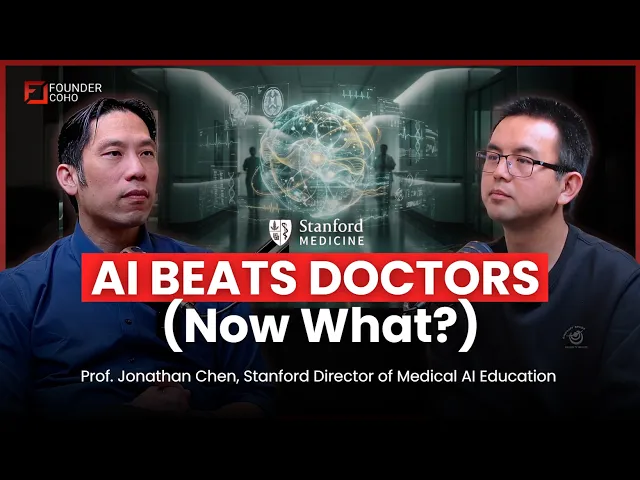
Prof. Jonathan Chen discusses startling research showing that AI can sometimes outperform doctors even when they are equipped with AI tools, challenging traditional "human-in-the-loop" assumptions.
|
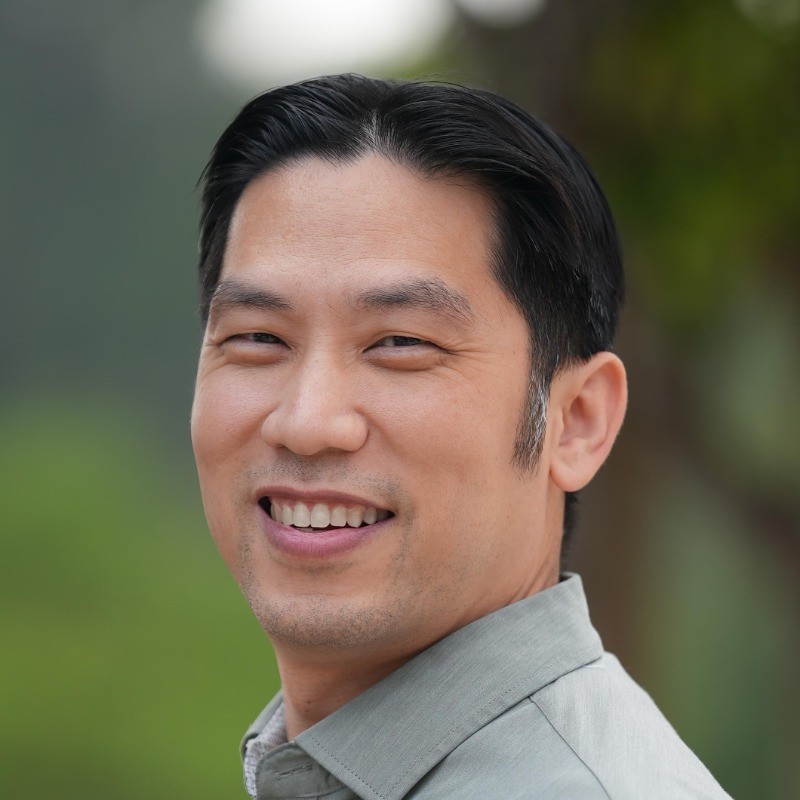
Associate Professor of Stanford Medicine | Stanford Director of Medical AI Education
Professor Jonathan Chen who entered college at age 13 and holds both an MD and a PhD in Computer Science. His work focuses on integrating technology into the clinic, from AI systems solving organic chemistry problems to leading research on how large language models impact medical decision-making. As Stanford’s Director for Medical Education and AI, he is training the next generation of physicians to work with AI as a teammate. Beyond academia, he is an award-winning magician who uses performance to demystify science and emphasize the human connection in medicine.
In this episode, he discusses startling research showing that AI can sometimes outperform doctors even when they are equipped with AI tools, challenging traditional "human-in-the-loop" assumptions. He explores the transition from AI as a tool to an active teammate, while warning against risks like anchoring bias and the 10–20% rate of harmful recommendations in current models. From his "ChatEHR" project to the challenges of AI in medical education, Chen envisions a future where automation and human judgment must be carefully balanced.
References
Prof. Jonathan Chen’s Linkedin – https://www.linkedin.com/in/jonathan-h-chen/ Prof. Chen’s Stanford Profile - https://profiles.stanford.edu/jonc101 Arise Network - https://med.stanford.edu/hospitalmedicine/research/ARISENetwork.html Stanford Computational Medicine Colloquoia - https://computationalmedicine.stanford.edu/seminars-and-training/colloquim/2025-2026/ Stanford AI Med Ed Curriculum - https://med.stanford.edu/ai-in-meded/resources-and-tools.html Jing Conan Wang (Host) – https://www.linkedin.com/in/jingconan/ FounderCoHo – https://www.linkedin.com/company/foundercoho
Timestamps
00:00 - Highlight
02:38 - Skipping High School at 13
05:26 - Choosing a Major & Pre-Med Path
06:57 - Deciding to Pursue MD + PhD
18:23 - Building an AI for Organic Chemistry
23:44 - The JAMA Study: Doctors + AI vs. AI Alone
29:06 - Redesigning AI Workflows in Medicine
30:39 - AI in Mental Health: Promise and Risk
40:41 - AI Safety & Benchmarking in Healthcare
53:53 - Innovations in Electronic Health Records
57:46 - Transforming Medical Education with AI
01:12:41 - Magic Tricks as a Teaching Tool
01:25:25 - Advice for Interdisciplinary Builders
01:26:50 - Resources & Closing Thoughts
01:27:00 - Outro
Full Transcript
Technically, I'm a high school dropout. They kept calling me on roll call every morning for months. I just didn't show up.
At 13, he skipped high school entirely — and went straight to college
Nobody cares about you. You're on this giant campus. That kind of forced me to kind of grow up in some ways. You have to think about where do you want to direct your life and take responsibility for things — which I was not used to as a 15-year-old.
Professor Jonathan Chen - Associate Professor of Stanford Medicine and Director of Medical AI Education at Stanford. Leads the HealthRex lab in the Stanford Division of Computational Medicine. A pioneer in clinical AI integration and the impact of large language models on diagnostic reasoning. Holds both an MD and a PhD in Computer Science. Over 100 publications across medicine and informatics. Co-founded Reaction Explorer LLC, an expert system for organic chemistry. And Outside the lab, he's an award-winning magician — using sleight of hand not just to entertain, but to make complex ideas click.
I got the PhD in computer science so I can work on interesting, fun intellectual problems — but I got the MD to help me understand and focus on important problems related to human health.
Decades later, that combination led him to a discovery he couldn't believe.
Very weird phenomena where human plus computer does worse than the computer by itself on a complex reasoning task. Like, whoa, wait a minute. This was not what was supposed to happen.
We have to rethink a lot of tasks and things we used to assume a human had to be in the loop.
And the stakes couldn't be higher.
Most of the time the harm is not that it invented, hallucinated some crazy medication or surgery. The majority is it had an error of omission. Doing nothing is not the same as doing no harm.
I don't think safety slows down innovation. Safety is what enables you to innovate very boldly and aggressively.
I wouldn't have said this out loud three years ago — we are clearly heading towards AI doctors. AI computer systems that could just prescribe medicines by themselves. That would have seemed crazy three years ago to even say that out loud.
Because where this is all heading — is closer than anyone thinks.
I'm Jing. As a founder myself, I learned something about this journey. The best way to build a startup is not to read a manual, but to learn from your fellow founder stories. That is the reason why we compile those unfiltered raw founder stories and share with you in this channel. Before we dive in, I have a small favor to ask from you. If you find value in conversations in this channel, please hit subscribe button and turn on
notifications. It helps us keep the mission going. And this will be the only favor I will ever ask of you.
Hi, Jonathan. I'm very honored to have you in the FounderCoHo. And you have a very fascinating experiences. I saw that you went to college in age of 13. That's a super young age. How did it happen?
Yeah, it wasn't by design or plan necessarily. I was just a kid. I was a pretty nerdy kid and I just went to public school. And then when I was around eighth grade, there was a program out of Cal State, Los Angeles. It actually started in their psychology department, I think, as an experiment to bring young kids in and save Hanalep. But after the experiment, it just kept on going and turned into a sustained program all in going called the Early Entrance Program. I took a test, basically something like an SAT type thing, and I seemed to do well enough. They said, why don't you come in for a summer quarter, take some college classes for the summer and then hang out with the program to see both academically but also like emotionally would you be ready for an experience like this and then
It kind of was, and so me and my parents, and I didn't know necessarily any better, was what a unique opportunity to do something like this. And more or less, I basically skipped high school as a result. So I went straight into that program from there, was there for a couple years, transferred to UCLA from there afterwards, and graduated from there a few years later. but technically, I'm a high school dropout. Yeah, apparently my high school I was supposed to go to, they kept calling me on roll call every morning for months. Jonathan Chen, Jonathan, are you here? you here? No, I just didn't show up. We didn't tell them.
I just didn't show up.
And you went to UCLA.
first it was the program was through Cal State LA then after two years of there I transferred UCLA I wasn't required to it's just kind of expanding this good opportunity and to give some color there that that was a much more challenging experience when I was at Cal State LA it was a program there's probably 30 40 kids like me around that age right they're all starting college kind of early but you have this cohort so although you're taking classes with college students you kind of have this group of younger kids to kind of socialize with when I transferred to UCLA I'm like one 15 year old kid I'm living on campus in the
dorms and 30,000 people on campus, that was very difficult and challenging, right? It's a very different experience because basically nobody cares about you. You're on this giant campus. Nobody has time to pay attention to you anymore. ⁓ On the flip side, that kind of forced me to kind of grow up in some ways because I uh-oh, I go to class, I study really hard, I get straight A's. That's my job, right? And it's like, you realize that's just not enough anymore. You have to think about where do you want to direct your life and take responsibility for things which I was not used to as a 15-year-old and I had to learn very quickly.
Yeah, exactly. And I think what you mentioned is very resonant to me because I went to college at 16. It's a lonely experience. Everyone is like three or four years older than you. And did that experience have an impact on when you do the career choice, choose your career?
Sure, it definitely did. I don't know about you, but when I was 13 years old, I didn't think that much about what career I wanted. I'm just a kid. was gonna play video games. I was gonna just do stuff for fun. If you had asked me when I was a child what I wanted to be when I grew up, I probably would said I would be a stand-up comedian because I like to make people laugh. But who cares? I'm just a kid. Obviously it doesn't mean anything, right?
some point maybe I'll be an architect to design my dream the dream home for my mom or something it's just I wasn't really seriously thinking about it but now it's like oh I'm actually like in college now I have to actually start thinking about that you have to pick a major you have to think about a direction and of course like my parents my mom especially wanted to be a doctor we have no doctors in the family and I thought well I don't know because that's a hard thing to do an important thing to do I don't know any better sure I'll start on this sort of pre-med track
not necessarily knowing exactly what it was balanced by the reality. It's like kind of in my heart personality. I'm really a computer nerd. It's much more gravitated towards that. My dad's an electrical engineer and that's more natural for my personality and I try to navigate that in a kind of messy way, but that was part of growing up too.
Yeah, and I know choosing the major is pretty hard thing. A lot of times, especially when we are young in college, we have no idea. And so we just follow the choice. But it looks like you did some navigation of your journey and you went to this program that has both computer science and MD, PhD, is that.
Sure, all the above. It's always the same, literally on my med school application essay, I say, maybe it looks like this makes sense, but actually it's a very circuitous route, and we're kind of figuring things out as we go. I did learn, at some point I was like pre-biology or something like this, I thought you had to do that to become a medical student, and then when I realized that was not the case, I was like, I will definitely not major in biology or biochemistry, because that's not actually my inherent interest, I have much more computational interest, so just what's the necessary to get towards that direction.
So in UCLA I ended up getting a degree in cybernetics with a specialization computer studies. Now, I think MIT and UCLA are the only places that have this major. You might call it systems biology nowadays. It's a about like computational modeling of biological systems. And that really worked for me. It's like, oh, OK, that's very cool, because I get to learn a lot of computational engineering concepts, but also in an applied medical biological domain where that has that direction. And then we're kind of skipping ahead to that part of story, but.
I was doing that. took the MCAT, kind of the test to get into medical school. I did really well on it. I was an officer in a pre-medical club. And I'm there hearing all the time about, you want to be a doctor, it's a huge commitment. You have to want to be a healer. It's your life's passion to do this. But I'm like, I'm like an 18-year-old kid. Like, I don't feel anything. I don't feel like I'm not ready to commit my life to this direction. This just does not make sense for me to like commit to right now. And so kind of at the last minute in college, I said, no, I'm not
not going to medical school. I'm not going to go. I'm not even going to apply. instead, was actually right when the dot com ⁓ boom was really starting to happen too, that I got a software job. I was a software engineer, actually, my first job right out of college.
So after you graduate, you just went to work around dot com boom area.
Exactly, so I graduated what was it, 2000? And so then I was already doing an IT job internship and then I worked for a software company based on Austin, Texas Trilogy Software, amongst other experiences. And then that was interesting. Oh, that's a really good job in some sense, right? I'm actually very good at programming and I paid well to do it. And then once my parents saw how much I could be paid as a software developer, then...
And you made more than six figures.
My first job when I was 19 years old was six figures with a $20,000 signing bonus and maybe that sounds ordinary now but this was 26 years ago so that wasn't that normal back then.
What's your feeling when you get the first check?
I think I gave the signing bonus to my mom. This was the behavior of all the support that they've given me. And we've always mutually supported each other all along.
So that was cool and validating like, like I can do something valuable that people care about. But ⁓ before we get too excited about that, that was good. But also there was this dot com flurry, right? Everyone's just throwing money around. There's an AI like buzz right now and before it was some other buzz. And it's all very exciting, but also learning some real tough lessons about life and what industry is like, for profit industry is like too. When I worked at that company for a year and it was very exciting. I learned a lot about more technology.
working with people in project management, unit testing, optimization, all this kind of stuff. And then I also learned like, a for-profit industry is very mercenary culture. They don't care about anything. ⁓ And actually, as it out, a year later, I got laid off with a third of the company. I got another job within like a month. It was fine. And it was perfectly OK. But that really shaped my mindset a lot.
I'm like, all this stuff I was working so hard on is so stressed out about. And then once I let off, like, what does it matter? Like, do I care? I'm over beating myself up too much about it. Like, you're working on a business problem. It's perfectly fine and a reasonable thing to do. But that really did get me gauged. I got another job, which is fine. I was good at it. I was appreciated. I was paid well to do it. But to me, it's like, this is a job. I don't know if I'm seeing a long-term career I'm going to feel satisfied or rewarded with. I wonder if I should rethink some things about what I do. I learned other good principles about the really
valuable people, even in industry, have strong quantitative technical skills, otherwise it's all just talk and fluff, but who also deeply understand a subject or a business domain. And then to me, I thought maybe medicine, healthcare could be that business domain again. But then my classmate back in undergrad who went on to medical school when I jumped off ship, I was hanging out with him, reconvening. He's like, hey, you ever thought about applying to medical school again? I'm like, oh my gosh.
No, I stepped away from that. I'm not going to go back and deal with that again. And he said, you know, you took that MCAT, that test, which I did really well on, it kind of has an expiration date. You could still use it and apply for medical school within three years. After three years, if I ever applied to medical school, I would have to take that test again. I was like, well, there's no way I'm taking that test ever again. Because that was really painful to take that test. So maybe I'll think about it. But oh my gosh, I have to go back to my old
Professors go big on my beg for a letter of recommendation after I left early. Oh my god. Well, had to deal with all this Is my girlfriend at the time though when I talked to her about I say Oh my god Jonathan, you should definitely apply to medical You definitely should in life. You will regret what you didn't try not what you did try this I very much remember these lines. It's just really twisting the knife and I like oh that really got me
and then I was like, fine, fine, I will apply. I don't have to get into medical school, but I'm going to at least try to do it. However, however, I'm not going to apply for a straight MD program because I do know enough about myself that being a full-time doctor, that's just not me. It was never going to be, but it doesn't have to be either. I'm going to only apply for programs for joint MD PhD training and the PhD has to be in computer science. And that sounds really weird. Nowadays, it would make a lot of sense at the time 25 years ago it would sound really really weird .
It’s very real people were associated ⁓ with MD with engineers or technical skills.
Exactly. So most people will think, you're going to get your PhD in biology, neuroscience, immunology, molecular something. And I was like, those are all fine. But I know that that's not interesting to me. If I wasn't going to be a doctor, I wouldn't study those things. I would study something else. I would study computational work. So hey, if programs are open to that and they think that's a cool combination and can support me in learning that, let's take a shot. If everyone think that's a crazy idea, I don't have to do this. I have a job. And I can live a much easier life than I actually have lived.
Even though the reality is I didn't know exactly the combination. Luckily, I did find a couple of programs that were into it. I ended up going to UC Irvine, Southern California, Orange County, ⁓ joined MD, PhD program. And very compellingly is they have a school of computer science. So usually computer science is housed within engineering. It's like, no, it's an independent school because it's such a big program. And they had another student in front of me, Josh Swamidass. He was two years ahead of me. He was an MD, PhD, getting his PhD in computer science. Most places talked about how they thought it might be interesting, but to have a really concrete example and role model to kind of look to like this really could be a thing that was a very compelling direction. And ⁓ I like to say I got the PhD in computer science so I can work on interesting, fun intellectual problems, but I got the MD to help me understand and focus on important problems related to human health. And that's kind of started off a very crazy long journey that I don't know necessarily what I was signing up for.
I think fast forward now, like ⁓ medicine and biology, computer science, they all connect. Yeah. Back then, 20 years ago.
It sounded weird.
Yeah. Did you foresee some of these, or do you just like follow you passion?
I had no idea. I don't know if you guys know what a third or fourth year medical student does in clerkships, a medical residency, fellowship, postdoctoral fellowships. I had no idea what any of that was. But I figured this is good intellectual. I am fundamentally a nerd. what I realized in industry, it's great for work and projects and making money. ⁓ But in most settings, actually did not cater to curiosity. Hey, I want to learn something. Did you guys read this thing? No, we don't have time for that. Let's get back on projects.
What are our goals? He's like, all right, fine. Just get back to work. I actually really like just being in the school environment. Surprisingly, maybe not surprisingly, that's why I'm still here. I just like learning. I just like learning. So to be able to have that environment that cultivated that. At the time, was it going to be protein structure prediction or genome analysis? At the time, that seemed like the only way to marry computers with medicine or biological science. Now we can talk about it a bit, really combining much more actual healthcare practices and little medical AI applications. It's really unified. It took forever, but it's really collated in something that resonates with me a lot.
A question I have for you is that a lot of breakthroughs actually happen in this interdisciplinary area, someone with very diverse background is kind of mixed feeling in every place. Like you mentioned you feel like being a doctor is not a thing for you but you also feel like there's this real thing about technology but you end up figuring out your own path. Do you think that ⁓ this is a general pattern or does the school systems or the society actually encouraging this.
There’s actually some self-selection bias. I have gravitated towards programs that go in that direction, so like huge bias. I'm gonna have my whole response here. But I did pick that up from my industry experience, even though I have actually a lot of hard feelings about the industry experience that I really was kind of traumatized by in some sense. felt being laid off there felt like my first failure in life, but actually just kind of learning how life works. When I went there first as a software company, I'm going to go here, I'm going to be the best programmer there is because I could be so good at it. Then I get there, it's like, well, everybody here is a programmer basically. How are going to be the best programmer? There's no distinction anymore. That doesn't barely mean anything. Having that lesson I heard there a couple of times, the most impactful people are the ones who have the strong deep technical skill, but who also deeply understand the subject application domain. Now these interdisciplinary things can happen, these cross over ideas, these nuggets can come firm, that actually gravitated me and I deliberately set myself with my training to be able to do that ⁓ in a way. And I'm very biased, but I set up my research lab in that capacity too. So have very strong computational postdocs and students, data science experts, right? Everything's become a data science for measuring everything, but also literal doctors, clinicians, scientists, so we can all kind of learn from each other. Because a very, not always, but a pretty repeatable pattern, is innovation is very often at the interface of disciplines, right?
It’s very good idea that's been developed in one area, but just hasn't been figured out or applied in another area. And for better or worse, modern healthcare is typically behind other industries by over a decade in terms of adoption of information technology and the use of real-world data. So it's like, lets just see what's really working well in IT, informatics, computational, e-commerce industries, and then how does that analogize to what is needed in a very high-stakes medical area. But it's very easy to say that from the outside. What are the actual medical problems?
or I did a lot of chemistry in my graduate school, what are the chemistry problems needed? I try to really immerse myself and learn it and practice right alongside them to distinguish credible versus non-credible problems.
I know that in your PhD ⁓ you built a tool that helps students to Chemistry homework. That became an education platform that is used worldwide. Tell us more about that story.
Of course, I went to medical school, got medical training, which surprised me that I wanted to do more of it by the end of it. I did not think I was, I actually hated the pre-medical environment. It's very toxic. It's all about building a resume and competing with other people ⁓ that I thought I wouldn't like medical school either. but the...
end of medical school you're actually dealing with real patients, it was very compelling to me in a way I didn't expect. In my PhD work though, in the middle, I got a computer science PhD, but it was very applied to chemistry, organic chemistry. I thought that meant I was gonna work for a pharma company, invent drugs or something like this, or design them. That would be the natural, logical way that would connect.
Instead as a side effect of what I did in so many words I built an AI system that could solve organic chemistry problems It was a complex rules based expert system for two years. I made two thousand rules and five thousand test cases so that it could basically replicate this type of thinking and reasoning but
If this thing could do your organic chemistry homework, that means it could teach you how to do your organic chemistry homework too. That wasn't what it was intended to do. It just kind of turns out that it was a very natural thing it could evolve into. And so kind of onside, not really intentional, I made it into a platform, a tool, an application that students could use to help them learn and people really seemed to like it and responded to that. And so even though that wasn't an intending, it just grew and grew and grew in impact and influence in our local institution, UC Irvine, at their classes.
We said, I presented some conferences. Here's some life lessons about companies as well.
Well, I just go into the conference, hey, all you educators, I made this thing. I don't even care about making money. Just please use it. I made it. I'm so glad anyone's using my research. And some people did, but basically free is not the right price. A business can't sustain itself. A product can't sustain itself. It needs a sales team. needs a marketing team. It needs a tech support team. It needs an infrastructure team. And you need to pay people to do that work. So we ended up licensing out the software, platform to a publisher, Wiley Publishing in this case.
And then we created a company just for that purposes. Here's some other machinations. I don't know how far we want to go here. But technically, I invented this thing in the university. So I don't own it. The university owns it, right? Stanford has a similar thing. I think UC has it where, well, me and my advisor, we were the inventor. So we own 25 % of it. But the university is going to take 50%. The department is going to take 25%. So even if we sold it to a company, which we did,
we get only a fraction of that. So we basically create this little company with no employees, it's like me and my advisor and one other person, to intercept the licensing revenue and then license that to the university so that we basically capture most of the profit before paying a license fee to the university was how that was structured. And learned a lot from there. I can tell you a lot more about that story too.
you mentioned about it can solve a lot of the chemistry homework problems and a lot of students now use chatGPT to do those tasks and you did well ahead of time and back then we used to do these systems what constraints you faced?
At the time is I had to understand the actual knowledge area right so I took graduate like two or three graduate level of organic chemistry courses even though that's not my degree I'm a computer scientist I was trying to really learn how they think to understand the domain because at the time I had to do a lot of work building the representations and encoding the knowledge that I learned and putting it to perform does computer executable so program the engine and then the huge knowledge base to kind of power it so first now the language models can do a lot of powerful things but doing in this kind of visual
representation. Organic chemistry is not equations, it's all diagrams basically. Also required a lot of custom work to kind of pull that together.
and you also mentioned about you created a company to do that. And so did you, hire people to continue working on it?
I mean, that's an open question now. If anybody online would like to reach out and has a thought of where to go, because it was by design basically a license, right? It was software that I made as a student, essentially. We licensed it to the company that we founded so that we could then license it to a publisher to use it and distribute to students. And that worked for us. Other than it was basically just me doing the technical support work to kind of keep things together. And then the company did almost nothing else, just the basic functions, just to stay operational.
And then that worked very well, it was very profitable for over 10 years. We just had one exclusive customer. After like the 11th or 12th year, eventually that publisher moved on. And so now actually I'm deciding what to do with this company if at all anything. Because we still hold the intellectual property. There still is a very distinctive capability as it has. But it would take a whole another sales cycle to regroup and decide whether we find
Another publisher, market direct consumers, revamp the product, and it's just trick is like I've kind of, I have so many other things going on with my other research career right now that I haven't quite decided what to do with it.
Yeah, maybe some of our audience would be interested.
Anybody in the audience like to reach out if you'd to buy this software, relicense it, or find a way to make a connection, I'm actually not joining, you should reach out because otherwise this very very profitable thing that lasted over a decade, the IP is still there, I’m still deciding what do with it.
AI's Role in Medical Decision-Making
Cool, so the next thing I actually want to talk about your research and your JAMA network open study became one of the most cited AI medicine papers of the year. This is a very interesting research. Can you tell us more?
Sure, so this was a user study. Hey, doctors, this is ChatGPT just blew up on the scene, right? It's like, well, is that really so good? Is AI so smart going to help you make medical decisions? That's what I'm going to be interested in, because now the stakes are getting very high. So it was designed for, doctors, answer very tough diagnostic dilemmas. What's the disease? What do you think it could be? What would be the pros and cons? Stuff that's not multiple choices, much more nuanced than that. But we said, aha, I bet if we give
doctors access to GPT-4 in this case, if GPT-4 is shockingly good, it'll make the doctors even better too, right? It's almost obvious. We were just going to do the randomized control trial to prove it because we think it's very compelling. It should shape the direction of how medical practice goes forward. So that was the basic structure. Randomized study, half of the doctors went through these cases and they had access to the usual internet. So go to Google, go to PubMed, go to update, just reference it if look them online, but we just told them don't talk to an AI chatbot system.
And then the other half of doctors in the study, we gave them access to GPT-4. We just subscribed to ChatGPT Plus and say, here, here's a prompt. You can go ask it, whatever you want. And the surprising results we found for doctors plus usual internet, they actually did pretty well. They got about 72 % on this evaluation. The doctors who had access to GPT-4, actually, it was about the same. It was like 74%. It was really not that much
different, which is really not what we expected. Because if it turns out if you just asked GPT-4 itself the questions, it was getting over 90%. Like ⁓ better than all of the doctors, even the doctors who had access to GPT-4. This was a very surprising finding, and this was not a fluke. We're not the only ones that found something like this. This has been shown in radiology many times, and then Google's Omni study, I think, showed something similar to this. Very weird phenomena where human plus computer does worse than the computer by itself ⁓ on a complex
reasoning task and really question our understanding like whoa wait a minute this was not what was supposed to happen there's this fundamental theorem of informatics that that's been put forth that
Human plus computer when combined deliver better results than either alone. It just feels so good very natural mantra I used to say as a closing line for my keynote presentations for years and after the studies, I don't say that anymore. It's not kind of unsure right now. What does that actually mean and maybe human plus computer isn't always the best way to do things or we better figure out how to redesign our system structures and expectations so that it can be
So what was your team's initial reaction when they got the results?
My first reaction I was like wait did I just hear that correctly? That the computer by itself did better than both? I looked straight at the biostatistician. Wait, you have to double confirm. That is really true. That is an actual result and it's not preliminary and we're not, don't need to fix something. Cause if it is, that is the headline. That is clearly the headline, but we need to triple check that we can stand behind that to make sure we've done it rigorously. And so once they did, it's like, okay, then let's project the results we can, but really unpack what that means. And it has really led to a whole spawn of research afterwards because once you have a result like that you have to follow up on it. Like why did that happen and what are you supposed to do about it?
You mentioned how your study was done about two and a half years ago in which most of doctors have very little knowledge about AI tools. Do you think the results will change now that many doctors are familiar with it?
Absolutely, It would be the principle. Well, that's tricky. ⁓ On the one hand, things are different now because more doctors are familiar with AI and how to use it. But also, the reasoning models and stuff have gotten way better too. So I don't know that you can catch up to them with even some collaborative structure. But it was a distinctive thing. the time we did the study, a third of the docs in the study as we surveyed them had never touched AI chat bot before in their life. They just did not know what it was.
Another third maybe using once or twice but didn't really know how to use it that well. And so when we studied their logs, what were they actually typing in, it was clear that many of them, maybe half of figured out you can copy and paste in the whole story, maybe ask a follow-up question, maybe something that feels normal now. Three years ago, two years ago, that was not normal. People would not have expected you could interact with a computer that way. Many were treating it like it was a Google search engine, which it's not. And then there's another chunk, 10%, who just did not use it at all. What is this AI chap? I don't know what this thing is. don't know how to, forget it. I don't want to use it.
I know how to practice medicine. I'm not going to use this thing. So when that happens, of course it can't be effective. So I think there's two issues at play. One is, you know, sometimes a computer is just better at computing than a human. Like, I wouldn't compete with a calculator doing division. Why would I compete with a computer at memorizing, you know, medical drugs? That doesn't make sense. A computer can obviously do that better. ⁓
And so there's some of that. And also, it's an education aspect where it was clear that a lot of people using it at the time did not know how to use it and or did not trust it. And so they weren't really able to take advantage of it.
Yeah, and you also mentioned about because this is a very counterintuitive result for many of us like have human AI is actually worse than AI itself. Do you think this conclusion is applicable to more fields or is more mostly just for doctors?
I focus on the model medical context, but the lesson should be very generalizable. We clearly need a scrutinized specific task roles and aspects where Why do we or we shouldn't always assume a human plus computer is the best solution for certain tasks? I'm trying to think I don't know, you know washing your laundry or something Maybe a human should be in a loop and like move the shirt around like what why would you do that? That doesn't make sense. Just put in the machine a little let the automated machine go that
that I think we have to rethink a lot of tasks and things we used to assume a human had to be in the loop. It still is needed a lot. We still need humans, by the way. People are going to misinterpret this as we should just replace all workers. That is not what I'm saying. ⁓ But there are a lot of roles and tasks where if you think, maybe there are certain things we can delegate and actually fully automate in a way with a human on the loop, double checking and being able to support if bugs are coming up, but where we can refocus where our computers and humans spend their attention.
Gotcha. Yeah, I think what you mentioned is also happening in many fields, for example coding. Totally. It used to be co-pilot, like human plus AI. Now a lot of people, they are vibe coding. just like one prompt and build the whole website. Do you think similar things will happen to medical field as well?
It's kind of loaded in contra, but like, obviously, yes. It's just kind of where and how and the circumstance by where it happens. There was just recently actually, you have to be careful, right? Because there some states banning the use of AI for certain health related things. Many Kaiser employees recently just protested and went on strike because they said they didn't want AI being used to be used in mental health kind of support services. Then again, I think like UC San Diego and others, have, if you call in for a helpline, the support line,
you'll be talking to an AI, you won't be talking to a person anymore. The call center is no longer operated by people.
kind of seems a very natural direction for things to go, but you can also see why some people feel very anxious and threatened by these things. Hey, maybe a call center just for scheduling an appointment, AI can handle, but hey, you're asking for mental health therapy support, you have stress or depression, and you want to get advice on how to handle that situation, that sounds very scary, and I get why, I get why. Very legitimately, very scary bad things can happen when you just let loose an unproven computer to talk to people, and those people don't understand the full implications of what that means.
which is why some states are banning the use of AI for mental health usage. On the other hand, I think it opens up so much potential to reach people to get access out there who didn't have access to a doctor or therapist at all or a counselor in many ways that I think it's very promising, predictable pains and literal harms along the way, which is why we have to do a lot of active work to mitigate those and manage that so we can get the benefits while not causing such obvious harm that can happen along the way.
There's many ways that AI can be applied in a very helpful way. And obviously, you're also doing some exploration here. Your most recent paper has a very striking title. It's called a “from tool to teammates”. After finding that just give doctors the AI is not necessarily a good thing, you started work on some workflow that make doctors more effective with AI. What are the framework?
Sure, sure. This was Eric Horvitz, Science Officer at Microsoft, wanted to do this kind of study. He's done a version of that and got our students, Celine Everett, Brian Bunning, Ivan Lopez, and many of our team on this one. Because we had that prior result, which was really weird, what? How come doctor with computer isn't really helping that much? It's because, and I can tell you, reviewer number two on the first time we submitted that paper, this study is completely unrealistic. No one would just release a computer system for doctors to use without properly training them how to use it first.
That was so frustrating. It's like that is what they do all the time. They definitely will do that. They have to have that. We get indebted with tools in the hospital, in the clinic all the time without getting proper training and we just sort of figure out as we go. And so that I was the most realistic study here. Doctor Who GPT-4 is just a public internet tool. You can use it if you want to. ⁓
But nonetheless, given that we said, well, a follow-up study is like, what if instead of just GPT-4 by itself, it was a custom GPT in this case, that sort of taught the user in real time how to use it. It didn't just say, here's a blank prompt, ask whatever. It said, hi, I'm a healthful diagnostic assistant. If you have any questions about this, you can give me symptoms, you can get input, you can ask me follow-up questions. It basically explained to the user how to use it real time and gave feedback. So it's not just a tool you use, it's like a teammate, or it's more of the co-pilot that's kind of flying with you.
along the way. And then the interesting things that emerge from that study, and it's just being published right now, a similar pattern doctored by themselves where the usual internet does okay, but now the combination of human and computer is better. It is better. About the same as if you asked the computer by itself. ⁓ But then, now there's two different versions of it. If AI is so good at manipulating all this stuff,
Who should go first? That's an interesting question. Do you have AI write the first draft and then I will fix it and edit it the way I want it? Or do I as a human, here's my thoughts, AI come in and reformat and fix it, what do you think? We tried both directions and both directions, both combinations work. The collaboration can be effective and lead to good results in both cases. What's really interesting and leading to a follow-up study we have in submission right now is different kinds of errors.
depending on who goes first, on average it ends about the same, but you have different results because of anchoring bias, sickle fancy. I'm sure your watchers have had this experience. You ask ChatGPT, Claude Gemini the same question 10 times, it'll be a little bit different. And usually these things really, really want to agree with you. They really want to agree with you. And even if you're totally wrong, it wants to make you happy and just tell you you're right. Because I often say that these systems are designed not to be correct.
They’re not designed to be useful, designed to be engaging, they're designed to make you want to come back, right? This is like social media again, they're designed to be addictive basically, so you just keep coming back. That is what a business is optimized for, not to be useful. As a doctor, sometimes your most important skill is to tell the patient, that is not the right plan, I'm not going to order that test or that antibiotic for you, and patients hate that, they don't like being told what they didn't want to hear. But as a doctor, your responsibility is also to like do no harm and be thoughtful about what you're doing. These systems aren't designed for that, they're designed to keep you engaged and predictable harms happen when computer tries too hard to please the user.
Yeah, exactly. I had the exact same experience sometimes when I'm asking the GPT about the questions of my company and we have this long discussion and I think the GPT is so reasonable. Yeah. then suddenly I say, what if you think the other way around? the GPT says, oh yes, you're also right.
Yes, yes. Having said that, a slight tangent here, I think a very good, one of the really valuable things I found with these chatbots, is like summarize a note, look up information, medical questions, it's fine. It's actually really good at that stuff. That's almost obvious. What I think is really revolutionary is you can have these conversations and you can practice conversations in different ways. So I give the example of I counseling a patient's family, difficult, terrible diagnosis, how do I explain to them, hey, chatbot,
Can you pretend to be the doctor and I will pretend to be the patient and have that conversation? It really opens up your empathy. I've done analysis of medical legal cases. Hey, Chatbot, pretend like you're the plaintiff. What would you argue? Chatbot, pretend you're the defendant. What would you argue? It's very interesting. You get a lot more perspective because we all come in with our own biases and looking at things a certain way that having this has really helped me unpack some complex situations that would have been hard to without the alternatives.
Yeah, exactly. You mentioned about a very interesting usage of these large-angle models is that it gives you different perspective. It can pretend to be another perspective and have a conversation with you. And you also mentioned earlier on the comparison between this ChatGPT or AI versus the previous generation of AI, which is kind of recommendation algorithms, personalizations. And there are similarity between them which are both optimizing for engagement.
But in the previous generation, you would not be able to switch your views and talk like others. This all comes back to your earlier points of the human AI collaborations. I think there's some ways that human AI can work and more effective, the example you just mentioned. But there's also some ways that could be damaging in terms of productivity and all other things. ⁓ I'm curious that from your perspective, what are the several ways that you think human and AI collaboration can be effective. You just give one example. Do you have other examples like that?
It's all the obvious stuff paperwork coding is dramatically changed right all my team members They've wanted I've so everyone get on like Claude Code right now I don't want anybody like handwriting code the same way anymore It doesn't make sense. You have to learn how to adapt to this tool. It really reshapes how we can do a lot of things. So those are the very national ones, kind of counseling conversational things. My wife talks to ChatGPT like every day, but she's talking about actually her work. It's like was I too tough in my conversation? How do I manage this person like this interaction?
What would they be worried about? How do I think it through? It's all these different dialogues, thought partners, and it's this kind of thing where...
It's not that the computer is smarter than you, right? That's not the point. It's often really unpacking, unloading your ability to understand a problem. You've heard of a rubber duck debugging, right? I've got a coding problem, I'm stuck, I don't know what's going on. You bring out a rubber duck, you just tell it the problem. I would code it this way, and I'm getting this error, and it doesn't make, wait a minute, now that I'm talking to you, it makes sense to me now. Just having this dialogue partner can really unlock a lot of your own thinking and process along the way. I'm trying to still expand in this way too, but I know more and more are using things like Claude Cowork and others.
where you just verbalize what you're trying to do. You give it access to certain files in your computer. now all sorts of, most of my job now is I just push emails around, right? I haven't actually gotten to write code or really do hands on stuff except when I work in the hospital. Most I just push emails around, you do this, you do that, fill out this folder, file that one, and I'm just gonna make these connections. ⁓ It would be great if a lot more of that could be automated and streamlined through computational systems so we can focus on the problem solving, decision making, and interactions and human correspondence, which gets a lot more delicate.
Yeah, exactly. So that's a lot of great use of AI. You mentioned also earlier about the risk of using AI, like anchoring bias. And that could be one reason on that. You mentioned about that one of the reasons is because they're trained by commercial companies. They're driven by profits. And do you think there's solution for that? Like should models be trained by only companies or there should be a non-profit models or what is the take on this?
the irony is for a big question like this we could just ask AI and it would give a really good answer. I'm thinking really hard how to answer like I should just ask AI and would have a very good answer to this. It's a dilemma right you know well I'll try to have one watch you could say well innovation versus regulation even though as a general rule I'm very I've been indoctrinated right libertarian anti-regulation I'm not that extreme but I think there's a
trade-off. also think if you try to regulate AI as an actively moving object, almost certainly it's antiquated and your approach isn't even effective anymore. But I think there are principles of it. Doesn’t mean let's just go hog wild and whoever is the most capitalist makes the most money gets to decide the rules. I think it leads to all sorts of very predictable harms. And actually industrial revolutions like the AI revolution is great for everybody on average. We probably will all be better off in general just because of increased productivity, but it very classically leads to predictable harms, disruption to the way people live, and greatly exacerbates existing inequities in wealth concentration and power concentration, so i think we should be thoughtful of that, okay that’s one angle, this is high level, i actually have concerns about. I think medical health level for example they’re having some safety guardrails. We’re trying to middle on a benchmark on our group. Well here’s all these things, if your ai can at least pass all these tests, it doesn't mean it’s perfect but at least we feel like it’s not gonna do something grossly dangerous. We have this no harm study right now, it's in pre-print, where we found even the best frontier models right now still 10 to 20 percent of the time on medical consult cases, it would give harmful recommendations.
10 to 20 Percent? Well That’s very high
That’s concerning. Yes it is. What's even more interesting there is most of the time the harm is not that it invented, hallucinated some crazy medication or surgery, told her to do something stupid. The majority is it had an error of omission. So doing nothing is not the same as doing no harm. Very often, if I say I'm, very pointed example, if I say I'm suicidally depressed, I'm thinking about jumping off a bridge, you say, ⁓ thanks for telling me. It's actually very harmful because it's like you need to ask
on that. It's something very concerning to me. If a patient says they have sepsis, a really bad infection, and you don't recommend antibiotics, or an example I use is if somebody has a sign like they probably have cancer, they lost 10 pounds, they have a new tumor, if you just reassure them and do nothing, that's going to very harmful because you were supposed to follow up and work that out. So defining some of these frameworks, having these benchmarks in place, not the most exciting thing to do, but like a really necessary thing to do because it establishes some safety guardrails so that, if your AI’s can at least pass this, it gives them confidence so you can be bold and innovative and push forward. I don't think safety slows down innovation. Safety is what enables you to innovate very boldly and aggressively. Weird now, you're gonna move fast and break things, right? That used to be the mantra. Well, no, you can move fast and break things when you have a very robust unit test suite, right? So that way your infrastructure you know is very stable. You won't break anything mission critical because you have a very rapid way to cover yourself and make sure you're still on track.
Is that the reason you leave some efforts on red teaming for the models?
I've been definitely involved in some of those. In so many words, the simple answer is yes. I think it's more nuanced of what's red teaming versus what's stress testing versus what's benchmarking, but that broad framework. Because that's where I think a lot of the need has been is just evaluate what is good, safe medical advice. It's actually really complicated to answer that. What is even good high quality health care? That's a struggle to answer that even for decades. And it's just more pronounced now in the AI era than ever before.
Exactly. Also, another question I have is that clinical drugs go through very rigorous process of phase 1, phase 2, phase 3 trials. ⁓ Should AI tools follow the similar patterns?
no, I don't think they should because it's not the same thing. ⁓ Then it also gets to the things like, can't the AI explain itself? I'm like, well, nowadays, language model actually can look like explaining itself. But we don't make Tylenol. We don't explain how Tylenol works. We don't explain how anesthesia works, but we still use it. Why? It's because we did the clinical trials. So however this thing works, we have proven that it is safe and efficacious.
so that we can use it. AI systems in general have never been held up to that level of scrutiny because also like it's a different object. If you can't explain yourself but we are going to blindly follow the AI to drive your car or we have have this AI blindly give you personal medications, yeah I think it needs to be held up to that level of scrutiny and that level of evidence to know that we can trust that full level automation. But arguably, and this is a gray area so it's worth arguing about a little bit, a lot of the AI uses is decision support. Well,
Just like I consult a textbook, I'm consulting the AI that's giving my advice, but it's up to me to decide or not whether it applies to my patient. It's up to the patient or not to decide whether it's the right advice for them. So the liability still falls on the human to be responsible for how to interpret that. We don't subject a textbook to go through clinical trials, phase 1, 2, 3, 4, to prove the textbook is actually safe and efficacious for patients, right? Even though I definitely use textbooks to determine what prescriptions I give to somebody, right? So in that way, you can think of it as a cognitive aid and support.
But we are clearly heading towards, I wouldn't have said this out loud three years ago, we are clearly heading towards AI doctors, AI computer systems that could just prescribe medicines by themselves. That would have seemed crazy three years ago to even say that out loud. Now, to me, it's obvious it's inevitable. And in fact, there are places like Doctronic, Legion Health, and Utah has opened up this regulatory sandbox where they're letting multiple companies try that. Just for medication refills, relatively safe area, but even that's still pretty contentious about where that's goes and that's not a technology innovation that actually really is a regulatory breakthrough.
Yeah, yeah, exactly. So there's still a lot of things that the regulation and the society needs to learn. But I like your framework of that. If it's decision support, it's likely whoever makes a decision should be responsible. If it's an AI doctor, then it's a separate question.
That's a very different standard to expect to. There's a whole depth here. There's software as a medical device. The FDA has some ground work here. What gets gray is like, well, it's just decision support. But what if the thing is I recommend you get this ⁓ medication to treat your stroke, and you don't have an hour to
think about that. If you're going to do it, have to do it in the next 15 minutes. And there's no alternative I give you. I'm giving you a single recommendation, and you have to follow this recommendation or not within a very short time frame. That doesn't feel so much like a recommendation. That feels more like a command or an order. I have to do it now. And I think the way the FDA wrote that, they would imply that that might be under the regulatory purview, and that's not just decision support anymore. But also, the latest guidance right now is they say, you know what?
even though we could, we're not gonna bother regulating that stuff right now. We're gonna try to keep it open-ended, because this is really weird tensions. The big tech companies, right? They've got all their frontier models. They said, if our model says, it looks like you have influenza and you should take a flu shot or something like this. That's one advice and that could be interpreted as too precise a recommendation and need to be regulated. Well, it's very easy to work around. They would say you could get a flu shot or you could take Tylenol or you take a hot bath or you take they could just make up stupid distractors that are actually making the model dumber, right? It's giving less useful information just to get around this regulation. And so because of that, point and this is changing month to month year year regular term of advice says you're right even though we could regulate you we're just not going to right now.
So like the regulation is pretty it's falling behind
Every human institution is way behind is way behind or the technology has moved way too fast for our very Linearly moving slow human institutions to catch up versus technology suddenly erupted at an exponential pace. It'll plateau at some point, but it is very weird. You know when I first saw GPT-4 it was everybody had this moment like holy crap. What the heck just happened I've been in this space for over a decade and my most famous paper my most cited paper was seven years ago eight years ago I read about machine
learning and medicine like it's great but it's way overhyped it's a nice tool that everyone's like it's gonna change everything it helps some things prediction models do some things it does not change everything first of all I saw GPT-4 the first I was like holy crap this changes everything. Half of my research paper, I should just throw it away right now because I was using these types of transfer remodels. I tested them out six years ago because I thought it looked promising. At the time, 35% accuracy in medical questions. Oh, this is stupid. Call me when it gets useful. And this was a fun student project. I just stopped paying attention to that line of technology for a few years until ChatGPT 4 emerged. go, holy crap, this got a lot better than it was a few years ago. And that also means it's not that hard to project where we're going few years from now that things are going to advance very rapidly.
Yeah, yeah, the technology has advanced a lot in past couple of years. You mentioned about accuracy used to be very bad, but now with GPT 4, a lot of progress has been made.
GPT4 that was 2 years ago.
There’s a lot of new models, even this week, anthropic had released all other models. ⁓ And LLM has been notoriously known as having a lot of hallucinations. With all this progress in technology, do you think this is still an issue? ⁓
It's still an issue. It was already clearly a lot less of one. ⁓ I'm not as worried about it anymore. It's a problem that has to be addressed. And for a high-stakes dealing domain like medicine, we must hold us to high standards. But to me, it's like, that's an engineering problem. It can be solved and worked on and optimized and measured in ways to ⁓ specifically address it. That's an engineering problem, not a fundamental science problem that ⁓ is clearly already way better than it was two years ago, right?
So you are not to worry about hallucination in particular.
It's short term I worry about it, long term I'm not. And also if this comes up like, energy usage and climate like, short term it's an issue, long term I don't think that's gonna be the bottleneck.
from what you see in the long term, what will be the one thing that you would pay attention to for LLM? Specifically, the thing that you think LLM will not be able to do well for the clinical research.
that's a does a big one too that can go many directions some of the themes I talk about are you know, I've talked about a written will have a perspective piece coming out very soon Like what's the point of having humans anymore? What do we what you even need a doctor for? If even our own studies and we're not the only ones many people show like for many medical reasoning tasks It looks like these things are smarter than doctors. I'm way over simplifying, but that's the headline that's gonna come across ⁓
So does that mean you don't need humans anymore? Well, I'm like, no, obviously you still do. But then you have to rethink, what is it like? Just let the calculator do the calculations. And so now we can refocus where humans can focus on, where you can't rely on a calculator to just do it anymore or ever, right? Because it just serves a different function and isolating those. And I try to summarize this in competence, communication, and character. Competence, communication, and character. More than knowledge, because am I going to compete with knowledge like that's a stupid battle I'm lose that battle there's no point fighting that battle but knowledge and then you have judgment that experiential learning like right why you hear a conversation somebody's story you could have looked up the facts you could have looked up everything on the internet but like hearing more about what is good what is bad what's acceptable not acceptable what are worth the risk versus what's not worth the risks stats and evidence don't answer those questions values and preferences of humans is what you do and it's being able to identify those like we rely on computers for values like that that's a real problem
that will not lead to good things. You will optimize towards things that look efficient, but efficiency isn't always in the best interest of human values. Communication. Empathy is good. Being nice to people is a good thing, a robot could simulate empathy. A dog could simulate empathy, but many non-physician humans can. But more than that is also influence. Can you direct people in a way that actually is in a positive force for them, which can be a good thing. Danger being LLM's multimodal generative AI system. It's so obvious they already are. Can fill our social media, our news feeds with AI slop and be
directly manipulated to influence us into politically polarized dangerous things. And it's already happened. I actually don't have a good answer to that. I'm actually very not optimistic about where that goes in the future and the present.
Yeah, yeah, I think we'd love to get more take after a year or two. So the next part I would like to know also your research about the EHR, the medical record. ⁓ You did some work of chatEHR. Tell us more about that.
Sure, I wouldn't claim my individual credit there. There's a whole team and dozens of people who really pulled that together. Some of that spawned my graduate student, Connor Corbin, years ago. know, know, when ChatGPT first came out, the first thing I thought was, want that connected to my electronic medical record. But I can't do that because of patient privacy issues. You can't just be sending open AI on the patient medical records, even though doctors and patients are totally doing that. But I tried to it like, you are totally just giving a tech company all your private information.
But now, through that Connor work with me, Nigam Shah, Chief Data Scientist, a whole crew here to kind of get the pieces together. Hey, what if we basically create a secure version that could allow that to happen and then that just spawn and then we just preliminary testing and it took years to put all the pipes together. But in so many words, it is basically something like ChatGPT directly connected to the Stanford Electronic Medical Record. So now doctors, nurses, and maybe one day even patients, right now it's only clinical staff.
You don't a very common chore or task we have to do is scan through a patient's medical record and find out information. But these records literally be hundreds, thousands of pages long. Every lab result, every diagnosis code, every note, every patient message. It's actually very difficult and actually is quite a task and chore. And literally there are people whose job is like chart abstractors. Their job is to just read patient medical charts and try to figure out do they have diabetes with complication? Do they have a drug injury to liver and putting all this information together.
Now, we can just ask chat EHR, can you review this patient chart, summarize in one paragraph, tell me which prior medication they have, what was their cancer history and what treatments they got? And it is not perfect, it is not perfect. I'm not even sure it's really ready for primetime, but to make clinical decisions upon it's in a beta phase, but people are so hungry, because we don't care if it's perfect, just give it to us right now, we need help right now, like okay. And so people were so desperate to get it that we've got it out there, most of our clinicians have access to it.
enables all sorts of new workflows and ways of thinking and working with complex patient information. Let me backtrack a little bit because I think it's a telling sign. It is imperative we're actively optimizing in many ways our whole broader data science team. You remember the first version of ChatGPT, it blew up, right? 100 million users in one month, the biggest thing in internet history. Even though it had a lot of problems, it would hallucinate like crazy, confabulate, all sorts of stuff, give you terrible advice. And I don't know if it's apocryphal, but
I had heard the people at OpenAI before they released it, they were very worried. They're like, my gosh, we've been working for years trying to make this general AI system. All we have is this thing just hallucinates and makes up references. nobody's gonna ever want to use this thing. This thing is terrible. And then they...
to let's just release it, let's just release it see what happens. And then it turns out even with its imperfections and problems, it was so eye-opening, the capabilities of things that you could start to do with that, actually people couldn't stop using it. So I think that's a similar phenomena in Chat EHR. It's imperfect, we're improving it every day, but it's useful enough that there's substantial appetite, demand and need that people are jumping on it.
Yeah, it's always good to launch early and iterate fast. One fun story on that, I was actually working on internal version of chatGPT in Google. And it was hallucinating a lot. And Google decided to kill it. So it never went out in public.
Yeah? It's the same situation. Google was the incumbent, right? The big organization. The liability purpose is they had to be more conservative versus open AI. It's like, well, just swing from the fences, because why not? They were the little startup company just a few years ago,
Yeah, exactly. The next question I have is that now that AI can summarize hundreds of thousands of pages in a minute, how does it mean to the medical education system?
Oh this is different theme. So amongst other things, I'm now the Stanford Director for Medical Education and Artificial Intelligence. This role did not even exist two years ago, but our new senior associate, Reena Thomas, when she came in the role, the first thing she asked was, OK, guys, so how many lectures do we have for our students on how AI works? We don't have anything. I get grand rounds
at my seminars, but there's no required coursework for medical students. Like, well, how many slides do we cover? It was like, no, we don't have like a single slide about AI. So one of her first tasks was to set up a recruitment and basically found me at the end of it. She said, Jonathan, like, that's unacceptable. We need to teach all of our people about what AI is, how to use it and do it effectively. Otherwise, all sorts of problems happen. And it is some real challenges, and there's not agreement on how to handle a lot of this stuff.
I guess I'm here to figure out some of it. Was it three years ago when ChatGPT first emerged? The first thing you do is like, try it on some medical reasoning questions. It wasn't perfect, but it could borderline pass even complex medical reasoning, even at that time. And the first reaction of many people in the medical school around the world, even at Stanford, is ban the technology. Oh my gosh, don't let our students use this. This is terrible. And the thing they were most worried about was not the students would be sick. It's that.
Our test doesn't mean anything anymore. Our homework doesn't mean anything anymore if it's so easy for students to just use the same to do their homework and their tests. They don't know how to grade or evaluate students anymore. I think we are fortunately past that phase. Nobody thinks we can credibly ban this technology anymore, but it's gotta be. But education's been turned absolutely upside down, maybe even more than healthcare. Anything that's based on, you have to read and write text.
That just does not make sense anymore. You cannot do it the same way. You can't teach it or test it in the same way, because it's just so easy for AI to simulate that in a robust way. And I'll give you another concrete example, an anecdote I think really drives us home. I think two years ago, first year medical students at the time, they have a medical reasoning class. So here's a patient case. What do you think the diagnosis is? What treatment is, right? This kind of stuff. On the homework, students are killing it. Wow, they're doing great.
But then we did the closed book exam in class. Twice as many students failed that test compared to usual.
What happened? You guys did so good on the homework. It's obvious what happened, right? They all just use AI to do their homework for them now, and they missed the point. The point of homework is not to get a good score in the homework. The point is to struggle in the homework, and that is what forces your brain to learn so that you're ready for the closed-book exam. So that was a very sad end to that story. More optimistically, this year's first-year class, I give one of these opening lectures for the first years. I tell them intro to AI, basically, and how it affects our education.
I do some magic tricks for them. I also teach them some of my research concepts, but I'll say, dude, look at this story, guys.
AI could be the best tutor and trainer and learning support you've ever had. It really can be. But if you misuse it, it will be the worst thing that undermines your learning and compromises your ability to actually be a competent professional. So if you understand that difference, use it to study anyway. I'm going to advocate that to not ban things, but realize we are still going to test you in closed book environments. And it's not just because of the test. One day you're going to be in front of a patient. One day you're going to be in front of family member. And you're to have to make medical decision on the spot. You can't say, wait half an hour while I go to ask ChatGPT.
You have to be able to still think on your feet. So this year the first year medical students actually did better. They actually did better on that medical reasoning exam than usual. Hopefully with this kind of admonition, use AI to help you, not to undermine yourself.
Yeah, and like you mentioned, it's actually very important to set expectations for students how they should use AI. But I think for normal students, they will have this tendency of using AI. How do you enforce the proper use of AI in the education?
I mean, it's unenforceable. It's unenforceable, right? You have to give the inspiration and guidance, role modeling, and mentorship, which is tough to do at a system institutional level. The first draft of one of our policies on student AI use a year ago when we were trying to formalize it, it was awkward, right? Because I think in our PA, our physician assistant class, there was a reflective writing assignment, saying, write something about how you felt about a medical encounter. And then one of the teachers thought, it seems pretty clear the student used AI to just write their essay, their poem for them.
There's too many telltale signs. This is not the way the student usually writes. And when they confronted that student, she totally, she didn't lie. She I totally used chat to me to write that assignment. I didn't know I wasn't allowed to do that. I'm sorry. Was I not supposed to do that? And at times, they're like, well.
Technically, we never said that they couldn't, right? If you look at the policy, we don't say anything about AI. we need to have a policy. And if we didn't get that student in trouble, it was an awakening to the instructors. We need to reframe what expectations we set. So the first draft of the policy was students, unless your instructor specifically says you can use AI, assume you cannot. And I fought very hard that that cannot be our policy. That cannot be our policy because it is unenforceable. It's unenforceable. Students, you go home and study with AI, but you can't do that unless we allow you permission.
How can you stop them from doing that. And some of our other key directors pointed out how that would put our students in a position of undue temptation. And it really puts them in a compromising position in the honor code. During COVID, we had to base everybody had to do open book exams at that point because you couldn't even come in. like, here's the exam, just take it home with you and work on it. And we said, close book exam? That's what it used to be. was like, if you're taking the test home with you, there's no way to enforce that. We have to just say it's an open book exam because you can't put the student position
It's like, you with your honor promise you will not use a reference to help you on this test, even though maybe your other friends are and they don't say it. So we can't put students in the same position where you are not allowed to use AI at home unless we say so. That puts an inappropriate position to put them in.
It's very hard to enforce and I think people also need to use and try to really to get good at using AI.
Here, we try to teach them how to use it, but then I say, caveat though, we will test you in closed book environments and oral examination. So use AI in whatever way you think is good. We'll teach you some, but realize you will still be evaluated in ways where you can't depend on it.
Yeah, exactly. Another question about AI education is that this technology changes rapidly. Every week there are new things happening and you are now Stanford’s director of AI education. How did you build the curriculum about this technology that is changing almost every week? ⁓
It's a chore. I would really credit, really formed a great team. actually just rushed over here because some of my associate medical directors, Dong Yao, Shibaba Fadag, Aiden Zainabash, and others, I'm just naming a few. There's a broader team here. The first thing that Reena tasked me with this is I need a team to do this because there's too many moving parts and a lot to cover. So some of it, a few ways. It was also a key challenge. It wasn't like, just write out the curriculum and then we'll be done. It's like, obviously that's not going to work. This subject is changing too much. So we have a few components. We have foundational curriculum. And these are things I really like to emphasize in teaching. Whatever technology advanced, you still need to know what sensitivity and specificity mean. I don't care what technology gets invented. You will still have to understand what that means. No matter what technology gets invented, our subject is like, do you have to understand what patient privacy is and what you can and can't upload to the internet basically? That will be true no matter what it is.
How do you rate risk and benefit? No matter what technology available, that's the thing you would have to consider. And by the way, here's the current tools of the day. We know this is going to be out of date next year. We'll update those two slides by next year. And then amongst other things, I'm also the main organizer and host for our Stanford Division of Computational Medicine. We have a weekly colloquia series every Thursday at noon.
Usually it's been cutting edge research topics, but now I have some education ones in there, because there's an update the curriculum for the medical students. It takes another year before they'll ever see it again. also, but those students are already gone. They were to graduate. too late. So we need a forum where also we can always be talking about the cutting edge topics that keep on changing.
And then a whole spectrum along the way. If you want to get deeper, we have med scholars. They can do a summer quarter, do some research. They can do a PhD program if they want. We have also a master's degree in trying to cater to all the students, trainees, but also existing doctors, scientists, professionals, because it's kind of continuing education for everyone in a rapidly changing world.
I think they're like now should be a lot of flexible ways for people to get up to date on technology. So another question is that I think the whole industry is also the clinical industry is very regulated it requires a lot of license and all this thing. Do you think that will also change?
For a person to be qualified to be a doctor, would that change with any AI assisted section included in the licensing exam?
That's interesting. My gut reaction to that is it probably will not change for better and for worse because a lot of this stuff has nothing to do with technology or efficiency. It has to do with legacy institutions and protectionist guilds who are going to make sure things don't change if it's a way that's profitable for them. That's kind of how human institutions work. They're designed to protect you know, sometimes literal unions. Having said that, some changes have already happened in that process. I don't know if you know what, maintenance of certification is. This is, to be a doctor, I have to pass a, I have to go to medical school and I have to pass a written test. So now I'm eligible for that. And then to be a licensed physician, I take another test. And then if I'm board certified in internal medicine, which I am, and every specialty has a different one, not only do I have to pass this test once it used to be I had to take that test again every 10 years my gosh but take this eight hour test and ten years later it's gonna test me all this weird esoteric stuff that I never use in real life so then they changed it now to like well just every six months just answer 30 questions and then now it's more it flows limit more with what regular life is like and now it's an open book test you know you're taking it home anyway if you want to go look something up to date or a PubMed article like that's what you would probably do in real life anyway.
I think just the year ago, they said, well, you could use up to date or whatever, looks me up, but you cannot ask AI for help. I get what they're trying to do, but it's hopeless. It's just hopeless. And I think now they might have given that up. They realize, just use whatever tool you would use in practice. Just don't talk to another person. Don't let another person take the test for you. But it's really easy to go through a medical question. I've been doing these. And to ask, yeah, what do you think the answer is?
And even though the AI is not always right, by the way, but it can be very helpful for a lot of these scenarios.
In some sense, like you mentioned earlier, it could serve the purpose of textbook.
Yeah, and to me that's right because even your own doctor. Do you want that your doctor to practice closed book and have to guess everything off top her head? You want your doctor to be smart enough to do that most of the time But I think you want your doctor to be able to say hmm. Can I double-check my my textbook for a second? Can I double-check the computer? I'm pretty sure this but let me let me see if I can get another perspective to make sure I give you the right information That should be a good thing that we allow people to practice like this. And why would you want your doctor to be stuck memorizing a thousand drugs and bugs? That's not that's not what you actually want your doctor for. You want them to have judgment.
Yeah, cool cool. The next question I have is that what do you think is the most overhyped AI application in ⁓ medicine right now and what is the what is flying under the radar?
I already read about how machine learning was way overhyped. We'll predict everything. We'll predict the day you'll die. I'm like, no, you definitely will not. That is not how any of that works. It doesn't mean they'll not be useful. So that was definitely way overhyped at the time. What's even hyped now? guess agents are the hype thing. I actually think that maybe overhyped because it's too broad. People don't even know what they're saying when they say agents are going to take over. But I actually think that actually will be very disruptive. But just like the internet.com bubble, which I very much lived through,
And was very traumatic experience. was a bubble, it totally burst and Pets.com led to nothing and so many companies just got disintegrated, billions of dollars wasted investment. But the internet did actually change the world and now every of the largest companies in world is an internet company basically. So I'm actually optimistic that more agentic frameworks actually will substantially change and automate a lot of processes and tasks in the healthcare field. But over hype right now, when people very often, very apropos, people come to me and say,
Hey Jonathan I got this problem, can you like use AI to solve it? I'm like, no, that's not how it works. AI is not magic, it's not actual magic. It doesn't just do anything you want it to do. When you understand what it does and doesn't do and you can understand your problem well enough to see where it plugs in, can it be applied? Very powerful things can happen, but it doesn't just mean, hey Jonathan, can't like AI just sort of like, just educate our students and just sort of tell them exactly what they should do and like give them personalized guides, Sort of, but you need to be more specific, right? That's actually turning into a real implication.
In some sense the agents are very very hyped right now. I see a lot of agentic companies. And you also mentioned there was some interesting part of agents as well. I'm curious, what by your definition would agent mean to you?
It's funny, I asked my students this, like, can you explain to me? And one of them just took inference time scaling, so can you explain that to me? Like, what are these words? It's very much, that's why it's very fun to be at a university, even though I never planned to be an educator. It's like, oh, but you hang around bright students, they teach you and keep you up to date. The simplified way I like to explain it, even though I don't know other people who would say it this way, but it helps me conceptualize, in contrast to a chatbot, a large language model.
A chatbot says things, right? An agent does things. They have a little bit more autonomy, can actually execute and complete tasks and follow up and plan those. But if a chatbot says things, an agent can do things. The analogy I often like to give is, hey, I'd like to book a reservation at a nice Italian restaurant for me and my wife tomorrow. I don't want to talk about it. I don't want a deep research report. I don't want to be counseled about. I want someone to just take care of it and just like do that. That's the kind of different thing an agent would do at that a chatbot would not.
it looks like from your journey you have been maximized the interest in this like being interesting ⁓ I know that in other than being and researchers and MD and an engineer's like you're also a magician. How does that happen?
That's pretty random. That was definitely not on purpose. For better or worse, I've become very known as this. A lot of people just say, do you know there's like this doctor who does magic? apparently like they just people that are pointing me as that. That was very accidental. I had, you know, when I was a 12 year old kid, I think I have my first trip to Taiwan with my parents. There was a, you know, the night vendors, you go out to the market, you get a snack or something. And then there's a guy like showing a little magic demos. And of course, if you like it, he tries to sell it to you.
But I was very captivated, very interested, and my mom bought me this, you Magic Kit, and I dutifully learned it, and it was a fun experience, as many young boys often do. They like to play around with Magic Kits. But, you know, I did it for maybe a month or two, but then after I showed my sister and my cousins, I had nobody else to show Magic to, so it kind of just served no point.
I just kind of abandoned it at that point. It wasn't until maybe six years ago, it was just before the pandemic, that I started to get back into it. I was a junior faculty, new faculty at Stanford at the time, and it is really freaking stressful to be a new faculty. We should go back and start by how, by the way, at some point in my life I said I would never go to medical school. I would never be a postdoc, I would never do medical residency, I would never be an academic faculty because those all sound stupid, why would you do any of that? I'm gonna just go work in industry. The interesting phenomena is I've ended up doing every single one of those things.
So being a junior faculty is extremely stressful and very unforgiving. It almost feels unrewarding. But you're slaving away, trying to do research, applying for grants, and you get almost no feedback, or any feedback you get is usually very negative. Everyone tells you about what you're doing wrong. And it's very damaging to your ego when you're used to being a really smart person who's worked hard and applied yourself and done good work, right? But that's the nature of doing cutting edge research. It is just the norm of how do you maintain that rigor. So where am I going with this?
just trying to make my way through that. I started picking up piano again, which I had taken a couple years lessons when I was a kid, and then I just started playing around a little more for fun. I did a lot more in that junior fact phase, and it was almost like therapy for myself. I started learning Beethoven's Moonlight Sonata, third movement, which is way too difficult. But then,
If I try to learn who's gonna stop me, who's gonna stop me? No one's stop me. I tried learning the first two seconds of it. That's really hard, but you can learn two seconds of the song. Then the next day I learned two more seconds. Next day I learned two more seconds. Next day learned two more seconds. And after two months, I could sort of kind of play it. And that was actually very motivating and encouraging. This thing that seems impossible, extremely difficult, inappropriate for me to even attempt. It's like, if I just break it down and do it systematically and just have the perseverance go through it, actually you can emerge and see progress and make a difference that way and then, so piano. I will play for other people. I mostly play for myself I'm not that good at it. I'm better than a typical hobbyist. Magic was one it was a great thing to share with others my oldest child at the time sixth grade eight or nine years old. We just happen to be at some street event and somebody a magician was performing magic show and he pulled a rabbit out of a box and I don't know if you ever seen a child experience magic. It really is magical not the magic is to see the child experience. He's like wow
He's totally eyes lit up. He comes over, oh my gosh, did see that? I was like, oh, my child is old enough to appreciate magic now. I'll go buy him a little magic set, just like I had when I was a kid, so he can play with it too, and maybe he'll like that. So I was showing him, my child, how to do some of this basic magic, and I was showing my friend and his son too, just kid stuff, nothing you would be impressed by. And then what happened? My colleague, he looked over at me and like,
Jonathan should work on his sleight of hand. What? What did you just say? I will go learn some sleight of hand magic and then we'll see how that goes. And so I learned a couple more slightly more advanced tricks. And then it was also a great icebreaker. First it's just for my family, for kids and whatever, just a thing. And then I started showing some students, graduate students, just to show I'm an approachable professor too. And then I actually did it very poorly many times. I messed up many times, but whatever, just playing around, just for fun. But then some people kind of liked it and then I tried a little bit more they kind of liked it and I kind of got better and I got better and it's like that's interesting and it's just spiraled out of control. I've now competed and won multiple magic competitions. I performed live in many venues. I've been paid not even I am very commonly paid to be a keynote speaker now in AI and medicine and I incorporate magic into the presentation as a live way to engage people.
And it's just become this thing that's gone out of control, but has been fun too.
Wow, wow, that's a very fun journey. You mentioned about you learned magic to help you to handle the stress as a junior faculty. Does it work?
It does because it's a thing kind of like piano, but what's nice about magic is different is you can tell if you're making progress. It's like sleight of hand magic in particular, many of these techniques. When you first do it three times, you're doing it really badly, but you do it the fourth time, the fifth time, the tenth time, you're self-aware like, I'm getting better at this. And it's actually very motivating to feel that progress and to get some positive feedback from people who are actually enjoying it. So that was a very rewarding and a great way to icebreaker. It's a classic icebreaker for all these like social situations, how many like holiday department parties I've just been sitting at and I'm an awkward computer nerd I'm gonna sit there and set my drink but hey here I don't know you wanna see a magic trick? I know this is an easy thing to kind of initiate an icebreaker conversation. And then it elevated towards once you go past like here's the secret to the trick everyone obsessed with the I bet you have this card there I bet you put your hand in your pocket and like if you really want to know you can go in the internet.
It's actually not that hard to find out the secrets. The secrets are actually very trivial most of the time. It is the execution and ability to kind of perform it. And that actually has helped me a ton. And why I get invited for hundreds of keynotes is because...
It's really sharpened my presentation skills and when I'm explaining a super complex concept like scientific studies, statistical analysis, understanding medical AI applications and risks and benefits, but being able to phrase like what is my audience thinking in this moment? Not just here's my data. It's like if I present this, what would that make them think? But I want them to think that so how do I present this in a way that guides them there? And that is very much what you have to do when performing magic effects. Not just go through the motions. If I do this, I bet you're gonna think that
I had a card in my sleeve, so I'm going to roll it in my sleeve. If I do that, I bet you're going to think that I hit it under the table, so I'm going to open up the card box so see that. You have to really anticipate what another person is probably perceiving about what you're doing.
And you had fantastic presentation skills. One thing you mentioned about is also I'm learning about that is it's very important is to understand your audiences ⁓ and which I think made your lecture to be very different than a lot of other researchers who mostly disseminated information out. But you are entertaining the audiences.
I try to and of course but it's also part of that is just the fun but it's also the that is the actual trick. It's ah you're entertaining because you're now paying attention I could actually teach you something I could actually inform you versus if I just data dump all the results like it's just your eyes glaze over to go back to email you're not going to pay attention but to have that mix and intertwine is a real technique to try to convey important and complex and provocative concepts forward while still be able to capture a human attention which isn't designed to sit through a lecture that way. So it's been a very very deliberate thing I've done. It's weird, before I was already trying to make my talks, my lectures a little bit fun and provocative. I'd be storytelling techniques. It was just a few years ago, maybe not even three years ago, where I first had an actual magic trick in my presentation, in my science presentation. And that seems crazy. I think it is crazy actually. Now it's like totally my signature. People have just told me that is my niche. I have to keep doing it. I thought that was just a phase.
I was giving an invited talk to our university medical partners, the clinics affiliated with Stanford. They have a retreat. They wanted to learn about cutting edge topics, but they also wanted to be fun because it's kind of for people to kind of relax to. And it's like, our theme of like magic, said, Jonathan, we heard you're a great speaker. by the way, we heard you also do magic, Jon. Would you like to also do a magic show in addition? I'm like, yeah, totally. I mean, that's crazy. But another skill I learned is like, this feels very weird, very uncomfortable. I don't know if I'm ready for this. No, you have to say yes. You have to say yes.
That's the only way to get better at live performance. You have to just do it as many times as you can. You can practice from a mirror, a video camera, as many times as you can, and you should, and it still doesn't count until you just start practicing in front of real people. Everything, all unpredictable things happen, you have to build a cup with it. So I did that one, and then it was my wife's idea. I blame and thank my wife very much that she had many excellent ideas. One of her's like, you know
Why would you do your lecture, my keynote, and then a magic show? What if, like, there was some of the magic was in, within the middle of the talk? Like, what? That's crazy. You can't. If people laugh me off the stage, I'll look like an idiot. I was like, but wait a minute. But I don’t know
What's worst that can happen? I look like an idiot and they don't like me back, I guess, right? No one's gonna kill me if I try that. And so that's first time I tried and I not just here's a magic trick. Okay, let's lecture. Here's a magic. It's like,
Here's an effect about solving a Rubik's Cube, very complex problem, bam, instant solve, but actually it's just algorithms. Let's talk about how AI is actually not magic, it's actually an algorithm. Can you tell what's real or not? Deep fake imagery is very hard to distinguish, just like this rope, it looks like this rope just ripped through my neck, but obviously it didn't, so can we understand and break down the solution? And it ended up being remarkably effective and successful, and that was really maybe one pivot point in my career where like, oh, this could really be a thing,
I've certainly turned that into a thing now where I try to educate, reach out to people, but directly incorporate these type of techniques to engage them on a complex topic.
And you did mention about it is the positive feedback that helped you to learn, have a much smoother and fun journey as you learn magic tricks. Do you think there is an issue right now in our education system or our society as a whole that give too many negatives to students with ambitions?
It's a very broad question. I don't think I have a one simple answer to that because the reality even doing magic I've got plenty of negative feedback all the time. There's something very inherently adversarial about doing a magic trick even though it's not supposed to be supposed to be like I'm just doing something for fun so we have some joy together but I work with a lot of engineers and doctors very analytical thinkers and they're oh how did you do that right? put you in that is they get some of get angry and they and I caught you I saw that card there and it's like yo I'm just trying to do something fun. But that negative feedback is like, if I internalize it, man, I messed up, I'm terrible, I'm an idiot, which sometimes I still have those feelings, by the way, I'm just a human. But or I said, I'm going to make a note of that. I literally have a spreadsheet of thousands of rows every time I've tried to perform something with notes on like, I should probably fix this and make an improvement. Within the educational framework.
I don't think that should be just we should give all positive or negative feedback. We should calibrate and steer and give people opportunities to help them actualize and realize what their strengths and aspirations can be. Otherwise, it doesn't help them either to blindly direct people to something that isn't really what they're going to thrive in.
So the next question I have is that I want to take a step back of your own journey because you went through the journey in the early days in which the Medicine and computer science are completely separate fields and you were one of the early people who basically pursued both as your interest and now it comes all together and for young people who has a similar combinations of interest like you do. CS and medicine maybe different things, different combinations together. What would be your advice to them?
There's a few things I want to touch on. I was like, am I early? I'm just relatively early. A lot of people are doing this kind of stuff 50 years ago, before I was born. AI applications in medicine is always where people want to apply, because that's where it matters and the stakes have been done. And some medical informatics. Ted Shortliffe founded a department here, the division I'm in now, basically. Was it before I was born or was it around when I was born? So a lot of that's been there. A lot of compelling ways to do it. Some of the lessons I might say I've already said which is the most impactful people have strong quantitative technical real hard skills but who also deeply understand a subject application domain and it's gonna feel like those are competing goals. Whatever that's just applied science. That's just, you know, I want to do hardcore the math and the fundamental algorithm. You can and should do that. It actually is really cool and if that's what gravitates you, you're excited by it, you should do that. But if you can find a way to actually do some of both, that can be very compelling.
But it's tough, But don't force yourself to learn or do something that you hate doing. It doesn't get better later. You just get to do more of what you're doing. So if you hate what you're doing, do something else. Find something that is productive, useful, and valuable, but that you actually find rewarding along the way. I think it'll be some good principles to think about.
That's cool. And do you have any advice on the resources or information sources that people should check out?
we're part of arise network, call it, Stanford, Harvard, multiple other sites where it's just a collaboration of the research we work to do. We try to collate a lot of our research and our processes, but we also have a mailing list. So can check our computational medicine colloquia every Thursday. We're always talking about updated topics. Reach out to me if you have a suggestion for one that would be compelling for the community to learn from.
And then we have AI med ed curriculum, the things we're trying to teach every doctor, any student, every professional what you should know, and we're making all this available online as well. But it's just unending resources. The issue is not what to resource. The issue is like, how are you ever going to find time to digest them all? So also, if you want to use notebook LM or something to digest them for you, like you should probably do that. You should probably do that.
Thank you. Thank you very much really great to have a conversation with you and appreciate it sharing with our audiences
Thanks for having me. Great conversation.
Thanks for watching the full interview. Don't forget to subscribe to our YouTube Channel and turn on notifications so you never miss the next one.