Interviews
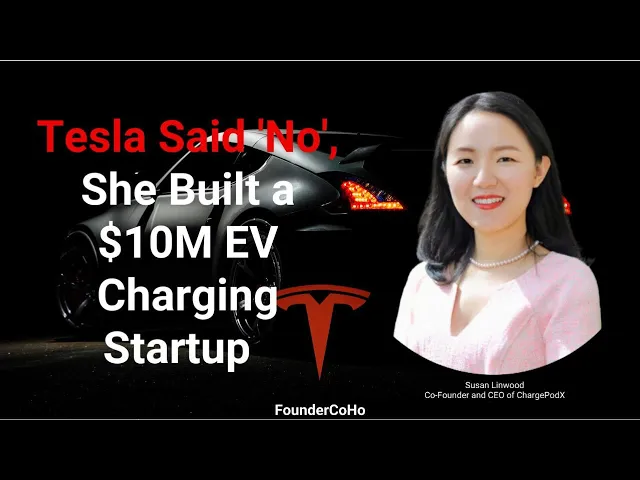
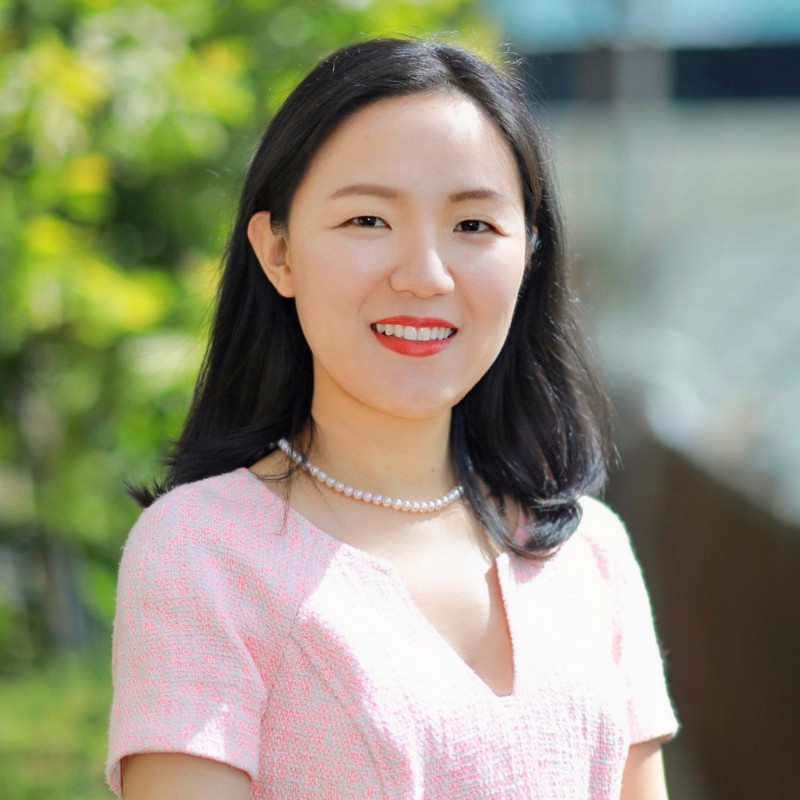
Susan Linwood, CEO of ChargePodX, on becoming an EV charging pioneer.
|
CEO of ChargePodX,
From Tesla Owner to EV Charging Pioneer: The ChargePodX Story Tesla hesitates, but should startups charge ahead? Can Cybertruck owners build a supercharger at home? Dive into a chat with Susan Linwood, CEO of ChargePodX, and discover the future of EV charging tech! As an immigrant founder who built a multi-million dollar clean energy tech company,
Susan shares invaluable insights on:
- Solving the EV charging infrastructure challenge
- Building enterprise & government relationships
- Leading as a woman in tech
- Creating a supportive startup ecosystem
🌐 website: https://go.foundercoho.com/chargepodxwebsite
👉 Connect with Susan: https://www.linkedin.com/in/susanlinwood/
Timestamp
1:00 Introduction
2:13 The ChargePodX Origin Story
12:13 From Finance to Clean Energy tech
19:01 Silicon Valley & Stanford Experience
38:26 Sales, Marketing and Service for Enterprise and Government Customers
50:00 ChargePodX Roadmap
52:05 Balancing Startup & Family Life
01:00:00 Advices for people who wants to do startups
01:07:25 Woman Entrepreneurship Advices
Full Transcript
I don't jump into this thing energy space this energy space this infrastructure space. I think it really work. Is it only me is one and only secondly only in the culture of the founder culture is like the supportive system the understanding is important the communication only gave us one foot in the door but the customer service is truly the quality that make sure that we stay in the long run and make sure that they would work and other friends for us. Being an entrepreneur is a lifestyle change. I share my success stories with my children and I share my challenging stories with my children so that they one of the most proud thing that my children are my girls would tell their friends introduce me as in my mom is an entrepreneur. Being founder is going to be 10 times harder than you have everything so make sure that you have to have
Welcome to Founder Culture. Share founder story through founder journey. Today we are honored to have Susan Liu the founder and CEO of ChargePoint EV to share with us her personal journey and insight. ChargePoint EV is changing the EV industry by providing Tesla-like supercharging experiences at home. In this interview Susan talked about how she turned her personal pain point which is how to find a supercharging station at her home to a real business the ChargePoint EV. She also shared as an immigrant and how she moved to Silicon Valley and her learning the process. She also shared as a woman entrepreneur how she balanced the startup building and her family life and how she became the role model of her daughter. Let's hear Susan's story. Thank you very much. Thank you for inviting me to come to your home. So, my name is Susan Li uh very nice to meet all the audience here. Um what um I had a background in business. But in 2019, I became an owner, personal owner of Tesla vehicle. And once I started driving it, I realized this is the future. Just like many people, I had a skepticism of electric vehicle, but once I started driving it, all the skeptic went away. And truly though, the driving experience, this the the technology uh has something to offer to everyone. And also in my observation, I was getting a mid-life panic attack. Was throughout a 6-month period right after I purchased my Tesla, all of a sudden, there's a huge spike of personal Tesla ownership. I I realized this is the future. So, like many people, uh I'm a curious person. And when when we purchased a Tesla, we were told by the dealer, "No, you cannot have a Tesla supercharger at home." Yeah, we didn't take no for an answer. So, uh myself and my CTO, our co-founder, figured out a solution to essentially supercharge at home based on home level charge. Now today, ChargePoint X is a multi-billion business, multi-million business. And we are um um we um did product market fit a few different times, and we found our technology best used at the fleet side, commercial fleet side. However, the exception of the business was uh like you said, exactly my life pain point translated into a real business and to help drivers like me to stop there like that. Oh, thanks. Beautiful story. Thanks for sharing this with me. Absolutely. Yeah, I saw that way you drive. Come here drive a Tesla. Is that a Tesla you are driving? You Yes, that is a Tesla that I still own and drive. I enjoy driving it very much. That's awesome. Related to Tesla, a lot of our audience are also in the Tesla meters or thinking about buying Tesla stock. I actually have a friend who once told me that the friend he bought a Tesla um 5 years ago. He said he regretted he didn't buy the Tesla stock 5 years ago than the Tesla vehicle. I'm curious that since you are in the EV industry and knows a lot about about the industry inside, what do you think about the impact of Tesla on the whole EV industry? And how do you how do you look at the the stock of Tesla? Do you think it's really it's too high or you will be there's even more opportunities going on? So, there are two questions. One is what Tesla did for the industry. First of all, a tremendous contribution. I have a lot of respect to um to the to the founder of Tesla and the current CEO, of course, Elon Musk. And the whole team. I know quite a bit of uh team members who works in Tesla just because of course we're in this in this in in the same same ecosystem. Um so, I commend um Tesla truly um figure out the mass production of EV electric vehicle. Mhm. And also uh consolidated the charging standard in North America. Mhm. And those are the two very important contributions that uh Tesla has accomplished and made. Mhm. Um in terms of stock, interestingly, I was I was I I checked out uh Tesla stock uh I put a lot of work into it. Yeah. Um um it is at an all-time high right now. Mhm. Um it it had a huge spike ever since November uh this year. Um um you know, this is not a financial advice, but I do think Tesla as a company still have a lot of potential in it. Um but at the same time, it is at an all-time high, so um you know, of course I'm sure uh I want to let the audience make their decisions Yeah, they got it. um uh what to do um the um the dominance of Tesla in the market, especially in North American market, is quite obvious. And I believe in the near term, this dominance will pay well for Tesla. Um and we'll see. Uh we are still uh the new administration has not started yet. We'll see how the new administration work with certain uh government policies, regu- regulations to see what um in what way that's and will have a huge impact on the industry. Uh uh Right now in the industry, the consensus is all wait and see. That's what we see from a lot of conferences that I recently attended. Uh it's in a wait and see moment. Mhm. Um the industry is still young. Mhm. For example, um after a couple of considerations and some events going on in the industry, right now there are only one surviving electric bus manufacturer in America. Mhm. Only one. Mhm. Um that's an unfortunate situation. Uh I recently attended a meeting about electric bus. Mhm. Um but the the the the sentiment of the industry is we would like to have more. Mhm. So that customers have more and also some healthy competition in the industry to do how that solves that that demands. So that's just an example. Of course, you have more choices in passenger vehicles. You know, we will see. And I have all the hopes and best positive expectations of the industry. However, we will not let the industry just settle a bit. The industry got to be better. We will see. I think whoever will survive will be in a much more stronger position because of the natural consolidation. It's inevitable. It's probably healthy Yeah, exactly. Yeah, a lot of us remember like Tesla as a like EV manufacturers. At the same time, it's also a big player in the charging industry with the supercharging capabilities. And that's also the main reason is ChargePoint X. We want to share a little bit more about what you are doing in the ChargePoint X, what problem you're solving, and what made you start to get excited about this. Absolutely. So ChargePoint X, mainly we are a manufacturer of our own chargers. And mainly our feature our main feature of our main product is we utilize a lower infrastructure. The infrastructure that is 80% of US small to medium business, the infrastructure of 80% of US apartment and warehouse, and that kind of infrastructure. And make sure and charge it as fast as we can. So normally the DC fast charging is only available if you have a higher infrastructure. And to upgrade that from lower to higher infrastructure it takes many many a long time. New transformer, uh new lines coming a lot more with the local utility Mhm. permitting, construction, uh average right now in the industry is at least 9 to 12 months or 18 to 20 years. Leading up to 20 years. So, that's a huge investment Mhm. in financially and a huge investment in time. Our feature is we are pop-up, flexible, quick deployment of infrastructure so that we can utilize it anywhere. Mhm. And charge as high as possible. So, our target audience target customers right now that we find is really really speaking about our niche. Mhm. So, by fleet I mean school bus, city transit bus, uh city maintenance departments, Mhm. um car maintenance, shuttles, Mhm. large event drainage trucks, and also last mile delivery trucks. Mhm. So, these are all specific customers that works very well with us, that we satisfy. So, Mhm. um we are very proud we are serving a relatively niche market and also but also at the same time we're making a huge difference in this market. Uh I want to I want to talk about my personal Tesla and Tesla charging. Tesla's public charging is very relatively readily available to regular customers, regular consumers. Um um that's kind of the you know, a a bit of a how um regular regular drivers relate to charging. Mhm. So, our technology is essentially a Tesla supercharger but on wheels and ready to deploy tomorrow or Monday. Yeah. Yeah, thanks for sharing that. One keyword I heard you talk about is infrastructure, which is very very important. Like like we need an infrastructure, public roads or cars to move. Mhm. We need the infrastructure for chargers in order to be able to do that. That's a very very fascinating thing to do. And let's dive that later talk more in the in the as we talk more. And I also realized one thing. And if I look at your past experience it The one last thing I would like to share with you would be infrastructure project. I I I really admire you have a financial background. Uh Yes, sir. Yeah, so tell tell us tell us a little bit of more about your early days of your financial like background, a finance background, and how what made you decide to jump into the finance field into the hardware spaces. Yeah. Thank you for asking me this question. I do have a non non-linear career path. Mhm. For sure. Um my earlier years was in a family finance. I had a family finance back background. I went to school for those. Uh that brings me solid business background, which is very very handy when I'm running this new company. Mhm. Um I also um had a a good a good couple of years that raising family actually. Um but after raising my family, um you know, I Essentially, I think it's a drive of would love to control my destiny. Mhm. Would like to find my own destiny. Mhm. To explore my own path. A 9-5 job is awesome. You know, it's it provides a stable income. And the the the psychology is is much more predictable. Um however, I think it's the drive of if I don't do this, I will regret it in 10 years. If I don't do this, if I don't jump into this clean energy space this energy space this infrastructure space, I think it will it won't work. It also I feel America that's generous. United States is a very entrepreneurial country. Land. The land of freedom. And land of
Just just a founder. A startup. So so it has a lot of policies that encouraging uh everyone to become a business owner. Yeah. And I I I Once I realized that, I went I only live once. Why not give it a try? Yeah, you mentioned a really great point that everyone just live once. You only live once. Using your own culture is actually very very important to start a company. Absolutely. Yeah, the number one resource for you is your time. And you can never get it back. How to spend your time? How to spend your life? That is very very important decision for all of us today. And find something that you have a passion. Absolutely. Absolutely. If we have um so I think founder life is not for everyone. I think you do have to have a a stronger psychology and emotional stability to be able to handle all of the challenges that as founders you and me face every day. It feels like we are uh battling uh some challenges every day. There's every day there's new challenges. But every day that I go to sleep thinking I solved some of them. Right? I solved some of the most important challenges today. And that's a win. That's a win today. And I count my wins every day. Um I do think that uh you do have the conviction, you do have to have the conviction to believe in the it is a very good problem that you're solving, believe in solution that you're bringing to the table, and also believe that we're doing something good for the community. And all these values align. And also you want to work 10 years. If you have all these convictions, then go ahead, absolutely do it. Become a founder. And make sure it's, you know, put 120% of this in this product. Now, if you don't have the conviction, um if it's uh just a you know, a nice to have kind of idea, then that may not be the right idea. Or that may not be the right time in your life to do it. And that is okay. That's normal. Founder's life is not forever. That is okay. Yeah, exactly. Yeah, one thing that you mentioned is very rightly for me is that you need a conviction also to work here. And many people when they you can start up, they they think start is they are only willing to be inspired, but actually there's a very long period of time Absolutely. in which founders are looking to the ideas. It's a It's a soul-searching process. Absolutely. It's not only you said soul-searching. Yes. For sure there are product market fit, there are um go-to-market, there are um you know, keep on innovating so that you eventually find the right solution, the right product, the right customers. Um so uh it's searching the right solution, and it's really soul-searching. We love uh We are going to, as founders, I'm sure you and me we find we have to find our limit is. Yeah. And and to find out, okay, um this has to be Sometimes a lot of times it doesn't work. It really doesn't. But how do you pick yourself up? What what To to move forward. Yeah. It it does take uh some mental strength to to be able to to move forward. And also, we need to surround ourselves with right with people, Mhm. caring people around us to be supportive, to have that ecosystem. It takes a village. It takes a village to to create a successful startup. Exactly. One thing like you mentioned that environment really means that it takes a village to create the startup. And it's actually also founder's responsibility to create that environment or find the right environment so that you are in the right spot to succeed to build the startup. Absolutely. Yeah. I also realized that you have very rich experience in different parts of the world. You grew up in China. You spent a couple of years in Chicago, Ohio, and then moved to Silicon Valley. And curious, you also have a lot of experience and why you ended up deciding to do a business in Silicon Valley. Silicon Valley because it's Silicon Valley. Uh that's simple as that. Mhm. Um before I moved to Silicon Valley, I was able to attend a couple conferences, pitch events, a founder event here. Once I started to talk to more people, I realized, oh, um I cannot find similar symmetry, energy, the support, the ecosystem anywhere in the world. Mhm. There's nothing no place like Silicon. Silicon Valley is one of a kind, Silicon. Um and the Jeff Bezos recently had an interview and he said, "In anywhere else in the world, you would not be able to believe that somebody collectively will give a hundred million to a group of people, a handful of people who has a seed money, you know, for their startup. Um but this only happens in Silicon So, the culture of the Silicon Valley culture is like the supportive system, the understanding is important. So, that's why I want to be part of this. I want to be part of the the fertile ground for for for people becoming a startup and then and then hopefully grow my startup, just like many people we will see in many people in the future. Yeah, yeah. I think you mentioned a really great point. This is an area where density of resources, especially people are willing to risk is is on par now among the world. And I have a very similar experience like you. Um I was also born in China and my initial come to the US, I actually picked Boston as my uh my city. Saw that Boston should have enough density of talents. Absolutely. Yeah. They still do. They still do. And then I realized that even though Boston may have a lot of talents, in terms of the talents which in that who who embrace risks to do startups, and from that perspective, Silicon Valley is on par now. And among all the challenging founders we used to face, moving to Silicon Valley is probably one of the smaller startup smaller problems to solve. So, I know a lot of the our audience is might not be in in the Valley. Or in different part of the uh maybe you might be in different part of the world. Uh and I have also seen a lot of special knobs like how how people do the assistance. Like you you may have different um uh restrict like constraint so you cannot come to come to buy. But here there's a lot of resources and people can leverage on. Community like on Google and we have communities. Oh, absolutely. Yeah, and um I love your events. I've attended a couple already. They are very well run. Yeah, yeah. Thanks. Yeah. Another thing, I also know that you attended the SE standard program. Yes. Yeah, tell us a little bit more about that experience. Absolutely. And by the way, you just said that um I think even people your audience may not be able to even buy it. But they can pick up a book. I I recommend a book. It's called Venture Mindset. In what year was it? By uh Professor Ilya Stroblov Yeah. uh from Stanford. uh Graduate School of Business. Um he studied adventure um how ventures um invest in startups. I think um it should be one of the books that every startup founder and every venture um capitalist should read because he had nine different points of what people can take away. So, not only um so if you um it is okay to not live in Silicon Valley. But I think um being a startup co-founder, um we should understand the points. Yeah, exactly. And you can always like uh comment on these so you can You can always comment on this. Yeah, exactly. Yeah. So, let me talk about uh Stanford Executive Education Program, SEP. And by the way, that's where I met Oh, that's awesome. And we had a class during the last seven times. Um So, I find I'm very grateful that Stanford with the alumni called uh which fabric of this very globally renowned institute. Um Um what I learned not only from the professor, but also from my peers, my classmates. Many projects are united by my classmates, by my classmates, and many venture capital business provide equity and also big corporation executives are in the program. So, what I learned from each other and also from the professor is important. I think they changed my mindset a bit in how to work in my business and also my life. Yeah. For life challenges. I still keep in touch with a lot of my classmates Mhm. and I am able to join a lot of online events Mhm. um through that channel and just every time the people, the network um that I was able to join is phenomenal. And I'm very grateful. And I think it's still um it will carry myself, carry my startup, my company uh for a long time. Yeah. And so, so that's uh such a privilege. I was able to connect both not only with GSB uh a graduate school of business, but also with sustainability school and also the engineering school, computer science department. I just all of these um places is tremendous capital and this network that I was able to tap into. Just great connections. Yeah, yeah. Yeah, SCP is a fantastic program. Uh that's also very related to the topic we have a lot about. This Stanford is such a great symbol of the valley. Without Stanford, there's no Silicon Valley from that. Oh, yeah. And other great institutions. That's great. Yeah, great as well. But Stanford is definitely one of the symbol of the the valley as well. That's many ways to involved in the both startup ecosystems and Stanford ecosystems. Uh SCP is a fantastic program. Yes. And I myself also have a very interesting experience with the Stanford as well. When I started my first startup, I actually did research about the SCP program before I was about to join. Um but it was very expensive. It is still is. Yeah. And then I thought that oh which other possibility for me to get us like as some education from Stanford. So I I found this program for Stanford continuing study and found an entrepreneur class. Yeah, it only cost me $400. And then in this course I actually met uh two of my most important investors lead to get their um invest 1.2 million in my first startup. So if you think about the the payoff is like probably the best VC deals you can Oh, absolutely. You should You should write about this to every friend of yours. Make sure every friend of yours know this. And also make sure every VC that you meet to know this. Say "Hey, you invest $400 and you you get 2.1 million back." Isn't that a great deal? And so this So a lot of this story happened to me and also happened to a lot of friends I around me. It's It's not because I'm very very super special. It's actually a examples of the uh um of the density of the resources, the talent, the people are willing to put money Yes. uh on you so that it is possible even if you're just going to join a continuing study class and you find investors. So two points I to come to the Silicon Valley there's many ways. Like even if you are like you can go through different programs, like SCP program, continuing study, and you can just come and hang out and join events that might be a good idea. Yes. I recommend SCP the most successful SCP alumni. And every year he gives a talk to that year's SCP cohort. And it's an event. It's an excellent event. Mhm. Um and also he's um um So I had a opportunity during this year. I sit like that close. Oh. Cool. Um He's acting humble. He's humble. I mean I think they He's humorous. He's humorous. But I can tell that
he he's thinking about his next chapter. Mhm. He is thinking of his next chapter, just like any founder. There's There's no end. He's He's continuously reinventing. Mhm. Reinventing himself. Yeah. I I have a huge respect Mhm. to Eric. Mhm. And he's one of my my idols. Yeah. Yeah. Somebody I look up to. Yeah. I think he's very inspiring because one of the same many of the immigrants are not told that English is not our first language. You cannot do startup and all these things. One inspiration I got from Eric is that I used to tell myself that oh my English is like that. I couldn't do the job like CEO job that needs a lot of talking. But then when I look at Eric, so his English is not that good. He came to the US at 27. However, he is very charismatic. He's very charismatic. That's what that I It doesn't matter like what your language is. So I think um if the language is not your first language, uh there's still other ways to to make people stand out. So I think Eric's style and your style is humor. That's why It's always making fun of himself. You know, in a very candid way. Yeah, self-deprecation. In a very, very healthy way. Yeah. That just pulls that distance to to to people instantly. I I like that. Get people closer. Right, instantly. Um I I just find that being very charismatic. Very charismatic. And in that really helps first generation first generation immigrants. I think that's a great strategy to have. Yeah, exactly. I think what I mentioned earlier about leadership Mhm. I myself still looking for the leadership role in the um uh as I'm doing myself. One part of the startup building is that you need to collaborate well. At the same time, especially when you're doing CEO role, you need to present you like represent a company to your future employees, your investors, your customers. So, leadership is very, very important. Absolutely. One of the challenge that I faced before and still in the process of figuring out here in Silicon Valley is that because we come from more most of the immigrant also come from a more introverted culture, like Asian culture. You're supposed to be humble. You're supposed to not be too aggressive. And then in American leadership, a lot of people would be like they would treat you like a typical coach. Like really, really like uh masculine, strong, present confident. And that caused a lot of at least for me a lot of inner conflict. Like should I be that type of person? Should I How do I fit in to this this type of leadership in the US? That's a that's a very good good question. Um Jim, I I I I really respect that you are opening up yourself and being vulnerable um in this question. I I have um I my personality my my underlying personality is steady um on the actual side. So, that has worked well with me and I guess maybe part of it is I uh I came to America slightly earlier in my life stage of my my teenage year. So, um so so that has worked well. That being said, um I cultivate my my my pictures. I cultivate my relationship with my co-workers, with people along with my environment. Um Now, I think in the end days you need to be yourself. So, don't pretend to become somebody you are not. One thing if I may that I could have uh a suggestion to our audience, which is even during a meeting I use this is my a trick. During a meeting when you're taking notes, right? I usually divide my notebook this piece of paper into two parts. One part is writing down uh what I need to do from the meeting, what I learned from the meeting. So, it's actually a meeting-related notes. But, make sure I dedicate the other part listen to the other meeting attendees, especially the native speakers, what language they're using, what verbage they're using, what expression they're using, what kind of interaction they have. Observe and learn. Also, pick one person one to two person in your organization that you look up to. And that person is in a position that you aspire to be in the next step. Observe that person. It could be man or man, woman or woman, usually. Look at how he or she make decisions. How he or she interacts with people around him How this person dress. Hair style. Image. Now, I'm not saying you have to be exactly like like that person. But make sure you pick one or two person that you aspire to. And learn from him. Keenly observe and learn. So, my meeting notes always two parts. One is truly the meeting information. The other are what I learn from the communication skills. After this meeting. And periodically go back to it. Once you're truly truly observing and making notes, you realize that. Try it out. Practice. And that's how I grow in my communication skills in the professional side. Yeah, I think what you mentioned is very relevant to me. I appreciate your advice. Absolutely. Yes, we are I'm a first uh you know, sort of a first generation as well. And um but but I was And from all these mentors, from these um I was able to really hone in on my communication skills. Um I I keenly observe the former person. And founder. And and you know, whoever that you want to that you want to to to follow. Um just grow every day. Um I think that's very And also, pitch In terms of pitching, Yeah. that is coaching. Yeah. Very intentional. And I'm not a master yet. I'm I'm not. However, it is very helpful to join some pitching coaching events. Uh to join Toastmasters. Oh, I I also joined Toastmasters anyway. Absolutely. Absolutely. Um and also practice makes makes it perfect. Uh practice with in front of your family, your friends, your colleagues before you try to go to a master, for sure. Um Um I know I have a pitching event. Like I um I Um I know a friend that even practice uh with his daughter. Mhm. And actually his daughter gave great feedbacks. Mhm. And also then I I give you one of the uh a pitch competition, first place. Yeah. Actually several rounds of of practice. Exactly. And one thing that you mentioned that's very relevant to me and I have been doing that a lot is that practice. And find a a psychological safe place where you can practice and feedback. Like the Toastmasters you mentioned is a great place is that you get a group of people coming in to listen to your pitch and give you And it's a very friendly environment. Environment, exactly. And you you want to the start out, try out at a bit of a friendly zone. Yeah. And then go to more uh serious places that you you probably truly need to present. Get more harsh. So so the first place is the place that we can clean and polish our presentation. Exactly, yeah. In fact, that's also how I got into public speaking. Uh Tell me more about it. Yeah. Initially, of course I just come and do stuff. So, I just do myself. And then there are so many places I need to first do practice and do a pitch and get some opinion and honest feedback. But, I realized I never get any honest feedback from you guys in general. It's hard. But, yeah. They're busy. They also want to They don't want to bring Greece. So, like they never They will be silent and disappear in most of time. But, but I think the key thing that also don't I'm not exactly the same stage as you are. I realized that the networking with fellow founders is much more useful and effective. So, I started to have a Google Founders coming together to basically like give feedback each other, help each other's live and meet them regularly. And then I realized that to to one thing you mentioned about earlier, to build a village to create a startup. And that's that's how I got excited in community building. Absolutely. Absolutely. Um you know the community building is is wonderful. I've attended uh uh uh many uh Founder Cohort co-host event already. And every event is very well hosted. And you invite interesting, strong, seasoned speakers. And every time I learn
And also the uh network before and after is wonderful. Yeah, thanks. Thank you so much for for supporting the community. Thank you for hosting these events. Sponsor is complete. Yeah. Um so, the next topic I actually would also would love to get your thoughts is about um about as you are building a startup, especially you are playing the CEO and do sales and marketing role. And your business is selling to is is the is is actually even harder than enterprise, it's governments. Uh and which are Some of Some of the Some of the customers are government. Uh okay, like government. Some of the customers are private. Are private, yeah. Yeah. So, I'm curious that you mentioned about you how you practice in your leadership and communication skills. Do you find those skills are useful as you're talking to customers? Yeah, how do you do Do you have any advices to people who who needs to sell to customers like that, like bigger companies or public sectors? I see. So, about governments and enterprise customers, they They are obviously in terms of power, they are in the stronger power position than us, for sure. Um I think first and foremost, we need to make sure our product, our solution, our service is truly solving our customers' problem. That's first and foremost. And um lucky for Chargebacks, in this space that we are in, we are one of the very few, if not the only solutions out there. So, um now our customers understand and they know that we are unique. We are the solution to them. Make sure we are around. We attend many events, many industry events, conferences, um you know, we go to where our customers are to meet them in those states, in those places. Um and make sure that we give um highest testing the testing opportunities for our customers. Um make sure that we serve the product. So, as a matter of fact, before this interview, I had a customer that just called me. And urgently we need some of our products. And they wanted me as humanly possible as I could get, which you know, probably um tomorrow, which is a Saturday morning. So, that's what we we decided on. And uh this Saturday is just before Christmas. So, uh a lot of other competitors probably are already not even answering their phones. But we were able to move and deploy and serve our customers within 24 hours. I think that speaks to the customer service, the dedication to our customers. And I know that is what they expected.
Also, this particular customer is another customer to So, this is our first customer, which was our first customer, too. So, this just goes a long way. If we're doing the right thing, our customers will just tell tell our tell others. Yes, that's the that's a fantastic example. One thing I heard you from uh from uh from your sharing is the dedication. Uh a lot of people say to sell the marketing you need to sell is about talking, it's about communication. That is very very important for you to get to to for customers to understand what you're doing. But one thing you bring up, which is very very important, is that you show your dedication to your customers. So, it's going beyond talking and communication. It's that putting your customer truly as the first as the first priority. And they will see and they will be your champions and they will be your promoters. Sometimes my customer might um might um make a you know, slightly have some misunderstanding on our product. But the way that we approach on my team approach is
always say oh okay so this is what happens how about try a different solution. Like sometimes um it you know they the misunderstanding is really caused by other nature and some things that we are not in control. Um however we need to always see our the service side we always need to be understanding and and and make sure we provide the solution. You know so I think that mindset that customer service mindset is very important. The communication Ali gave us wonderful feedback but the customer service is truly the quality that make sure that we stay in the good graces and make sure they would refer their friends for us. So that makes a huge And we we work 24/7 like I said if if our customer calls at 3:00 on a Friday even Christmas we deploy on Saturday. from our vacation time. Our team member were about to take a vacation on Saturday but I um I I was able to reach him. We knew that things make sure that they're taken care
Yeah yeah. Well customer showing that dedication to them is very very important. Um and also equally important is delivering them as soon as possible. Absolutely absolutely. hardware is very different than software industry like it actually moves quicker than a standard delivery. Uh it's incredible we have that you can actually delivery a challenge in just two days. Tell us a little bit about how the logistic or how the manufacturing of the bowling ball and company works and how you figured out a way to be able to effectively deliver solutions to your customers. Thank you. Uh excellent question. We didn't uh figure it out first day, right? It took us some time. However, currently, we do have our our assembly and our warehouse here locally in California, in Northern California. Um so, the local advantage is very important. Our response time is 12 hours. And this is uh what we want to provide for our customers. This is how we stand out, how we make a difference. Um we make sure that we keep inventory ahead so that when our customers need it, we can ship it right away. Uh it did take us some time to accumulate our uh ability to to to be here. It's not a big deal. Um and we made our mistakes. We made a fair share of our mistakes. Mhm. Um to understand our rules, to understand our logistics. We we made some We we learned. Mhm. We learned. But every time I One thing I learned from uh one of the Stanford professors was the mistake I regret is always the mistake that I make the second time. Actually, because that's when the lesson is not learned. Mhm. I can make a mistake always one time. Mhm. But not a second. As long as I'm doing that, then I have no Mhm. Yeah, yeah. Learning from mistakes is very very important. Um also, I'm curious about another part of about Holloway because a lot of the bowling balls that I have known recently Holloway is hard. One of the reason is that it takes a long time for the revisions. When you figure out something goes wrong the manufacturer the company probably already signed a manufacturer agreement. The cycle is way much longer than software which you can find a bug just like deliver this fix the code Um I'm curious that in the product iterations you have in the chapter X how long how does the iteration process look like in your company and how do you make sure that it's fast enough for you to ship the good product? Thank you. We of course we keep a detailed record and iteration. Um um we debrief with each and every scenarios that happen uh during our pilot projects. We make sure that we are on top of our R&D. Uh it does take some time much longer time than software to update. Um however, uh I think it's working with the right team. Working with a team that has a mindset that this is not the end product. Mhm. We are always um innovating and reinventing ourselves. Mhm. And always keep a very keen observation. Keep our eyes open, our ears open to make sure that we listen to our customers. Mhm. So uh and our customers knowing us and knowing us um that you know, it generally speaking in the energy space, electric vehicle space, in the human space Mhm. the people are very very willing to collaborate. Mhm. I have major enterprise customers Mhm. very willing to figure out new products with us. Mhm. Co-develop Mhm. that mindset. Mhm. It's just incredible. Mhm. We have weekly meetings. So we were able to able to do the code about objects which are our major so that helps and that helps our finances helps our the willingness that our suppliers would would work with us so that I feel better and feel very grateful that we could have this one.
Yeah yeah exactly. Always listen to really getting with your customer relations. Listen to them equally fast equally fast as fast as we could and get feedback from them. Yeah. Yeah I think a lot of us are also very curious about this federal rebate from Enel X. It would then be gone or how does that impact the overall overall like consumer choices? I see. Yeah. So the federal rebate is gone as of the end of this year end of 2024. Um you know it it it might be a bit of an impact passenger vehicle but it does not directly impact the commercial vehicle which is our customer base. Um now in commercial vehicle side there are some rebate and grants as well. You know there might be some changes but I think it probably will be helpful in the industry because with all the rebate and grant then it's really too much how the market will react. We'll see. We'll see. Yeah yeah. We we should wait and see what happens and yeah. So another areas that we are also very curious about because you mentioned about ChargePoint
when you will started you were really passionate about making superchargers at your home and we will have some products relating to that. What is the road map of the company? What is the next biggest initiative your company is taking? The next big initiative that we want to do is in security um spinning and using AI Mhm. technology Mhm. in the electric vehicle charging stations. Mhm. We do see some some benefits and also quite some security concerns around electric vehicle charger charging stations. Mhm. And we are currently working with a new AI team Mhm. to figure out in which way that we can identify the threat Mhm. um and also detect early detection Mhm. and also monitoring Mhm. and
so let me see. Mhm. So I have just a sneak peek Mhm. what we have today. Mhm. Got it. And also um So another new product that we're working on is leasing our product. Mhm. We find our product is a generally great fit for leasing during construction of new construction infrastructure and also repair and maintenance infrastructure. Mhm. The leasing program has been doing very well. We got approached in the past 1 months Mhm. about three different transit bus organizations Mhm. in California, in Nevada, and in Southern California. Mhm. Uh we got numerous Mhm. which is our leasing project. So we'll see how it goes. Yeah, yeah. Yeah, so another topic that I'm very, very curious about is that um you have been like doing Champs on X and you mentioned about customer dedication very very important. At the same time, I know you also have two kids and family. How do you balance the family and the style of living? Thank you. Um I am grateful that my children are no longer infants and babies. Um they are relatively self- sustained. Um I think being an entrepreneur is a lifestyle change uh of the entire family. So uh we align with my husband, with my children that hey, this is what Mommy is doing and uh everyone on board. And also make sure I create opportunities so that my children see what I'm doing, what I'm working on. I share my success stories with my children. I share my challenging stories with my children, so that they learn. Um at a younger age, I mean, I I teach them to cook, to wash their own clothes, um to fold their own way. Um they I love them to teach them the value that they are individuals, they are independent individuals that they can make difference in their own life. And also um I think it's to the value to the value of the entrepreneurship value. Right now, um one of the most proud thing that I uh learn from my children are my girls who tell their friends, they introduce me as hey, my mom is an entrepreneur. I think what I'm doing hopefully I'm I'm being a role model for my girls. So that they are inspired. Um what I'm doing if I I'm enjoying what I'm doing and I think they see that. At the end of the day, it doesn't matter how much I do for them directly. But really letting see what I'm doing, what I'm enjoying. Of course what I'm doing. Now of course I care about my quality time with them. I um when my children um they come to me even when I'm in middle of an email I um I try to drop everything, make sure I give 100% of my attention when I'm with them and answer their questions, do activities with them, do holidays and weekends to make sure that we have that quality time. And after they go to sleep I run to my computer and jump back on to building the stuff. So amount of time management, a lot of priority alignment and make sure that when I'm with my children, when I'm with my husband it's quality time. 100%
100% turn off put away my phones. Yeah, exactly. Your your sharing is really helpful for me as well. I am a father of a two-year-old myself. So I often have the challenge as well of the balanced life, the time with my daughter and also the startup building process. What I hear you mention is actually two sides. Um one is the mindset. Is about being a role model to to to children to children. Absolutely. Which is very inspiring to me and as a reflection is also a same reason I get my home phone study. There was a time I was very worried about that if I have two if I have a kid I have to be in the 95 job to so that I have enough time to spend with my children. But later I realized that when when I actually have my my kid I realized like what I want to give to my kid. I want to be a good role model. Like I'll be a dad they'll be proud of do something interesting on the crowd. Thank you. So that is very that that actually changed my whole mindset and the risk tolerance level. Excellent. Excellent. Now spending quality time is important. Yeah, exactly. Yeah. When you spend time I actually I I spend time with my children. Uh, we last week we build a 1,000 piece puzzle together. Mhm. And that's my uh, relaxation. That's my stress-free time too. To spend make sure I spend time. So that we build a project together. Um, and and that my kids see our hardware our product. They grow up around our our our hardware. They grow up and they saw our innovations our projects. Yeah. I had my girls uh, put on schools schools on our hardware. Mhm. Yeah. And I I make sure okay, I'm going to keep all these videos and pictures for you for life cuz you are part of a team. Uh, when we send out marketing materials my kids help me fold the envelopes. Exactly. They are part of the team. And I I make sure that they understand that they know it and truly treat them as a part of the team.
So yeah, include them of our startup journey and also make sure we are part of their life, too. So, I think it's a stress base. Yeah, yeah, exactly. That's very relevant resonating. And many of us might not realize that the positive impact of having family and startup building. One thing that you mentioned which is also very resonating is that it's also relaxation for us. Because often time what number one from one one reasons for uh startup deaths they actually found the burnout. Like a lot of founders burning out without actually knowing that until to a point of no return. And the family spending time like with family actually helps a lot with that. Absolutely. Yeah. You have this a lot of stress and the challenges on this side. You need to have that healthy family life to balance out this part of the stress. So, that otherwise it's Exactly. So, I will share you during COVID my family made a point that we go on a hiking uh activity every week. Mhm. Every week. Um in the middle of the woods. Mhm. Um and and that proved to be one of the best moments that I enjoy personally enjoy every week. That's the best time of the whole week for me because we walk together, we chit chat, catch up during you know, the the trees, the the the walkway, the the the nature, being part of the nature. It's wonderful. And it helped me to de-stress. Helped me put away all my challenges um away for the week. I can say, "Okay, it's my I can breathe in." Exactly, yeah. Breathe in. They really have figured Exactly. And that requires also intentional planning. I think you put a lot of intention, here, like design the activities so that the kids would enjoy that and you would enjoy that and like really have a beautiful memory on top of it. Yes, looking back, these are some of the fondest memories I have. Yeah. I think those are the best trips. Yeah, exactly. And also, like you mentioned, they design some of the company activities so that actually the kids also have their own memories, which is very important. Absolutely. Yeah. Absolutely. Absolutely. Yeah. Cool. Yeah, um I'm also curious about um your uh advices to people who are about to start a hidden startup yet. Like, what would be your advice to them? I think um be intentional. Mhm. Be intentional. If you're thinking about having a startup, it probably takes some time to accumulate the right solutions, the right idea, the right project. So, talk to as many people as you can um to validate your idea. To make sure that there's an idea that not only can be viewed, but also make importantly, can be sold. It should be feel a need to the end customer. Mhm. Make sure you talk to the end customer first. Mhm. Our engineer and you know, a lot of engineer friends, they build beautiful solutions. However, that's not ready for the market. Mhm. The There's a There's an idiom in Vietnamese is the dog needs to eat the dog food. Mhm. Right? Does it truly and make sure you I'll talk to the customer so that the customer can give you the right feedback. Say, "Hey, this might work, but actually I have this, this, this, that." on strings along the way that you might need to think of and make sure. So, that's number one. Number two is you truly have to have the conviction. We we talked about it Make sure you have the conviction. It is something that if you don't do it, you'll regret in 10 years. Down the line, then you do. Yeah. Yeah. It's not that hard to probably you're not convicted enough. Because being a founder is going to be 10 times harder than you have ever imagined. Yeah. So, make sure that you actually have the conviction. And thirdly, surround yourself with supportive people. That being your family, your spouse, your children, your parents. You need to be on board. Yeah. You know, make sure that they see that see that passion in you. Yeah. You know, communicate in the right way, right? In the right way. Um and surround yourself in the right ecosystem, in the right network. Founder Cohort would be the great opportunity to meet the right people. Um make sure that if you need to find the right co-founder, talk to as many people as you can. And um you know, so that you are in the right place to find the right kind of co-founders. Right. You know, so but in the end of the day founder life is a journey. Yeah. Entrepreneurship is a journey. It's a life journey. Yeah. Um people often times are not successful at the first time. You know. And there is a high risk. Um However, um enjoy the ride. The end outcome is not as important because it will take time. It definitely takes time. Um you have to learn everyday. You have to learn and be okay to fail everyday. The mindset The mindset. is very, very important. The mindset. Being able to but pick up very quickly and learn from the failure and move on quickly. Yeah, yeah. That mindset. So, I think my suggestion would be the right mindset, the right idea, validating the idea and also supportive system in those three. are the ones. Yeah, yeah, yeah. And you're if you're not there yet, make sure you foster these three elements so that one day you will be ready to take that leap of faith. Yeah, what you shared is very resonating. Especially you mentioned about mindset is is startup is a journey. You have to accept this is part of the the life. Yes. And also enjoy this this this lifestyle. If you're not enjoying, if you're Mhm. you know, stressed, anger, you know, take over by stress, by anger, um um that's not fun. That that that would not be it's that's not sustainable. You have to enjoy this, right? Mhm. And then and then eventually this will work. You know, this will work. It will work. Yeah, exactly. I'm curious that in your journey of developing for service mindset and eventually becoming a savage and more, which which people or resources or or like frameworks that helped you the most to to get those mindsets? I think it is being reflective on myself all the time. And I'll be honest. Um I um um I had a pretty smooth ride in my first several decades of life that I have to be sometime to learn that you know there are things that oh
I need to learn that I am pretty about
so it is It took me some time to understand okay there are
a lot of things I need to learn and the more I learn the more I know that I don't know right so so it is very hard and I'm still it's not the end I'm still in the beginning I I I have a lot of unknowns I know that I will continue to make mistakes so the humbling mindset really helped and along the way there are many mentors and many so that means like you mentioned any other books or podcasts you often read and listen
I do listen to GSB has a couple of professors they have podcasts and I I do I do listen to I I try I try to stay open-minded
it takes a long long time
right exactly so I think it's it's a journey make sure we enjoy the journey make sure so so life is a book you never you never know how next chapter is exactly you mentioned a great point now I give you work you know the book exactly like leaving the line is like a really good you don't know what is in future. And every seller found in the book you can also read other people's book. Sometimes no make more friends. Yeah. Yeah, so you you talk about the great point about the women entrepreneurships. Uh we also know a lot because we want to promote the women entrepreneurships. Um Um So we're doing all the investing. We we And so And also my co-founder is also a women entrepreneur. And she's wonderful. Yeah, I learned so much. And all the great people around me are basically awesome. So we're doing that this event. But I also realize there's a lot of challenges for women. There's a lot of social barriers. And also community generally must more It's much harder to find a community. Last last month when we were organizing the news panel like we do the same amount of the channels we do for reaching out in community but the number of uh communities of women is actually much smaller than we thought. And curiously also because as a woman leader and entrepreneur you must experience a lot of challenges yourself. What what would be your analysis to for for any woman who want to do This year especially people this generally exactly There are 224 students from all over the world. Yeah. Only about 20% are women. So on the executive level naturally women just there are fewer women. Um and out of these 20% of women maybe two or three or four are founders. One or two. So when I share my founder story with our women's dinner and when I share with them that the thing that made me most proud is my daughter introduced to friend as my mom is actually Powerful. Um so so there's uh the feedback is positive as well. So many other co-founders came to me and this is very exciting. I I do find women's events are helpful. I attend both men's and women's events and make sure I think as women founder tapping to the women's organization, tapping to that that association, that club, that network to launch um resources from there. We are small Can I speak very rich very so a lot here sharing the warm blows and all the positive energy support from the community. At the same time, of course, you can men, you are our allies. You are actually our very bonding allies. Please join us. Um so, seek mentorship. Women entrepreneurs just like seek mentorship both from other women entrepreneurs and men. Uh women and men entrepreneurs, very important. Yeah, exactly. What I should mention and what I really resonate with is that what I see in value information is that I I have a lot of for micro founders as well is that a lot of women entrepreneurs would have mom guilt. They would feel like guilty not being spending a lot of time. But at the same time, like don't feel guilty from that. Like we are the good role model and the kids feel proud. And also from from a men's perspective is that what I would like to throw out to the male community Yeah. from is that um it's not just a lot of time people talk about women representative as if it's a just like neutral initiative like that. It's not like that. It's actually such a hard skill. It's about empathy. And even if you are a man, you want to be a leader, the number one important skill you need is empathy. It's to understand people around what what they are thinking, the challenges they are facing. And by understanding your situation and other and shows your support, it's the best relation in leadership. And it's the best way to make yourself a better person. And so a lot of times like it's not you should put this like a two high priority. You're part of my and that by itself it already goes to show of your support. So we really appreciate you sharing your insight with the community. Is there anything that we can do for you? Oh, that's such an honor. You know, I would love to share my LinkedIn with all the all your audience. And feel free to add me on LinkedIn. I'm very active. Let me know how I can help the community. And if you have any connections I would love to make just be part of the be part of the the network system. Be part of from the cohort. That's it. Thank you. We will leave our students LinkedIn under the video. So if you want to connect with Susan and if you are interested but you can reach out to her and she will talk to you. All right. Thank you very much Susan. We really appreciate you taking the time to join with us.