Interviews
How a founder is saving developers 60% of their time with AI.

|
Founder & CEO at CloudAEye
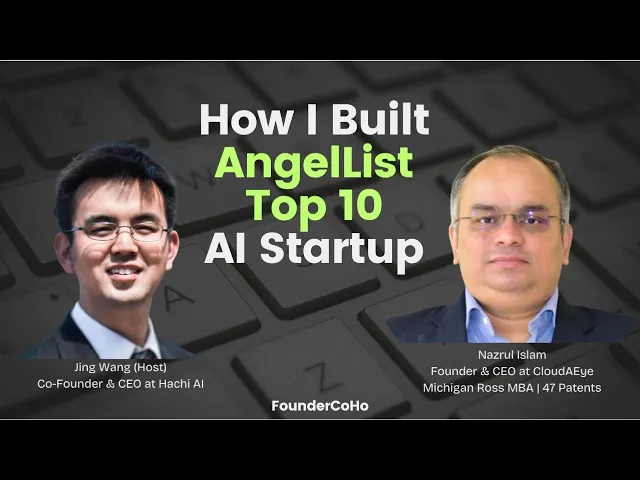
How This Founder is Saving Developers 60% of Their Time with AI" Join me with Nazrul Islam, Founder/CEO of CloudAEye (AngelList Top 10 AI Startup), as he reveals how his team is revolutionizing developer productivity by cutting non-coding tasks by 60%.
Must-Watch Insights:
- Why developer tools are a huge opportunity
- The "marriage test" for choosing co-founders
- How to compete with tech giants
- Building AI safety into developer workflows
Timestamp
1:00 - Introduction & Background
5:00 - AI Agents in 2025
6:00 - MBA Journey & Startup Transition
15:26 - Co-Founder Story
20:12 - Finding Product-Market Fit
27:40 - Customer Acquisition Strategy
33:32 - AI Code Review Innovation
40:01 - CEO challenges
Full Transcript
developers spend more than 60% of their time uh doing non coding activities and if you find an area that uh people are doing repeatedly and takes a lot of time if you optimize those using AI there might be a start up there like a marriage uh because you'll be spending a lot of time with this person for you know 7 to 10 years um if uh you don't have respect for each other then it's a bad idea to get into aunder relationship um don't wait for a perfect product uh to interact with customers if you not embarrassed by your initial product then you wa it to Lear so what do you have as a small startup compared to big Enterprise companies what's on your side is speed everything is the company real conversation is how much value Are you delivering for your customers as the CEO one of the thing um that uh you constantly struggle with is U prioritization because like you know if you make wrong decision you can easily spend 3 months reading something then
welcome to founder sh founder story F founder Journey today we have Nazo Isam to join us to share his story Nazo is the founder and CEO of cloud AI an Angeles top 10 AI startup he's also a Michigan Rose MBA with 47 pents that's H na story thank you for having me how is a developer to uh startup so one of the Staggering uh statistics that uh we learned uh when we started the company is uh developers spend more than 60% of their time uh doing noncoding activities so things like uh debugging testing monitoring deploying you know supporting production those type of activities so other than coding you know all of that activity consumes 60% of their time so what we are trying to focus on is how can we improve developers uh life by providing various tools um so that uh developers can very efficiently and um successfully do these activities without having to do these things manually repeatedly so by uh delivering these tools we want to make developers life better and as a result um free up free up their life free up their time and then that time could be utilized for more productive and fun activities awesome yeah that's like amazing tools that were like many develop life much easier and a lot of the members in the communities are founders who are all who they are still working on become but want to be founder one day you have amazing careers in B companies like Oracle leading the teams over there and then you choose to be a Founder what lack this transition yeah so I was a part of java team at sunos system so I spent about 78 years of my career there we were focused on how to make Java number one programming language during those uh and attract all the Enterprise developers in the world so during those years what closely developers developers communities so that gave me some insights and Foundations on how to think about developers and I was a developer myself um and um later on when I moved into management um managed developers uh as a leader and uh that also gave me another perspective of what are the challenges Enterprise companies face so the combination of both um you know give me some unique perspective on like um where to focus uh when I was considering to launch a cloud um uh these background experiences uh helped me pick this area and um in terms of uh advice for community in terms of how to think about uh launching a startup if that was your question um so we going to this amazing time where you can launch a unicorn with 10 people startup right so um it's actually a great time to think about startups and um there are lots of things that um people are doing repeatedly um and um if you find an area that uh people are doing you know uh manually repeatedly happens you know uh all the time and takes a lot of time uh if you uh find those uh use cases if you optimize those using AI uh then G start up there that's how I would you know free free the conversation inms of how to think about launching a new start that's like you mentioned where in an incredible time that AI is changing many things so what I hear is say that if you are in an confence or in fact anything you are saying that is repetitive and can be automated it's probably a very good time to use AI to automate those things and create a value for your customers and launch the sellup from that that's right yeah so I think 25 would be had of AI agents uh so you'll see a lot of uh uh new kind of uh capabilities coming into the picture and there will be lot of adoptions so uh you know every single workflows that uh people are doing currently uh you can ask yourself could we do this better uh could we make it more fictionist could we automate these things right and if the answer is yes there may be a start uh now these may not be the most interesting you know most you know lucrative use cases these may be very boring and you know things that people may not you want to do you know they don't look forward to doing these things but those are perfect use cases for you know agent is very very fany feeli there's a lot of thing happening here which will dive a little bit deeper later um so that's uh go back to the your journey of the St founder um and I realized that after you la um your the big compy job you actually started do MBA uh so tell us a little bit more about that experience I was at Oracle and Oracle was going through this transition from a on Prem you know software company to like a cloud company so they were sending all their you know Executives to these uh classes so the classes were organized between two universities University of Michigan and and European company called uh European school called IC so um we were doing one week u in Europe and one week in you Anor and in between we're doing a project so it was like a you know fascinating with of getting a peak of you know how to um um rethink um creativity how to computer those kind of things sort of like a mini crash CS in MBA so I when I took that you know program I was really really you enjoying that program so I spoke to the professors uh at the end and asked like what would a MBA you know program would feel like and they said it would be a much longer version of this and then um that kind inspired me to kind of consider my you know executive program and then um you know I remember the last day when we finished our program um you know one of the teacher he you know introduced me to the uh program director you know of the executive program and uh that's how I started thinking about you know pursuing my executive so um I remember you know talking to that person for maybe 10 minutes and then um you know remembering that you know there is like a deadline of apply so I never thought I'll get in because you know these are great schools and I wasn't sure you know that they would you know me so then when you know there was a like deadline was approaching then one weekend I actually sat down and applied and um and in in the initial phase and then I flew in for a face interview um and um uh the folks who were doing the interview they thought I would be really really good for the program uh so uh after the interview they offered me a position in the admissions class and then you know that's how I started my journey into into the executive program but it was U but start out you know it was like one thing L to another that's how I yeah so you get some ideas about what NBA looked like and then after realizing like that you now approach it and actually started to pursue the MBA full-time basis um I'm also curious that what what is the biggest takeway from the mpa program so I always um you know had my uh colleagues uh tell me that you do really great in a startup uh because you know I was always like getting things done and they I would be like perfect for the startup uh but you I never had you know kind of a business background you know so I always was apprehensive about uh kind of uh taking the pl so U when I went to business school one of the thing that I learned was kind of how to look at a business from like a financial perspective from a marketing perspective so I can you know so if you are thinking about doing a startup and you uh you have engineering background and you're kind of like nervous like me in those days MBA can give you the kind the grammar of how to think about businesses and how to think about various challenges a startup may have so um for me you know and being me the kind of the uh reassurance that you know it will be all right you know if I start and um the uh faculty and the staff you know they were very uh helpful you know they were supportive um in my personal I actually talked about you know having this uh you know dream of launching my startup but I was always afraid and then towards the end you know they you know one of my coach executive you know leadership coach she was like yeah you should you have all these skills to you know do your own startup you should really launch um so they are very uh supportive and encouraging as um and I also realized that before Cloud AI you also did another startup for a couple month like n months since and for uh is there any takeaway you got from your that Journey um that was mostly uh the should I or should I not so we were actually um thinking through like U What U startup to launch area to focus on um so I say that was K the ti pH before before we officially um officially can register the company and um uh unofficially actually I um I did a small start up long time back um during those time um we were trying to do um Services um um by uh it's um you know we thought U we have have enough skills um and we trying to do it part time so one of thing I learned is you know start up and part time doesn't really work you have to really get into for time if you want to do yeah exactly and once that's also uh I learned from my personal experience like really that being being a startup founder is a full-time job and you need to put your heart into uh into it to get really good ideas so let's uh let's uh um move to that like next part like then you start a cloud Ai and you describe a little bit about the complaint already uh I'm curious that how did you get an idea uh that's interesting HD so um in uh during our execu MBA program there is a class that um you know we took uh that was about entrepreneurship so the class required you to take a business idea and um write about it you as like a paper as if you're doing that um startup for so um that uh you know put the seed in our head and then couple of as um um started uh talking about start ofas um after lunch for a few weeks and then um that led to like lots of ideas and then we were like okay you know let's figure out like which one of these are actually W pursuing so one of the brainstorming uh idea was uh what do founders bring to the table like what kind of experiences do we have so we uh named it what's the F so the idea was you know you cook dinner based on what you have in the refrigerator right you normally don't go to the grocery store and buy something we're like okay let's figure out like what background do we have and what ideas then we can generate based on that so during that session since I had some you know what cloud background some DeVos background because I was you know associated with JS so um I thought about uh this uh idea of like building something in the developer space with AI That's how we got into cloria uh yeah I I know that for a lot of Founders they have like a deployment for them to really get a conviction I'm going to get this startup started for cloud AI is there any particular moment or experience that you like to share yeah so um I was kind of on the other side of this problem where um what uh I noticed is um this customer escalations that happens pretty much every week or every other week and um we uh we were fically trying to uh deal with it but most of the time it was mostly a manual approach um so um when I started uh thinking about various ideas my initial reaction was I wish there was a tool that could automate all of these you know customer escalation problems so that we wouldn't have to spend hours looking through kind of like the data to resolve a problem so then I started talking to my co-found and at the time he used to work at uh as an AI engineer so I used to talk to him and try to understand like okay what are the kind of things AI can do um and um you know what are the opportunities there and based on those conversations and you know I also subsequently I took some a classes to educate myself and then I realized that you know if we could th the between Cloud devop these few areas there is a nice automation opportunity so that's how we can got started in you know with yeah another very big uh important decisions you need to make to be a Sal founder is decide who you want to work with find a co-founder how do you you for called it took actually a lot of time and effort so um initially I was uh interested in this uh idea of using AI for Automation in the space uh so obviously I knew that you know I needed somebody who was who has strong background in Ai and um then I started looking for a co-founder but then um my co-founder kind co-founder he was you know happily you know gainfully employed you know at team so he wasn't considering to uh move um so uh what I did is I recruited him as an adviser at the time initially and then got started and then uh when he makes some progress and then uh he got convinced that you know it's um actually uh for him to also quit his job so then he also got full time uh but it took uh me several months to convince him and I saw this um interview with I think Steve Jobs um he um you know said you know he waited like a year to recruit one executive because he didn't want to you know hire anybody else because he thought you the person was perfect for that Ro so that convinced me that you know I should you know wait and see you know that I can convince Myer and then even see I was to convince him once thing you mention B actually very great strategy is that U if you want find a co-founder or have a very important person one way is also making them to be involved through Arrangement like advisor Arrangement or other ways so that you can get ideas what they will work well together uh and when you both get know each other way much better then it's much easier to make the decisions yeah the IDE days are actually funny so because I had cloud and Dev background so I would understand the domain and the problems in terms of like the kind challenges um uh I used to have or you know the customers would have but then um my co-founder had U lots of background but so uh when we talk um we talk like this we were not connected you know after you know him taking a look at you know this domain and me spending some time taking some classes then we started talking at the sameel so it was interesting to think about those you know early days and uh realize that you know um we are talking about lots of you know basic initial Concepts and we're trying to like educate each other that okay you know these are the challenges and you know he would tell me like okay these are the way you know you could do things in the ey and stuff like that but um you know we came a long way after that yeah yeah exactly and many people would like treat like a startup uh when the product take off but actually there's a much long majority before that like including co-founders fig out the best way to working together and it's not an easy uh task because everyone has their own exper background and sauce um since you mention about that you and your uh co-founders have slightly different background but also uh you both have technical background before so that's one combination but there also startups one one founder is primary focus go to market and another co-founder is primar on the technical side there are also cases where two technical Founders what is your advice for Source um what what makes a b uh the best founder team so it's always good to think about you know if your co-founder is complimenting you so um like you said uh if you can find combinations where uh one uh co-founder is very strong in the go to market side and one co-founder is is strong in the technical side uh then uh it's um great compination um but um what I would say is um at the end of the day think of it like a marriage uh because you'll be spending a lot of time with this person for you know 7 to 10 years uh so think about you know um whether you have respect for the person whether you would be you know able to work together and make strategic decisions without you know having you know conflicts if you can have those relationships those are the you know matches for co-founders um if uh you don't have respect for each other then it's a bad idea to get into a co-funder relationship the other thing is uh it gets [ __ ] because you know you start a company you have you know Equity ownership and things like that and then you know if you have to part way actually not a good situation so I would advise for New Start Founders uh to through carefully see if you're excited about working with that person right you know does the person compliment you uh in skills that you don't have in my case I didn't have y background which I needed for you know for sure to start the company um so it made perfect sense but uh you know if you had other combinations where you know you have all the technical skills and you need a like a sales or go to market you know leader that's even better if you can find that uh overall take time um to think through and uh make sure that you know you are comfortable uh spending a lot of time with that person for 7 to 10 years yeah yeah I think one thing you mentioned that which is really resonating is that this is a person you're going to spend a lot of time for next 7 to turn years so it's very very important you have complimentary skills but at the same time the trust the respect is very very important you have to be very enjoying to stay spend time with this person right yeah and also like Clarity of you know all the details like how do you split Equity you know who does work what kind of uh uh roles and responsibilities you have between the two of you because early days there is a lot you have to do uh so it's uh always great to have um very clear trust and you know like you have to feel like you know your co-founder will have your back and you will have you know e a card back when that happens then you yeah exactly yeah yeah like even with high trust and respect there are some structure like you need to Define your scope and responsibility that well help F strength and uh the trust Absol that's awesome thank you thank you so much for sharing this community on on this uh a very exciting experience to get the component study as we all know that getting component study is only the very first step of the start building and then after that we need to figure out our customers figure out product marketing iterate our product do you have any AD advises to Founders who to iterate and find a product Market feed yeah so um one of the advice I will give is U don't wait for a perfect product to interact with customers U so in business school they talk about you know clean concept that's actually very true so the sooner you can engage with customers the sooner you can get feedback the better it is for you so some ex examples is like you know don't even build anything like um if you can somehow communicate your idea to see like whether you know there is interest uh you know you are saving yourself a lot of time by building something that customers may not be excited about so similarly you know when you are you know starting out one of the uh famous video is if you not embarrassed by your initial product then you wait it to work so the idea is um build enough so that you can communicate your vision for the product but engage with your customers as early as you can um so that um you can get feedback and think of it as like a very cycle and um the other thing I'll say is don't worry about like you know having a big launch and you know Mega of your uh product you know when you're a startup U you are not a very wellknown brand or you are a very famous brand so launching repeatedly is a good idea what you need to do is you can build something uh uh interact with your customers uh obviously you'll get a lot of feedback uh because you know you barely built anything and uh take those feedback and then build those and then next month go out again and say Hey you do all of these things uh and try to kind of like you know do this as fast as we can another thing that I say is um U if you think about okay what do you have as a small tring startup compared to like big Enterprise companies what's on your side is speed startups can move very fast compared to big Enterprise companies so utilize that as your strength so if you can move very fast develop very quickly you know Amazon talks about you know that day one modity like you know the first day you have this like excitement if you can maintain that throughout and engage with your customers then I think you'll find your product Market that useful and very Rel and also would you mind to share a little bit of the integation you have done in the cloud AI that leads to where you are yeah so um we went through a couple of uh big people and iterations so when we started um we were thinking about kind of um building the infrastructure layer uh for observability and then uh we build EI powered observability you know solution and then um we spent um like you know one or two iterations you know building this things and then what we realize is you know the existing solutions that are in the market are you know big you know $40 billion companies so it's very hard to kind of through you know the marketing U and then uh we get started focusing on EI layer on top so that realization we found out the hardware if we had found it out sooner uh we could have you a bun of time so in terms of you know our journey um we went through U you know the speak of okay let's focus on the a um and that actually um um gave us a momentum and um and then um as we started to focus on okay you know what uh we can do with that and optimiz optimize um you know various workflows that lead us to kind of like the developer ecosystems how many customers are currently call AI have we have ear you know initial customers uh that we are working with um that we launched our latest product that focuses on test faal so when I was in a conference um of this conference one of the person I met there um uh she uh approached me about a problem that she she was having in her company and um we uh then later on uh got together and talk talk about the cases um then uh we realiz that U we can actually solve that problem uh so that led to creation of this you new service that we have currently promoting so what it does is it helps you uh analyze test failures in your cicd so as a developer when you push new code um it uh uh obviously goes to um bunch of tests um so if any test fails uh then what we uh notice is uh in an Enterprise developers spend uh uh half a day to a day prob we uh fixing those test uh if you can save that time you can actually uh save 10% to 20% of developer time um so we worked closely with this public company um uh to build the service and uh uh we are also working with few other companies at the moment to kind of for the early stage startup customer position is very very important you have and like uh SCE about customer conditions those you can share from your person like experience of cloud a or analis to the uh Founders in community yeah so early days um customer acquisition is mostly driven by Founders um because uh you don't have same team that you can rely on um so what you do is U um you rely on your uh personal reords um that U uh you have because uh people you want to before they know you so you reach out to them and see if uh any of those personal networks have a uh paino that you sol that's usually like you know the first thing that works and then after that um you know the local meetups and local um get togethers particularly if you live in B area there are a lot of Meetup that happens so if you um meet other Founders other you know Executives in the meetups um those are usually like you know good places uh to go to and kind of talk about your solution recently like just to give you an example in giab there was a A2 session that happened um so we submitted you know to talk there and uh we were one of the 10 startups you know who talked about um you know cloudia there along with you know few other startups so um so in the area there are like lots of opportunities like that so for startup Founders who are here I would encourage uh get out of the house and you know engage the local community that actually uh gives you a lot of uh opportunity to interact with other Founders um and other Executives yeah exactly you had a great Point as a startup Founders you always sell uh always sell your product whenever you meet always have a pach reading they potentially could be your customers they can potentially be your advisers be your employees all the time so really leverage your personal land workk as a starting point yeah in that note you know this community that I had the opportunity to attend is also a great community so you know yeah I can come join and attend the meetings here you amazing yeah so another very important P for the startup is the product because there's nothing the startup andless you have a great product and uh to the product part um can you share a little bit more about the cloud AI product and what is your thinking about competitive landscape uh your on yeah so uh the uh current product that uh we are focusing on um that uh we like I said you know we stumbled on it based on a conversation with a uh customer when we U work to the um customer closely to understand the air flow you know what comp they're going through and um and then realizing that yeah we can actually solve these problems is um unique in our case because we were lucky to find that kind of use cases so for that test faure analysis we haven't seen other products like this in the market yet uh for so um there is uh one other company um that does uh something similar uh in the like the quality space but not so much in the like the developer space where um you know uh like a very integrated experience with cicd things like GitHub actions and all integrated and when you push your code changes you know actually show you like the root cause of the problem and we also give you like a code fix suggestions those experiences we haven't seen um so I would say like um uh we are slightly unique or lucky there um most of the time you have other competive products so we have built few other things that we have not launched yet um so one of the other resolution that uh we are uh in the last stages of U kind of U development is cod review um so obviously there are other Cod riew products out there um that um you know does this but what uh we are focusing on for aiew perspective is U um uh a lot of developers are building AI agent you know rag Solutions you know lots of you know AI Cod and um what we notice is um the companies and Enterprises don't necessarily have all the expertise um that are necessary to successfully transition those early prototypes you know codes into Enterprise ready Solutions so we saw a a need for AI Safety and Security and so the Cod solution that uh we are U planning to launch will have you know AI Safety and Security in mind so the idea is uh if you are a startup or a company um you know who has uh let's say bu of uh prototype or you know MVP type you know code and you are stratching your head in okay how do I take these Solutions and deploy them uh and you know make them customer facing um then um you know if you use a um Cod solution who will help you make sure that uh your code doesn't have U vulnerabilities that will be exploited so that's like one way we try to differentiate um ourselves with other Solutions it's very very important uh like a solutions to help ensure that your solution is safe and also make the the development life cycles way much more efficient and better yeah so actually on the codw front one of theing statistic statistics is uh so let's say after you finish debugging your code and you spend half a day to a day going to the C failures and then submit your code for code review on an average Enterprises are spending seven days um uh to get you know two human code reviews so if you submit uh you know your PR uh today for uh to human Cod it takes 7 days so you actually get it resolved you know after a week so by having you know some AI automation there um you know helps speed up the code review process as well so the way we see it is U if you have a unbiased AI based Cod Rie which is very thorough and details um this will uh help uh the second human code Rie to acknowledge that these are important things to fix go through the list of items and uh prioritize them as well uh because you know out has labels in terms of security City and also like um scores so the riewer can actually go in and then validate those as well so that way you know the person who's reviewing uh uh after the uh uh that can uh be um uh lot faster than what it would normally be talk to few Engineers so I'll give you one other example so in one company they have the culture of different departments reviewing each other code so one of the challenge with that is if you are not like used to all the code written by another department then obviously you go for code review you're spending a lot of time um uh so one of the request was hey can you add a bot that can answer me uh code related questions like uh so we added support like at Cloud explain this block of code kind of you know Q&A so that um the human reviewer who is trying to go and review this U code you know may not be very familiar um they can um quickly get help and finish their um without having to spend yeah exactly Yeah you mentioned about AI agents earlier AI agents is definitely super popular and hard in the valley right now many people say that 2025 might be the year of the AI agent in particularly I think the AI coding agent has been super hard it's like um a highflying startup like cursor when the Ser is coming how do you think about the generally in the space and what other things that make you feel like most exciting and how do you think about the trend of the AI agent in particular coding agent yeah so Google recently announced that significant portion of their Cod was written by a agents so that was uh you know I open that for everybody one of the other thing that the people are beginning to realize is these agents truly make you more productive um so when I go out to meet other Founders what are your everybody's building agents there is hardly anybody you can find that uh did not you know somehow associated with the Regent uh yeah last night I went to you know meet up where uh there were like four companies uh who were pitching and everybody's name had AI at the end and everybody's name also started with the Mas so they jokes about it uh you know leaving that aside um if you think about agents and the opportunity and U how to think about all of these uh U product so on one hand you are going to see all these amazing tools coming up uh that's going to uh change how fast can you get get things done now um obviously um your competitions are going to be evaluating those so if you are not um uh upgrading uh your engineers with these uh tools then you may be because you know your engineers are taking longer to do things than your competition so obviously um evaluating these tools and figuring out how to adopt them in your worklog is going to be important for folks uh who are kind of like the consumers of these tools and then um the other thing that um is super important is as these AI agents coming in and redefining the space so um if you are doing X today you have to think about okay uh is my customers uh capable of doing that already using you know these AI tools and if does the case then somehow you need to the value chain and figure out what can you do on top of the you know utilizing agents so that you can continue to deliver value to your customers because uh at the end of the day if you are not uh delivering um value um in this new landscape then you may not be um uh as attractive to your customers as you are today Yeah you mentioned about very very interesting concept for like I heard mentioned about this move up to the value chain which is very very important uh and even before the air agent that Trend already happened like many people were working more more like the infrastructure actually or working on directing things that direct competing with open eye and it's very very hard to compete with those G building things on top of them actually is a great strategy to help to build some differentia part right so there is a this um conversation about you know are you a rapper company and you know if you're a rapper company are you that valuable so the way to think about all of this is um at the end of the day everything is a Apple company the real conversation is how much value are you for your customers I saw a comment where somebody was saying you know nvda is the company on top of Microsoft so so yeah so from one perspective you ex perspective everything is so then you know the conversation is not so much about D company non company conversation is really about how much value um are you generating or creating for your customers and um you know and are customers excited about those you know values and then the second thing is um what's your stickiness if you're um generating some values How likely your customers to kind of switch if there is another value in the system so you know that's into the conversation of mod uh but um but uh in terms of the value I think you that conversation um is uh you know has not changed you know it's it's the same conversation or true before and it's true now yeah you mentioned about a very interesting concept of stickness like stickness of your product to your customer is very very important what do you think like to your field and also for generally enterprise software what what characteristic will make a product to be seeking to the C yeah so in the kind of the developer tool space if you are providing let's say apis um then once a developer adopt those apis then you there's a cost associated with kind of like switching over to another set of apis so that's gives you stickness because you know if uh you get the adoption uh then uh developers are likely to stay with you unless uh something really goes WR so that's like one kind of sickness that you can get um the other thing that you can think about in the developer space is um you know how much are you making the developer you know productive so if you are kind of saving them you know lot of time you know the product is very intuitive to use uh it's uh so the way to think about is um How likely is the adoption curve so if the adoption curve is than your startup is likely to do very well um because if you can U make your product very adaptable meaning you don't need a lot of complicated you know uh journey to of adopt your uh solution um then um uh then uh you can actually get into produ P growth uh that U that actually giv you you know very fistic P the the time to Value like making it super easy for your users to adopt is very very important for for grows and Rain the customer that's yeah cool cool uh yeah so let's switch GE us to another topic which about technical leadership so you have an amazing careers of leading technical teams in bigger company and now you are a stup CEO that is a huge transition to change have you faced any challenges in the processing and what are big biggest takeways yeah so as the CEO um one of the thing um that U you constantly struggle with is U prioritization because um uh the enter uh you are responsible for a much bigger team uh so you have a lot of tools in your Arenal but when you just get started in a small startup then um you have a much smaller team um so one of my realization was priorization is key in terms of like um what do you do uh how do you spend your time like what do you decide to build uh those decisions you know we should scrutinize and make sure that you know you have that time uh because you know if you make a you know wrong decision you can easily spend 3 months reading something you know that may not be as valuable so uh that's one thing I saw and um other thing is you have to be very um uh judicious about how you spend your resources um so you know you a small startup um you know every dollar comes so you have to be very smart about how you utilize you know those resources uh because every um uh dollar you invested in your startup you have to make sure that it helps you grow so uh those decisions are are very crucial in terms of like like um let's say like how do you launch you know do you spend you know uh money um organizing launch parties how do you do it you know so those you know uh uh use you know money decisions Yeah you mentioned a very great point which is that when you working a big platform you wouldn't worry too much about resources but in the startup environment every resource you have every hour of time every dollar you have is very very precious so you have to you are in a situation you have to be really cautious about making every decisions that often leads to smarter decisions which is also one reason why startup can move faster and can do better can do better than big confident do you have any like decision Frameworks or any any tools that is helping you to make decision faster so we use a dasi framework from atasan um so in the early days um when we were trying to make decisions on various things uh that are impactful so let's say for example what text stack would you use um we went to this um decision framework that atasan introduced um so I use that and know one funny story is um so I was part of java team so obviously I thought you know use Java in the start as a programing language and then once we evaluated you know the kind of the programming language choices we ended up not using Java what I can say is if you um kind of go through the kind of the documentation and unbias you know critique of various options and include your statements in terms of making decisions not only you make good decisions um that you can live with and uh also gives you a record of uh the reasons you make these decisions so that uh later on if you want to go back and you know think about why did you make the decision it's actually alled for that's really really helpful so uh the last question I have is that what is the biggest challenge you have faced your staff journey journey so the biggest challenge I would say is my background is mostly technical um so I'm very comfortable Building Products um I have built uh many many products uh in Mya so um building the product U wasn't you know it was challenging but it wasn't in out of my comfort zone but uh when it comes to um doing other things for example Marketing sales uh uh that uh was a you know a lot of learning uh uh getting used to um doing Outreach sales Outreach uh those things you know I have to I have to and I myself is also a technical uh founder with technical background but now I'm also in the CEO of my own stup so what I mentioned is very very resonating um as a start found it's very very important do the product but at the same time it's equally important to make sure the world knows your product that involves a lot of work like sales marketing put yourself in the public so that other people will know you yeah absolutely in this is actually that's U equally or more important i' would say because uh lot of people can build these amazing uh tools and solutions but uh what would differentiate uh between startup is really the ability to you know execute on the go to market or distribution channels right so the startup with the stronger distribution channel will eventually win do we have any advises or any resources for Founders to improve on yeah so uh one that I really loved is uh name is called the qualified sales Leader by John mmon um he was like five time C and um did amazing companies uh so and the book is very easy to read so for first time found um with that you know technical background folks like me you know who don't necess have sales marketing background I would U you know sub that book U I learn it on by reading that book the other things I'd say is for uh folks who are considering to start U startups uh the YC School startup school is really good and YC has U lots of videos um that they publish um watching those gave me a lot of insights into like how to think about various uh problems in this start journe so I would suggest looking through uh those videos and particularly do the startup school videos for sure thank you so much for sharing the resources and also thank you so much for sharing all your journey and insight with the community is there anything that the community can do for you are you Hing are you looking for some uh uh experts from some domain yeah so uh for help um what I say is um we have built few tools uh in the developer space and uh we are uh going to release few more things uh in the coming you know weeks and months uh so uh we have a free uh premium solution uh offering uh for each of these tools uh meaning you know for individual developers is free to try news so if U any developers out there um who are watching this uh please come to cloud.com and sign up uh try our the best way we can improve and make it better for you guys I'm pretty sure now will be a lot of developers in the community who are absolutely enjoying your product for found for community members we leave uh naz's uh um comping website in the comment uh in the description below so please feel free to check it out thank you very much for watching this episode of Thunder interview and very looking forward to see you in future events and also see you in some of our interview as well