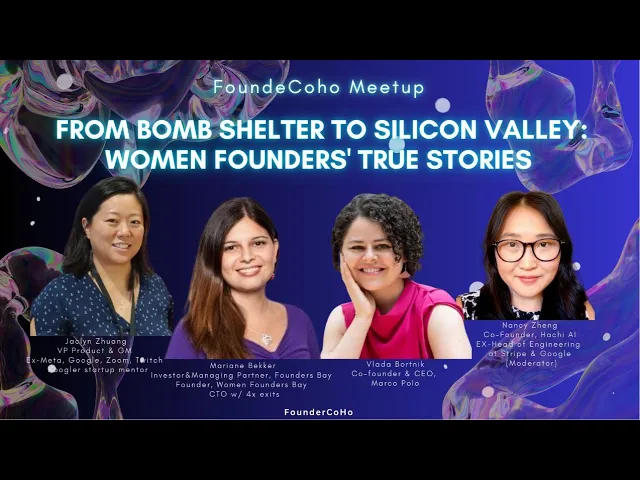
Interviews
Powerful stories from women founders across backgrounds and industries.
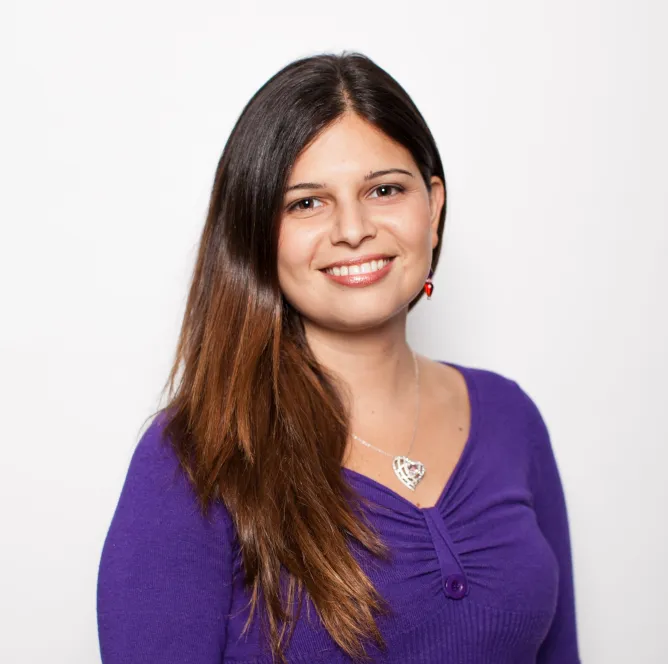
|
Managing Partner at Founders Bay and founder of Women Founders Bay
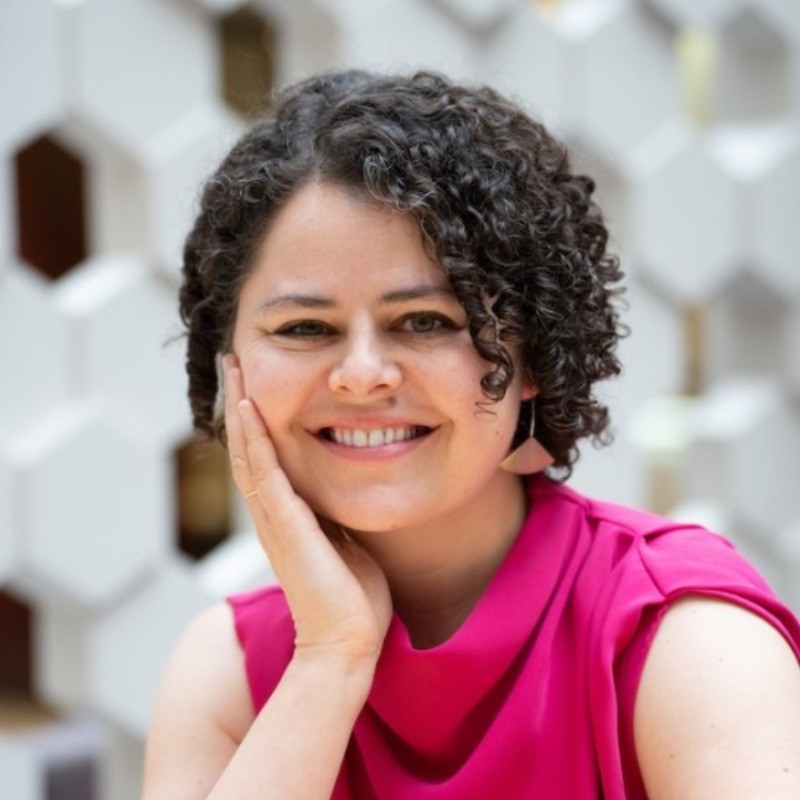
|
Co-founder and CEO of Marco Polo, Ex-Microsoft
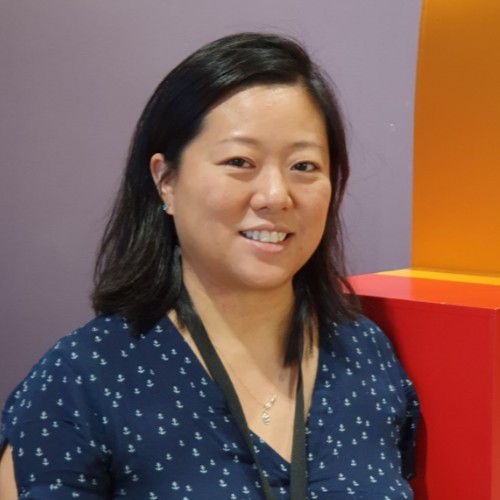
|
VP Product & GM @ Eightfold AI
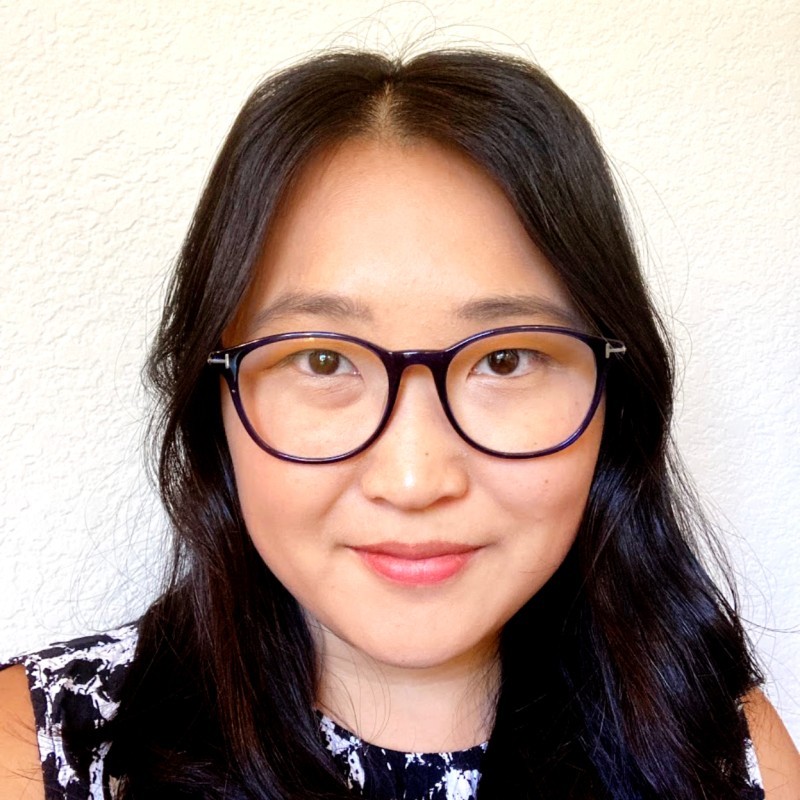
|
Building voice-native interactive media | 2x founder, ex-Google, ex-Stripe
In this game-changing session, discover how these women built multi-million dollar companies while breaking cultural barriers and balancing family life.
FEATURED FOUNDERS:
Mariane: Escaped war, built 55% women engineering teams
Vlada: Built billion-message platform with spouse co-founder
Jaclyn: Transformed from shy student to global product leader
Nancy: Survived devastating accident, left Stripe to founder journey
CONNECT WITH SPEAKERS:
Mariane: / marianebekker
Vlada: / vlada
Jaclyn: / jaclynzhuang
Nancy: / nanzheng
Timestamp
00:00 Welcome and Introduction
02:00 Speakers' LinkedIn vs. Real Stories
04:10 Nancy's Life-Changing Moment
06:00 Vlada's Journey with Marco Polo
07:09 Jaclyn's Path to Leadership
09:00 Mariane's Story from Lebanon to Silicon Valley
12:23 Advice for Early Founders
15:50 Bootstrapping Strategies
18:47 Fundraising Insights
21:18 Product Market Fit
25:02 Work-Life Balance Discussion
27:44 Asking for Help
30:47 Building Personal Brand and Networks
34:31 Networks or Communities
37:20 Q&A
Full Transcript
I was born in Lebanon in the middle of a brutal Civil War so I spent the first six seven years of my life in different box shelters we started hearing the helicopters that throw bombs coming closer and closer we started hearing boom boom boom boom everywhere everywhere everywhere if you inevitably have to Pivot a few times how many pivots can they endure they try to few pivots together and then quit that's like a huge reset so I think just the pure like being able to stay together for long enough is really important I don't really more like that and for me it's about being consciously unbalanced I want to highlight the difference between the buyer and the user where they had huge traction Revenue lots of people buy they discovered that no one's
losing so hi everyone thank you so much for coming to the St or Co meet up event my name is Nancy and I going to be your moderator for tonight um and we've got this amazing panel of amazing women with me today we'll get to introduce everybody but before we get started I want to First tell you a little bit about found c as a group founder Co the name actually says for founder Coffee House Nam after in the stford C CO as well um but founder Co is a community that is uh here to bring Founders closer together so um as many of you are founders yourselves you might know that the journey is uh really long and difficult and so it's really important to have the Community um help each other out and share information and um so we're all about um sharing founder story and fueling founder Journeys um together um today we oh actually before before that as well I just wanted to call out our amazing organizers um ye and Jane are the found and then as well as our amazing volunteers as well if you're volunteer if you could stand up and then just um you know show yourselves just all that they they have been hting fruit since an hour ago so they're just amazing so um and of course thank you to all of you for being with us on a Friday night and of course we have our amazing uh women founds Anders with us today as well and I'm just going to get started with introducing all of them but I want to do this in a slightly interesting way so I'm going to do something of a two-sided intro or I made that up myself this morning a two-sided intro where the first version of the intro is going to be like a LinkedIn version that you might have read about them if you had looked out the event I'm going to ask them to give me a different version that they would like to share and in particular I know a lot of the audience questions that asked about you know the stories from uh your your journey that might be really interesting to share or difficult stories or really moments that really kind of changed and impacted your career and so I'll invite you to share one of those Journeys that are memorable as well but I'm I'll start with myself so I'll make myself the guinea pig you guys can follow the template um but my name is Nancy and I am the founder of Hai AI so we are an early stage consumer AI company but um been at it for about um almost a year now and before that I was an engineering director as strive to that at Google as well so that's my like LinkedIn version but my personal version is so I was born in China grew up in New Zealand and Canada and studied East Coast in the US and lived in France for a while and two kids and two cats and my sort of interesting story is that about two years ago uh or actually no it's a little bit longer than that now um uh when I had my second child a week after I had my kid I actually fell down the stairs and broke three bones in my back and was pretty much paralyzed for a year and when that happens you do a lot of thinking in your life and one of the things I realized was that you know I could have died that day and uh life is really short and what what are the things you actually want to do in life right what are the regrets like if if you know the other thing and I realized that one of the things I wanted to do was to be a founder and I had always given myself these excuses like oh need a have some kids and you know maturity leave benefits and things like that and I think I realized in that moment that you know tomorrow might never come and you just got to go and do the thing and so I think from that point on it was just setting all the gears and and took me that many years to get here so so that's my like you know the vulnerable version of that story so anyway I will but I intro um vat so vat is the co-founder and CEO of Marco Polo which is a serious C company that built an a synchronous video messaging app that helps people stay better connected with their loved ones and and they have over 4 billion Polo Cent and you know have been featured in Tech Crunch and V and you know as a as CEO and Mom and I think lot of mission um for marcoo has also been really amazing as well and just really rounded in mindfulness and and you know Joy um and purposeful work so that's the you know that's her official version but uh want to hand it over to V to share her you know hering like I said I don't think I can follow your story but I'm originally from Ukraine I came here in the late uh 199 and my journey is through like I got a computer engineering and art degree in college um and then I went to Microsoft where my my husband so I spent five years there and maybe like The Unofficial part is that you know everybody thinks it's most people most people think it's pretty crazy to start company with your husband and we've been doing it for 20 years together in one way or another and it started with us doing a nonprofit together while we were both at yourselves and that's really what got me hooked on seeing how like an idea can become a bigger thing and together we can make even bigger and it so much fun working with them and then the other thing I say that you should know about me is that I have two teenage girls so this is like my fun Friday night I and we started this company when my oldest one was in my belly is when we started thinking about it and so the company officially 12 years old but really been thinking for about 14 sorry let me and next up we have Jacqueline so jacine is a season product leader with experience at some of the most Innovative tech companies including alasan Zoom twitch meta and Google and she actively mentored startups and emerging leaders globally through programs like the zler uh ducko and first round fast trap hand it over to you to give the mother verion as a vision so like many other people here I'm from single I came to us well business school and my intention actually wasn't to stay in the US I wanted to move to Hong Kong or back to Singapore to do corporate strategy for investment banking totally different world um and at my now husband and boyfriend in business school he said St for 2 years let's see how things go now he says Nope cut go we have got two kids not being a single parent my story is I think one more of like self growth coming here going to business school I didn't do very well at business school because I could you know get studying done the test done for the life of me I could have put up my head and class I was really very scared uh single schools don't look this way you don't stand up and you don't have to answer things and so you know my husband used to De boyfriend used to get kind of bad at me because he said stop Whispering the answer to me it's the right answer just put up your head and say it and it really took a while of learning how to talk to my husband because he's very good at talking nonstop and I have to interrupt him to get my word in and going to you know work live and meetings so then actually come to speak up so if like when me back then saw the me now sitting in front of everybody who I don't know with bright lights and my face be like no that's thank you thank you and last but not least we have Maryann and Maryanne is the founder and managing partner of women's father's Bay andish and one of the largest most active communities of tech female Founders in Bay Area and before this Mary and L engineering teams and leading startups like New Relic and money body and has gone through five Acquisitions in one IO well this is the official story The Unofficial story is actually I was born in Lebanon in the middle of a brutal civil Civil War so I spent the first six seven years of my life in different ball shelters and one night um we were with my family and we started hearing the helicopters that throw bombs coming closer and closer um and then we started hearing them you know as as the night progressed we started hearing the bombs being closer and closer to us so we came downstairs with the neighbors and then we started hearing boom boom boom boom everywhere everywhere everywhere and then at that moment we started hugging each other like I was very young but I still remember that we said our goodby for our neighbors we're like okay this is it we're not going to survive and then a bomb exploded in our building but luckily it was like 2 m away so half the building fell down but miraculously I don't know how we survived that night so the next day U my mom took us and went to the Canadian embassy and she refused to leave she was such a strong woman until they gave us visas because she said that what is her choice if she comes back we're dead so we left but then because at that time they were only giving visas to women and children we had to leave my dad behind so we came to Canada in New World and then in Canada we went to the Arabic ghetto um and it means there was a lot of poverty a lot of the women were not educated at that time and then a lot of the men were left behind so we were living in an apartment with like 10 other people but that experience really shaped my whole life because it really showed me that when women are not empowered when they are not independent when they don't have education they have a very hard time taking care of their children right and taking care of society because all they're doing is surviving so I've dedicated the majority of my career to helping women around me so when I went into engineering and my last job I was director of engineering at my body before got acquired um I spent 2 years and a half fighting to get a team of 55% women Engineers which we were able to do um after that experience after that experience what happened is that um I when we got acquired I decided to leave and then start a company to help companies hire more women Engineers because my philosophy is that if you putting women at a fast gr startup her career in a gr we're going to get more women as Tech Executives that are going to Mentor more women and you know ideally really change the tech industry but in thatour journey I found myself being an entrepreneur and I couldn't find any other woman entrepreneur where I went to founder events I'm like where are the women I need a community behind me so then I decided to start women Founders Bay now we're one of the largest and most active communities of tech female Founders every week I report on all of the events happening in the Bay Area and the reason I report on them is so that more women find them and more women go to them so that's the unofficial story that you don't see on my link yeah so I so I thank you so much for all of you for submitting questions in the Luma as well and so we actually took a lot of questions and one of the themes that we saw was that a lot of you are either early Founders or aspiring Founders and I think we'll start out with a section focusing on um you know thoughts and advice um and this uh you know for folks who might be in this position um wanted to maybe to start with a open-ended question of for the folks who you might be an early founder an inspiring founder what is some high level thoughts or advice you might have for that maybe we can go one at one at a time I would say if you're an aspiring founder um stop thinking about it just do it because I think what I realized is that let's say you are inde decisive right you're like okay should I start this company should I not start this company these kind of this debate it always happens in your head so as a result you don't really learn from but then if you actually started right and you made the wrong decision and even if it's like the worst decision that you made but you will still learn so much from that experience and then then from those learnings you can then make the next decision and then it's kind of an iterative Loop that over time will allow you to learn so much and accomplish a lot of things so really like Nike said just do it that's it stop thinking about it from the different startups and Founders that I help into I think one question that comes up a lot is how do I find product fit how do I know if you know people want my product like it and there's always the fear that oh because I don't have a huge research arm I can't really like go out and find people I do user testing and all that um to them I say hey there lots of free places around like Reddit Facebook groups YouTube and people like to talk and complain and compare quite a bit so use those resources like it's really easy to you know find the right Community there throw an idea and get that feedback at scale really quickly like don't let that stop you I agree with everything you guys said um and then the things I would add is I think it's really important to find a community because I think it's much EAS easier to do it when there's around people around you who are rallying you on supporting you and celebrating to join a community like this or another one I think is really important and then the other thing I would say is I often get asked like how do you how do you come up with an idea for what you want and you know kind of a Cheesy answer but I think it's it's the right answer like find something you're passionate about and then how do you find something you're passionate about um actually the thing that helped me was a quote that I read Lally in front like as we the hardest part of the journey for me was really figuring out what we're going to work on and there's this quote that I read that said don't ask the world what it needs ask yourself what makes you come alive because what the world needs is more people coming alive and so looking for something that you'll be willing to be doing that kind of gets you excited to do however small it is or however in significant you think it might be chances are that you can turn it into a business in some way so just start just start doing it doing with the community and then you can find the right product Market fit and set yourself up for now I think would love to hear what what gave you conviction to you know quit your job and and go like how long do you spend know researching the idea and like getting all the signals and ready before you're like just make the leap and do it it wasn't a unique case because like in this company we actually had a for this company that we stopped we so we stopped working on it and so we we did that because we knew we're going to start a company and so it was kind of like this idea that we wanted to model to our kids what it's like to work on something that's really meaningful and we knew we not going to be able to do that with this other company and so we knew we had to make a change and so for us it really was a matter of like just courage and saying like we're going to do it um and then the other thing I would say is it definitely does have to have it does help to have a supportive partner um somebody who again is part of the community building per support somebody who really B you on and doesn't say no to you crazy been said go I can't answer this haven't done I will talk about Founders way how I decided to kind of you know stop my first company and work on this full time it's really when I starting having an impact and start having traction so this is the an advice for women okay whether we want it or not and this is a very sad reality is women still receive less than 2% of the funding that means that we have to do more with little Capital that we have so I don't necessarily suggest you leave your job to pursue your idea full-time because it's going to take you probably like a year a year and a half maybe two years to raise that funding so instead you know start working on your idea part time once you see that you're having traction once you see that people are willing to pay for it then go all in on it but make sure that when you do you have at least a year or two of personal Runway so you don't get into trouble later yeah I think that was a great segue into the next question as well and so I think a lot of folks in the group um ask about boost drapping and so specifically when you are boost drapping especially when um you know funding is is hard to come by these days like how would you access resources that other VCB companies might already have you know when you're bootstrapping related to that it's like how much should you kind of De Y and try to wing it versus you know hiring you know professional help when when you're boostrapping especially for things like legal and and other other things like that I think it's really important for you to manage your um your how much Mone you have right um I would say try to do a lot of the things that you can do yourself of course like legal and all legal well luckily now you have CHT that you can ask a lot of questions it'll give you probably you know pretty fairly good advice um but I would say when you're bootstrapping what I recommend is just really keeping track of how much money you're sending how much money you're receiving but for all the companies that I have been focus on is trying to make Revenue as soon as possible right even if it's like having 10 paying customers even if it's having like $10 a month from One customer just try to think about like starting getting Revenue in as soon as possible the things that I would Outsource if I were who was is for example oh another thing I wouldn't try outsourced marketing okay right now you have the greatest tool at your disposition for go-to Market which is social media and social media requires absolutely zero dollar so start building your Following start like writing about things that you love I think um L gave it really great um advice right which is if you're pursuing this that means you love it so find other people that you love it and start sharing what you love about that idea you're going to find your niece you're going to find an audience and all of that the cost of acquisition because they're your audience is going to be zero so yeah bootstrap by you know building your following or marketing and then just make sure to keep track of everything going out and everything going in when it comes to cash flow the things I would add is when we started Marco Polo we were I was pregnant with our second kid we had our first kid already around and what we did is we budgeted exactly how much money we needed to pay the bills and then we consult it just enough to pay the bills and then the rest of the time we spend working on the idea so just as a way of thinking of like how to set that up structurally what you could do and then the other thing is I toally agree in terms of um keeping track of your expenses and starting to get Revenue as soon as possible because that's also your clear sign of product Market fit that people are willing to pay for it um so don't be afraid to ask I think that's another thing that I typically hear women being nervous asking for people to pay for their product and don't be to it and then the other thing is part of being in a community is there's a lot of resource sharing so somebody might be really good at engineering they can review your code and give you an idea you might be really good at setting up Social media so there's a lot of cross referencing and cross sharing of resources that you can do if you're part of community so for folks who are fundraising um I guess what I think Mar you shared a little bit about the state of funding especially for women Founders but any like any kind of observations about the latest trends and any fundraising advice you might have for this group all right latest funding Trends so I've met of women who have raised funding sometimes they is 3 million pre idea sometimes it's 1 million post idea but I think they all had one thing in common is that they started building a network of VCS around them very early on so one of the things that I suggest if you want to fund raise is to not go in the market without a network and say that you're fundraising because it's going to be very hard for you to get funding longer you take to fund raise the longer you become unfund because NBC start hearing about it that hey why hasn't haven't they Fund rais in a year what haven't they fundrais in a year and a half so one of the things that I do recommend is now don't say that fundraising start going to different types of events um meet VCS and every time you meet a VC get a CRM so get an Excel sheet put who that DC is who you you know when you chatted with them connect with them on LinkedIn they with at least 100 to 150 VCS once you have that list once you have a connection a warm intro to these VCS then what I saw they did is they said okay well now we're ready to fund raise we're opening around then they started reaching out to VCS who had the most likelihood of funding them they got the first term sheet and then Within These few weeks they went with that term sheet and they created fomo among other VCS and that's how they raised their R so it's a very kind of you know ABC process but this way you make sure to you know create buzz you make sure to close your round it's not impossible and then um and another thing also um if you don't have that big network of DC or if you're still building it focus on building traction and if you're building like B2B apps for example let's say that you need money to build your app right but when you can do you can get letter of intent from different companies and that just is enough to show you SE that you have some traction people are willing to pay for it and the only the only thing I would add is that when you are pitching is like don't just think about the one thing you're building but paint a big picture what is it what's the industry you're changing why is it important to you I'm not just don't explain just the one thing you're losing but again paint the big dream the big picture and I think I see women do that a lot I said they're very conservative they're like oh yeah I think realistically I can reach like 20 million in four years I'm like cut this 20 million and tell them how you're going to reach 100 million and how you're going to be the next billion dollar company do that all the time so even though you think oh know what it's not possible no believe that it's possible and that you can do it and sell them the dream don't be humble moving on to talk about product Market fit this elusive product Market fit um yeah tips on product Market fit in general um and maybe I'll start with you jack on yeah um I think it depends on what they you're consumer Focus or Enterprise Focus consumer Focus I think the atast market people want to use like what you're building your app your Bo software um and then they find it delightful because for consumers the first part is like just grabbing the attention making the usages there and then after that you can think about monetization with Enterprise is a different piece though um with Enterprise I think you want to see the initial revenue of the B and then with that also I want to highlight the difference between the buyer and the user I spoken to you know met a couple of Founders where they had huge traction Revenue lots of people buy and then something happens and they discovered that no one's using and when no one uses the Enterprises you know companies stand to not spend for very long time because they also want to see people you know see their the their investment in apps and software coming to fruition and the price side definitely you want to see the buying happening but keep a close eye on your usage as well all right what this is great advice I think the thing that I can add is um I think the way that you find product Market fit is through the it process called like aile methodology use like the MVP building so when you want to figure out how you find product Market fit right how do you build a product I would say always start with thinking about like one feature that can can solve a very specific problem and then just build that one feature and even though it's not the product that you envision what you can do with that one feature is that you can release it to a small Subs set of customers you can start asking them questions and you can send them surveys on what they like and what they don't like and with that feedback you can then go and iterate on that product and on that feature then you build the next feature and you release it and you get feedback and then you build this next feature and this creates really this like cycle where you are not taking so long and you're going in your corner and building your own thing but while you are building your finding product Market fit just by going to your customer and asking them question and I've had engineering team anywhere from 7 to over 100 and even with 100 engineering team we did the same thing we started with this one feature we released we got the feedback and then we continued building it over time to really like make the product better just to give an example of what both of you guys are saying on the consumer side with Mar with the mar consumer version the first version of the album did was actually called Joya and was wait for to create a video photable you guys remember back in the day you had wallet we're trying to create that for kids and videos and so I had 20 moms that I met through different music together classes that I just like handb buil the app for that family and had them use it and then I collected feedb and the surveys and then from that we realized like that's not enough they want to be able to send videos to their family members so then we did the next version and then at some point we created this other app where again people were sending videos and then we realized like oh no people are actually turning the camera and talking to each other using this app and that was the beginning of maripa it's all like user research is such an important piece and in our company we talk a lot about making contact with reality because you can be like uh you guys were talk about being your head a lot there's a lot of interesting things that happen here but that's not reality the reality is that actually what Howes we give the product to the person and start using it and doesn't have to be full and buil out it can be prototype it can be totally band together and start giving you like real data on on just falling on to that but like how long did it take you to reach or feel prod work bid so we officially Incorporated the company 2012 we iterated 9 time since got Marco poloo and Marco poloo started 2016 so from 2012 2016 four years um I think another big category um a questions that from the audience questions is work life balance um I think this is the How Do You Bic how do you prioritize um between family commitments and kids and and work right so I'm a single mom two kids that's another thing that you won't see from my link and there's no work life after like however I put it I'm either always working or with my kids I literally went to pick them up drop them F them and came here and I'm going to go back and do the same thing and start all over again um the reality of it is like moms are superheroes right but a few things that I try to do just to keep my mental health is maybe you know one night every you know two weeks I try to just turn off the phones turn on everything and just do an activity that that I love and that kind of keeps me same I think different people feel about differently about life balance I'll give you like interesting examples like for my husband life balance means he has to shut his laptop down by 6 p.m. otherwise he goes you know crazy the next day like doing the workday he's pretty intense very focused 6 p.m. has be off but for me it was different um I was always managing Global teams like a lot of team members in like Australia New Zealand and India and Poland and with that being the situation they're not weake during the day their day starts in like our afternoon evening and so for me what like balance means in the evenings being able to like drive my kids because I have two kids two different genders and different activities so my husband and I have to split up drive with the assigned kid to their activity and two calls from there and like grabbing dinner here and there but it works for me and at the end of the day you know I can still shut down get stuff done during the day I get all the errands done so I think different people get different final HS for you I like to say that I don't really work like that and for me it's about being consciously unbalanced um because that's I think that's the best that I could do so for me it's really about figuring out what are the things that are non-negotiable what are things that are really important to me and then setting up life around it also for me part of the reason I started Thum that I did is because I wanted to work on something that I'm so passionate about it didn't feel like work and if that's the case then you can say that I'm out of Balan all the time because I love talking about my company and so it's really a matter of like one of the buckets in your life really important so for example we almost always have family dinner this is pretty unusual for us not have family dinner today so that's something that for me was like non-negotiable there's also like I'm really close to my mom and my my parents so like there's always a phone call every day you know so there's just like there's certain things I put in place there's nonnegotiable and often times they go my calendar but everything else kind of fills in as needed sometimes like my husband I talk about like different plants you water different plants as needed sometimes the pl needs a little bit more water but you just make sure they're all I'll just add one thing I think my superpowers is outsourcing stuff I think it's very important it actually takes time to figure out you know the cleaners like babysitters Grandma everything but yeah like ask her help I think that's really I think I just want to say I'm so glad you said that I think that's really important ADV and I know for me like I grew up an immigrant it's really hard was really hard for me to agree to get like somebody to help clean the house and I F my husband for a really long time and I think it's a mistake I think if you can afford like if you can create a budget like maybe you don't eat as much or maybe not I don't know what it is for you but it's so important to get help like ask for help maybe can train with a friends but getting help around like these logistical household things I think is really important I think you're bring good por about Astro health and this is a story that happened to me so a few weeks ago I was organizing a web three founder okay and w three is very me dominated um and there's not a lot of parents there but last minute all of my Babys getting options went through the door and I found myself not having babysitting I was organizing this so what am I going to do so I brought my four-year-old and my 8-year-old with me and the at the dinner and then the web 3 Founders like the typical web 3 founder they started I asked them for help I'm like listen guys like I need to eat I'm very tired help me out and they started playing with the kids they started helping me so just ask for I think the Community here is so willing to be open and to help out that you'll find a lot of people around you giving you the help that you need people underestimate how much how good it feels there's like research standord research that says that people underestimate how good it feels to help somebody else and so because we think we're going to be a burden or I think I'm going to be a burden them and so on and so that really keeps me from asking and I forget how good it feels when I get to help somebody like I get to be the hero and help the friend out so yeah ask for help I'm so glad you brought that up yeah and I think ja I think you actually have a really interesting story about asking for help as well make sure that I don't know the story but I think asking for help is like one of my secret underrated superpowers because somehow I don't feel bad about asking people for help I think everybody likes help and I realize I don't know everything in the world so whether it's it's work or it's like family stuff with work I never feel you know insecure or unsure if something comes up because I'm very sure someone has the answer I just ask somewhere and then even for kids stuff them stuff like these two ladies like hit the mail on the head um we have no family around and sometimes it's hard for us to Outsource or find things last minute so my neighbors are the one I depend a lot mom's dropping their kids off to soccer and what I realize is well the worst is they can say no and most of the time they do say yes and they don't really think much about it because it's just like okay grab your kid grab my kid and let's go so I would say I meet a lot of people who are afraid to ask for help I would say don't be afraid and that's of course easier said than done you can always ask for help again anonymous I like to talk about all the social media apps where you can ask for help there just ask even if it's like information about work and trying to get through your work B things you don't know try anonymously first B you put put your name to it that I read it cool I think moving into the next section um I think there's a lot of questions about building personal brand and network and I think even before you um get started how do you before you you know start founding a company like how could you even start you know building your personal brand in it today right um and so yeah any any tips you would give around building personal brand and especially for women I think like what makes us different or what are sort of our strength that we can leverage to you know stand out and build that narrative as well um I think I was thought with what you mentioned which just like talk about what you're passionate about like what do you like doing what are you interested in and start from there CU once you have that interest it's easy to start talking to others about it or inquiring from others but how they relate to it and and then you can move on to that uh from from there I know people talk about like writing articles on Lon and building up your social media presence I think like that's the next step to it I see as the next step first step is really just finding out what you're passionate about talking to talking to people about it I definitely agree with that I'm what you're passionate about and then the next step is find your goal why are you building that personal brand are you building your personal brand so that you can build an audience for your startup are you you building your personal brand because you want to be an influencer are you building your personal brand because you want to find a job right once you have a clear goal The Next Step would be to find according to that goal who are the people or who what is the audience that will help you achieve that goal if it's for example you want to build your personal brand because you want to work on your Healthcare startup right then your ICP is probably maybe let's say doctors okay let's just take an example then what you start doing is you start like looking at okay well where do these doctor where does your like ideal customer profile live are they on LinkedIn are they on Twitter are they on Tik Tok and let's say they are on multiple channels find what you like right let's say you love to do videos and you love recording videos then probably you want to use like Tik Tok or YouTube let's say you love writing long form writing that's LinkedIn let's say you hate writing and you love taking pictures and Instagram so find the social media that you will not be hating your life doing um and then find what your ice cream really care about right a few things that I did when I started my kind of personal branding journey is I looked at who are the top five influencers right in Tech what what are they writing about who are they who who are their followers and start interacting with them then their followers is are going to notice and then slowly over time you're going to start building your following that way and another thing that was a game changer for me is that I ad tested every single thing that I did when that means if you try out different types of content and you see the response of that content once you see something is resonating then you take that and then you continue refining it and iterating to really find product Market fit there's not different building a personal brand is no different than building a product so think about it more as like this is your product this is like probably the most powerful thing you'll have right as an audience is your personal brand and iterate over it until you find product Market Fit until you find your audience and your people just going to add something to that um I think the testing pieces important like what I do is one step before that which is when I'm thinking about like what to do career work and all that and then rather that looking like this event like this I just share like here's what I'm thinking about and I'll ask them doesn't matter what background they have but I'll just ask like how does this resonate what do you think and again to the point out lots of people want help when people hear about it they'll either have a point of view or they start thinking about oh who do I know that could help and that's where I get a lot of introductions to other people who can help me along the way as well okay I think we're on the last question which is what networks or communities have you found to be helpful for you um in your so for me I think it's a few networks one is there's a program there's Bish called leaders in has anybody heard about it before um it's a really wonderful program it's a one-year program and it's started by I'm BL on the but it's um Joe Greenstein and Carol and I can't remember her last name but she was the professor of T FS at Stanford at business school and it's a class that's the program is all about connection and basically personal growth and it's really a wonderful program because you're surrounded it's only for Founders they they also have um executive Retreats but the year L program is for Founders and it's really a great way to get support both through personal growth they see a career and then I'm also part of there's a DCB moms group that I find really supportive for hor they it's a it's a SL with some events and it's just nice to be able to event about kids and partners and what it's like being a woman in T I did not know about your community but now I do so we'll see and um I'm also part of YP it's a young presence organization and my child particular in all is mostly founder and we meet monthly for 3 hours to with my like mini group within that chapter to basically cover topics anything ased personal related but they've really been an enviral support yeah for me it's a company Al line networks so um there's a really big ex Google Network that I'm part of lots of events lots of networking and health there is a executive wein product group on Facebook and out of that like a small subset of us actually have come together and they're sort of like my personal board of directors we meet like once every two weeks uh we're on WhatsApp together and we're really holding each other up through the thick sentence of you know anything from founding a business to like just driving your career and then managing the teenagers you have in the house at the same time all right are you ready for my shamess FL I he all right well it's women Founders Day so we build this community really for one purpose and that's to empower women Founders to grow their startup so uh we are extremely active we have a community of 500 women 500 amazing startup Founders and then we come together you know every week every month to really support each other if you are interested in applying or joining you can go to women Founders bay.com and we would love to have you for the men here I also run Founders Bay and so shame this like we have 32,000 Founders NBCS in our Network every week I report on all the events happening and I give like work shops for Founders and then you can subscribe to the newsletter it's newsletter. founders.com so join our community we're here for you this is the only reason we exist is that we want you to find support we want you to find a group that really believes in you and that will be there with you they SP all right thank you so much for bearing with all my questions now I'm going to open it up to the audience if you have any questions for this group I would love to guess think see the lelf question yesterday was my 30 birthday I want to hear one line that you want to tell what would be one of advice start therapy and I got a divorce when I was 32 years old and honestly I didn't think that I was ever going to be okay again but you know I'm okay now I'm priming and I'm finally happy most of the time so things are going to work out for you no matter what yeah I think for me it's a slight different note at 30 I was about to get married starting to think about kids and very afraid that that would stop my career and just derail my entire life uh it hasn't so do what you need to do like my it things are going to work out oh I think for me um one thing I tell myself is I see this founder Journey as sometimes if you think about it as a free MBA in kind of helps um where you're getting a lot of learning it's free sometimes people even give you money and so what the learning you get is real you know Real Life practical experience so and if you think of it that way you should just do it say the question about the support networks there's one other one starducks because I think a lot of you guys Stanford there's an incubator called starducks that used to be have to be associated with Stanford but now I think there's no requirement for that and we went through it even after we raised I think around day and I found it in incredibly helpful so say again it's very close to he oh great yeah it's really it's a really great program and you don't have to give up yourbody be part than yeah thank all speakers Andor really really appr your ADV your Hest experience I have a question for each of you like what is the hardest time throughout your professional career especially if you are doing this start journey and how did you overcome it I mean the outcome can be good or better or how you overcome that hardest period of time throughout that journey and my is I'm also just starting just quit my fulltime job and starting my try to build something only a few months I don't know what is waiting for me so I want to learn something from you to prepare myself I think the hardest time in my founder Journey was when I started my first company operate recruiting I think a year in and that was I started like right when all of my new life started a year in I was probably working like a 100 hours a week I was you know navigating this new life as a single mom and then I think something very small happened that maybe one of my clients sent me an angry email at that point I really went into like freeze or flight mode I froze I couldn't move anymore I couldn't make a decision I didn't even want to work on the company I really burnt out um and then it took me like month to recover from that uh but I think what I realized is that your mental health like when you are building a startup is so important and actually a lot of the companies that fail do not fail because they don't find product Market fit they fail because the startup founder burned out so make sure to really prioritize your mental health to build that Community around you so that you have people to talk to because things are always there's always things that are going to go bad right it's inevitable when you're building is start out but make sure that when things do you have people you can reach out to and then you have your way out yeah so for me not founded any company but done uh quite a few of s of Z to one within bigger companies in that situation um you're working a lot but as Mar said the people matter the most so I've had to you know I been placed with people who we just didn't get along uh we just saw things differently and yet you brought together because you've been asked to build up this this new idea and the key part for me to getting through that um was just finding other people in the room in the company that backed me out that supported me that trusted me and then together we just started changing the ti of things and all good it I think the hardest tactically the hardest thing for me was making a decision to start the company and then the next song was picking the idea but I think when I think about what is actually the hardest about the journey I think it's your it's your mindset which is why I think it's so important to pick something really passionate about because that passion is going to get you through the ups and downs and the other thing is also with the mindset like with my first BCB company I really had this mentality of like I need to sacrifice myself to prove that I earned this investment and I need to set examples for everybody my company so I worked seven days a week like you know 10 12 hour days like I just like totally worked a ton paid myself nonmarket rates like all these things I did and it was such a bad mindset like the mindset is like I'm doing this because I love doing this I I deserve this thing they get to be they get to invest in my idea my vision benefit from it Financial eventually and that does not mean be sacrifice yourself it does not mean that your mental health is to go or your physical health is to go so taking care like taking care of the things that really matter lot in your life your family your health like don't sacrifice those things for the company it will not be worth it sorry one more thing I say like when I hire people Marco Polo one of the things I tell him is that I can't guarantee this going to be a hug financially successful company but what I can tell is I car very much for the journey and so every day we have a choice what kind of mindset we're going to have are we going to turn this thing that I don't want to do into a pain in the butt or we I should GNA you know turn on some music do a little dance or find a friend to do it with and get through it together yeah I think mindset is the most important actually actually have good one out before I found a I just found another company a Ty company um called pigos uh and I think the hardest part was actually you know breaking up with my f founder in turning the company down uh because I think people don't talk about that enough like so many co-founder breakups and often times was really emotional and really embarrassing and and and at the time too it was like you you know I had given myself some timeline to like yeah at least get the co-founder you know get some funding Etc and I had actually reached my SP line for that um what I had originally set out and I felt like I had nothing and so this moment of you know do I just quit and uh and then I I said let me give myself a little bit of time and so I think I spent a few months like three three or so months soul searching and actually ended up to U you know completely kind of pivot my direction and it was really scary but then I actually ended up um eating you know my my awesome coer now um was actually you know cheating right there um and uh and then I think that that just changed everything and so I think uh sometimes you think you give yourself a timeline in it right it's there's no timeline right I mean except for your financial timeline but if you don't give up you always get more tries yeah I'm s here I've been trying to do my thing it's been a few years but I moved across to India I was in Singapore actually so uh I can recognize your answer um and then I move back here through the Mia in 2015 one of the things since I come from the game Tech Enterprise infrastructure side one of the things that I come really hard is uh when I move to India and now I'm coming back here is there are very few women in the tech and so for example I see a lot of good ideas coming from women but often fraction time or like health care or F wellness and those things don't excite me um I was lucky I met the founders of my previous startup it's very limed LS of phds we had a good you know I'm comfortable fortable but uh like now I'm at a journey my four years are over where I really I'm looking for my next thing but again like we women don't have the networks to actually like build on our ideas I'm relying on my current Fe but really the second comment I have is uh you guys talk a little bit about the found in India we actually I was part of cell Bangalore where we actually had a six we program where we took Wom form the whole like meeting things of accounting Finance marketing market and so on so if anybody is interested I don't see such a thing existing Stanford doesn't have it University like none of the universities are providing like this program which is like the way they did it in I summer 6 week you stay togethers together so all the women Founders there are 100 I to teach in that program where you know you're kind of building the whole journey and when in the last session when the women came to present their business plan some of them cried because such an emotional Journey said in front of a large audience we their business plan that was very emotional and we need something like this in the I'm observing for last eight years there nothing I was say starduck is probably the closest thing yeah probably um in terms of groups for deep Tech and infer I think there were a couple of groups around so like earlier this year I went to den organized by Gman and and Dell the The Venture arm of Dell just for women in infernity time deel this year has launched organized and launched like a women in INF and dtec as well because they their PC focus is justed on dtec so happy to put you in touch with people and then if you're looking for people to like rainstorm with um I actually joined this like Ming Miss suspecting for next play u where it's just all early stage startups and they often like list out people who are just looking to connect with others just to bounce ideas back and forth so that could be another option happy to to to you um I agree with that we need more women in DET Tech but we did do a breakfast I think a month ago called women in women in tte and we sold out of the breakfast five times so there are women out there we are trying to change that by bringing more like industry Focus but one of the partnership that I did and I'm so excited about that is for women who are looking for you know D Tech advice right it's very very hard to right now go and find a co-founder that's as passionate as you but I made a with this a company called the agente and they are they build basically an llm but they offered their kind of dtech AI expertise to all of the people in my community for less than K you can basically build your AI product your D tech product so if you are interested talk with me and hopefully you know these types of Partnerships are going to benefit the community who are looking for more of this like d Tech expert oh yeah actually the same like just ask the question like now by General how you secure your or or business partner or the best team just feel like a lot of people have a lot of great ideas I feel like the best team is a It's Kind like something that can really get started so like you you start by yourself first or we have one get first cont thatour get started our a lot of people try to you know really focus on finding a co-founder but the reality of it is finding someone who's as passionate as you are about the problem you're solving but not only that not only are they as passionate they're in the same life stage as you and you work really well together is super hard so if you can't find a techn co-founder don't find a co-founder right now you have the tool especially with AI to really be productive to make your whatever you need happen on your own and then you can always hire like founding either Engineers or founding people that you can give them Equity to work with you but they're not necessarily the same as like technical co-founder um and another thing if you're specifically looking for like Engineers go where the engineer live okay go where they are so that means go start going to hackathons start going to Dev events and you're going to meet so many of them and a lot of them especially nowadays do not are you know in between jobs so it's a great time to go and try to convince them to work for you but they don't need to be your co-founder you can just give them like the founding engineer title is actually the risk tolerance matching is really important because it's something I didn't think about but um if you have different conviction levels from like a financial perspective or from how much runway you have it doesn't work very well because if you inevitably have to Pivot few times how many pivots can they endure um and I think the hardest part is if you you know try to few PIV together and then you know one of you quit well that's like a huge reset right and so I think just the pure like being able to stay together for long enough to to have something is is really important as important as compliment SKS I all that Stu I I agree with I mean I'm Co I am a co- find with my husband so I'm going situation but we did have a company PR Company with two other co-founders and what I learned from that is that it just takes so much effort to stay align with somebody else it's really it really is like another marriage which is why we decided not do that again and just stay married together it's very efficient but it really is like we found that to stay in touch with them it was like regular regular conversations all the time and the thing is like people often say that you know being a COO is a lonely job and so you want to have a co-founders she less lonely but there real it is like it's it's a lonely job no matter what and it's important to the community around you even with my husband he was the CEO our company first in s rols and I remember when he was CEO and he was telling me how hard it is and how lonely he feels and I was like whatever man I here with you I feel the same pain and de pressure I don't know what you're talking about like basically stop biting and then we switched and I was like oh like it's true like the SE position is really different and whoever your co-founder is is not going to feel the same person press and so if you're doing it to release yourself with some pressure like don't make the reason I think there reasons that so much to community and people something that find people so
any um so I po v um the person I do it with is friend and cent of was we' know 15 years so it works really well knows how to do something and which just works well because we have the same we communicate extremely well um and we know each other's strengths and and it's very Comm so I think that's really important to find that my question to the panel is that um are any of you basing how's been how has been the experience of raising and messaging anding the right people the grow well I'm not raising it either but I was Raising it before for my previous company and I think a lot of lessons learned there was that um it's it's like hiring their boss to some extent right and he really wanted to get to know them before you before you hire them and they're going to you know you're probably going to be doing meetings with them quite frequently and what I realized is that it's a little bit like it's a little bit like dating in some sense where in the beginning everything is great and like like oh yeah everyone looks awesome so great so helpful um I think then it's when the the push comes to shop right and then the other side comes out and so I actually find that when you're not raising actually getting to know people at a deeper level and just see like cuz everyone's like I want to help how can I help you know um I think before you're committed everyone wants to help but few people actually help right like how many people actually go and make customer intros to you or like Go and show the co-founder whatever it is right like and you actually quickly realize the difference between people who are like you know there's a group of people I think who are there to like have you as their meeting notes that they're going to present to the team later and they're just like doing moreit research on right and and it's very hard to distinguish that from you know actual great investors really you know put in the work and and help you out and so I think it's actually having time when you're not to build those relationships and learn a little bit about who they are is very important but it's hard it takes a lot of time as well and I think the other thing is nowadays everyone's scraping LinkedIn right so I think when I left strike I like over 100 inbound the LinkedIn request and I was so flattered I'm like oh you know I'm so great like everyone thinks I'm awesome and then and then you know over time I realized like hey you know it's not necessarily a great thing right if you just went and talk to all of them and then like two weeks later your idea changes or something like that's not that's not a great thing um so I think it I think it's just understanding what the nature of the relationship is and and try to build like real human connection uh before taking anyone's money right and I think um and I think even then I think I've heard a lot of stories about you know crazy stuff that happen you know when the tur sheets are on the table or afterwards right so um I think building that Baseline before is super important and I think and then nowadays there's so much about like run the process you know like talk to 100 people in two weeks and then like you know like fish the term sheets I I feel like the precept to that is you have to at least like them a little bit right it's not just about who gave you the best T machine it's like yeah do you want do you want to work with this person for the next next number of years I'm not fundraising right now uh and that I really agree with advice B around building up the network like we were very strategic and who we wanted to be on our board and so we sort of targeted people ahead of time and beings with them like started sharing our ideas and kind of got them excited because for us our very much a purpose to R company our purpose against to help people feel close and so it was important for us that the board was going to be representative with that and so we we inter them as much as they were interviewing us and then um the other thing I would recommend when you do if you are in a position like I would definitely referen J so talk to other Founders who had that investor on your board and ask the question but what it was like when things weren't going well because like you said it's easy to say I'm going call every investor I know says I want to be the first phone call free when things go tough and then find out from the founders where they actually the first person they call when things are enough you know so cross reference the information from the real people Real Talk there's a lot of tips out there so I'm not going to go in all of them but one advice that I get for Founders who are fundraising is to start like this um maybe quarterly newsletter where even let's say you talk to investors and they're not interested it's a no um a no is always can always be turn into maybe just not right now so start a newsletter put all the investors there that you've been talking about and then just send them updates and exciting updates and you never know maybe one update will catch their eye and then they're going to turn into a investor in your company
honestly I feel like I'm taking a risk every day right just by continuing building my company because like what is the alternative right if you are not building your company that means you have a stable 9 to-5 job you always have Revenue coming in right but when you're building your company especially at the early stage you never know when your next teach is going to come from right you never know if you're going to be able to fundraise more later on so every day being an entrepreneur is a risk and a lot of people are say okay yeah everybody can be an entrepreneur but no if you are not able to weather that risk if you're not able to go through extreme highs and extreme low that maybe being an entrepreneur is not good for you but I think it all it like comes back to what everybody is saying if you have something that you're so passionate about that you believe in your core can make an impact like for me I'm taking that risk every day because I truly believe that now is the time for the tech industry to change and to be more diverse and I truly believe that it's time for women to shine right so this passion of mine is stronger than this you know this scariness that I feel about continue being an entrepreneur so if you have something that you're so passionate about and that you know really want to make an impact in the world or make an impact for people around you then it's going to kind of counter affect that feeling of cared if was going to happen nice yeah and I think one part is really understanding your finances I think before I quit I had so much Feer like oh you know bear is so expensive and you know I could probably only survive like six months and I think it was just this I didn't even look at the numbers I like I just assume that I you know I need a lot of money and I think once I kind of scratchi it and like really looked at you know then I asked my husband like you know please don't quit your job and please give me some run but but I think it's like when you actually like project the numbers you actually at least for me I realized like oh you know we have enough saved um and like okay maybe I have to like sell all my stock and do something but I think you know I think I was in an okay spot financially I think it's very different when I've know I've met other Founders who are like literally living paycheck to paycheck and I'm like you know that that's like way too I I couldn't do that right but I think I think for me once I saw the numbers for me it was okay so I think that's one part is actually do you really know how much runway you have um I think the other part is um I think this feeling of like Is My Idea good enough is it going to take me to get to pmf and um I I just think like everyone do takes longer than you think right but I think to me that's why I think to me the this is a free MBA like if you think about it as education somehow you're more willing to do it and pay a lot of money to do it but when it's you know free MBA suddenly it's more terrifying so I think that thinking about it reframing it as education helped me like lessen the bar I think as a as a as an Asian I'm always like oh yeah I'm studying is always great but then somehow you know founding company was way more terrifying I think there's the cultural context behind it as well like yes the financials or something but like I said like I'm from Singapore people don't quit the jobs in Singapore you want a c job you get married you want to buy your house you have your kids and you know retire at some point and so moving here into the B area and see like so many people just yep I quit I'll live paycheck to paycheck I'll stay in like a I don't know a dawn room with everybody else it's it's quite scary to me and so I've never taken that step to like put my job and do whole thing but what you can do is start exploring ideas of the side and what I found is that there lots of people in Tech who are like I can't say they are resting and resting but they are interested in doing things on the side as well because of family reasons because of other reasons while still holding down their full-time job and I feel like to a lot of the discussions here those are the folks who have like sort of the same mentality as you in terms of RIS ofers in terms of timelines and those are the people you can work with to try and get your idea out or I was listening to a podcast my R here listening to the founder repet and how you know without a technical background you can just start using repet to start coding and then you know getting something coded up and for areas that repet can do they have a bounty board so you can go higher and developer just to fix and tweak the pieces so I think there are lots of different ways you can you can test out your idea while still maintaining some stability if that's what you're comfortable with riskwise the thing I would add is there's a few experiences that gave me courage one is I was micros show for five years and then we tried starting a company and then we basically I was was M high school was a business school and so I was not working he was a business school so our like money was just depleting and at one point I was like I can't do this anymore I need to get a job and so I went back to Microsoft and I got higher salary and that was like a really good data point for me that actually I can almost always go back to a job a corporate job and chances I'll get paid more than I did last time so I think like having that experience G me courage like okay I have some sort of safy then he has the markets maybe I won't get the perfect job but I think I'll be able to get a job and then the second thing that Al was um I came as a we when I came to us I had no money and so surviving that and then again when we started the company like seeing that I can do that with my husband like really manage our budget and live pretty cheaply also gave me the courage that I don't need that much actually to make it so if there is a gap and I can you know make it last longer like I would be okay so it's like Financial I can go back to the job and then third thing thing that that's helpful for me with RIS taking is surrounding of people like you were saying who are also willing to take the risk because um like I lived in Kansas for a while but I first lived from UK I lived in Kansas and I think starting company somewhere where there is a mentality that failure is a good thing are so for me being the B area it's like you failing a startup chances are when you apply for a job somewhere else it's going to be seen as an asset and so again it's going to get a better job some you know it's going to get a better job so being surrounded with people and seeing that whatever you do is MBA is actually an asset is another way to take a l than you're awesome yeah black been a really amazing Organization for me so um there is there are requirements to get in so if you're early stage it's probably not the right fit yet but the thing that I love about it is at least in my chapter it's mostly people who are founders and so I was really looking for a community um well me let me back up basically having a family at the same time starting family at the same time starting company meant that that's that was my life I didn't I really had very little time for anything else and I really wanted to find a way to have friendships and have community in a very time efficient way as you can see time efficiency is something I look forward to in marriage and founding experiences but also in my friendships and so YPO was something that was recommended to me and I actually was turning it away for a long time because there was a a cost associated with it and I thought I wasn't going to enough time for it I you know I need to stay focused on the family and the company and finally this person come visit to Jo and the thing that's so life changing for me about YPO is he really gives you access to a Global Network of other Founders and other people who are running companies and having the same kind of pressure and stress points as you do and so within my chapter that group is specifically you know Founders some many Tech Founders and then every month we meet my small my small group meets for three to four hours to discuss anything and St on mind for us it could be anything that's going with our spouses our kids our family like our parents and so on or could be like inial Crisis or pandemic or a war starting or like new presidency what does it mean for our taxes you know so it's really interesting conversations and the power of what field is really that it's vulnerable conversations it's really like we actually interview people for authenticity to see how deep they're willing to go in the conversations and all the conversations are confidential there's a lot of it's a bra policy and then there's also F events so we did like a Navy SEAL event so there's like these like serious monthly things that you do with your small group where you really go deep and then there are Spa things throughout the year like we're going to Alaska in February and getting to do lot like behind the scenes kind of things that awesome well I think we're going to wrap up here um just want to give a big round of
applause and um I think we also you know please feel afraid to stay and mingle and and help your off the food I believe there's cage I hope there's still some L but yeah thank you so much for coming for