Interviews
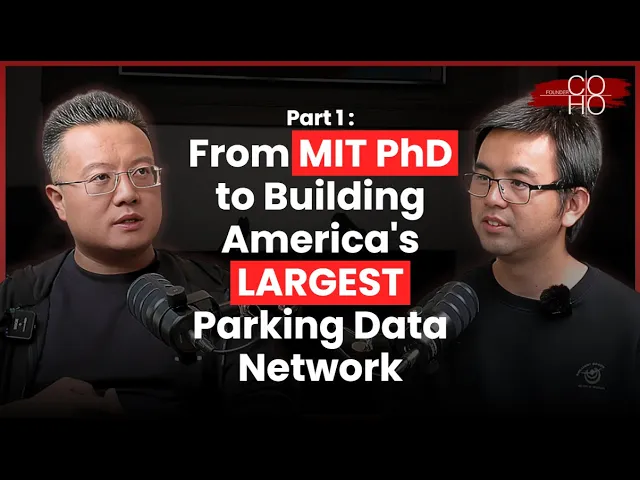
Wen Sang, Co-Founder and COO at Genspark, an AI agentic engine company pioneering the future of work for knowledge workers.

|
Co-founder & COO Genspark.ai
Wen Sang — Co-Founder and COO at Genspark, an AI agentic engine company pioneering the future of work for knowledge workers. Wen took the unconventional path from being an MIT PhD student working on car engines to becoming a Y Combinator founder who spent nine years digitizing America's parking industry. After successfully exiting Smarking—which connected 2,500+ parking facilities across North America—to ParkHub in 2022, he's now building in the red-hot AI agentic engine space. His journey from a Chinese immigrant to two-time founder offers rare insights into persistence, pivoting, and his vision for AI-powered knowledge workers.
In our conversation, we explore the hidden costs of startup success that no one talks about. Wen reveals why he almost burned out after nine years of grinding in an analog industry, how meditation and executive coaching saved his leadership, and the family sacrifices that come with founder obsession. You'll discover the stark reality of fundraising differences between Boston and Silicon Valley, why timing trumps technology in hardware ventures, and how he made the gut-wrenching decision to exit a company that consumed a decade of his life. Most importantly, Wen shares how he's applying hard-won lessons about market timing, team building, and personal sustainability to his current AI venture—lessons that could save you years of costly mistakes in today's hyper-competitive startup landscape.
References
Wen Sang – https://www.linkedin.com/in/wen-sang/
Jing Conan Wang (Host) – https://www.linkedin.com/in/jingconan/
FounderCoHo – https://www.linkedin.com/company/foundercoho
Timestamp
00:00 - Highlights
01:25 - Introduction and Interview Focus
02:48 - Introduction - Growing up in China, coming to MIT
05:04 - Early MIT experience and academic path
07:15 - The parking problem that sparked the startup idea
09:23 - Turning the idea into a real business
10:17 - Building the initial team with college friends
11:10 - Funding challenges - Boston vs Silicon Valley
15:13 - Y Combinator experience and Sam Altman
18:39 - Developing communication and leadership skills
21:01 - Executive coaching and meditation practice
25:02 - The Smarking business model explained
28:45 - Building the parking data network
30:38 - Scaling challenges and team growth
34:20 - Nine years of dedication to the mission
37:30 - The exit decision and sale to ParkHub
38:50 - Post-exit tinkering year and vehicle project
42:06 - Lessons from hardware startup attempts
43:13 - Outro (Preview to Part 2)
Full Transcript
My first check was actually from my wife. It's insane. Meet Wen Sang, former founder and CEO of Smarking, currently co-founder and COO at Genspark. Sam Altman was still the president of YC. He's a great, great communicator. He can really hold the entire audience in his palms. It was just magical. But success came with a brutal cost.
Didn't really pay attention to how human beings work, and made a mess. I would just categorize it as first time founder probably understood more how systems or technology work than how human beings work. The mission was taking its toll. It was hard on her. It was not easy. We delayed on every life decision because of this. After nine years, multiple near death experiences as a company and building the country's largest parking network. For committed founders, there is also this black hole. If we're deep in the mission, it's not easy to pick up your head and then see the world. When I sold Smarking picking up my head, I was like, holy cow. What has happened? Mission of family. Most founders never face this choice. But when you do, all the investors, all the LPs, their mandate is put money into AI, nothing else. Maybe that's the next thing after we take Genspark to kind of a trillion dollar company.
How do you choose between your life's work and the people you love most and what happens when that choice leads you to the next million dollar opportunity?
Meet Wen Sang, co-founder and COO at Genspark, an AI agentic engine company pioneering the future of work for knowledge workers. Wen took the unconventional path from being an MIT PhD student working on car engines to becoming a Y Combinator founder who spent nine years digitizing America's parking industry. After successfully exiting Smarking, which connected 2,500+ parking facilities across North America to ParkHub in 2022, he's now building in the red-hot AI agentic engine space. His journey from a Chinese immigrant to two-time founder offers rare insights into persistence, pivoting, and his vision for AI-powered knowledge workers.
In our conversation, we explore the hidden costs of startup success that no one talks about. Wen reveals why he almost burned out after nine years of grinding in an analog industry, how meditation and executive coaching saved his leadership, and the family sacrifices that come with founder obsession. You'll discover the stark reality of fundraising differences between Boston and Silicon Valley, why timing trumps technology in hardware ventures, and how he made the gut-wrenching decision to exit a company that consumed a decade of his life. Most importantly, Wen shares how he's applying hard-won lessons about market timing, team building, and personal sustainability to his current AI venture, lessons that could save you years of costly mistakes in today's hyper-competitive startup landscape.
Let us get started!
I want to go to the very beginning of your story. You grew up in China and then came and started at MIT, which is a top-tier engineering school. What drives you?
Well, I was fortunate, obviously. But yeah, to your point, I was born and raised in China. I was trained in automotive engineering since college. I did my master's in Tongji University in Shanghai as well. Back in, I think this was 2010, I moved to the States for the PhD program at MIT. MIT Sloan Automotive Lab, Mechanical Engineering, working on car engines, trying to burn gasoline like how you burn diesel, making it more efficient and all that. I mean, two things happened that summer. Actually, two summers before. So personally, I mean, I got to know at the time my girlfriend, now my wife.
And she was very determined to come to the States. And I was like, I mean, I obviously fell for her. So I'm like, if you're going, I have to go. So that's one. But yeah, all things seriously, I also had this amazing opportunity meeting with later on my advisor at MIT. He was at this conference. I think this was summer 2009. I was presenting there. My advisor from my master's program, Professor Lee Wan-li, introduced me to Professor Wai Cheng who was my MIT advisor later on. And I showed my work, and he was like, that's actually pretty good. Do you want to come to do research at MIT? I was like, yeah. Of course, who wouldn't? So yeah, I was pretty lucky from that perspective.
Yeah, and MIT is such an awesome academic environment. And this is the best place to pursue academic career. And three years in, you have a golden ticket to be a researcher, academic researcher. But I think something happened, and you moved to another trajectory. Tell us more.
That's right. I mean, yeah, to your point, a lot of amazing researchers at MIT, lot of Nobel Prize winners, genius people all around. But then something struck me at MIT. A lot of people don't know that MIT has this extraordinary entrepreneurial environment. So we don't talk about it much, not like the Harvard guys. They tell everybody everything about all the good stuff they do. We just hunker down and accomplish. A lot of MIT founders as well, right? There was more than one path to make impact.
And what I was thinking before was, sure, academic could be one path, but it was relatively speaking narrow, right? And looking at all of these amazing founders building, you know, a billion dollar company, it's not just because of the valuation, but also just how impactful they are. I was like, okay, these seem like normal people. Why can't I do the same? So that was one of the biggest kind of driving force for me to start exploring on the entrepreneurial path. Also MIT had these amazing programs like the 100K competition. There's the Entrepreneurship Center where you can get free ramen noodle. I survived on that for more than six months after my graduation, I'll tell you that. A lot of amazing programs. I'm definitely grateful for all of that and every summer there's a Delta V accelerator program. They don't take any equity. They just, you know, pure giving. It's amazing.
Yeah, so MIT has a lot of support system to help students. And related to your startup dream, you mentioned earlier that you work on combustion engine research. Then later when you do the startup, your startup is an enterprise SaaS company. So what is the connection here? And what is the story that people don't know?
Yeah, that's right. Well, I don't know if there's much of a connection there, but when I got to MIT I think this was the second year. I got my first car in my life. It was a little bumpy center. They don't make those cars anymore. I was fifth owner, $2,000. I got it from another guy who, well, that's right. So started driving around feeling excited, you know, freedom right like I could go anywhere with the car. But then I found myself circling in the streets of Boston. Couldn't find parking spots. And I was like, this doesn't make any sense. Now it's a burden. Why, right? We're like doing stuff on our smartphones and I can't find a parking spot. It just, you know, it doesn't make any sense. So I started looking into that and came to the realization that the problem is not on the consumer side actually. It's really the supply side was not digitized. So yeah, basically this was before my graduation from MIT, started this kind of thing.
When was that?
This was 2013 probably.
So that was a time when mobile was really taking off.
Yeah, everybody was talking about mobile, local, data, global, whatever. Yeah so one thing led to another. I worked for this company for about four months as the automotive engineer or mechanical engineer and just saw my next 10 years there, you know, the ceiling was you know, it seemed pretty low so I was like okay I'm done with this so came out and just you know started working on this full-time and that was the start of my entrepreneurship journey.
That's cool. Yeah, I know that it's very hard to find parking space in Boston. And if you go to the city, I think the daily rate is 25 bucks.
I mean these days if you park in San Francisco, I'm still pretty familiar with all the parking rates. Overnight it's probably 80, 90 bucks if you park at one of these hotels. It's insane.
Yeah. Now you have this idea for your own problem, how to find parking spot. How did you turn that idea into a real business?
I mean initially it was really kind of a project so I was with this engineering mindset that there was a problem. Let's solve it. Later on I think well, I need to, I need to survive, I need to kind of support myself so and also I mean seeing a lot of amazing companies founded out of MIT like Dropbox and so on. Drew Houston came back to give a talk and I was like, wow, this guy's pretty cool and he's very friendly and we chatted briefly and he was very encouraging and I was like, yeah, why not? Turn this into a company would be amazing so yeah.
And you once mentioned that like your company called Smarking is MIT data scientists and battle testing enterprise leaders. How did you recruit your initial team?
That was all my friends, I mean. All your friends like college friends? Yeah, so my co-founder Maokai, he was the champion of MIT Pokerbot competition 2014. So essentially, write machine learning bots to play hundreds of thousands of poker within one minute. And you try predicting how the other opponents are going to play, and you try winning the game. So yeah, I mean, we're in the same dorm building, and we hang out from time to time.
So you started with your college friends, you have them to join you, presumably initially part-time. And also another thing that is very important for building startup is getting the resources, the funding. As a poor student back then, how did you solve that problem?
Well, it was hard. It was not easy to raise money in Boston. Essentially, my first check was actually from my wife. It's insane.
So you mentioned about Boston. It's very hard to raise capital in Boston. A lot of our audience might feel confused. Boston is the second venture hub in the US. How could it be hard?
Look one thing this is back in 2014 so it might have changed since then but back then Boston is indeed big on tech and there are a lot of amazing companies right TripAdvisor, Kayak and all, you know, amazing biotech companies. The environment is just a bit different from Silicon Valley. So I tried raising money in Boston. We actually get backing from this venture fund called First Star Ventures, also founded by one of our MIT alum, Millie Liu and Drew Volpe is her partner. We got backed by them, but the macro environment is just very different. In Boston, people for like early stage companies, people ask you, okay, what's your five year financial projection? I was like, sure, I can build a model, but like, would you believe it? I haven't figured out how to sell this thing yet. And this was also, I think, the end of 2014. Y Combinator sent some partners to scout kind of projects in Boston. We had a conversation, and then I applied for YC, and we got in. And then, once we were here, it's like, okay, I'm exaggerating a little bit, but those were also really good times, right? Like people were like, okay, what's your dream? Oh nice. Here's the check. And it's just, yeah, very different.
You feel the difference between the Bay Area ecosystem and Boston ecosystem? When was that?
It's different. That was the beginning of 2015.
That is actually a very interesting point. And a lot of our audience also see the movie Social Network. And there's a lot of startups that are created in Boston, like Facebook. There's many other examples, like even Dropbox. And they are created in Boston by MIT alumni, Harvard alumni. But then eventually when they need to grow, they move to Bay Area. Do you see this is a broader trend? Like you mentioned at one point, the venture part. Is there any other reason that caused this?
Honestly, I don't know. I mean there are still a lot of amazing companies in Boston right like Boston Dynamics, Analog Device. I'm forgetting a lot, but there are a lot of amazing companies in Boston. I mean raising money for the first time founders by itself is just a challenge and raising money, it's a lot of times it's trust right so yeah, I mean, everybody would have their own kind of different path. I mean, for us, for me, I think we were just very fortunate to kind of find our path. But yeah, plenty of companies like Commonwealth Fusion, like, yeah, they find money in Boston, they stay in Boston, and they do well. But yeah, I think Boston does have this kind of little hard tech, biotech vibe comparing to the Bay Area, which is more like software, AI kind of focused in a way. So it's just different flavors. Yeah, if you're doing fintech or consumer tech, probably better luck in New York. If you're doing art related stuff, maybe LA.
Yeah, back to your story, you mentioned that you came to Bay Area because you accepted to the YC program. And walk us through the first days you are in the YC program. How do you feel when you first enter YC program?
It's all blurred now, but at the time I think Sam Altman was still the president of YC. We would go on these one-on-ones outside of YC office in Mountain View. Every Tuesday there will be a dinner, or Thursday, Tuesday I think. Big dinner with hundreds of founders. There will be invited guest speakers to share their insights, thoughts, mostly very accomplished entrepreneurs, sometimes accomplished investors, to talk about their perspectives. And obviously we learn a ton from them, also from our peers. We kind of formed this fellowship. Yeah, YC was both, I'd say, it was awesome. It was exciting. And the partners were demanding, I'd say. They would be like, okay, where's your 10% growth this week? So, but that really helped, you know, keep us on track, keep us focused. And yeah, three months later, Demo Day, voila, 500 investors in the audience. Companies get funded.
Who is your partner?
Back then it was Dalton Caldwell, and PB Paul Buchheit, the creator of Gmail.
Yeah, how does the experience look like when you had this mentoring section with them?
I loved it. I mean, Dalton has always been very nice. He's very helpful. He's very kind. Always, you know, supportive and, you know, just helpful. And PB was a little, I'd say, critical. He would go kind of, he's a little bit of a no-bullshit type of guy. And he's very focused on product, I remember, and growth. Yeah, they were a great combination.
Yeah. That's pretty cool. You also mentioned that Sam Altman was still president of YC back then. Right. How big was the YC batch back then?
I think our batch was winter 15. We had probably about 120 companies.
Back then, was still very small back then. Compared to today, yeah. And through your interaction with Sam Altman throughout the program, what was your, your, like interaction with him? And at that point, would you imagine he will be the person who created ChatGPT and change the, how the whole industry works?
I mean, I personally definitely had no clue at the time how the world is gonna be, right? So, but yeah, he was awesome. He was very helpful. He was very supportive. He would challenge us on the thinking on all things related to our company. I vividly remember he's a great, great communicator, regardless if it is just one-on-one or on the stage he can really hold the entire audience in his palms. It was just magical to see yeah learned a ton.
Yeah, he's a master of communication. Yeah. You're also very good at communication. Thank you. How did you develop your own communication skills throughout the journey?
Well, I actually had challenges early on. I mean, I was trained in engineering, so there is definitely this transition for a founder from an engineer to kind of a business leader. So this was back in 2017 or 18. We had some crisis in my first company.
Would you mind sharing what the crisis is?
It was people issues so I won't get into the specifics but I mean I would just categorize it as first-time founder probably understood more how systems or technology worked than how human beings work. And I didn't really pay attention to how human beings work, and it made a mess. And that was my painful learning process of just getting to a point where I got a lot better at understanding how human beings are different from mechanical systems. And yeah, I had a communication coach hired for me. That helped. I also had to get an executive coach to help me to actually kind of grow a bit, both from self-awareness standpoint and also from just how to lead, to work with the other people. Because as a founder you have a million things going through your mind and it's just very difficult for you to pay attention to you know a lot of little things which could be very important. Yeah.
Thanks for sharing your journey. One thing I realized is among all the founders who come from engineering background, you have very unique characteristics of being a very good communicator.
You're very kind. You did a great job. And I think the audience will be very curious about your journey, about how did you turn yourself from engineer into founder who is good at communications and also good at people like you mentioned.
Well, I don't know if I'm good at those things right now, but I would say I'm probably much better than before. It was all forced onto me. I mean, if there was a way for me to just, you know, soldier through without understanding how human beings work, I would. I would have.
You mentioned about you have an executive coach. How does the executive coach help you?
So, I mean specifically, this is probably oversharing, but. So, at that time, we raised money, we still have, I think at the time, plenty of money in the bank, but we were experiencing like culture issues, people were not properly incentivized, you know, just, there were toxic people on the team. It was a small team. Looking back, I'm amazed how much shit we had to put up with to be able to work. So basically, the coach was. I later on learned there are different streaks of coaches. Some are more focused on business strategy and some are more psychological kind of type.
So this coach I worked with, he was hired by some major executives like at, you know, major companies. You would see those companies on the news. He was doing this startup program on the side to help early stage founders. I was one of them. Obviously, it was paid, it was expensive, but it was worth it. So two things primarily. One, he said, you need to start meditating. I'm like, what is that? He's like, download this app and just start meditating. I was like, okay, so I started doing it. It was Headspace, I still use it. I don't know how many hours in, but yeah, like at the moment you won't feel it. A month later, it's like, whoa, I can see things. That was pretty cool in the moment. And then another thing he kind of taught me was, when it comes to the busy, kind of whatever's happening right in front of you, there is no need to rush into responding to that right away. Instead, there is actually this space and time that you can give yourself to essentially prepare yourself to get to the responses. And you should ask more questions. Don't just jump right in and start acting on it and all that. So that was really helpful.
Yeah, you had such a wonderful story. And I think what you shared is very resonant to me. I also meditate for very similar reason as you do. And I felt like a lot of our successful entrepreneurs, they all meditate. And you put in a beautiful way to actually give you a different perspective, give you an idea that you don't have to react. You can give yourself a little more space to think clearly, have a strategy, and then react.
Yeah, I mean it's hard to realize day to day if you're not kind of reminded with that, Headspace. Yeah, well, maybe Genspark will build an AI Headspace for you or AI meditation for you, meditator, meditation coach.
I'm very looking forward to see that. Yeah right I mean I would use it right based off who you are what your mood is and yeah, just for you.
Thanks for sharing your like experiences and the journey about growth as an entrepreneur. We can switch gears and more into the business side as the Smarking idea. So what problem were you solving?
So essentially, you remember we're talking about how I wasn't able to find parking spaces in Boston. So, well, what would help, right? So I was thinking at the time, if I open up Google Maps and there is availability, price, and everything available on Google Maps for all of these parking options, that could probably help making everybody's life a bit easier, right? You know, 30% of traffic in urban area in the States is all parking searching. That's a lot, 30%. And we overbuilt. We have a lot more parking spaces than we needed.
There are about 250 million passenger cars in the country. We have over a billion parking spaces. Each car has more than four. And it's not that we don't have enough supply. It's just people don't know where to find them. So the bottleneck really is none of these information regarding availability, pricing, and so on is digitally available or connected to anything. So that was kind of the problem statement we gave ourselves. We're like, okay, for us to solve this problem, we can't just go straight. At least that was the thinking at the time. We did talk to Google Maps and everybody is trying to solve this problem. There were amazing product managers on their team trying to figure out how to make it happen as well. For a moment, they even started a separate company within Google to help solve that problem. Yeah, everybody eventually get to this point that we just don't have the digitized supply information transaction capabilities, so we decided to go in and just do that. Basically we sold a suite of business intelligence, data analytics, dynamical pricing and later on another flexible parking program kind of product suite to all the parking asset owners from municipalities. You know, city of Houston, city of Miami, city of San Jose, were all, city of Santa Monica, they were all our clients. So municipalities, they own a lot of parking. They make a lot of money out of parking as well. And then there were real estate companies. People owned office buildings and shopping centers, right? Brookfield properties, Boston properties, Tishman Speyer, Oxford properties, a lot of these major real estate companies. They also have a lot of parking. And then, you know, hospitals, hotels, universities, airports, you name it.
So we just basically went in to help these folks who own parking assets, to help them to do better. At the same time, we accomplished the goal to build, essentially at the time, we built the country's largest parking, real-time parking data kind of network.
How big was the network?
Before our acquisition, we got north of 2,500 parking facilities across North America.
Wow 2,500 parking across the whole country?
Yeah, and to do that, we had to build out 500 plus ETL jobs dealing with different data sources as for just data extraction, transformation, so on. Basically, the industry, I mean, let's be honest, parking industry was a little left behind. Data was not readily available. I still remember first set of data we dealt with was transaction reports on PDFs. 700 pages or something like that. It's insane, right? Back in the days, we don't have any like ChatGPT or whatever to help us to extract data. We had to write programs to extract transaction data out of PDFs.
Wow, that must be very hard because even now with ChatGPT, there's still a lot of people doing PDFs.
Yeah, yeah, I mean those were actually rather speaking better ones. A lot of the others they don't, they don't have anything. They just have a human being counting cars in parking lots. That's like yeah the worst. But yeah, then we had to deal with all kinds of parking gates, ticket speeders, pay stations, meters, online reservation platforms. We built integration with pretty much everybody in the industry so back in 2015, first parking trade show I went to, I remember this was March in Chicago, Parking Industry Exhibition. I went to the show, nobody knew me at the time, and I was like, okay, I went to this parking access control, access control system booth, and I was like, okay, do you have an API? And the guy was like, what is an API, what are you talking about? Who are you? Where are you from? What are you talking about? What is an API? So that was kind of the state of the art of the parking industry at the time. By the time we got to acquisition, I'd say if I go to a trade show, probably majority of the folks know, they would know me. And they know what we do and a lot of people would say, really, they're happy with our product and our services and yeah, it was.
Yeah, you had a very ambitious goal. What I hear you say is that you basically digitize the physical spaces starting from parking spaces. Yeah. And you build such an amazing network, 2,500 facilities across the country. That's a very heavy duty for you to do. It was a lot of dirty work. It's a lot of like, I would imagine very operation heavy.
The question I have here is that as you grew the company and have more and more parking facilities you support, did you feel like you have to scale in order to support it? Was there anything that broke as you scale?
Yeah, it was two folds. One, we had to scale the system or the technology. So accommodating a lot more data, accommodating a lot more variety of data, there were a lot of technology work to be done. But at the same time, we had to build out kind of a full support team, customer success team, account management team. It was all. A lot of people you had to manage. Essentially, we were doing consulting work with and for our clients while we selling them our software services as well.
At the peak time, how many people you manage?
Not too many, we were like, yeah, couple dozen, few dozen, yeah.
It's still very efficient compared with the number of people in the parking industry.
Sure, I mean, yeah, we were in the software world, but yeah. Yeah, we were a pretty small, tight team.
And you work on the Smarking idea for eight years, 10 months. Yeah. And almost nine years. One question I have is that what made you work so hard in the industry for nine years?
That's such a great question. I mean, looking back, I'd say I was probably young and stupid, in a way. Very important quality for founders. Yeah. I mean, look, on the one hand, I just deeply believe in the mission. It was clearly a problem. There is clear benefits to the world if we could, you know, successfully solve the problem. So that belief, that faith really, you know, it just got me through a lot of, I'd say, the ups and downs, the roller coaster rides, the dark times, multiple times we were near death as a company. I don't know, I mean for committed founders, there is also this black hole or this trap that if we're deep in the mission, it's not easy to pick up your head and then see the world. When I sold Smarking, picking up my head, I was like, holy cow, what has happened? You know, Bitcoin won this and won this and won this again. Like I had no clue. That was a feeling. So yeah, I mean.
It's like you zone in. Yeah, it's easy to get sucked into the whole thing, for sure. At what time you suddenly realize that there might be a lot of more interesting problems than the one that's worth your time as well. Not until after I sold the company, actually.
Yeah. Yeah. Yeah. Also, I know that you sold the company to ParkHub in 2022. Tell us more about the story around this exit.
Sure, basically by the time we ran the company for four, five years, we got a little reputation in the industry. So every year by March, people would reach out. They were like, hey, when are you ready to sell? I'm like, before we were always like, no, no, we're going after our mission. We're all in. And then I mean, we went through this kind of, you know, ups and downs for quite several times. And then it was the pandemic, and then this was early 2022. We were in this for about eight, nine years. And someone reached out again, quite a few of them, one of them was ParkHub. And we're like, I sat down with my co-founder, Maokai, we're like, okay, so what are we thinking? Do we want to talk to them or we're still just going hard? I mean, look, it was tiring, right? Almost 10 years in. And to be honest, part of this was personal. I think when it comes to this sort of decisions, it has to be personal. I always felt, my family, my wife, at that time we had our first kid. That has been, she didn't say much, but it was hard on her. It was not easy. I mean, we delayed on every life decision because of this. Yeah, I mean, she was there. So and that time I was like, I probably got to kind of be thoughtful about my family as well. And yeah, I mean, so it goes with my co-founder Maokai, we're just reflecting on this. And then we just said to ourselves, why don't we just talk to these folks and then see if they're being real, if being genuine. And then we had a few conversations and we were like, okay, let's run the process. Let's see what options are out there. Did that for a couple months and then, yeah, I mean, we're also very fortunate on this front. We got three offers toward the end of June 22. And one of them was one of the largest, largest tech company here in the Bay Area. Yeah, so we just went through with it.
Yeah, yeah, thanks for sharing your journey. I know this must be very difficult decision whether to continue or access or try new things. And this is a story that people often don't hear from founders. I went through a very similar journey as you do. And as founders, we always want to continue because that's your mission, that is why you put your soul into it. But you have to be responsible for many people around you including your family. Now that we're talking about this, like that was 2022, now it's 2025. Now you think about that decision, how do you feel? Do you feel that it was good? That was a great decision you made or you wish it continued?
I mean, look, there's no what if in real life, but I'd say for me, there's no regrets. I think on the one hand, it was an awesome journey. I've learned a ton. I've made so many great friends from the industry. Friends from the industry kept me in this country. Okay, so that was pretty awesome. We still are in touch. And I was just talking to one of the folks this morning. They were curious about Genspark. I was like, OK, sure, I'll share with you. Yeah, it's really amazing. And yeah, I'm absolutely forever grateful for all the amazing people who helped us out throughout and supported us, all the investors. Yeah, but yeah, I mean it was a good ride. It was awesome ride. I think, yeah, you have to experience different things with life. I mean the world is still our oyster, I think.
Exactly. Yeah, exactly. Without that decision, you wouldn't be in the Genspark, which is the rocket now. Right. Yeah. In hindsight. Yeah. Yeah. Cool. After you exit from Smarking, I saw that in the LinkedIn you put a year of 2024 was tinkering year. Tell us more. What thing you explored in that year?
So I came out of ParkHub at the end of 23. That's when I actually got to know Eric. That's when he first moved to Silicon Valley. We hung out, we became friends, we went on trips to LA, we shot some guns in gun range, and we did silly stuff, as you know. But yeah, it was fun. We kept friends, he started working on Genspark, and I mean, we helped each other out.
I started working on something related to building the next generation intelligent vehicles in the US market. So people talk all about EVs in China, how awesome they are, right? But the majority of people haven't actually seen it. I was lucky that I had the opportunity to try it out. It's insane. You can talk to the car, the car would just do things for you. You can ask the car to play a movie or give you a massage. And the vehicles are driving by themselves. Not level four, sure, but still, I mean, every morning I heard a lot of people were just eating breakfast while the car is driving them to work.
That's the kind of technology and product we don't have in this country and I think everybody deserves a better product. Come on, Tesla is the only one right? I mean sure there's Rivian and Lucid. They're all trying to do amazing things, but yeah, I mean clearly we're being lagging behind so the thinking was you know what if, what if we could put intelligence onto the vehicle, not only it could drive you around but also it could interact with you like a human. There's also that AI alignment kind of element right? That's also from the latest generative AI breakthroughs. So that was the thinking that was the project. I actually ended up raising money from a group of really awesome investors, some of them backed me in my last company. And ran that for quite a while. We got to a point where we pretty much nailed our hardware kind of kit and we're just getting started on the software stuff. But then, I mean, I just had this reflection after talking to some really experienced, let's say, mentors in industry and decided that the timing is just not right. When it comes to the interest rates, when it comes to hardware innovation, when it comes to manufacturing by itself. People talk a lot about stuff, but I actually went in to really sort through all of these noises and then got to a point where we can't execute on the plan. But yeah, I'd say the macro environment is not there. One simple thing is all the investors, all the LPs, their mandate is put money into AI, nothing else. This was not like three, five years ago when Tesla just went profitable and then...
I heard that in 2024, heard that like VCs put in 90% of the capital in AI.
Yeah, so exactly. So this is where the world is. I mean, I still believe in the importance and how much joy we could bring to the world to, you know, everyday American if we could build such a vehicle. You know, just be your friend, be your companion and just have it with you. But yeah, unfortunately, I think maybe that's the next thing after we take Genspark to kind of a trillion dollars.
Maybe Genspark will have hardware. And I went through a more abbreviated version of your journey as well. And when I exit from my first company, I was also trying to do a hardware company.
Wow. Hardware is hard.
It is hard. That's the lesson I learned. And I went through a very similar process you do, a more abbreviated version. I talked with many experts and realized it's very capital intensive. Yeah. Timing is probably not right. Cool. So now I want to learn more about the Genspark journey.
That's the end of part 1 of our conversation with Wen Sang. In Part 2, we dive into how Genspark hit $36M ARR in just 45 days, Wen's bold 'no moat in AI' philosophy, and his vision of a future where every worker manages AI agents. Don't miss it! Subscribe to FounderCoHo if you haven't already.