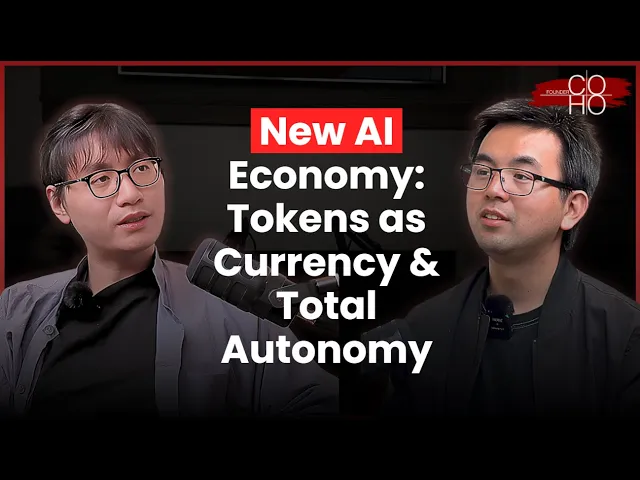
Interviews
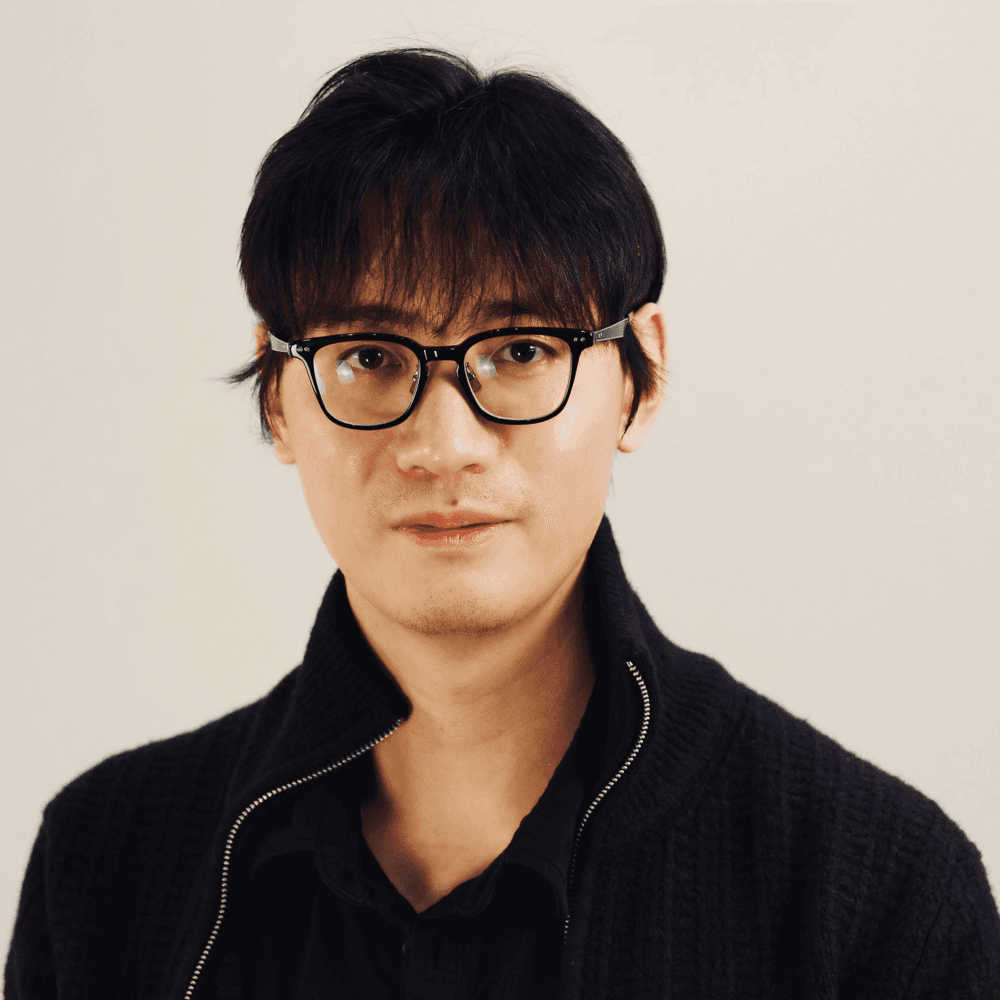
Yi Shi, serial entrepreneur and computer scientist with 3 exits and 1 IPO before turning 25.
|
CEO of FlashIntel, Serial founder - 1 IPO, 1 unicorn, 1 acquired($350m)
Yi Shi - Serial entrepreneur, computer scientist, world traveler, and philosopher who achieved what most founders only dream of: 3 exits and 1 IPO before turning 25 including multiple other ventures across 4 countries.This is about a philosophy-driven founder who dropped out at 19, moved countries, learned 6 languages, and revolutionized entire industries. This 19-Year-Old Dropout Built a $150M ARR Company & Had Lunch with Warren Buffett for $2.35M. Currently building FlashIntel - the AI agent platform pioneering fully autonomous sales and customer‑experience systems.
Most Mind-Blowing Moments:
- How a bored 13-year-old learned programming and became a millionaire by 25
- Why "wabi-sabi" philosophy is the key to product simplicity
- The "performance-based pricing" hack that solved the trust problem overnight
- Running 2 companies simultaneously in 2 different countries (yes, really!)
- What Warren Buffett actually said during that $2.35M lunch
- Why "tokens are the new currency" will change everything you know about business
- How to eliminate 15 software subscriptions with ONE AI agent
Reference
Yi's LinkedIn: / yishi88
Timestamp
0:00 - Highlights
1:16 - Introduction and Interview Focus
2:41 - Philosophy & Travel - How Nietzsche and Wabi-Sabi Shape Business Thinking
10:07 - Early Life - Growing Up Between Shanghai and Germany, Learning Six Languages
21:10 - First Company Avazu - Dropping Out at 19 to Build a $150M ARR Ad Tech Company
27:15 - Overcoming Early Challenges - Performance-Based Pricing Innovation
28:04 - Going Global - Building an International Company from China
34:28 - The $350M Exit at Age 25 - Managing Two Companies Across Two Countries
39:00 - Warren Buffett Lunch - $2.35M Investment in Wisdom and Life Lessons
42:14 - The ChatGPT Moment - Recognizing the Path to AGI and Starting FlashIntel
46:07 - FlashIntel Vision - Building AI Sales Agents to Replace 15+ SaaS Subscriptions
50:20 - The Philosophy of Simplicity - Why Autonomy is the Ultimate User Experience
57:01 - Token Economics - Why Tokens Are the New Currency in the AI Era
1:06:00 - Technical Implementation - Long Horizon Planning and AI Agent Guardrails
1:09:38 - Engineering vs Research - Why AI Agents Are Now an Execution Problem
1:12:12 - Customer Adoption Patterns - The Urgency to Adopt AI Across Industries
1:15:07 - Outro
Full Transcript
Warren Buffett was talking. He told us if a rich man becomes rich twice, there must be something wrong.
At 19, he dropped out of university and built a company that hit $150 million revenue in just four years.
Philosophy gives you the framework to think about problems on a very deep level. As a startup founder, one of the main competitive advantages is about the depth of your thinking.
I couldn't find any investors. I was also struggling in finding new customers. People thought it's a scrappy startup from a 19-year-old dropout coming from a different country. We thought, what if we just offer advertisers a performance-based pricing? We took over all the risk. The result: a $350 million exit at age 25.
ChatGPT - that was kind of the pivotal moment for me to understand that's the clear path to solve the generalization problem. I think the ultimate form of simplicity in the AI era is autonomy. You define your goals, talk to the model, and the model should do everything for you. Token is a new currency in the AI era.
More and more companies are going to reduce their OPEX and invest more into CAPEX. It's not a research problem. I think right now it's more an engineering problem. It's just a matter of time.
Meet Yi Shi, CEO of FlashIntel, serial entrepreneur, and visionary leader. He's built three startups: one IPO, one unicorn, and one $350M acquisition, raising over $450M along the way. Growing up between Shanghai and Germany and speaking six languages gave him a global lens - one that helped him go from dropping out at 19 to building Avazu into a $150 million ARR company and exiting for $350 million by age 25. Always chasing transformative conversations, he led a company that invested over $2M for a charity lunch with Warren Buffett and made a six-figure bid to meet Salesforce CEO Marc Benioff. He has been honored in Forbes Asia's 30 Under 30 and Fortune's 40 Under 40.
But Yi's worldview is just as compelling as his business track record. In our conversation, he described how Nietzsche's will to power and Japanese wabi-sabi guide his decisions through first-principles thinking. Early in his career, he built Avazu into a $150M ARR company by pioneering a performance-based advertising system that reshaped programmatic marketing. Now at FlashIntel, he's applying the same principles to create autonomous AI sales agents, driven by a belief that the ultimate simplicity is autonomy - and that tokens are the new currency in the AI era. Yi's mission is bold: free ten million jobs by automating repetitive go-to-market and customer experience tasks. Let us get started.
Yi, welcome to FounderCoHo. Your story fascinates me. You had three exits and one IPO before most founders even get started. This is incredible. And what is more fascinating is I realize it's not just about startup building, it's also a human journey. From your perspective, if someone asked who is Yi Shi, what things would you tell them outside your LinkedIn resume?
Yeah, so first of all, glad to be here. And I would describe myself as a founder and a computer scientist. At the same time, I travel around the world. So I'm also a traveler. And like the companies I build, I always had some convictions in some first principles in things I believe in. And there are different philosophies and schools I believe in, because I grew up in Germany and there are a lot of German philosophers and I think one of them, actually one of my favorite philosophers is Nietzsche. So his school is studying the core human incentive in the will to power. And I think as a founder, it gives me a drive to always pursue new things, the next generation of product or trying to transform a certain industry.
And I also realized since we chatted last time in April, you already traveled more than 10 countries. That's a lot in just two months. I'm curious that through your journey, what is your view about travel? Like are you searching something deeper through those travels?
So at the current stage, it's more for me to experience different culture, experience the diversity of different cultures and see different things so that the travel itself can give me certain level, or certain new inspirations. So it's more for me about the inspirations and new ideas and also experience the diversity than - it's more about the experience itself than some purpose. So more the experience.
So the experience, you get energy by experiencing more different things. Exactly. Yeah. Yeah. You mentioned that you're also very into philosophy. Is that also part of your philosophy?
Yeah, I would say so. So because I like German philosophers, I also like the Japanese wabi-sabi. It's kind of the Japanese philosophy of imperfection and loneliness and also simplicity.
That's very interesting because many people will think German people are very perfection-driven - like they want everything to be perfect - and Japanese wabi-sabi is more about imperfection and finding beauty from it. What is your take about different philosophy and how that shapes your own philosophies and views in the startup building process?
So I'm trying to find some analogies between the different schools of philosophy with something, a model from psychology called Maslow's hierarchy of needs. So based on that Maslow's hierarchy of needs, as a human being, you have different drives, you have different incentives, different drives. You do things because you want to survive, you want to make money, you want to have some certain level of self-actualization or self-esteem and so on. So you do different things with different incentives. And in the philosophies, you also see different philosophers who studied different directions of ontology. Ontology is basically the term of first principle thinking in philosophy. For me, there are two philosophers which I like the most. One is Nietzsche. So what Nietzsche says is you need to fight for the power, will to power. That's what he says. That's the ontology of human incentive under the Nietzsche school. Another one is Locke - he's Anglo-Saxon from the UK. And he says that the ultimate human drive is about freedom and ownership. You want to pursue freedom, right? Economic freedom, all kinds of freedom. And also ownership. So you fight for things that belong to you. If you try to fight for something that doesn't belong to you, you get de-incentivized. So these are the two kinds of philosophers or schools which I like the most.
That's very interesting. It looks like you put a lot of thoughts about the meaning of life and humans' drive. Do you think that is also related to the roles you need to play as a startup founder - that you need to understand more about humans' drive?
I would say as a startup founder, it's critical, it's essential to have a deep thinking of the fundamental problems. So you need to think very deep into the problems you're trying to solve. And philosophy gives you kind of the framework to think about problems on a very deep level. Like first principle thinking in philosophy is called ontology. So you try to boil things down to the most fundamental. And it's a way taught in philosophy to try to boil things down, trying to look very deep into certain problems. And as a founder, I think one of the main competitive advantages is about the depth of your thinking. So that's why I think that's very important.
A lot of times people think of founding a company is about tactics or the skills you have, but a lot of times it's also about the decision framework or philosophy that might also be more important than the things you do because there are so many factors you need to think about when you do the startup - like which direction you need to go - and philosophy can provide guidance from that. So I want you to also rewind back to the beginning part of the journey of your startup building process, your early days. You mentioned about you like German philosophers and I also realized you moved from China to Germany at very young ages. Tell us about your early life.
Yeah, so I grew up in Shanghai, stayed in Shanghai for around 10, 11 years. So I was born in Shanghai and went to Germany when I was 11. And then I went to high school and also to university in Germany. So I basically also grew up in Germany. And when I was 19, I left Germany and pursued my first startup. So I became a startup founder, started my first company in Shanghai again. So back to Shanghai. And since then, I've been living in different countries like China, Singapore, US, Japan, and I founded four companies basically.
That's cool. So in the very early ages, you actually experienced both cultures in China and in Germany. So did your whole family move to Germany?
Yes, so my family moved to - my parents moved to Germany around 35 years ago.
35 years ago. And I also realize that you learned programming at a very young age, like 13 years old. Tell us what made you get into computer programming.
As a teenager I was just too bored. I didn't have anything to do. I didn't have any other hobbies. So I spent a lot of time in the library. And in the library at that time there were a lot of magazines about PC and how to repair your computer, installing different programs, playing games and so on. I saw - at that time I saw it would be cool to make my own website. Like my own homepage at the beginning. So I started to learn how HTML works, how FTP works, and how to register domains. And I started getting into web programming, web coding. At the beginning, very basic stuff like JavaScript, HTML, and then more and more into PHP and some other programming languages.
That was a very young age to learn computer languages.
Yeah I was 12, 13.
While most people are still learning their mother language, how to write and read it, you're learning how to communicate with computers. Another thing I feel very fascinating is that you also know six languages. In addition to computer languages, how do you learn all those languages?
Yeah, so in Germany, I grew up in an environment where I needed to learn German and also another third language in German schools, which was either Latin or French. And then because I grew up in China, in Shanghai, so I also speak Shanghainese because we spoke Shanghainese - I spoke Shanghainese with my parents and also my grandparents. And also I spent some time in Japan, so I also speak a little bit Japanese. Yeah, so that's basically the background.
Knowing six languages, how does it change your philosophy of the world?
It gives me the diversity of thinking about the problem from different perspectives and also different cultures. So if you think about European languages, especially German, the German language is designed to be very logical. It's a very logical language. So you have - for the nouns, you have different articles, articles in different genders like female, male, or neutral, so different articles. And then the grammar is also very logical. So it's a very logical language. And then you think about English or Chinese - Chinese is not a logical language. It gives you kind of a feeling if you see a Chinese character, it's kind of like a picture, trying to illustrate something. So, if you think about English, English is more - compared to the European languages, I think English is easier. It's an easier, more accessible language. And by understanding or knowing different languages, it gives me different perspectives to think from different cultures and also gives me diversity in thinking.
Yeah, you mentioned a very interesting point about the nature of the language and that also impacts how people behave. You mentioned that German language is more precise. You can describe exactly the meaning using the different versions of the verb and nouns over there. Chinese is more fluid and more imprecise as a consequence of that. It's also very interesting to see how this impacts people's thinking. There's a spectrum. On one hand is computer language, which is very precise. There's exactly one way to do things or represent a thing. On the other hand, music or art is also a language which is very imprecise. The people who use different languages will do either very logical, programmatic things, or they will be more artistic. That has an impact on how people's behavior looks. For example, I personally found that a person who uses a more imprecise language, they are more imaginative but it's harder to follow exact instructions.
I'm curious that among your experiences about different cultures - now you've experienced Chinese culture, Japanese culture, German culture, and US culture as well - what is your take about different cultures?
I think the Japanese culture and the German culture are very similar. So people take a lot of value in craftsmanship, building things responsibly and focusing on quality, trying to make the best out of everything. American and Chinese culture is more pragmatic. People try to define a goal and try to focus on getting things done and try to achieve the goal basically. Yeah. So I think that's the biggest difference for me. But in detail, there are different ways of doing things if you're looking at Germans or Japanese or Americans or Chinese - Chinese tend to be very pragmatic and also try to move very fast. Sometimes the quality might not be the best, but you try to get things done and you try to ship the product to see how the market reacts and so on. While the German, Japanese culture, they try to make a top quality product first before they launch to the market, bring it to the market. And in the US, there are also different types of cultures because US is a very big country. It's very diverse with different cultures, different people coming from different places. And if you look into Silicon Valley, everyone's talking about shipping fast, you need to ship very fast, you need to iterate on a weekly basis or twice a week. While in some maybe other regions of the US, the way of thinking is a little bit different again.
Yeah. You had a lot of great observations about the characteristics of different cultures and over the past 15 years you've been building multiple companies across different countries. Do you feel like those philosophies helped you to build multinational teams?
Yeah, because I think understanding different cultures is very important in bringing the vision to the team and as a CEO, in my opinion, there are two things which give you the biggest leverage. The first thing is having the right product vision and understanding the technological path, like how the industry is going to evolve over the next five years, 10 years. And trying to build a product roadmap that is going to help the company to win over the next five years or 10 years. And the second thing is communicating the vision to the team. A lot of times it's not about building a product yourself, it's about building an A-class team and bringing out a top-notch product together with that team. So you need to communicate your vision and you need to talk to the team and that's very important.
So I want to also rewind back to the beginning of your entrepreneurial journey. You mentioned about your start at age 19 and tell us a little bit more.
So I studied computer science in Germany. I started my study when I was 18. At the age of 19, I was in my third semester and I was studying in Germany in Frankfurt. And I was already making some income with my website at the time. And I was thinking about whether I should make that business full time. And I decided to drop out of my study and started my first company, which was Avazu. It was started in 2009. I moved from Germany back to Shanghai because I thought I could find more talents in China. So I moved back to Shanghai and started my first company, which was an ad tech company. So we built advertising platforms. At that time, there weren't so many advertising platforms on the market. Everyone was trying to sell ads in a very manual kind of workflow. So you go to a customer, sign a contract, then you need to use Excel sheets to open up insertion orders and then try to place your ads, the advertiser onto the web properties. And we wanted to bring everything into one platform, automate everything, and make the transactions more efficient through actions.
I would imagine as a 19-year-old, it's hard to make people take you seriously. Did you have any challenges in securing customers or finding initial early employees?
Yeah, I think the biggest bottleneck at that time for me was one, finding customers, two, finding investors. So I couldn't find any investors. I was also struggling in finding new customers because people thought it's a new scrappy startup from a 19-year-old dropout coming from a different country. So people didn't take me seriously. And so I was trying to solve that problem by rethinking the business model. How could we remove all the barriers, remove all the frictions in onboarding new customers, and what could we do to attract more talents to build a great product? So I think the struggles at that time were also a good thing for me to really think deep about efficiency. How can we become more productive or more efficient?
What was your business model that helped you to get out of the situation?
So as I said, we were really struggling in finding new customers. And the biggest friction of finding new customers was that customers didn't trust us. They didn't trust us in delivering the performance. They didn't trust that giving us budget could bring them a certain level of performance. So the customer here is the advertiser who spends money on the ad network.
Yes. So we thought about what if we just offer advertisers a performance-based pricing? So we guarantee the performance and the advertisers, they pay us only if we deliver the performance so that they don't need to take any risk. So we were one of the first companies offering performance-based pricing.
By doing this model, you took a lot of risk yourself. You de-risked your customers, but you took the risk yourself. How did you feel at that moment?
So we wanted to solve the problem with onboarding customers first. And then try to - as you said, the second problem is the fulfillment. So once we de-risked our customers, once we helped our customers to de-risk, we took over all the risk. And the way we did fulfillment was how could we make our algorithms more efficient? And at that time, I think 2011, 2012 - so we actually started with machine learning, but at that time, we built very simple models. We built some logistic regression models. And we also started a contest on Kaggle. Whoever can build the best CTR prediction model. And I think it was one of the first and one of the most participated contests at that time on Kaggle among the machine learning community.
When did you become profitable?
In the second year.
Very fast. Yeah. Yeah.
Because we were also very efficient. We had a really lean team, a very small team.
How big was the team at that time?
Around 15 people, 15, 20.
Another thing I found very impressive is that your revenue grew rapidly. I heard that just after a couple of years, your ARR hit 50 million. Is that right?
Yeah, it was my first company.
First company, in just a couple of years, right?
I think it took three or four years.
Three or four years to hit 50 million ARR. I think before the viral coding revenue trend, this is probably the fastest I've heard of. Is there any pivotal moment in the company or pivotal decision you made in the company that you think contributed to rapid growth? If you could name one.
I think the biggest pivotal moment was to launch performance-based pricing, to remove the frictions in the pricing itself, and to enable customers coming onto the platform through self-service onboarding instead of having a service team to onboard them.
Yeah, you had a very great call out. Business model is actually very important for the company. If you get it right, everything gets easy. For example Google, they have AdWords. That single decision helped them over two decades. So you had incredible success with your first company.
How did you find your early team members?
I found them mostly by scouting. Initially, the first team members I found were through direct scouting. So I looked into LinkedIn, trying to find different people from my industry who had an international background. Yeah. And after that, it was mostly through job postings and also referrals.
And most of the team members were based in Shanghai or different countries?
At the beginning it was mostly based in Shanghai and then we moved - we also opened up an office in Netherlands, also another one in Germany.
So you opened offices and also one in India. You became an international company very early on.
Yeah, I think from 2012, 2013.
Wow that's very early and where were your customers from? Were they also very international?
They were also international. Very international. So you were an international company from the very beginning.
Yeah, it was a very international base of customers.
Was that an intentional choice made by you?
I would say so, but we also found a lot of demand coming from different countries outside of China at that time. Because in China, there were still a lot of incumbents with legacy media who didn't want to push for performance-based pricing. It was going to disrupt their business models. And outside of China, we could find a lot of customers because they didn't have so many alternatives. And some of them, they just started with advertising. They just started with online stuff. And they saw that it's a very efficient model for them.
Yeah, I recall that you were in the very first batch of companies, Chinese companies that started to do international business back in 2010. It was only later in 2014, 2015, Cheetah Mobile started to go more global. And I wonder that from your experience, what were the pros and cons of going international as a Chinese company who go international instead of focusing on the Chinese market back then?
Because I had an international background, I grew up in Germany. I always thought globally. If you look into European companies, if you just serve a single market, you will never be able to scale because every European market is very small. And every European company, every European startup I know, always tries to launch in different European countries. So they end up having offices in over 10 countries. Because in Europe you have different countries with different cultures and different languages. You need to localize. So because of that background, I always thought we had to do business globally instead of just focus on one country.
And then later you sold the company for 350 million to a Chinese public company, which is incredible. And when - how old were you when that happened?
Wow, At age 25, you became a multi-millionaire from that. How did it feel when that happened?
I didn't feel so much difference actually, because my drive was not about the money itself. I was always trying to build a cool product or try to build something which can be transformative in a certain industry. So I didn't feel so much about the exit itself. And also the deal was 40% cash and 60% equity so I became kind of a major shareholder of the public company and I continued to manage the business. So it wasn't so much difference for me at that time.
What made you decide to exit from that company? Like you mentioned, it was actually a merger with the company.
Yeah, it was more a way for us to get listed in China because it was very hard to get listed directly in China. The IPO system in China is approval-based, not registration-based. So you need to get different government approvals to get listed. And at that time, it was almost impossible for us. We did a lot of international business. We didn't do so much in China. So even the audit - we were going to have a lot of issues with even the financial audit.
That's very interesting so you did this merger for the IPO so essentially it became a reverse merger IPO. Was that common back then?
There was one year or two years where a lot of tech companies in China did similar, very similar transactions. Later, it was less and less actually because as I said, the Chinese system is an approval-based system. So they need to balance the demand and supply of the capital on the market. So if the ETF, the stock index goes down, less companies get public. If the index goes up, you get more companies listed, whether through direct IPO or whether through acquisitions and mergers.
And you mentioned about your role also changed after the acquisition and you also started managing the new company. Tell us a little more about that life.
At that time I was young and I got my first major exit. On paper, I also made a lot of money. So I thought I should try to pursue the next big thing. So I started two other companies at that time. One in consumer internet, another one in shared mobility. And the crazy thing was also that the headquarters of these two companies were in two countries. So one in Singapore, one still in Shanghai, China.
Wow, that's interesting. So you did something that many founders would think crazy - doing two companies in parallel in two different countries. What made you decide to do two companies?
I just didn't want to rest. I had too much energy. I was young.
And how did you split the time between these two companies?
Three to four days in one, another two to three days in the other company.
You mentioned about one in Shanghai, one in Singapore, so did you need to travel very frequently?
Yeah, I went to Singapore a lot.
I see. So every week you traveled between the two cities.
Yeah, something like that. Yeah.
I also wonder that because you have a team from both sides, how would you convince them that they will have your full attention or they will have enough of your commitment given that you only spend half of your time in each company?
So for the team morale, it's very important that on one side, you have a vision. You need to have a big vision and you bring that vision to your team. On the other side, you need to build - the business model or the product the company builds needs to have a purpose. Because whatever you build, as a founder, if I start a company, I build a product. And the product or the company itself stands as testament of what kind of a person you are as a founder. So if you can build the next generation of product and also as a founder, you bring them this vision of transforming a certain industry, then I think the team morale is also gonna be okay and a lot of people are going to be pumped or excited about building the next generation of product, transforming a certain industry. And the only problem comes if you start to lose the vision and start to pursue some financial targets and just go out and try to replicate or copy some products. And even worse, if you cannot win the game by copying products because you lack all the distribution infrastructure or distribution power. So I think if you want to keep up the team morale, it's really important to try to find a product or the vision which can be transformative, which can be disruptive, and which people think is a cool thing to participate in.
Yeah, what I hear you mention is the power of strong vision. And your experience actually reminds me of Elon Musk. Because Elon Musk also manages many companies like X, formerly Twitter, and Tesla, SpaceX, and Doge. And he seems like a very energetic person like you are. And also I see a similar pattern. He uses strong visions, like making us multi-planetary, to keep the whole team motivated. It's such a very good strategy. Another thing I'm very curious about is that you bid for a lunch with Warren Buffett during this period of time. Tell us a little bit more about that.
Yeah, I had an opportunity to have lunch with Mr. Buffett in 2015 when I did my first exit. So I'm curious how much did you pay for that lunch?
So I didn't pay, it was the company - my company paid around 2.35 million.
Wow, two million for lunch, the most expensive one I have ever heard. Did you get enough value from it? Is it worth it?
Yeah, I think so. So what questions did you ask Warren Buffett?
Actually most of the time Warren Buffett was talking. He gave us a lot of his wisdom. So what I remember from that lunch, even till now - that was already over 10 years ago - one thing which he taught us was never try to over-leverage. And the way he said it was, if a rich man becomes rich twice, there must be something wrong. So meaning is that if you get rich once, so if you already get rich once, if you don't make any major mistakes, you will always stay rich, right? So if you become rich the second time, you must have made some major mistakes, whether you over-leveraged or whether you did something wrong. Yeah. So that was the first thing. The second thing I remember was he taught us - he gave us a warm atmosphere. I felt a lot of compassion and empathy from him.
Yeah, from your perspective, what is the most surprising thing about Warren Buffett that you learned through lunch?
The most surprising thing at that time was that he was still using a Nokia.
Wow, 2015, still Nokia?
Yeah, I think he was still using Nokia and he wasn't reading emails. He had an assistant who prints out all his emails.
I bet back then he didn't buy Apple stock yet.
Also, I think this is a period of time you got a lot more experiences like lunch with Buffett, running two companies, and then after several years you transitioned from the two companies. Tell us more.
So after COVID, at the end of COVID, at that time, I was still managing DotC United. However I thought I should build a new company, a new more global company based out of Silicon Valley.
So you were actually thinking about the next one. I assume it's FlashIntel.
FlashIntel. So I did a lot of research in Silicon Valley what I should do and there was also the event with GPT-3.5, the launch of ChatGPT November 2022, I remember.
What were you doing when you first heard about ChatGPT?
I was chatting a lot with ChatGPT. I saw that it's kind of - because I studied computer science and I did machine learning very early on. And if you look into the history of machine learning, deep learning and all the AI stuff, you basically did everything, a lot of things manually like feature engineering, selecting the features, manipulating different features, merging different features. That was a paradigm a decade ago. And you did also a lot of that in the first company.
Yeah, and then you move more and more towards automating everything and getting more and more compute, feeding more and more data into the algorithm to get a bigger and bigger model and more and more powerful model. And generalization itself has always been a research topic in computer science. So how could you build a model which generalizes across different use cases? And transformer or ChatGPT, that was kind of the pivotal moment for me to understand that that's the clear path to solve the generalization problem.
Exactly. So yeah in computer science - when I studied computer science, I also had some stuff in algorithms, AI and so on. And we studied Kolmogorov complexity and all this stuff. And that was really kind of a pivotal moment. And then when you look into the history, I would say the first pivotal moment was deep learning, when deep learning became more adopted among the...
That was 2012 when you were doing your first...
Yeah, kind of but at that time there weren't so many people still - people still believed in feature engineering. They still believed in machine learning specialists, machine learning algorithm engineers who looked into all kinds of features, did all kinds of fancy feature engineering and then different models.
A quick note on that, what you said is exactly true. Even though deep learning had already achieved amazing things in 2012, and many companies, it took much longer for them to remove the older system and use deep learning. For example, in Google, it was not until the end of 2019, they started actually moving to using deep learning for CTR prediction.
Yeah. So it took a while for the AI movement to take off. You have been putting a lot of thoughts about how to create a generalized framework to solve many problems. Also you have so many resources, you have seen many industries and had financial freedom, you can choose to do any problem. And you end up choosing to do FlashIntel. Tell us a little bit more about your vision here and why you picked to work on that problem.
So I chose to start FlashIntel because ChatGPT was kind of the pivotal moment. And I thought that the sales and customer experience industry has a very big TAM. So in the US alone, in sales related functions, there are over 13.9 million people employed. So that's kind of our TAM, right? If you try to build the AI agent, the super agent, helping these people, amplifying their productivity, or replacing some part of these people. So that's kind of our TAM. And it's way more than coders. I don't know how many coders there are, maybe 2 million, 3 million coders, programmers.
Four million.
Four million. Yeah, so it's 3x more. It's already a very big problem. And the second thing was, that industry was not well served in the sense that there were a lot of different softwares in different categories trying to solve a part of the bigger problem, a part of the GTM, the go-to-market problem, whether pipeline generation, sending out emails, doing calls, trying to track the pipelines or the forecasting and so on.
Maybe one thing that you can describe to our audience is what the life of the go-to-market team looked like before the AI agent?
So we did some customer surveys at the beginning and we found that some of the customers they have over 15 subscriptions to run the go-to-market team.
Like subscriptions to other SaaS companies?
Exactly. So you get different tools for different use cases, for different highly specialized channels, highly specialized.
Can you give us some examples of those subscriptions?
Okay, so if you think about sending out emails, right? Sending out emails alone, you need to have a data provider. So that's one subscription. And then you need to have what is called an email verifier. So you get a list of emails, you need to verify them. Because if you send to all these email addresses from the data provider, a lot of these emails landing in spam. So you need to get an email verifier. So that's another one. And then you need to have an email sender, right? A platform which helps you to send out emails. And by sending out emails, you need to have mailboxes because if you just use your main domain to send out emails, it's gonna flag your domain, so you need to register new domains. And then after sending out emails, you have a call to action. You want to schedule a meeting. You want to ask someone to register or something like that, right? You have a call to action and you have a landing page. Or you want to schedule a meeting. And then you have a meeting router. That's another one.
Yeah, Calendly and some others.
And then once you schedule the meeting, because in sales use cases, every meeting is valuable. You need to record all these meetings and then run some analysis on these meetings. So that's another one. And then you get a CRM which tracks all the progress of all your prospects. That's another one. So just thinking about sending out emails, you already have seven subscriptions.
How does FlashIntel help solve this problem?
So initially we thought it's enough to just build different features into one platform, as a unified platform. Until we figured out that's not the right way to do it. And my philosophy, when we started with the discussion at the beginning - one of my philosophies I believe in is wabi-sabi. So you believe in imperfection, impermanence, simplicity, and these principles. If you translate these principles onto software products, I think every product needs to fulfill the user's needs right? Every product needs to become more and more simplified. More and more simplified. So from difficult to use to simple to use, more human friendly, or shorter time to value. Let's say time to value. And the ultimate - what is the ultimate form of simplicity? I think the ultimate form of simplicity in the AI era is autonomy. So you define your goals, talk to the model, and the model should do everything for you. You don't need to struggle with all the interfaces. It's not about user experience anymore, right? It's autonomy. How can you achieve autonomy at the same time, still deliver the outcome your customers want?
Yeah, that's such an interesting perspective and you touched on such a great point about the human-AI interfaces, like the human-computer interfaces. When we are interfacing with computers, the interface we use is programming, pipelines, processes, workflows. It's very specific and defined for certain problems. That actually leads to what I mentioned about there's a particular workflow for a particular situation then we implement software for that. But with AI it's designed for this generalized solution. So it allows people to build it to the ultimate vision, which is like you mentioned autonomy - you just talk with the agent and the agent can do things autonomously. And I also realized one interesting thing - you worked on agents very early on. FlashIntel was 2022. Of course nowadays everyone's talking about agents. What made you start to think about agents at such early time and be so committed to it?
I would say the pursuit to get the product more simplified. Try to find the clutter and try to eliminate all the clutter. Try to make everything more frictionless.
I really like that your first principle thinking, which you mentioned earlier, and this is such a great example. You simplified the problem because I heard you talk about you initially did all these integrations, kind of trying to have the philosophy - I think the mentality initially was "it's so complex, so let's do the complex thing for the customer." But later you started reflecting and thinking about what is the first principle here? The users and humans, they don't need complexity. What if there's a simple thing the human just talks to and gets it done? And that fits the agent definition so well. And I wonder that as you are pursuing this agent, because you have been doing it a couple of years before so many people are doing that, what is the biggest learning about implementing the AI super agent?
Fundamentally, there are two things. One is how can you identify where are the areas you can - where are the frictions? There can be frictions in a lot of different areas. So trying to identify and eliminate as many frictions as possible. That's the main challenge. A lot of times it's not easy to create a simplified product, to create a minimalistic product which can still fulfill all the needs of the customers. And the second thing is more on the commercial side. So if you think about enterprise software, a lot of companies still run a sales motion, right? Sales-led motion. And in the AI era, if everything becomes so simplified, is there going to be - is Jevons paradox going to be more effective than keeping the old playbook of sales-led motion?
So yeah, that's a great point. The Jevons paradox - this is such an interesting paradox. It's so relevant to AI as well. It says that when the cost of doing a thing, the cost of buying a good is lower, it actually increases the consumption because it unlocks so many new possibilities and potentials. And I like the way you put it here - the first principle thinking not just in the product building that leads you to think about doing the agent early on, but also how the go-to-market strategy, how the business side is working. Sales and growth like you mentioned is another example of processes. The reason why they have so many sales tools is because they have the playbook of sales and growth. They need to book the meeting, do the call, and close the deal, the whole Salesforce pipeline. Basically the whole Salesforce is built based on that concept. And now that you're moving to the stage where everything gets simplified, the go-to-market gets simplified, which means that the sales and growth is going to be remodeled. I'm very curious about - you put so many thoughts on this, what is your solution for that? If sales and growth doesn't exist, what type of growth strategy will you have for FlashIntel?
So ultimately if everything becomes minimalistic, if the time to value becomes very short, I think the main playbook is going to be heavily based on PLG, product-led growth, with a minimal level of SLG to serve certain kinds of customers.
Yeah, that's a very great point. And the PLG, SLG thing has been a topic for SaaS founders for many years. And there's a traditional view in Silicon Valley about PLG, which is you can do a PLG company and grow very well until you hit 20 million ARR. And you have to add a sales team to ignite the growth furthermore. Do you agree with that or not?
I think the beauty with AI is - compared to traditional SaaS - you can charge based on performance, you can charge based on consumption, you can also charge based on outcome. So the more the customers use the platform, the more they pay. While in the traditional SaaS model, it's all based on seats. So the customer needs to hire more people to make more money for you.
I love this conversation, by the way. This is so fascinating. You mentioned another great point about what is the pricing for AI companies, AI models? Traditionally, all SaaS companies are based on subscription models. You charge per seat, and then I help you, one person, I'll charge $20 per month or $100 per month. That is based on the fact that I automate your workflow that a human is doing manually. I save you time and then charge based on that. But because AI has so much autonomy, it is possible to just charge by performance. And it ties back to what you mentioned about your first company. The CPC or CPM is actually putting less risk on the customer side, but performance-based pricing puts more risk on the company side. And that puts a lot of risk on your side, but then you solved that with AI. Now it looks like you're doing it again with FlashIntel. This time with a sales team. Is that the right way to think about it?
Yeah, I think my big conviction on AI - so one is AI is on the verge to solve the generalization problem. So if you wanna achieve AGI or ASI, that's a key milestone. The second thing is, I think token is a new currency in the AI era. Consumption of tokens, because at the end, regardless of what model you train, it all comes down to data, compute and architecture. So architecture is more a research problem. Data, compute - you buy more GPUs, you try to get more data, synthetic or crawled from the web. And ultimately, the output of all these three pillars is tokens, right?
Can you elaborate more about the three pillars?
Yeah. So I mean, data, compute and architecture. So architecture is like transformer, you discover new architectures, which can make AI models more efficient, and so on. And data, it's all kinds of data you need or you use to train the models. So previously, we got data from the web, and now a lot of companies are trying to generate data, synthetic data, to feed to the model. And then the compute itself, it's GPUs, more so - you wait for NVIDIA, always the next-generation GPU, and the frontier GPU companies, always try to get up the productivity per energy unit, per watt of their chips. So basically, the GPUs are going to be more and more powerful every year. And the cost is going to decrease. So that's why I think in the AI era, if we believe AGI is going to come maybe in five years, in 10 years. And also if we believe in Jevons paradox, basically you're gonna consume more and more tokens. And the token consumption is going to increase exponentially year over year because of the Jevons paradox. Everything becomes cheaper, right? You get more powerful GPUs, better architectures, more and more data. And so ultimately it's all about tokens. Because ultimately, a lot of the existing SaaS products in different industries are going to be enabled or disrupted by AI, integrating AI or disrupted by AI. Because the ultimate form of simplicity is autonomy. So AI, generalized AI or AGI, a generalized AI towards AGI, kind of an intermediate form of AI, is able to do a lot of autonomous workflows, agentic workflows. And it's gonna consume more and more tokens because there are more and more use cases. That's why I believe token is a new currency in AI.
Yeah, and the third thing of my thesis is more and more companies are going to reduce their OPEX and invest more into CAPEX. OPEX meaning that in order to scale, in order to grow, they don't hire more people. They buy more GPUs. They invest into hyperscalers, they invest into data centers. And they use smarter AI models to achieve these growth targets. So less OPEX, more CAPEX.
You put it a good way, token. Token is the currency. And by just observing the currency, which is the price, you can know a lot of things happening. For example when we observe the market, we know the goods were moving to the places where it's cheaper to the more expensive place because people are making more profits from that. And if we think in that way, there's a whole token economy that we can think about and what that would enable. And one trend you mentioned is autonomy and how to achieve that autonomy. Usually that means more token consumption. And the trend we have been observing is that when ChatGPT just came out, it's just writing a sentence and how many tokens you will need for that, very little. And later, we are starting to do coding and the coding you need to understand way more code context, the token consumption just goes higher. And now we're entering the stage where the agent needs to take action and you also need to understand much broader parts of the world, so which leads to more token consumption. More token consumption will achieve more autonomy. And when you build a company, it's much better to build for the future because the token cost is going rapidly down and tied back to your charge by performance. Even if you're not making money right now, if you're operating at a loss and just giving people the economy, but get the market, but then eventually when the token cost goes down, you will become insanely profitable when the time is right. And I'm very curious about FlashIntel's ways of using tokens. And you mentioned about the super agent data and how it just computes, and that eventually leads to autonomy. How exactly does FlashIntel's solution solve that problem? How do you analyze the data you have and turn that into actionable insights?
So what FlashIntel does is we try to build AI agents and we look into the common problems or the biggest problems which the GTM teams are facing and also the customer experience teams are facing. And then we try to build very agentic workflows to fix these problems. And by doing that - there's one term called long horizon planning. Having a good planning agent is very critical for how to solve these problems. The agent we are building is not a general agent. It's a very specific agent. So a general agent might have a certain level of hallucinations and that's still okay - most of the users don't care because they just pay 20 bucks or whatever. But if you look into some of the B2B use cases, enterprise use cases, you need to find the balance between autonomy and control, autonomy and guardrails because in some enterprise use cases, you face issues like data security, data safety, brand safety, and so on. So you don't want AI to write some weird messages. So guardrails are also important. And that comes down to how you design the system, balancing the autonomy with the guardrails, or autonomy with the control.
In FlashIntel, how do you put the guardrails? What exactly are the guardrails and how do you ensure that the agents are performing what humans want them to do?
So on one side, we also use AI to make QA to make additional checks of all the outcomes coming from the AI. So you have an evaluation system? Yeah, evaluation system based on AI. Based on large language models. And on the other side, we still give our users the opportunity to approve the outcomes coming from AI. So the users will give some feedback. We collect the data. Try to run some reinforcement learning.
Gotcha. So you will collect some real data from users either - so they reply to the systems or do you design some buttons for them to give feedback?
Yeah, we do have some buttons where they approve certain steps. They can also use auto approval. So everything gets auto approved or they can also look into the outcomes coming from the AI and try to... Yeah. Yeah, exactly.
So that leads to another question I have. You are basically doing the alignment of humans and the models through the feedback. So the way you put it previously was control, but also it's about alignment that the agent will basically do the thing based on what a human's intentions look like. How did you do that? Did you train models? Did you design some framework to make that alignment happen?
So currently we are more at the stage of collecting all the data and based on the data we do some reinforcement learning.
What, as you are doing the planning about the future of FlashIntel, what are the biggest challenges you think that both FlashIntel and the whole industry need to solve?
To be honest, I don't see any challenges. It's a very clear path to go. It's just a matter of time. Maybe you can achieve these milestones within two years or maybe three years. If you think about challenges, you need to break it down to whether it's an engineering problem or whether it's a research problem. So research problems normally are unpredictable. You don't know whether the next cutting edge architecture is gonna come out or not. Whether it's going to be exponentially better or not compared to the current one in regards to the loss of different areas of evaluation and benchmarks. And when it comes to an engineering problem, it's more predictable. It's more about time, right? A lot of A/B testing. Whoever brings out the first product, the first working prototype, or the first working product which can fix exactly that problem. I think right now it's more an engineering problem.
You think that we're entering into more of an engineering space.
Yes. And it's more about A/B testing, whoever brings out the first prototype instead of a research problem. It's not a research problem.
Exactly. You actually mentioned a great point about when is the best time to do a startup in a space. Usually for new technologies, first comes from the lab and there's a lot of research and it's actually not a good time to build a startup when that is happening. It is the transition between the two, the transition between the research problem to engineering problem. That's actually the best time to do it. And I think that, like you mentioned, actually 2022, 2023, it's actually that transition time. So you picked very good timing.
Yeah, but I mean, you also need a certain level of - there's always some learning curve involved as well. To build the right product, to leverage the technology. It's not just about understanding it's the next big thing, and you need to be at the table. It's also about building the right tech stack, building the right product for this industry, and that requires details. Yeah. Exactly, yeah.
Yeah, I see so many successful founders in this AI wave - they have been serial entrepreneurs like you. They've built companies many times, even the Anthropic founders, they did three companies before. And they built all these muscles already. And when the time is right, they can execute extremely fast to capture the opportunity. That skill is also very important.
You need to be prepared. Prepared - the opportunity is only for people who are prepared.
I want to switch to another topic about the customer side for FlashIntel. I saw that you have over a thousand customers across US, Asia and Europe. And among all the customers you saw, do you see any patterns on the people who adopt AI sales agents in the early stage?
I see an urgency among all kinds of companies to adopt AI. Because I think a lot of companies understand that AI is going to disrupt a lot of things. So I see kind of an urgency in a lot of companies in adopting new technologies. But you still need to be the right vendor for them to adopt. So you still need to understand their problems and offer the right solutions.
Awesome. Yeah. Thank you so much for sharing. And I think we are moving to the closing part of the interview. I'm curious - you are a very busy person running many companies before. What are the places you get most of the information? Do you have any recommendations for books, podcasts or anything?
So I listen to two podcasts mostly on YouTube. One is Lex Fridman. Oh yeah, I like Lex Fridman as well. And the other one is All-In Podcast.
Awesome! Thank you very much for taking time to share with us. And for people who are interested in FlashIntel either as a customer or to join you, what is the best way for them to reach out to you?
Yeah, they can - so yeah, you can find me on LinkedIn or it's the email under the video.
Okay, awesome. We'll put his email under the video. Thank you very much for taking time to share with the community. It's such a great pleasure to chat with you.
Thank you. Happy to be here. Yeah, thanks.
Thanks for watching the full interview! If you got value from this conversation, like, drop a comment, and subscribe to FounderCoHo. We've got more founder insights and deep-dive interviews coming your way - don't miss them. See you in the next one!