Interviews
A conversation on how AI represents a civilization-level shift comparable to the invention of language.
|
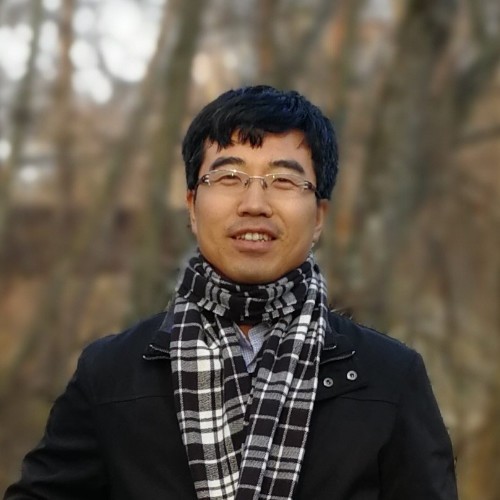
Stanford Professor Co-Founder @ Path Integral Technology
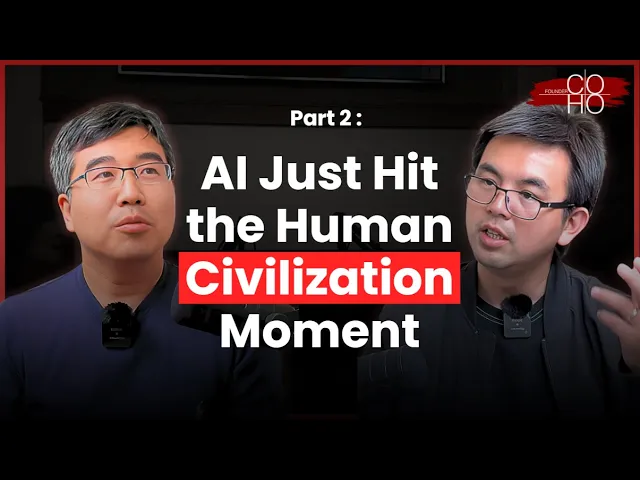
What if I told you that we're living through a moment comparable to when humans first developed language 100,000 years ago? That's exactly what Stanford quantum physicist and startup founder Prof. Xiaoliang Qi argues in this absolutely mind-bending conversation.
You're about to discover:
- Why recent AI Nobel Prize winners are just the beginning of a scientific revolution
- How AI might soon conduct research and make discoveries completely independently
- The comparison between current AI development and the emergence of human civilization
- Why language is the key to unlocking unlimited AI capabilities
- How AI agents are about to form their own "civilization" and collaborate without human oversight
- The shocking truth about what separates humans from machines (spoiler: maybe nothing)
Reference:
- The Lucien project aims at building the first AI scientist platform with the global research community. (X account:@Lucien_Science)
- Prof. Qi Linkedin: https://www.linkedin.com/in/xiaoliang-qi-a5b9a615/
- Jing (host) Linkedin: https://www.linkedin.com/in/jingconan/
- FounderCoHo newsletter: https://substack.com/@foundercoho\
Timestamp
00:00 - Highlights
01:22 - Introduction
03:20 – AI for Science: Two Directions of AI in Science
06:16 – Can AI Discover Knowledge Like Humans?
08:55 – Language Models as Universal Information Processors
10:45 – Language and the Dawn of Machine Civilization
14:40 – Collaboration Between AI Agents: The Next Scaling Law
19:40 – Human-AI Networks and the Power of Know-How
26:13 – Qi’s Startup Journey: Building AI Scientists
33:47 – Designing a Platform for Cross-Disciplinary AI Research
37:22 – The Future of Research: Alive Papers, Evolving Knowledge
41:50 – Final Vision: Making Research Universal and Accessible
45:08 - Outro
Full Transcript
Jing Wang
Exactly, you are exactly spot on that. And in fact, there's a whole scene that is happening now, AI for science. And in fact, this year the Nobel Prize is there. So many AI scientists getting Nobel prizes. For example, using the AIs to solving the protein docking prediction of molecule. A protein that is characteristic of protein from it. so I'm very curious about, you also talked about AI for science. How do you think about this current trend using AI for science? I think right now it's still primarily using GPU for that purpose. What is the current status? What is the future for AI for science?
Qi Xiaoliang
Yeah, so I'm certainly very interested in this direction. That's part of the reason I started to work in this field by starting this startup. And I think there are two kinds of directions in AI in science[37]. One is like the protein folding. So these are the developing new machine learning methods for a particular task. So I define this task of protein folding.
And then you can design a model particularly for that and with the current new technologies, new algorithm and computational power, you can get so wonderful results. And then the other direction is the general aspect, which is related to the language model, which means AI scientists, which means that in addition to these specialized tools,
There are also all the works of scientists, which means like come up with new ideas, like understanding other people's work and then come up with new ideas and then like plan a work and really do the work and like use all the existing tools correctly and then come up, invent new tools if needed. So all these kind of aspects are not specialized to a particular task, but it's like the connection that connects all the specialized things together.
And that's role of human. And this also, with the current language models, this can gradually be not completely replaced, but can be taken care of by AI. And that part, I think, in longer term, it may even lead to a bigger dramatic effect in the AI for science.
Jing Wang
Yeah. You touched a very fascinating point about letting AI take the process of knowledge discovery itself. Because we used to think that we human beings are the only species on the planet that can discover new knowledge.
because we have logic, we can reason, we can understand the observation we had, and we can come up with science. That's basically the jewelry of our human civilizations. You believe there's also possibility that AI can do science as well. they can, and the scientific process by, currently is a process, is a systematic way to seek knowledge, which you need to collect the data, you need to run the experiments, figuring out which
which hypothesis right or not and moving forward. And that is, it is possible for AI to automate the whole process.
Qi Xiaoliang
Yeah, that's what I believe. Yeah, think that's also why I, like two years ago, I co-founded this Path Integral Technology where we want to work on language model applications in scientific research because
My motivation was I think there is no fundamental barrier. There is no some reserved place for human. Like some people think AI is just simulating, just copying what we are saying, like interpolating between known things, but we can be creative. I don't think there is such fundamental difference. I think...
I have this point of view because I study quantum information and space-time. So I would like to view everything from the information point of view. [38]And when you think from the information point of view, there is no fundamental difference between me looking at a message on my phone and then forward it and then add some more message. I'm just processing that information. And the AI with a powerful enough AI model can certainly do the same kind of information processing. So the language model really
opened up this possibility because it processed language and everything we can communicate with each other is language. So there is no limit. Like I can describe any task like driving on some road, all right, this is I can also describe in language, navigation, right? I can describe like playing chess. Let's say if you have a model that only play chess, then you can't do other things. But if I have a language model,
can play chess, because we can just describe, I want to put this here, and I want to put that on that coordinate. We can just chat, and then we're playing chess. [40]And you'll see this video that DeepSeek and ChatGPT played chess. So that's why language is universal. So once the AI has the capability of using language, processing the information in the language, then in principle, it could do anything we can do. So I think in the end, it's going to do anything we can do.
Jing Wang
We are basically information processor we use language to communicate information to process information and if we are just information processor of languages and if we can have a language model and as it evolves,
it can do as good as we do.
Qi Xiaoliang
Yeah, I think the key, like when we think about information, what are we thinking about? Like if we make a phone call and then when I talk about the information I send to you, that means I don't care about the physical content, right? I don't care if this message was sent to you through the electronic, electromagnetic wave or by sound wave like we are communicating in person. So the format doesn't matter. It's the information content that matters. So when we think of that way,
then really the AI can process any information that we can process. I mean, of course, when we talk about language, it may be like, what I mean is in a little general sense, because like we also want the AI to be multi-modal. could process video and audio, right? It could also understand traffic signs.
Jing Wang
The language is basically like a symbolic replication of information. And because this is such an interesting topic, so I want to dive a little bit deeper into that, about the language and intelligence. Because like you mentioned, that anything that we can turn into language, there's no reason why the AI cannot learn or machine can learn. I'm also curious your thought because many people hold the feeling that there's some part of our intelligence that we just cannot describe in language.
Some people argue the artist like that of course like again again we prove that something that cannot be described like art now can be described but people believe that some inherent like some core part of our intelligence cannot be described by language or any symbolic system I'm curious your take on that
Qi Xiaoliang
I think, yeah, so this is the quotes from Wittgenstein that I really like, which says that the, I don't remember the exact quote, but the border of your language is the border of your world. And so it's like,
is like, yeah, there are many things like ours. There are more and more subtle things that you can't directly describe, but then you try to describe it by, say you can describe some concept by giving many examples or taking limits of things. So we have things that we can't describe, but we can describe indirectly. It's just like, no, but none of us can really feel the 4d space, right? We only know three dimensional space.
have a sense for what is a four-dimensional space, but using all the mathematical tools, using the physics tools, we can understand four or five or any higher dimensional space. And if I work on that for long enough time, I can get intuition just like our three-dimensional space. I can kind of navigate in that and work on it, although I don't have a direct sense. So that's the magic for language, that it is
Maybe the daily life, maybe the starting point, like the building blocks are what we learn in our real world, so they are limited. But based on that, we can build more and more layers on it, and there is no limit. And I think this is related to the Turing completeness. It's like something is Turing complete, and you can describe anything with it. That's my rough understanding to this computer science concept.[41]
Jing Wang
you mentioned a very great point about what is a language you can either directly refer a thing or describe a thing which is like an explicit description or an analytical solution or can just describe something like have something directly description or this is good that is bad and it actually reminds me the different paradigm in conditioning the large language model so some people use prompts.
So the problem would be, please do this. So that is like an explicit description of the instruction. But there's only a subset of things that we can describe or the model can follow. Another way to do it is provide some examples, like training examples. Like you have something happening. This is good. That is bad. This is good. And if you think about this whole thing connectively, that's a language. That's a symbolic system you're describing.
not as concise as the previous one, it is a way to describe.
Qi Xiaoliang
Yeah, just another example is what I learned from some other AI researcher is that when we ask the AI to do certain physics tasks, you just switch from markdown to latex[42], makes the answer quality much higher, just because there's more higher quality things happening in latex. But yeah, so that's just like human. There was all these subtle things in the context of what language is being used, what code is being used.
all these things, are part of the information you give the model. And it's not just explicitly written instructions, but all the subtle part also becomes part of the instruction. So in that sense, all the subtle aspects of human culture, like arts and all these things, can also be included in the language model, I think.
Jing Wang
That's a fantastic view. It also extends our definition of language. In fact, many people think that language, large language models, is a misnomer. should be a large symbolic model.
Qi Xiaoliang
It's like a general information processor, which basically means any intelligence. So that's why I got so excited. In 2023, feel like, like, what should I compare? Like after I use the GPD for a few weeks and then I feel like, okay, what should I compare this moment with in the history? Like people talk about these, like people talk about iPhone or talk about like industry revolution. But I feel like the only time I can compare with is actually
when human got language. I don't know when that happened. It could be 100,000 years ago or could be 10,000 years ago, sometime between that. We don't know. But there was a time where human language just emerged. We just start speaking. And that's the only time that's comparable with now. Because what happened is the information processor changed. Before that, the information processor is DNA. It's just we evolved by evolving
the DNA. The DNA changes from generation to generation. That's the only meaningful, like relevant change happening in the ecosystem. But then after you have language, it's possible to have dramatic changes just caused by words. Just caused by when something I tell a hundred other people and so on. So all these things can happen in a scale much faster, in a time much faster than DNA. [43]So the whole world is dramatically changed. So now it's similar.
processor is different. And the language is also different because the AI learned to unify all these things, put all these different formats into vectors and then it's kind of imitating a new language. So that could mean that[44] the information dynamics of the whole world is like just goes to a new edge where it's so fast, it's just so much faster than before.[45][46]
Jing Wang
Yeah, you mentioned a such a fascinating framework to understand where we are for this wave of AI innovations. Because this question, I think Lex Fridman just ask Sundar Pichai on this. So I'm actually comparing our answers to Sundar Pichai. I think our answer is more interesting than that. [47]What I hear you mention about is actually you are comparing this to the beginning of human civilization, which is
Qi Xiaoliang
The language.
Jing Wang
It s really the language is the mark of the
human civilizations. And you mentioned about an interesting point about is that where the information or intelligence was stored. Like there's several moments that is very important. Like when we have DNA, we have genes, that's the very beginning. Well, we as a species started to store some information, can adapt environment, but that's not fast enough. Then we have our neural system. Then each individual process started to be able to adapt to the environment around them individually. That has been hundreds of millions of years already until the very moment, like hundreds of thousands of ago or something like that, somehow language is invented. And because language is invented, we can directly transfer the experience from one person's mind to another person's mind without the two have to experience the same thing.
Qi Xiaoliang
Yes.
Jing Wang
that really kick off the civilizations and that's the beauty of the language and the beauty of us as a society as a because we don't have to learn the thing by direct experience
Qi Xiaoliang
Yeah and if we compare with animal language, animal also have some languages but maybe for pre- kind of built-in purpose. It's like the bees know how to send signals to each other but that's restricted to the predefined things. So when we say the emergence of human language, more precisely it's like an emergence of a universal language which can describe basically anything and then we gradually make it even more
more universal, more precise by inventing science and so on. So yeah, so it's an emergence of universal language. That was the critical point. And then now it's like the point where the universal language can be processed by some machine.
Jing Wang
Yeah, you actually mentioned such an interesting point is that if the language, what matters is the universal language. If each individual has their own code, it doesn't matter because really the matter is collaboration. The language made collaboration possible and...
It matters now for the intelligence as well because previously all of the computers, very powerful computers, they are not collaborating with each other. They are collaborating with the human. collaborating with each other independently. So they are just tools. They are under the command and control of humans. But with the languages, I think there will be a moment of this machine starting to have their own civilization, coordinating with each other.
I think we now call it Agent but there may be better names in the future.
Qi Xiaoliang
Yes, that's exactly, I think that's the key difference. When we say tools, like Google is a tool, I go ask Google, it's a really complicated tool because it requires a...
a huge amount of computation to make it such a good search engine. But you go ask it and they give you the list of websites relevant. So, but if you think about the output, it's a limited, it's a very restricted format of output because whatever I ask it, the output is the sorted list. The output is a sorted list. So that means that I cannot ask a hundred Google to collaborate with each other because like the, I mean the search engine,
the search engine give you a result, that result cannot be used to send to another tool. So that's exactly the point you were saying. Like now we have this general models which can communicate with language, then what leads to most dramatic advance is not the capability of a single model. It's the capability that these models could collaborate together and collaborate with human.[48] And then this scaling law is the most important thing.
When you consider just putting a problem there and then...
a team of models and humans collaborate on it and if the complexity of the problem that you can solve by this team grows with the size of the team then you are done. Even if each team is not very smart you can like scale it up and so in the end what matters is not the capability of a single model, it's the capability of scaling up the complexity of the problem you solve by the size of the team.[49][50]
Jing Wang (
So what you mentioned about is there are two levels of scaling... I would go back to the back to the metaphor we talk about human so as a single individual our brain just evolves from six million years ago until we, it keeps evolving until we are homo sapiens like 200 years ago and then it plateau, it plateau never getting better, so like our brain structure is not significantly better than a homo sapiens.
Qi Xiaoliang
200,000 years ago.
Jing Wang
1000 years ago, like that.
We are also talking about the plateau of scaling of the individual model. I think there's parallel between the two. But a thousand years ago, that was really just the beginning of human civilizations. Like we have, as a society, made so much more progress. Not because the individual of us become more smarter.
But because we form a society, we collaborate. And so what you say is that this is also what happened to AI, because this model right now, we're trying to scale the individual of them, and we feel it's more and more efficient to scale them by taking more on power. But they can form a society themselves, collectively getting information, they want their own civilization, and then they can continue to scale as a society.
Qi Xiaoliang
Yeah, I think it's not actually a plateau. Like for the same, the same way as like human brain, it probably will continue evolve, but it's just relatively looks like a plateau because it's so slow compared with the evolution of the society. So like the model probably individual model can also continue improving. And it is, I mean, like, like, there is a computational scaling law and then now there is test time scaling law, which means like you put in longer context and then like,
you allow the models to think and there is the scaling law but this is also individual model and then there is then once this reach certain level maybe we are there or we are like close to be there once they reach certain level then we start this much faster scaling law which is like you form this society this or the other name we call it is the human AI collaborative network and then that once you started that then it's just, I expect that that will be an easier way to
to achieve many complex tasks by this kind of collaboration, because we have a lot, human has a lot of experience with this kind of collaboration, so all these things can transfer to the AI. think that's the other aspect I want to emphasize, which is...
this kind of transfer of human knowledge, but more important than knowledge is the know-how. Because knowledge is like what we read down, like in the papers or in Wikipedia[52], all these things, that maybe we can just dump to the AI and then train and then the AI remembers them. So knowledge is something more static, it's there and then if you ask me, I know how to find it, that's it. But the know-how is like how to
climb a mountain, like how to ski in an expert way. And then even if I ask google to write an instruction on how to ski, it doesn't help me because I can't really learn it. So these kind of things are like, I think a lot of the...
essential parts of why human society is intelligent, but they were not ready to be transferred until now. You couldn't just dump these data to train AI. But this is exactly the thing that now when the model reaches a certain level and if they could take instructions better, we start to transfer this kind of know-how to the AI. I think that's the next big thing that's going to lead to a dramatic change. And that's why we're working on this direction of AI scientists, because we feel like the essential thing is we need to get the know-how of human in all these different expertise fields to transfer to AI.
Jing Wang
Theres a deep level collaboration between human and AI because of this new paradigm that we're experiencing now. This is such a fascinating conversation. I think I continue the conversation for couple more hours, but I do want to dive deeper into your startup journey on this. You mentioned about in 2003, you started your company, Path Integral Technology, and for a Stanford professor starting to do a startup there must be a deep passion for you to choose to do that. Can you tell us a little bit more experience like your story is how you get this company started?
Qi Xiaoliang
Yeah, so the main motivation for me was, I have said, I feel like this is such a dramatic change. This is like something you can compare with human language. So I think each of us, we feel like we have to do something at this moment. Because I think that what we are going to see is the next 10 years, maybe we are going to see more change, more dramatic changes than the past 300 years. So if that's the expectation, then
we have to do something. So and then for me, I think a startup is...
a way that allows me to, because I wasn't an AI researcher that already have an AI research team, I feel like instead of doing the more fundamental AI research, I want to directly relate these ideas about like, we need to transfer human know-how to AI, and then this collaboration network of AI and human is going to lead to a dramatic new way. It's like a paradigm change for everything, especially for scientific research.
So I think the startup is a more direct way that I can turn these ideas into reality. And also I was fortunate that at that time several other friends also is thinking about this. So we kind of just started this together immediately. We all really want to work on this project.
Jing Wang
Yeah, so you basically have this vision that I about AI and human collaborations and you wanted to really not just think about it but actually build real application and real impact in the world. So that's really your study, your startup. I'm very curious because as a professor doing startup and your vision is also more in broad levels about
improving the human and AI collaborations. I'm curious how do they approach this way to do this data? Because you have to also figure out more about the market signals, what exactly the business model is. Can you tell us a little bit more about your product?
Qi Xiaoliang
Yeah, so if we think about scientific research or pretty much everything else, like if you are working on something, then there is three parts.[54] The first part is you learn the necessary information, like knowledge. Like I need to get prepared, so if I'm going to do some research, I will first learn what other people have done, get the essential skills. And then the second part is the main thing that I need to make my own invention, make my own new thing. And then the third part is I need to send it out and let other people know. I need to write it in a format that other people can understand. And maybe I will go around and take your talks. So this is the workflow of scientific research. But if you think about everything else, pretty much there is these three parts, input, creation, and output. So if I'm making a product, then I also, maybe I do some investigations and then I have
design and then I start convert the ideas into actual code and then in the end the output is a product. So this kind of process is general and then if I think in that way then what we want the AI to do is to be there for the whole procedure and become a collaborator in the end-to-end scientific research including the input and the knowledge creation and the output.
to convert that into more precise product format. What we did was we first
have this product called TXYZ.AI, which is taking care of the input and output part, which means assistant to help you reading papers, search in the literature, make sure the AI is answering your questions based on facts rather than its own hallucination, and then like a writing tool helping researchers writing papers. We started with that part because that's like a more general aspect
like everyone needs pretty much similar tools. then after that, now since the end of last year, we have been focusing on the middle part, which is the knowledge creation. And then we're developing a new suite of products that's focusing on letting the AI basically progress from a system to a collaborator to do research.
the knowledge creation part of the research. So this is really different from the other two parts because this part requires specialized tools and specialized knowledge in each field. So it couldn't be like one product fits everyone. It will be like me doing kind of matter physics is different from someone else doing quantum computing research, someone doing biology research. Everyone needs an AI collaborator that's access different tools.
and it also needs different benchmarks to tell the AI how to make progress. So instead of just having one product here, we need to have a...
platform which allows researchers in every field to contribute their know-how into format that AI could access. It's like giving AI the hand, the globe, right, to access all your experimental equipment and all your computational tools and everything. And we don't do that because that needs expertise in every field. We provide the platform for people to do that. And this is the thing we are currently
working on. We provide the platform for people in every field to provide the tools and provide the benchmark and then we build this brain part like the general AI agent that's capable for doing research and then you connect the brain to these tools and then that's the AI scientist in each field.
Jing Wang
So what I hear you say, you have two phases of the company. The very first phase, you roll out a product which is more like an assistant to help the researchers do their job, like doing research, summarizing research, and getting an output. So it's more like helping the existing researchers to do research more efficiently. That's phase one. And now you also move to the phase two, which is really building
the AI scientists, which is like you build a platform, you build this platform that has this central, agentic planner that coordinates all the tools that we use, and also a platform for each individual researcher from each individual field to provide the tools they have, maybe this kind of database or maybe an experiment platform they have.
and this two combined together will lead to an autonomous system or autonomous AI that will do the scientific discovery.
Qi Xiaoliang
Yes. So yeah, so it's a platform where we provide the brain and then the community provide all the tools to let the AI access the real world. then this, so it's an open platform that it can keep growing. It can keep being updated with the progress of the research. And we hope this, so we feel like it's, the key thing is like, many people talking about building AI.
scientists now and they mostly refer to particular applications like in biology or chemistry and we want to build the AI scientist platform for with the entire global scientific community.
Jing Wang
There's a lot of AI scientists like DeepMind, which is basically an AI biologist. just specialize on that. But you want to a platform. It's like agentic workflow platform. Some platform like DeFi, something like that. Allow people to create workflow or create a system. Then that will be applicable for multiple fields. So that's a fascinating idea. I'm very curious that as you have been
doing this now in the startup world, what is the biggest challenge that you're facing as you are executing your vision?
Qi Xiaoliang
It's how to turn the idea into execution atoms and has a rapid iteration.
Like, yeah, which is similar to doing scientific research. It's like you are doing something that nobody has done before. So, I mean, that's a nice thing for doing a startup in this kind of field. But maybe in a traditional field it's different. So in the AI, it's developing so quickly. So the important thing is not like just find what's the right direction and go for a long time because nobody knows exactly where to go. It's like we are navigating in a new direction. So it's really important to fast iterate.
Like try something and then understand the response and understand what the researchers need and then quickly integrate that into the product and have this faster iteration. I think that's a really key thing.
Jing Wang
I think you mentioned about a very great point, which is like the difference between the startup environment and the fundamental research in the university. It's like a little bit different like time scale. Like fundamental research in university, that's the, the time span is like years or even decades on that. But in the startup, it's totally different because it needs to like connect. It needs to reach the product market fit as soon as possible. So the iteration needs to be extremely fast from that. I'm also curious that that's related to the last time I have, like, because you are both doing the research at Stanford now, also working on this startup. And they also have a very different philosophies about, like, the time span as we chat about how do you balance your professor life versus startup life, founder life?
Qi Xiaoliang
I think it really feels like two full-time jobs. So yeah, it's like really I've been working day and night. And in the startup side, I also feel like I learned a lot. It's really...
Also nowadays with the help of AI, with all these tools, it's much easier to learn a new thing. So I also spend a lot of time learning to code and learn all these things starting from scratch. So I feel like that really brings a lot of excitement to me, although I also spend a lot of time. Other than spending a lot of time, I don't have much other smart comments about how to divide my time.
Yeah, but I expect in longer time, maybe another one or two years, when the AI scientists progress into all different fields, then there could be more interaction. There could be...
I think they could, because that's the motivation is to do scientific research. I certainly want the research to be done also in my own field in the research in quantum gravity, quantum information. It's not the first field we try because it's kind of very hard to find many well-defined questions there. But I think eventually it is going to go there. We already collaborate with other physicists in that field to build benchmarks. within a few years, we will see.
AI start to do more creative works and then research including my own research will be in a different kind of paradigm which means that like a team involving AI agents and human it's not just doing things faster than what we have now it could mean a different kind of scale because the size of group like in our field like field like mine the size of group/team
is not just limited by funding. Even if you have enough funding, you don't have enough time to collaborate with other people because the communication overhead is very high. So with AI, it could all change. I think if we look at the comparison with industry, where you have a lot of experience, if you compare how we researchers collaborate versus how people collaborate on an open source project, it's quite different because open source project, you can have thousands of people contributing.
and this project constantly being evolving. And then us, we write a paper and then we don't have a way to make the paper evolve. The paper is just sitting there and then we work on another paper. So the paper is like an outdated format of information. It couldn't evolve and it couldn't take contribution from other people. It's not alive, but the open source project is alive. So I think it's with the AI communication with human,
this could change fundamentally.
Jing Wang
Yeah.
Qi Xiaoliang
Yeah, and the paper
itself is the agent. The agent is the paper.
Jing Wang
It's like the, you mentioned such an interesting and I also find it's very personal and like funny to me because I'm building like an AI partner for founders and you're building an AI research partner for professors. If we work together, we can now go to the beach and don't need to do research and startup.
So, like a good short answer for that question. But to your point, it's actually not about replacing the job or like the job of professor or founder. It's actually putting the human to the left. Because if you have your tools where your paper is just like a dad, it's frozen, then human need to do a lot of work. on top of it, it's actually a lot of administrative and repetitive work.
that a human need to do. That doesn't prevent us from seeking more high level. But if we have a research partner or we have a startup founder partner that can help take over all those low level tasks and really be our partner, even give us new thoughts and fresh ideas, then now we can have the things that is do the things that human really enjoy. It's the creative.
Qi Xiaoliang
Yeah, totally agree. Yeah, so I always get this question when I give the talks about this and people say like, are you going to replace students? And then my answer is that it's going to enable all the students to work like professors. Because you can delegate the routine works to the AI. So yeah, so that's easily the vision.
Jing Wang
Exactly, yeah. Like make every student, everyone who wanted to research can do the research with the help of the research partner.
Qi Xiaoliang
Yeah, and reduce the barriers like you have to go to these procedures universities in order to access other resources and do research there. And so these kind of barriers will.
Jing Wang
You put it in a great way, because now everyone thinks research is such a privileged position. But inherently, it's just like for you to have the curiosity to find out the knowledge, to seek the truth, and seek the knowledge of the world. And everyone should have that curiosity.
Qi Xiaoliang
Yeah, especially in fundamental research fields like mine, like the most why is Stanford such a prestigious place? It's mostly not because the material resource provided to everyone here, it's because you have these outstanding people here. You can interact with your colleagues and just chat in the hallway and then get inspired about new ideas and that's really only like the most valuable part of these kind of top universities.
for everyone if we have these AI agents that can help explain researchers and then that can help doing the research. Because my research can be itself an agent and this agent could be representing me and explaining to anyone about this work and then everyone in the world could access that and then in the same way as coming to talk to me
Jing Wang
That's exactly the motivation why we do these podcasts. Very few people outside Stanford would have the privilege to talk to you with such an insightful conversation with your knowledge and brain. By sharing these podcasts, we hope that more people can learn from your visions. We are so grateful for you to join us today. Thank you. Thank you so much.
Is there anything that the community can help for you or for your research or for your company.
Qi Xiaoliang
Thank you very much. I think that our AI work fundamentally is an effort of the entire scientific research community to contribute their know-how to the AI. So of course, I really hope more people to understand this mission and join us and check our website is pathintegral.xyz. by the way, Path Integral is a name, is a physics
term, our slogan is integrate our path to knowledge. It's like quantum particles, you move all different paths and you get a similar position of different paths. Yeah, so I really hope anyone who is interested in contributing our platform to contact us.
Jing Wang
Awesome. Thank you so much. I really appreciate you coming to the conference today and looking forward to you have more fun conversations
Qi Xiaoliang
Thanks very much. It's really nice talking to you.