Interviews
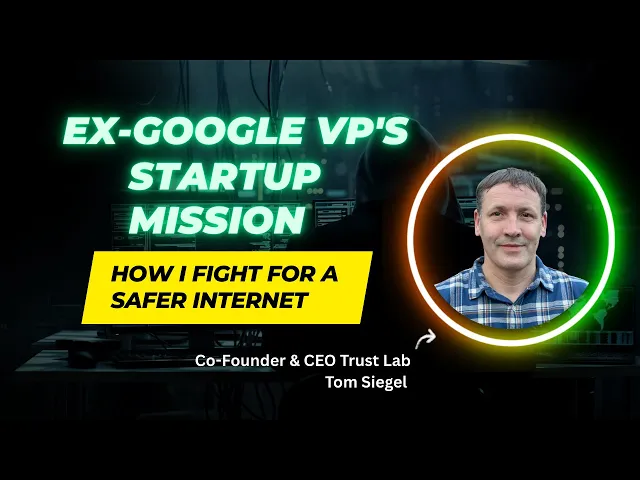
A former Google VP discusses building a startup focused on creating a safer internet.
|
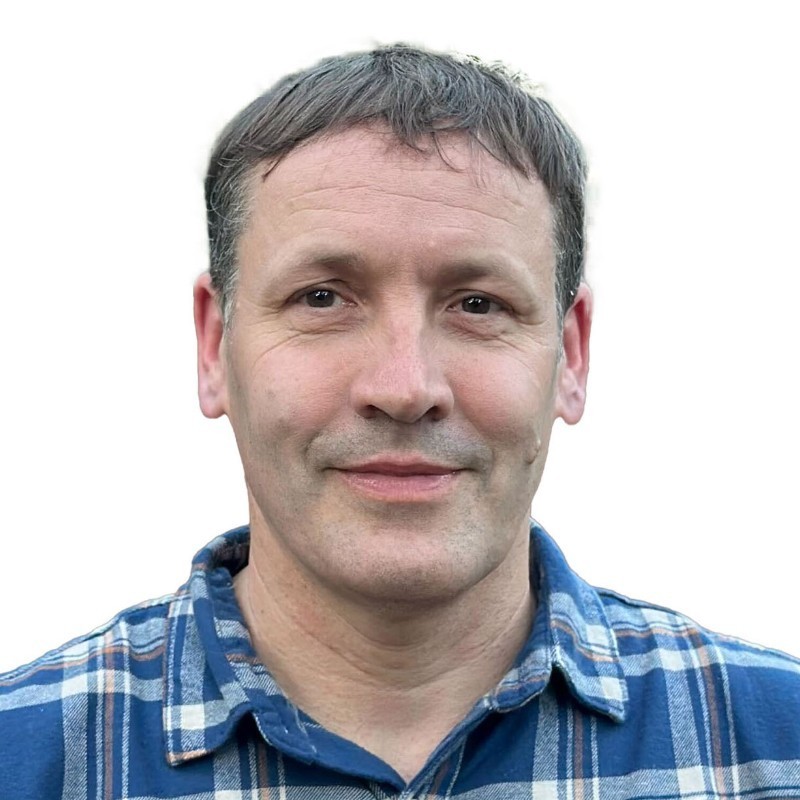
Co-Founder & CEO of Trust Lab, Ex-VP at Google
Tom Siegel, former VP of Trust & Safety at Google and now Co-Founder and CEO of Trust Lab. Tom shares how he built Google's trust and safety division from a one-person team to a 1,000+ employee operation, and why he left to launch his own startup tackling online safety challenges.
Discover Tom's unique insights on:
- Building effective safety systems for platforms with billions of users
- Leadership principles that scale from small teams to large organizations
- Finding the right co-founders and investors for your startup
- The challenges of achieving product-market fit in a specialized industry
- Creating work-life balance while building a mission-driven company
Reference
Tom Linkedin / tom-siegel
Timestamp
00:00 - Highlight and Introduction
02:05 - Early career and Joining Google pre-IPO and early work on search quality
03:47 - Early days combating search manipulation
04:47 - Attracting bad actors on high-traffic platforms
05:44 - Personal motivations for improving safety
06:09 - Brand safety issues
07:09 - Personal motivations for working in safety
07:40 - Technical solutions, policy importance, and bad actors
08:50 - Memorable experiences with YouTube and terrorism content
10:29 - Challenges in building Google's Trust and Safety
10:50 - Scale, policy, and imperfection challenges
11:29 - Trust and Safety team growth at Google
12:31 - Leadership philosophy for large organizations
15:08 - Differences between large and small companies
17:12 - Reasons for leaving Google after 14 years
19:12 - Founding Trust Lab and its mission
20:23 - Meeting co-founders and starting the company
21:30 - Decision-making frameworks for founders
23:35 - Building a support network as a founder
26:40 - Trust Lab's products and services
27:51 - Trust Lab's customer types
29:57 - Finding ideal customer profiles (ICP)
31:25 - Key aspects of product-market fit search
33:35 - Competitive advantages and moats
36:02 - Strategy for acquiring high-quality labeled data
37:35 - Measuring product-market fit
40:44 - Balancing multiple initiatives vs. focus
43:40 - Fundraising and investor relationships
45:10 - Managing investor relationships
47:00 - Work-life balance as a founder
Full Transcript
One aspect is to be very clear upfront what your value proposition is. Not starting with what you're building, how cool the tech is, how interesting your idea is, how you're solving a problem, but what does your customer actually get and why is that in really important value add for them? The first one to me is what what value are we providing to customers and is that value special? So I think that's number one. The second one is, can we actually build it technically? the third one is how big is that market? And the fourth one is the competition, right? Is there already 15 other companies doing exactly the same thing, and how am I differentiated versus them when you have two partners with strong opinions.
Sometimes it actually helps, having that third perspective to find through that. Compensation is often only a small part of motivates people. We all need to make money to pay rent, to buy food, but people work for many other reasons as well. And understanding those motivations and then rewarding people for those things that motivate them is very important.
Welcome to FounderCoHo! Please meet Tom Siegel, a pioneering internet safety leader with an extraordinary background. Tom spent over 14 years as Google's VP of Trust and Safety, where he impressively built their safety team from just 1 person to more than 1,000 members.
Tom's journey began as a mechanical engineer and lifeguard before he dedicated his career to online safety. Now, as Co-Founder and CEO of Trust Lab, he's pursuing his mission of creating a safer internet for humanity.
Today, we'll explore his transition from big tech executive to startup founder. We'll hear how he's building Trust Lab to address internet safety challenges. Tom will share his experience finding product-market fit in this complex space. We'll discuss the importance of co-founder relationships and support networks while balancing startup demands with personal wellbeing
First of all, thank you very much for having me. It's a pleasure to be here. I actually, uh, started out as a mechanical engineer working in the car industry, uh, doing r and d for vehicles. Um, and then spent, uh, several years in several other industries just trying to find my interest. I. Um, and was a management consultant.
Worked a nonprofit and then went back to school while I was doing my masters. One of my professors, was Eric Schmidt. Uh, he was the CEO of Google, but he was also teaching some of these people can lead big companies and they can also teach on the side. Uh, it was a class called Managing Growing Enterprises.
Mm-hmm. And, uh, so he would invite us over. Google had free lunches at the time. I think they still do free lunches. And so I got to know Google. Um, and out of our class of, you know, over 300 people, uh, I was the only one who joined Google at the time. And the reason being Google was still a very small company.
That was before Google went to public in 2004. And there was one area that did not get a lot of attention yet, and that was the kind of spam or kind of the manipulation of Google search results. Google only had one product at the time was Google search and, uh, web masses and SEOs. The bad ones would sometimes try to manipulate search rankings in order to show more highly so they get more traffic and can make more money.
And so Google had significant effort underway to identify those hidden text paid links, things like that. And I. Um, I was the first one to help build a team that would actually, uh, provide the analysis and, uh, the policy and the, uh, general support for our engineering teams, uh, to take care of bad links and, uh, generally bad search results.
Um, and that worked pretty well. Uh, and so as Google grew and added more product, uh, you know, YouTube and cloud and, many others, email, uh, we used the same approach of combining. Human and algorithmic approaches to improve the quality of the products,
we didn't call it trust and safety at the time, um, but from being the first member of that team, I then stayed with that team for over 10 years, to kind of build Google's trust and safety division from the early days. Wow. Such a amazing ride. Yeah. Thank you. And you mentioned while you joined Google before at IPO, that must be a very exciting experience.
Yeah, it was, uh, still just, I don't know, less than 2000 people. Just a handful of building all around one, one little courtyard and yeah, still obviously much less complexity. But still the same spirit, the same culture that I think made Google so special. It was already very, very much evident. Mentioned about it and in early days, Google's doing very well in terms of the traffic, but then it started attract bad links, like yeah.
All these bad traffic and manipulation search results. What was the incident that caused you to get, like, get your attention into this space? So what I actually find, since I deal with a lot of the bad stuff on the internet. I'm finding that, you know, when you have places that attract a lot of usage and a lot of traffic,
it also often attracts bad actors, right? Who want to basically write on the coattails of some of these, searching demands. Whether it is, you know, just usage, whether it's, it's it's revenue, and, you know, I had personally just, just bad experiences where, results. May look actually good and you click on them and then you just see, you know, a bunch of garbage that doesn't make any sense and it just takes a lot longer.
Is there any particular bad experience you had with Google that made you super motivated to improve it? Well, one has to do with general reviews, ratings. If you think you want to find. High quality businesses that have really good customer reputation.
But then, you know, and it's actually tells you on the search results that it is actually really good business, but then in reality it wasn't. So that was certainly one that really stood out. The other one is obviously highly egregious behavior, such as child sexual abuse imagery, for example. That was certainly in the early days across the internet, much more easily to find
when ISIS came to power in some of the parts of the Middle East terrorism promotion, that was a big one. And one of these very kind of influential moments in my career was when on YouTube you could actually not just find some of those videos that were, you know, could be seen as promoting terrorism.
But also that they were being monetized with ads. And so advertisers obviously got very upset about that, right? You don't want to see how, your ad is showing next to content like that. And that created a really big rethinking on Google's side on terms of brand safety and not just what it means to keep users safe, but also to do the right thing for advertisers and making them sure that, you know, they are not seen next to content that is not just questionable, but you know, not in line with integrity of their brands.
Yeah, exactly. You were motivated working in the spaces because Google was facing a lot of issue back then, and so what did you do to help Google to combat those? Yeah. Maybe I gave, I give you one more story how she got to this field. Absolutely. I was always interested in helping people. I had been a lifeguard in school.
I started a nonprofit organization and so, you know, I didn't have the kind of, perspective to be a medical doctor or something like this, or you know, some work in the police. But for me, finding a ways to actually make people safer was something that's always very important. And so that's kind of what attracted me to trust and safety
And that's why I was very, very excited to, to work in that space. The things that were important to me is that, you know, one is that. We dealt with very, very large amounts of content and it's just simply not possible to review everything manually. And so, you know, we had to find technical solutions from the very early days in.
Given that I have sort of a technical background, that's something that I always found very important. The second one was the important of policy. In the early days, we were like, yeah, you know, it has good stuff and bad stuff and let's just try to remove the bad stuff and you amplify the good stuff, but there's a lot of gray area and how you actually deal.
With gray area is very, very important. And the third one is that while initially the focus was always on content, it always gets back to the bad actors in the background. So one way of dealing with bad content at scale is actually by looking at the mechanisms or the individuals and actually create it.
And that can allow you to find more scalable ways of dealing with these problems. And last but not least, trying to find the. Analogies to real life, right? Like, real life safety concerns that people have, which are dealt with by the police or by the military, you know, others like that. And online, we don't have that equivalent.
Can you walk through with us a specific instance when you work in a trust and safety at Google that it's very memorable for you? Yeah, maybe I can think of two, but let me go back to the one that I had mentioned a second ago is when. We're working on YouTube was one of the products I was very involved in, and it was the time of the rise of ISIS or general terrorism content online, which really hadn't been much of an issue.
Yeah, we hadn't seen. Terrorist or terrorist organizations use the internet or YouTube in particular, very much. And, you know, from things like, you know, fatalistic prayers to beheadings and, and everything in between caught us a little bit of God and while we're working hard to try to protect users, the secondary dairy also that Google quickly was around brand safety.
And, you know, how can you make sure that, you know, advertisers do not get associated with such content. And again, there's a lot of policy problems. There's a lot of detection problems. For instance, you may have a news article about a cruelty from a terrorist organization, which should be allowed, but you know, if it's promotional, it shouldn't be.
Mm. And so how do you actually deal with that? Was a very tricky and difficult, but also very important issue. Hmm. I would imagine that handling all this, uh, incident and things are very important work, but also has a lot of challenges associated with, yeah. What are the most biggest challenge you have as you are building the Google Trust and safety efforts, and how do you come that I, in terms of trust and safety?
In building trust and safety, some of the challenge that we're encountering. I would mention three. The first one was the simple scale of Google and its products. And its content. 'cause we're not talking about hundreds or thousands of tens of thousands of piece of content. You know, it's millions, hundreds of millions and billions of those.
And that. Just requires a very different way of thinking. The second one is policy and what is actually good and bad. Not always clear, right? If you think in terms of scams or other gray areas. The third one is that realization that you will never be perfect and that you will always miss some bad stuff and inadvertently take some action on good stuff, and that is not great, but unfortunately that is, you know, if you're dealing with.
Large scale systems and ambiguity like you do in trust and safety, always something that, you know, we had to grapple with. Also, how big was the team that was doing all these tasks? Like trust and safety? Yeah. Well, when we started, it was just me. There was an engineering team that was working generally on, you know, quality initiatives and, and improvements.
But you know, I was the only one that kind of brought that. You know, sort of initial, impetus for, for kind of creating like a, a, a trust and a more dedicated trust and safety effort. And, um, yeah. By the time I left, you know, we're probably close to 1000 team members and Wow. You know, we're spending, um.
Uh, hundreds of millions of dollars working with many thousands of contractors. The Google Board of Directors received regular updates about activities and we're working with all the different PAs in the company. So it had become a really, really big effort. And, you know, over my, my time at Google, I probably had the pleasure of working with, you know, close to 3000 people
as part of my team. What is the philosophy of managing. Such a huge organizations, what is a leadership like for us to make sure that a thousand people will work, stay motivated, and do good work? Yeah, it feels, and I had the, I was fortunate to manage for small team and then bigger team over time, so had a chance to learn and as organizations and teams grow, I think.
You need different management styles to be successful in a team of 10 people, or 20, you know, a team of a hundred. You can still get to know everyone or talk to everyone once in a while if you want, but beyond this, that's no longer possible. The three things that I would say that are really important is, one, a joint mission.
You have to be able to articulate to the group why you are all together. And while you're working hard towards what goal. And if you can't articulate this, the organization will get confused and will not be able to be effective. So a joint mission and a joint goal is very important. The second one is joint values and they come from the leadership team and they need to be lived by the leadership team, uh, around, you know, respect.
Around transparency, for instance. As a leadership team, you are always watched as a leader, right? Even though you may not speak to everyone individually, everybody watches you all the time. And so you have to be always true to those values.
The third one is that, it comes down to finding ways to motivate teams in the right way to do the best possible work. And, you know, actually. I found that, you know, compensation is often only a small part of motivates people. We all need to make money to pay rent, to buy food, but people work for many other reasons as well.
And understanding those motivations and then rewarding people for those things that motivate them is very important and gets more important the larger the organizations get. Because you cannot use your personal relationship and your influence with them anymore. You really do it only proxy. And so one thing that I always paid a lot of attention to is also the people that I hired.
I always interviewed everyone. Until a certain size. And it wasn't possible anymore. But I reviewed every hire. Before you made them, the Google founders did that as well. And you have to pay a lot of attention to the people who you directly manage because they are your eyes and ears and your hands for the rest of the organization.
Yeah. Yes. I can see they are very thoughtful leaders and must be very happy in your team now that you are startup founder. Now the the startup is usually much smaller than the team and Google what? Do you feel as similar and different in terms of managing a team or grow a team in startup work, what is similar is ultimately organizations, whether it's a very small or a big one, is made up of people.
You have to hire the right people. You have to retain the right people, you have to set them goals and. You know why? You obviously also work in our business with a lot of machines and AI and things like that. Ultimately comes down to people, comes down to setting the right reward structures, setting the right goals, making sure that everybody knows what what's asked of them to do and how they're performing against those expectations.
It sounds all very simple and straightforward, but in a day to day. Particularly fast moving environment, it's sometimes forgotten. One of the biggest differences that I see between large and small company, actually I'll give you two. Um, one is it attracts very different people. To be successful in a small company requires I think a very different, and I'm not saying it's better or worse, it's just different.
And you know, there's actually probably very few people. Like you and me who've been in big companies and then in small companies. The other one is the degree of change. In a small company, things change very fast. Right. And you know, it's a cliche. Before I saw the company, people told me, yeah, it will be fast moving and you have to change a lot and you can make decisions very fast.
But it's really true. It has good, because if you see a new opportunity or you see something is done wrong. You can adjust very quickly, but you also have a lack of consistency that can easily become frantic. Or can be seen as like, you're doing this today and tomorrow this, and you do something else. And that lack of consistency is also not good.
In a big company. You have a lot of stability, which is also good. You know, as humans, sometimes we need stability. You need plan, you need time to train, you need time to learn. On the other hand, it's harder to kind of just get things done and changed, right? 'cause you have all these layers of management.
Yeah. I wouldn't say either one is only good or only bad. But that makes them very distinct. A long, time at Google. And what made you start to think about leaving? As you mentioned, I've been at Google 14 years, a long time, and also went from managing a small team and small effort to a very, very large one.
I left for three primary reasons. I'm sure there were more. The most important one was that the space I was in, trust and safety as a society across the internet were not making progress. The online world had become. Measurably less safe children, vulnerable groups were being harmed more. And while the Googles and the Metas and the TikTok spent a lot of resources, including my own team, trying to make it better overall for society, it was not getting better.
And so I felt this very strong motivation to go out there and try a different approach to really make the internet more broadly a safer space. I. And I felt being inside a wild garden like Google, I could only affect part of the system. So, so that was one. The second one was that I felt like I wasn't learning as much anymore.
You know, I was getting comfortable. It's a little bit like a machine, and the quarters and the years would go by very fast. And I felt like I wasn't stretching, I wasn't learning as much as I wanted to. And the third one is I had been now living in. Silicon Valley for 15 years, and I had friends who were entrepreneurs or venture capitalists or scientists, and I just had that bug of, you know, wanting to be an entrepreneur and try to create something, particularly being an environment like we find in Silicon Valley, which I felt like is a very unique opportunity to do that.
Yeah, you call it a bug, but it is not. I realize that's really the true reason why Silicon become Silicon Valley becomes Silicon Valley. So everyone has their own dreams to Yes. Build something meaningful to the society based their own hands. That's the start of dreams and then you left on Google and founded in Trust Lab.
Tell us more about this journey and tell us more about Trust Lab. Yes, so Trust Lab operates in a very similar space that I had worked in in Google, which is developing services for creators and hosts of digital content to make sure that content is safe. That's our mission. Make the internet safe for Space for Humanity is what Trust Lab is all about.
We are a technology company, uh, so we develop algorithm based solutions. That can detect and monitor harmful content online. And yeah, we've been now around for five years. I started the company with two co-founders. One was a distinguished engineer at Google. I
had been working on many of Google's algorithms and YouTube brands, for many years.
The other one had just started the policy and operations team for trust and safety for YouTube, and then gone onto TikTok. So we brought very different perspectives in the trust and safety space together and yeah, set out to, you know, change the world from a safety perspective. That's our goal.
Yeah. How did you meet your two co-founders? How did I meet them? Yes, absolutely. So we had to come across each other at Google before. So when we worked on, for instance, YouTube improvements for brand safety and monetization, Shankar was the leader of the engineering team, and I led the policy, operations and analytics team.
And so we had overlapped on escalation handling for a while, and then after I'd left Google. I had reached out to him and told him about sort of my vision and the type of co-founders I was looking at. And he was also considering starting a company at that point. And so that was with Shankar. With Benji, we had been in touch because he had worked on trust and safety issues at YouTube, but then he had gone back to Stanford to the same program that I had attended a few years before and was asking for advice and you know what kind of. Career path to pursue afterwards. And yeah, he was then also ready to start his own company and so our visions were closely enough aligned that we decided to start it together.
Hmm. So it was a long history of personal relationships for both of them. Yeah. Such great. Stories on how you find new co-founder, which is very important for. Our audience as well because funding co-founder is the most important thing for, founding a company.
Have you developed any framework that help with the decision makings or helping to drive a shared visions together among founders? Yeah. There's a couple things that we've did that I feel helped. One was clarifying some of these really important aspects upfront. Being like, who is responsible for what, or someone's gotta be the ceo.
What type of products, what type of customers you want to have. You cannot clarify all of this, but the really important principle decisions, clarifying them upfront will, just make it easier later on. The second one, I find is really important to have a network of advisors around you who help you through that.
Obviously you have mentors, you have board members, you might have family friends. We had a number of situations that were extreme mediated, you know, by, not that we're fighting or anything like that at all, but you know, when you have two partners with strong opinions mm-hmm. Sometimes it actually helps, you know, having that third perspective
And then we use some techniques other than just talking to each other to get through stalemate, through blockages, like writing things down on a document. Starting at a ground truth that you both agree on, and then walking yourself towards the more difficult issues, for instance.
So there's some very specific techniques. Sometimes it's also stepping away a little bit and giving each other some room as well. But I feel like as long as you're both committed. To the vision, to the mission, as long as you're finding some success of what you're doing. You usually can replenish your energy and recharge your batteries and kind of get through these challenging times.
Okay. I realize like one thing I learned about startup is like never just about doing work or coding or something like that, its about building a community, about a small network. What would be your advices for startup founders to build a support network? That would be helpful. Both for helping with the co-founder relationship, but also for many other things in the company.
Yeah. For me, I found this to be one of the most critical aspects. Not just to be successful, but to stay sane, in this process. Yeah. Um, because it's, you probably also noticed in our startup journey, it can get very lonely at times. 'cause nobody understands it as deeply as you do and nobody is as invested as you are.
so building that support network is very important for me. Again, there's a couple of different groups and I like to put it into those buckets. The first and important one is your immediate family because they. They're exposed to a lot of strain and stress that you're going through as well.
Because you the stakes of high. And you spend a lot of time and you have a lot of financial insecurities. You can sometimes mentally drained or worn out. And your family, is the immediate recipient of the good and the bad in those situations. So that is one. Watching out, taking, taking care of them.
The second one is professional advisors. I was very lucky to have a strong group of advisors, but also angel advisors financially, but also from a topical perspective, who gave me great feedback and direction and not just like technical advice. How do I do PR? You know, how do I do get SOC-2 certified, or whatever it is, but also more.
Conceptually around priorities around how to work through interpersonal conflict. It is a safe space that you often can't be as safe with other people who are not trusted advisors. And then the third one for me were other co-founders. One of the reasons why I started the company in Silicon Valley is 'cause there's just so many others around who are going through that same journey, and I learned so much from them.
I've gotten so much help from them. We've gotten so inspired by being together that I would say that's another very important aspect of that network. Yeah, well said, well said. I also see a lot of challenge of, especially the founders who are not well connected when they started from a journey.
It's very hard for them to connect with fellow founders. So having a community. To facilitate that, like the events we do monthly events or even a community, online community that can help like other people's stories, like story that you share would be incredibly helpful for founders in the community and really appreciate.
Thank you for sharing stories. I already personally learned so much. Yeah. No, also, thank you for what you do. I, I think what you said is absolutely right. It's, it's a lonely journey and a lot of founders do not have these networks, so actually the ability to connect. To other founders by themselves is sometimes challenging, so giving them more structured ways of doing that more easily is very, very helpful
so, cheering you on for Thank you. Thank you very much. It wouldn't happen without great founders like you to help your community. Talk more about Trust Lab. You mentioned about the spaces you are in, the Trust Lab is essentially, is still the same space of the work you do at Google. So what did the product of Trust Lab look like?
We are providing value to our customers in three different ways. Three types of services and products. The first one is measurement. A assessing the safety of a certain online space in a statistically scientific manner. The second one is helping them assess the safety of entities, either accounts or content, by providing them with additional signals that they may not have access to or may not be using.
And the third one is to help them improve the moderation and the labeling of content. So, once you know there, there's a lot of content out there that. You know, either historically has been not touched by machines at all or has precision recall issues, or is very expensive to review with humans, and we just want to make that process of detecting what content is about.
Higher quality and more efficient. For those who host or for those who create digital content, who do you think will be the ideal customer for Trust Lab yeah. We have two types of customers. Ones on the large social media. Platforms and marketplaces. Mm-hmm. You have either hundreds of millions of users or billions of, you know, piece of content that get generated every month.
That is one cohort. And you know, if you are
working with them since the very beginning of the company. And the other one are smaller, fast growing platforms, both have very different needs. The faster growing platforms have not built the infrastructures. To be able to do that by themselves.
They may not even have the numbers of people to actually be able to do that in a scalable manner. Large platforms usually have specific needs around the quality, of these labels or having a third party independent entity as involved for checks and balances. But we work with small and big platforms.
What are some examples of those platforms? Well, many of our customers are confidential. We cannot speak about some of them because we've done public projects with them. So we have in the past, for instance, worked with. YouTube with Facebook and Instagram, with LinkedIn, with TikTok on assessing the amount of harmful content that's available on the platform.
We work with medium sized social media companies. For instance, Doximity is a social media network for doctors. Outdoorsy is, kind of an Airbnb for van rentals. Mm-hmm. Uh, for RVs, I use them a lot. Oh, you do? Very good. Yeah. And so we work with other companies like Iterable, which is a messaging service.
We have historically worked with governments through the European Commission, for instance, and other governments in Asia to help them understand the safety of online spaces. Mm-hmm. Uh, these are some of the ones we can talk about fortunately, because we work in a very sensitive space. Absolutely. A lot of our customers do not want to be publicly named.
Back to the startup story side, because you mentioned about the product of Trust Lab and you also find ICP. Did it take some search process for you to land this ICP or will you start, we were already thinking about this. Yeah, so ICP and product market fit, so are very challenging, I think for most startups, right?
To find the right customer segment. The, so ICP, the ideal customer profile for Simple, we started with the type of customers that we're most comfortable with. Large social media platforms. That's kind of where we came from. And it turns out that, for a small startup,
there's often not a great partner. Of course, big platforms have very unique needs. You need to customize. They tend to move slower. They like to work with more established firms, often also as vendors. Mm-hmm. And so we went from working with that ICP to working with public entities and governments.
We worked with universities who worked with federal governments, worked with state agencies, and then a third group were this. Smaller companies, platforms that were growing very fast and didn't have enough time to build that in-house. And what you can already maybe tell from this is like, we did not have one ICP, and that was not necessarily by choice.
It is like, because we didn't find enough product market fit with one. And so we needed to keep looking. We needed to explore other areas and test new hypotheses. For the type of customers for which our value proposition would actually be most meaningful, what are the things that we find most helpful as you are going through the search process yourself?
One aspect is to be very clear upfront what your value proposition is. Not starting with what you're building, how cool the tech is, how interesting your idea is, how you're solving a problem, but what does your customer actually get? And why is that a really, really important value add for them? I think that is like being very, very clear and proving your value proposition by, you know, doing interviews and tests and stuff like that.
I think it's extremely important. The second one is the idea of tam. Or total addressable market. , once you have that value prop defined and to some degree validated how many of those customers are out there, and how much money are they gonna spend on this? Because you may have customers who really, really, really love your product, but there's just a few of them.
And then you can't, from business perspective make it actually work, And the third one for me and for us was like, do I have the right skills, personally and as a company to build a solution that can create that value, right? If it's in a space, so for instance, we thought about going into medical imaging.
You know, it sounded really interesting, you know, you need to label content there, but we knew nothing about the medical space, some founders maybe can be successful doing that. For us, it was really always important to have confidence that. The technology and the product that we're building, we can actually do it in a way that the product can actually deliver what it promises.
Mm-hmm. And not just kind of on a high level on paper, but we can actually build it. Gotcha. Yeah. So what I hear you is that there are several areas that we should pay attention to when the nature of the product. And the other is how big is your target customer segment, is how much opportunity that is available here.
And the third is that, what is like competitive advantages as a company or as a founders that you have to get those market. Yeah. So maybe you mentioned actually a fourth one, which I think is really important. Like the first one to me is like, what value are we providing to customers and is that value special to that special. Yeah. Yeah. . I think that's number one. . The second one is, can we actually build it? You know, technically the third one is how big is that market? And the fourth one is, which I should have talked about, is the competition, right? Is there already 15 other companies doing exactly the same thing and how am I differentiated versus them?
So these are probably the four that we always keep thinking about. And what is your thought about the competitive advantage or most that you have as company? Yeah, so I'm actually probably less worried about competition in general than many other co-founders because for me, a lot comes down to execution.
You can have the same idea in the same space, but you might be. Faster or better in executing against it. There's many examples. in startup life and industry, Google was never the first search company, for example. Mm-hmm. I do believe it's very important to know what the competition does and, and who they are, but I, I wouldn't be too worried about operating.
Mm-hmm. And exactly the same. Space moatss are important though, to really understand conception from a strategic point of view. Why others can't just copy you and do exactly what you can do, and it could have to do with the technological idea that you have. That could be the type of team that you build.
Type of customers you have access to, maybe how you treat data, right? There's lots of different ways of thinking about this moats, but you absolutely should have something that others around you can't easily replicate. And you should be clear about that, and you should be very strategic about how you build towards that.
In our space, for instance, trust and safety, it is having access. Like everybody's trying to find harmful content and building classifiers to do that. So someone in the space who has access to high quality labeled content to either, you know, as a general repository to check this piece of contents against other content that's out there, or to build better algorithms is actually really, really important differentiating factor, not very easily rebuilt by someone else.
So you always have to think about. And when you think about a moat is like how easy is it that anything that I'm doing for someone else to do and if there's an important aspect of what you do that is not easy for others to recreate you may have a moat. Gotcha. Yeah, exactly. Once you mention about is that like high quality labeled data could be a really differentiating.
Factor moats that startup has, and it happens to many vertical SaaS as well. What is your philosophy or strategy at a Trust Lab to acquire those high quality labeling data? Yeah, it's challenging because you know, everybody's very sensitive about data in general. Customers are sensitive about data. There's a lot of data regulation if you think of GDPR on others, and our customers are rightfully hesitant for their data to be used for other purposes.
Than their own. And so we label a lot of data ourselves as well, even though it's expensive. I think getting licensed access to other third party data is a potential secondary strategy. But yeah, we just ended up building a lot of our data assets ourselves. For that reason, to be able to more fully control what we can do with it.
And it's not just the data itself, it's also the quality of the label. Often, you know, we do get data sets and they being. It's touted as high quality, high precision recall, but then when you actually start looking into it, they're not truly high precision and recall data is very hard to find, and so when we do, we tend to pay special attention.
You know, that we can actually, I. I use it. You use it? Yeah. So I also want to follow up on one topic and we talked about early on the product market fit search for startup. And it's a very important problem for startups and often times it's important to have metrics that measured or dashboard looking at what are the data points that you use to evaluate whether you are hitting the product market fee. And how do you feel your current progress is? I find product market fit is one of the most challenging aspects of being an entrepreneur and finding it. You know, often we, I felt like we were making great progress and we found it. And then after just a few months noticing we can't find more customers
We weren't able to do it economically. We were losing money, providing that service. And then, you know, it doesn't make sense to scale something that, that you lose that when you use lose money. And so it's really, for me, the understanding that you are a, you have a, a very, very valuable thing that the customer really wants and that it is applicable to bigger group of customers than just a few.
And so a few things that are really important early on is doing so, like first of all, understanding the market size and the number of players, but then doing customer surveys, having things like, you know, if you do run pilots, how many of these pilots convert into full production contracts. How much customer churn do you get?
How often do you lose customers after you initially had them on board? How much incoming demand do you get? So when you're trying to sell, how much of it has to be you trying to convince them to buy it versus them asking you? So getting that pull from customers Yeah. Rather than you pushing is also important.
But you're asking a really good question. I really don't have an answer for how can you quantify it? I think it's just very, very difficult to know, not just, I think once you have it, it's easier 'cause everybody wants your product and you can't keep up. But if you're sort of in this gray zone where you may have some product market fit but not fully it what to actually tweak.
For me, the most important thing is to really listen to the customers. Mm. Like just gotta, whoever your customers are, if they're individual consumers, if they're enterprise, and if you don't hear enough from them that your product is great and really helps them, I think you better really question if you have found product market fit.
Yeah. I think you mentioned very good point about the product market fit processes. Like it's not as clear as people saw. When you hear a lot of products as talking about, they often, like talk about founders who already hit a huge product feel, oh, they hit ARR, like amounts are two 20 million ARR by the time we found it moving that stages.
Yeah, maybe the ARR is kind of the, the ultimate metrics for product. Figuring out whether you are on the right track or you are not on the right track. And oftentimes founders will think, oh, we should hustle. We should work hard to make it. And in fact, in early search is about search. It's about finding which direction you are, and it's almost better when you just stop a little bit to see whether the voice is moving by itself, and that could be the early indicators.
It's very, very well said. That's actually really good advice. The other mistake that I feel like I made is. One way to try to find it fast is to do many things at once. We try this with this customer group and this with that, and, maybe one of them sticks, right? More shots on goal.
Mm-hmm. Give you a higher chance to hit it. The problem is what you really also need is focus, right? Yeah. To kind of, to really go deep and understand this customer and build the best possible solution and all that stuff. Being clear that product market fit means that search that you're describing, but it also means if you're doing too many things at once, you might get distracted and not make enough if you do 'em at the same time.
What I think works a lot better is to try something more dedicated for a while, but then very quickly, if you don't get the signal, go onto something else. Jump from one thing to the next quickly, but not doing too many things at the same time. Yeah. You mentioned that actually such a great point about startup building.
A startup founder is actually the only tools you have is time. You have to drive decision extremely fast and do one by one. The hardest thing is not start. The hardest thing stop and oftentimes like your team spend time on it, they working and everyone has to like emotionally attached this thing, and you have to be the person to say, no, that's not gonna make it.
Yeah. Do you have experience like that? Yeah, absolutely. And in hindsight, these are probably some of the things I would change, right? We've not been on this journey for almost five years, and we always, at least I am, and that's also my personal style. Just go, go, go. You know? Mm-hmm. Mm-hmm. Hey, I can sell this one more customer here, or I can make this, kind of develop this one feature really, really fast while taking that step back.
To kind of think or to kind of make shifts more quickly when you know a certain direction is not bringing you the progress you need is very important. And particularly when you're in a situation where you already raise money, where your investors expect you to bring in certain revenue that pull between, that may just fulfill these short term revenue.
Goals like ARR versus finding the real fit as from a product market perspective is a real tug and pull. That can often be very difficult, and I certainly did not always make the right choices there. I had been much too focused on these short term I. Short term goals you, you bring another very interesting point about the external pressure investors and so I want to dive in a little bit more on that because a lot of fundraising, bringing investors is very important for seller founders, and many founders think, oh, they raise money that successful.
But like you mentioned, it brings some additional. Burden or things you need to manage. So what is your take about bringing investors or fundraising and, and how do you make sure, like all the team, like including investors and also your co-founders team actually align the same direction? Yeah, so obviously fund investors are very important.
You know, I, they're important part of the ecosystem. I very much appreciate what they bring to the table. But it's fundraising is one of the most challenging and not always the most fun aspect of, of what an entrepreneur does. I think it's very important to find the right investors who kind of have similar goals that you do and really have the right expectations and what, what is possible.
I, for me, it was also important to find investors who compliment each other well. some of them might be really good on the product side, on the technology side, and others are really good, on sales or access to customers but you usually, bonded with them for multiple years journey.
So I think it's very important to do really good diligence to make sure you really get the ones that personally can work with. I find it not as important as finding your co-founders, but still a hugely important aspect. Because you will go through ups and downs and you want to make sure that they can really support you when you need their help.
And that's not just money. Mm-hmm. Obviously the money you get as part of the fundraise and, and that's for you to use, but they bring a lot more to the table or should be bring a lot more to the table to help you be successful. Yeah. Yeah. You mentioned great point that investors, when they come, they shouldn't just bring the money.
Yeah. Not that the money person of the company. I also personally find that's very, very common. Like myself, also my friends is on that. It's like investors are very, very good people, but they just operating the different ways as founders do. Often create a little bit of conflict or tension. Have you met a situation like that and how would you like resolve this tension?
Yeah. I have to say I've been very lucky and fortunate with investors that I've had. They've been, without any exceptions, fantastic. Supportive, but I was also quite selective. Mm-hmm. Uh, in, in, in how I chose them. I think one thing that's very important is when dealing with 'em is, is honesty.
You know, it's very easy to promise them something. That you can achieve, but you cannot or describe a certain situation and you may describe it, you know, more, more positive than it can be. There's also often a power differential. Investors are often very experienced, much more senior, and obviously they have a reputation in the market and you know, you want to make sure that you are also.
Create your own positive reputation and this, so it's often not possible to push them as much as you otherwise would push other business partners. And so these are very sensitive relationships. I find it works best to talk to them one-on-one and not in group settings or on board meetings. Be very humble and really take the advice, even though as you said, it comes from a different perspective. They care about different priorities. Mm-hmm. But they have a lot of wisdom and to really take that in and ask 'em for help when needed. Exactly. Yeah. Last one, two questions. I want to also focus on yourself, your personal life as well.
Yeah. Like I know that building a startup. It is hard. There's a lot of work you need to do. How do you strike the balance of your startup life is your personal life, so that as a, you have like stay motivated, have good life, and also make sure the people around your families are also living a good life?
Yes. That's an important question. I think there's, you know, we bring our whole selves on this startup journey, and as I mentioned earlier, other surround us are also impacted by what we are doing. I would be lying if I say that I feel like it's easy to complementalize. It's not, I think one of the most challenging aspect of a startup life, that it is an all in scenario by carving our time for family, carving our time for health, physical, and mental health.
Is is just very important aspects and, and being, being very clear of making room for that is as well. And so is being prepared and knowing that there will be ups and downs and that you have good personal strategies for dealing with them.
What really fascinated me from my conversation with Tom was the interesting parallels between his career at Google and his journey starting from scratch at Trust Lab. I can picture Tom in those early Google days, being the only person dedicated to fighting harmful content, watching that responsibility grow into a team of thousands as the internet evolved. In some sense, Tom was doing a startup at Google. And. Trust Lab, in many ways, is a continuation of his dream at Google.
Thank you for joining us for this conversation, and I hope Tom's journey inspires you as much as it did me. Please subscribe to our channel if you like our content, and we look forward to seeing you in the next episode.