Interviews
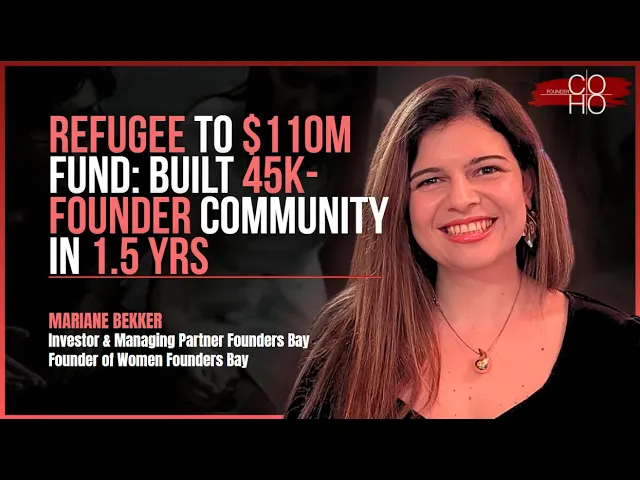
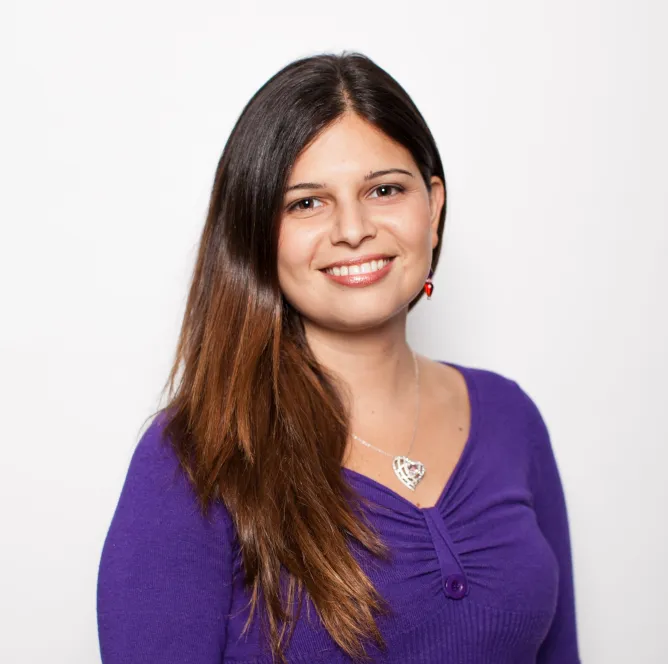
Mariane Bekker shares her journey from refugee to building one of Silicon Valley’s largest founder communities.
|
Managing Partner at Founders Bay and founder of Women Founders Bay
In this raw and inspiring interview, I sit down with Marianne, who journeyed from bomb shelters in Lebanon to raising $110 million for her groundbreaking venture fund in just weeks. Learn her proven strategies for building authentic communities that are transforming Silicon Valley's gender dynamics—growing to 45,000+ members while raising two children as a single mother.
Reference
Marianne Linkedin: / marianebekker
Join Women Founders Bay: www.womenfoundersbay.com
Join Founders Bay: www.foundersbay.com
Timestamps
0:00 - Highlight 1(Mariane’s story)
0:26 - Highlight 2(Founder’s bay origin)
1:19 - About Mariane
1:50 - Interview Focus
2:24 - Introduction and welcome
2:37 - Founders Bay Venture's $110M soft commitments in weeks
3:37 - From war refugee to champion for women founders
3:59 - Growing up in Lebanese civil war and finding purpose
5:07 - Building Women Founders Bay's nonprofit community
7:00 - The newsletter hack that attracted her first 100 members
8:15 - 3-step formula for growing influential social media presence
10:14 - How she grew 18,000 LinkedIn followers (spending 10-20 hours weekly)
12:21 - Scaling from intimate dinners to 2,000-person Giga Parties
14:45 - The intentional strategy behind her authentic personal brand
16:16 - Why sharing personal struggles transformed her professional network
18:11 - Her productivity system as a coding single mother of two
19:33 - The WhatsApp method for organizing high-impact volunteers
21:17 - Vision: Creating the ultimate founder ecosystem beyond San Francisco
22:37 - Honest talk: The challenges of rapid community growth
23:39 - Culture-changing moments that prove her impact on tech's gender dynamics
25:59 - 4 proven strategies for monetizing communities without losing soul
27:10 - Finding the perfect partner in Christopher Floyd
28:54 - How one newsletter post attracted $100M in investment commitments
29:22 - The "by the people, for the people" approach to venture capital
32:52 - Investment thesis: How AI is making "the future is now"
34:23 - The 3 AI sectors Marianne is most excited to fund
36:47 - The "hustle factor": What she looks for before investing millions
38:34 - Outro
Full Transcript
Mariane: I was born in a small country called Lebanon where I was born.
I was in the midst of a brutal civil war and it lasted over a decade. I remember just growing up in different bomb shelters and hospital not knowing if I'm gonna survive the next day. And then finally one night, what happened was really bad. our building got bombed
Mariane: when I started going to events, I realized that those events were very close circle and the VC and startup community was very exclusive. So it was very hard to learn about the different events happening.
So then I decided to start a newsletter so that any founder who's not connected, whether a man, whether a woman, whether an immigrant who does not have access to those exclusive events, can join that community. every week I started reporting on all of the events happening in the Bay Area and that quickly grew to over 45,000 founders, and VC here.
for Women Founders Bay, we are a nonprofit We have 600 startups that we are supporting, and all the women are supporting each other. We have a very active WhatsApp community. Anytime a woman needs anything, all the women come around and help her out.
And that's the power of community.
Jing: Marianne went from bomb shelters in war-torn Lebanon to building Silicon Valley's most influential founder communities. As a refugee turned tech leader and single mother, she's grown Women Founders Bay and Founders Bay to 45,000+ members in just 18 months. Her authentic approach to community building recently secured $110 million in soft commitments for her new venture fund, which will invest equally in male and female founders in the AI and frontier tech space.
Today, Marianne shares her strategies for building authentic communities that transform Silicon Valley's gender dynamics. We'll explore how she grew a massive following through personal storytelling, organized impactful events like the 2,000-person Giga Party, and is now leveraging community power to democratize venture capital. Her work is creating inspiring cultural momentum, and make the tech world increasingly embracing equal gender representation as the new gold standard for meaningful collaboration.
Jing: Marianne, welcome to, founder Coho. and also congratulations for the Farmers Bay Venture. I heard you had a 110 soft commitment already.
Mariane: Yes. Thank you so much for having me. I'm very excited about that. in the last few weeks we started a new venture fund and we already got 110,000 in soft commitments, so we're super excited about that.
Jing: Wow, that's good. Yeah. And I know that this Founders Bay Venture is based on the Founder Bay community, and you also founded the Women's Founder Bay community. how did you get the community started? throughout your career, you had, spent a lot of effort and dedication to have Women's founders, which is so important.
And what you mentioned is very resonating. There's, especially in the Silicon Valley, there's many times that when we're in the whole room, like there's no room inside. And many people take that for granted and it shouldn't be the women, like it's half of the population in the world. They should be represented.
It's not only just for women, but also for the whole society that have more diversity would be so important for the health of the ecosystem. Also, You mentioned about even early on you have been dedicating helping women to find a better career. What inspired you to do so?
Mariane: so I was born in a small country called Lebanon where I was born.
I was in the midst of a brutal civil war and it lasted over a decade. I remember just growing up in different bomb shelters and hospital not knowing if I'm gonna survive the next day. And then finally one night, what happened was really bad. our building got bombed and we were still inside it, but miraculously we survived.
And my mom then took us to the Canadian Embassy to finally leave the country, and we were able to do that. but going into Canada, because we came from a. Civil war, we went into kind of the refugee neighborhood and it was a, basically a big Arabic ghetto there. And I met so many women and children who did not have even enough money to eat enough money to buy clothe.
And then I quickly realized the reason why is because like those women somehow, the men were left behind during war and they weren't able to provide for their families. So that really got me thinking and showed me the importance of having women be independent, of having women be educated and be successful so they can provide for their kids.
And that really inspired my entire career. I wanna help. And I wanna inspire women to be independent, to be educated, to be successful, so that the next generation benefits from that so that the entire population, the entire community benefit from be having women be successful.
Jing: And what are the team members?
You, you work together?
Mariane: Yeah, definitely. So I can talk about, women Founders Bay and Founders Bay. So while building Women Founders Bay, one of the things that I realized is that it wasn't enough for us to have a community. Of just women supporting each other. We want, we need to integrate within the entire ecosystem.
We need to really create a world where 50% of men and 50% of women are represented. so what happened is that while what I started going to events, I realized that those events were very close circle and the VC and startup community was very exclusive. So it was very hard to learn about the different events happening.
So then I decided to start a newsletter so that any founder who's not connected, whether a man, whether a woman, whether an immigrant who does not have access to those exclusive events, can join that community. So then every week I started reporting on all of the events happening in the Bay Area and that quickly grew to over 45,000 founders, and VC here.
in terms of team members for Women Founders Bay, we are a nonprofit and really. It's not about me, it's not my nonprofit. We have 600 startups that they're supporting, that we are supporting, and all the women are supporting each other. We have a very active WhatsApp community. Anytime a woman needs anything, all the women come around and help her out.
And that's the power of community. And in terms of Founders Bay, right now I am working with a few different folks. One of them is Christopher Floyd. he just joined as a. General partner and I'm super excited to have him on board.
Jing: Awesome. At the federal community members, I know it's very hard to grow communities.
You mentioned that you did a newsletters. How did you get your first a hundred community members?
Mariane: So, even before I did the newsletter, I started, posting content on LinkedIn and the content that I was posting about was about women in tech and. About how as women founders, we are only receiving 2% of all VC funding, even though women start 50% of all the businesses in the US and 35% of all the tech companies.
So because of that, women really resonated with my message, but not only women, men and women. Right. I know. So many incredible men like yourself, for example, who wanna support women, right? Because we, they all have moms, they all have daughters, cousins. They wanna support the broader ecosystem. And that started growing my LinkedIn following.
So then when I had my newsletter, I posted it about on LinkedIn. and also I went to my friends and I forced them to subscribe to my newsletter. That's the truth. That's how I got my first a hundred.
Jing: So you started with, uh, LinkedIn Post. you had a amazing LinkedIn, content. I follow you a lot.
that is also, many of us, also doing LinkedIn posts. what would be your advice on people who want start to post more?
Mariane: I believe that having a social media presence can really change your entire life because suddenly you have the attention of people and attention is so valuable, especially if you have a message that you wanna send to the world.
if you wanna start producing content, if you wanna become an influencer or if you want to gain followers, there are very specific strategies that you can follow. For example. You first need to figure out who is your target audience, who are you gonna write to? for me, I was debating whether I should start writing content for women in tech, women engineers, or women founders.
so I started doing two different types of content. And then once you do that, once you find. Who is your target customer? You then start figuring out what type of content that you wanna write. And there's always two different types of content that you can write. One is educational and one is for entertainment purpose.
So what I recommend at first is write different type of content and then see what resonates the most. And then you can use data to see and look at the engagement. Are people engaged in this post? Are they not engaged? And that's something that you do. Throughout your entire career or throughout the entire time that you post content online.
The third thing that really helped me, and that's what I highly recommend, is go and follow 10 influencers that are influencing your target audience. So I went to see like, who are women founders following, what type of content are they following? And then you can start following those influencers, interacting with their posts, and their audience is gonna start noticing you as well.
So all these strategies will really kick off your social media journey.
Jing: those are super practical advices. wondering that you had a, a 18,000 LinkedIn followers and how did you start build your LinkedIn followers and how did you grow that?
Mariane: so at first, I think a year and a half ago I had maybe 2000 LinkedIn followers.
it was a long journey. And I have to say that social media is not something that you could do once in a while. You really have to dedicate probably 10 to 20 hours a week on it. So I started dedicating 10 to 20 hours on, on LinkedIn specifically. So I would write. Content. I started AB testing the different content types.
I started following people that are in my target audience. And then I also had a few posts that went viral. And anytime you have a post that go viral, you suddenly gain two to 3000 followers. And that really, really helped. now my LinkedIn strategy is that I'm posting probably. Two to three times a week.
That's how I started. And I posted content that nobody else has and the content that I feel is the most valuable. That is the most, your competitive advantage is your own personal story. 'cause nobody can reproduce your own personal story. So then I started being more open about my journey. like three years ago I went through a divorce.
My whole life changed and it was probably. One of the hardest moments of my life trying to rebuild from scratch with two, two young kids. So then I started sharing about my struggle and my journey, and then so many men and women resonated with that, which also helped with engagement. so really just be authentic on social media.
Figure out what your personal story is and what you want, what message you wanna share with the world. And that's what I did.
Jing: Authenticity is a, is a scarce thing in the internet right now. But sharing your story, many people resonate
Mariane: Exactly. 'cause your personal story is what makes you, you, and it doesn't get more authentic than that.
Yeah.
Jing: And you mentioned about you build online presence by posting LinkedIn newsletter and also founder, bay. And women founder bay, they have a lot of events, offline events. Now, how did you evolve from that to where you are now?
Mariane: I'm super excited about that. So we started with in-person events. At first we started with small dinners just for women founders.
I honestly, I remember my first dinner, I had it in a Lebanese restaurant obviously. and then I thought nobody would show up, but we had 20 amazing women founders showed up, and then we quickly grew that. And then I started doing both events for both men and women. And that grew.
Jing: When was that the first thing that you put?
Mariane: I think the first event that I did for women Founder, it was maybe a year and a half ago. Wow. It grow. We grew really fast. Like this grew even beyond my wildest dream and I'm so grateful for all of you for the community that is supporting us. so we started with small events like that and then we started doing bigger events for women founders and then a hundred to 200 women would show up.
and then because my newsletter gained so much traction at that point, and we had both men and women, following me, we started doing events for the both of them. but in all of the events that I do, we always talk about our mission. And the mission is to really make tech more diverse. So in the events that I do, even if we do panels, even if we do pitches, and it's both men and women, we make sure that at least 50% of the panelists, of the speakers, of the founders that are pitching are both men and women.
so we continue with our mission. So the reason why I started the virtual event is because. So many women came to me from outside of San Francisco. So many, both men and women now are following our newsletter and they can't come to the in-person event. So I decided to start doing virtual workshop one 'cause it's easier to attend and two, now suddenly we can expand beyond San Francisco.
Jing: Yeah, the virtual event, is more exclusive. we also started recently doing it in Founder COHO, amazing. Yeah. so Great. What you mentioned is very resonating. Yeah. We'll leave Mariane's LinkedIn, in our video as well. So the next thing I want only touch on, because you mentioned about you start a whole journey by posting the LinkedIn and become a public figure in the internet.
Have your personal branding on that. was it intentional or is it organic?
Mariane: I really wanted to spread the message about women founders, about women in tech, and then I realized that right now if we really wanna make a change in the world, we have at our fingertip, the largest distribution channel on Earth, and that's social media.
So I decided to use social media. To really empower women in tech, and women founders around us. So it was intentional that I wanted to figure out, okay, we have the social media. How do we amplify the reach? How do we amplify the message to the entire world? so then I decided to start using social media and grow on social media, and it was intentional in terms of.
I started watching a lot of YouTube videos out there on how do you grow your personal brand, how do you build a brand? And then I started experimenting with it. and I gave a lot of advice previously on how to do that, and that's how I started. Very simple. I started looking at what other people were doing.
I started writing different types of content. I started experimenting and then I quickly. Found a follow wing that really resonates with our message, and that's how we started growing really fast.
Jing: You mentioned earlier that also the content post on social media are very different than traditional.
Like for example, the LinkedIn people usually would just post, like, you know, promotion or some regular things. But you posted more personal stories on the LinkedIn. how did you figure that? How did you. figure formula for that.
Mariane: So that one happened very organically. you know what? I realized that at the end of the day, yes, LinkedIn is very professional.
But we don't exist in container box. We don't exist, especially as women. We are moms, we are sisters, we are friends. Like, I can't exist without my kids, right? And even if I, if I work, even if I have a career, even if I'm out with friends, right? All of my personal story follows me wherever I go. So why are we separating who we are from our job, from our career?
So then. I started just posting about how I'm feeling, what inspired me to do all of the things that I'm doing. What inspired me to do Founders Bay, and that's a very personal story, but it resonated with people because every single one of us has personal stories to share. a lot of the women out there are mom, and right now women still take on 80% of all the household duties, so we can't.
We don't really exist without our kids, so why are we separating them all? and even more than that, even during events. Now sometimes I don't have babysitting. I'm a single mom of two, so I bring my kids and I love that they love to meet the community, and the community loves to meet them as well. so that's why like we don't live in a container box as human.
We are. We have so many. Pieces of us, so why not share it in the professional world?
Jing: Exactly. Yeah. We are all a human. We're all human at the end. Exactly. Yeah. Exactly. Yeah. and that's a lot of things to, to do like, do the LinkedIn post newsletters, virtual workshop and, offline events. And you have two kids.
How, how did you manage to get all things done.
Mariane: I don't sleep. so what I do is, I have a team supporting me. I have amazing, assistants that are helping out with this. And also I'm a coder. I love coding. That's how I started out. I coded every possible thing that I could. So all of my newsletter is.
Generated with the code that I wrote. anything that I find that I'm doing manually, I code a script for it and it helps a lot. So as a result, I can be more efficient in just focusing on that. And then the other thing really, again, it's not about me. Like all of our events, our community helped put them together, for example.
Two weeks ago, we had a full day bootcamp around fundraising and four amazing women put that together on their own for Founders Bay and for Women Founders Bay. So I have the entire community behind me supporting me because at the end of the day, founders Bay and Women Founders Bay, it's not about me, it's about all of us.
Jing: Another thing you mentioned about is that you, you mentioned a lot of efforts, events are putting together through the volunteers of the community. And building community is also very different than building, company with full-time employees. How do you find those volunteers? How do you effectively work with them?
Mariane: very simple. So we have a couple of WhatsApp group for our community, for Founders Bay. we have a private membership where if you become a private member of Founders Bay, then you are. Part of this private community, and then women Founders Bay by nonprofit has its own WhatsApp group. All I have to do is post about what I need help with, and then somebody will come and help out.
how do I evaluate the volunteers? I don't really need to evaluate them. I know that every single member of that community is there to help. that's the ethos of who we are. We wanna help each other, so we have this trust that is already built. and that's what's so incredible. Like I've been doing this for a year and a half.
Every single volunteer has been amazing to work with and we never had any issues with that. So I'm very grateful for all of you.
Jing: Yeah.
Doing community work is, once major thing that is self borderline, some magically happened. As long as you align the visions. Right?
Mariane: Exactly. You have to have a vision. You have to have a mission that aligns the community.
Be, and our mission is very simple. It's to really make tech more diverse, to make sure that men and women are both equally represented and have equal opportunities to thrive in the tech industry. And I think once you have a very clear mission, people will align and will continue following you and the community and will wanna help.
this is a huge advice that I give to anybody building community figure out. What does your community represent? What does it stand behind?
Jing: You had a, like you mentioned that you started, the first thing that was like one half a year ago and now you have 45 team members.
Incredible growth. What do you see the community, a few years from now?
Mariane: Yeah, so this is where I'm super excited about what Christopher and I are doing. we are starting a. Venture firm to invest in AI and frontier Tech, and I'm really excited about that because that'll provide us opportunities to not only, help grow the community, to help empower the community, but also to invest in some of the founders in our community that are so incredibly talented.
And how I see it evolved is we want Founders Bay to be the one-stop shop for a founder. Whether they're looking to raise funding, whether they are looking for customers, whether they're looking for talent, whether they're looking for advice to grow. We want to be the place for them to go, and not only in San Francisco, we wanna expand to New York, to la, we wanna expand globally.
We wanna be the place to be if you are a founder or if you are a VC and wanna invest in founders. And that's how I see it growing,
Jing: a lot of the communities when they grow, they will have, they need more resources, more people to put in organize events. And at the same time, this is a non-profit start As a nonprofit, what is your thought about making the community be self sustained to get a resource that it needs to grow?
Mariane: So I have, two different entities here. I have Women Founders Bay that's a nonprofit, and that now all the women's are supporting each other. A lot of the events that I do at Founders Bay, I provide for free for those women founders. what does it take for a community to sustain itself?
This, honestly, it's been hard to manage that growth and I don't know all the answers because we grow, grew so fast in such a period of time, and I'm still trying to figure out, right, like now suddenly we have 45,000 members to manage and I receive probably 200 to 300 messages a day from community members, and it's been very challenging to manage that growth.
But I'm trying and I'm really depending on every single member to help me out with that. if you have any advice, if you have any recommendation, if you can support us in any way, I welcome you to do that.
Jing: so if you are, looking back in the one half year, build the community, what are the most memorable times?
Mariane: So many memorable time. But, most recently we did the Giga Party, and that was one of the biggest events that, SF has seen in tech and what we did there was very unique. We took over the temple nightclub. We brought in 2000 founders and VCs together, for a full evening and a full night. And I think what's very unique about that is that we didn't just keep it tech.
We brought in dj, we brought in art and music, and we really made it a one of a kind event. the most memorable moment for me was that we had a pitch competition and the winner of that pitch competition was going to go to LA and then pitch on tv. And an incredible woman founder won that competition.
And that for me was one of the best moments because suddenly you are seeing the impact that we're doing. We are actually taking amazing women founders and we are putting them in LA in the center stage of the world. other moments for me that have been impactful? Actually, one of them happened, a few weeks ago.
We had a woman founders Bay holiday celebration and a lot of men actually ended up showing to our women founders Bay celebration. And one man came to me and he said, Mariane, I don't feel comfortable going to any other events anymore organized by other community groups. And I told him, why not?
He said, because in the other founder NBC event, the women are not represented there. There's no woman in the room. I walk in, there's 99 men and one woman, and it doesn't feel good anymore. And I loved hearing that because I. That shows that we are really making an impact in the tech industry. We are changing culture, right?
We are changing the way that people think about event. Now we are showing that events where we have equal representation of men and women, one is more fun, but two is also better for everybody and it is possible. And that for me was one of the, honestly, the highlights of building all of that.
Jing: Yeah.
entity structure is also very interesting because a lot of the community builders, they also think about at the same time when they have this non-profit community, how they can also turn it into a business. at the same time. any advice, here?,
Mariane: I would say, monetizing community is one of the hardest things to do.
Because at its core community is not really a business community, is a group of people coming together to support each other? I would say, maybe figure out one of the ways that you could monetize community is, for example, offering consultation services for the community. Maybe offering paid memberships, maybe offering or selling digital products or even physical product.
Those are a few ways that I saw community, sustain themselves. But to be honest, community is not a money generating tools. There's so many other businesses that could make way more money, and I've met so many community builders that are having a hard time doing that. but what's incredible about community is like you don't really.
the best communities are not started for personal games. The best communities are started for a specific mission, and that's how they grow over time.
Jing: also, earlier you mentioned about meeting Christopher to working together on, Founder's Bay Venture. Tell us more how you meet.
Mariane: Yeah, so actually Christopher and I were following each other even before we met in person.
So he subscribed to my newsletter and then, I was following him because he started organizing these amazing bonfires at Ocean Beach. So he was building community even before, we met and I was doing the same. And then I loved his dedication to. To community and he's, that his dedication to bringing people together.
And then he understood that when you bring people together, it's extremely powerful and it's very impactful. And Christopher has always been a big proponent of women and supporting women and helping women succeed. So then, when we finally met in person after following each other for several months.
It just clicked. We had the same vision of where Founders Bay could go, and then when we started collaborating on the Giga party, that's the first event that we, that's the first big event we collaborated with. We just saw so much energy and so much synergies in what we wanna accomplish together. And, we've accomplished so much in just such, in such a period of time.
the community has grown from 30,000 to over 45,000 really because of. His input and his strategy and all the contributions that he's made.
Jing: it is amazing that, you share this story, how you met, Christopher. it's always mainly you find a great partner working together.
getting the resources from community is really helpful because that's the advantage of non-profit community that helping each other, everyone contribute. Exactly. You also mentioned about you are also starting the Founder Bay Ventures, which is, is also, is that a for-profit, business?
Mariane: So, founders Bay Venture is gonna be a traditional in investment firm. Right. and we are gonna invest in. AI and Frontier Tech. so that is a different kind of business. So there's three entities here. There's Women Founders, bay and Nonprofit. There's Founders Bay, which is a corporation.
And then we have, founders Bay Ventures.
Jing: you
mentioned about you started the first project, deal with Giga party, and then you, started do the, founders Bay venture. how did that happen?
Mariane: When we were doing the giga party, we realized that one of the things that also founders need is funding.
So we came together and we said, okay, why don't we start a syndicate? And in that syndicate we can take a few of the founders and we can help them raise funding from our network of VCs. because in my newsletter, we don't only have founders actually. We have almost every investor in the Bay Area in my newsletter, including from a 16 z from Sequoia, from Khosla Ventures.
So it's easier for us to help those founders get funding. so during the Giga party, we announced our syndicate, and then what we said was that if you are interested in investing in startups, if you wanna learn more, apply to join, apply to join, apply to help us co-invest. And suddenly, even after one newsletter edition, and Chris actually wrote that message for the entire community, we got over 30 million in soft commitments and we were blown away by the response.
And then we were like, okay, we're gonna do a syndicate for 30 million. That's a lot of money to do SPVs. And then we wrote about it in the next newsletter edition and suddenly we got a hundred million in soft commitments. And we're like, okay, well. You know, there is a need for this. People wanna invest in ai, they wanna invest in frontier tech, they wanna invest in diverse founders, so let's create a venture fund.
And that's how it started completely by accident. But it's really, this fund is for the community, by the community. It's all of us coming together and making VC and startup more accessible. But also we have also, similarly, a very specific mission. It's to show that there is a venture fund out there that could invest in 50% women and 50% men to really represent the population at large.
Jing: That's incredible. that's the power of the community.
Mariane: Power of community. It's for all of us. This is all our fund. It's not only mine and Christopher's.
Jing: Awesome. You mentioned about, that you put up a syndicate. Can you tell us a little bit more how the founder work?
Mariane: yeah. So we're still in the early stage.
Again, the response has been overwhelming. it's been incredible. We are so grateful for that. We are still figuring it out and we're building in public. That's the best part of it. We don't have all the answers, so we're setting it up as we speak now whenever we have more. More updates, we will share them.
And then we are also gonna share our journey for all of us. Like, how do you even set up a fund? How do you build a fund? The next step, now we just publish our thesis. we're super excited to say that we're gonna probably invest in AI and Frontier Tech. every week we're gonna just figure out the next steps.
So there's more to come.
Jing: Wow. Building public to next level.
Mariane: Exactly. This is building in public. Again, we are serious when we're
saying like, we are not building this for us. This is our fund. This is, every single one of us is gonna have a voice in this. Every one of us can contribute to this fund. We're gonna share it with the world because this is the For the founders Bay community.
By the people. For the people.
Jing: By the people. For the people. Well said. For the people. Exactly. You published your thesis of, of the founder recently. Tell us more about Thesis.
Mariane: so right now we live in one of the most exciting time in history, and the reason why this is happening is because of ai. AI really in maybe a year and a half, disrupted the whole world.
But AI will change every single industry out there. It's gonna revolutionize healthcare, climate tech, robotics. We really believe that with ai. We'll be able to live longer. We'll be able to go and use resources in space. We'll be able to transport each other faster and better. and that's what we wanna invest in.
AI made it that the future is now. So we wanna be able to invest in technologies that are the future, that are really gonna accelerate the future, but are also good for humanity. And we really believe that within five years, every single one of us is gonna have a humanoid because who wants to do laundry at home?
Nobody. So we're gonna have humanoids walking around us. We may have flying cars. We're gonna use space because we know we'll need more energy than ever. Now with AI being so popular and we're gonna figure out how to live longer and to exterminate a lot of the diseases among us.
Jing: Yes, AI is very hot, right now.
Exactly. Yeah. one question I have is that, what do you see that are the most exciting category of AI applications or, companies you would like to invest?
Mariane: I'm very excited about AI in the healthcare space because if you look at healthcare, Every time you go to a doctor, you still have to fill out paper forms, right?
We live in a digital world. Why do we still have to fill out paper forms? And the reason why is because healthcare really skipped the SaaS revolution. When everything was going digital, healthcare didn't go as digital as possible. But with ai, suddenly it's unlocking productivity for every single doctor, every single clinic out there.
And now I believe that. Every single clinic, every single healthcare professional will use it because it's gonna unlock productivity like no other. So that's one part. The second part is now with ai, AI can now suddenly detect cancers that were undetectable by the human eye. It can make it that it can personalize your healthcare treatment for yourself way better than any other, any doctor can do out there.
So with ai, we're gonna be able to find. Diseases earlier, but we're also gonna figure out the best way to treat those diseases. And because of that, we're gonna live healthier and longer for many years. So that's one part. The second part, is space. Right now we're already seeing that because of ai we will need more and more energy than ever before.
and especially with. A lot of the climate events happening here on earth will need to go to space to either mine the resources or figure out a way to get the resources from space to contribute to Earth. So we're super excited about all the space technologies that are happening. And the third thing is robotics.
As I said, humanoids in the past wasn't, was not something that you could really use because. They didn't communicate like us, they wouldn't understand us. But now AI actually understands what we're saying. so we wanna invest in robotics and humanoids as well.
Jing: Yeah, those are really, awesome frontiers for human to explore.
Mariane: Exactly. We're excited, but we're also just carving the thesis as we speak, so everything can change. We are really building in public, but we're excited about the future.
Jing: And what kind of, qualities they're looking for founders to invest.
Mariane: So this is what I always look for. One very specific thing, and that's the hustle factor.
Is the founder able to figure things out as they go? Being an entrepreneur means that you know, you need to know about marketing, you need to know about accounting, you need to know about engineering. You need to know so many skillset, and it's very rare that somebody knows all of that. So what makes a great founder?
It's their ability to be able to execute their ability to figure out what they don't know and figure out how to still drive results, and that's what we're looking for. The second thing is a competitive advantage as a founder. Do you have something unique that will differentiate you from everybody else?
And a competitive advantage could be the distribution channel. A competitive advantage could be expertise that nobody else has. A competitive advantage could be like their network. So we're really looking for those founders that have something very unique. but the third thing too is that's what we realize is that right now Founders Bay is one of the.
The newsletter especially, is one of the biggest distribution channel in tech in San Francisco. So we are going to use this distribution channel to help every single founder that we invest in because now they suddenly have a way to access all of the founders, operators, and the VCs that are in our community.
And that's the power of the ecosystem that we're providing.
Jing: Yeah.
So hustle mindset is very important, as a founder is always a journey that you don't know what it need, like what it requires to get things done, but you need a mindset to figure that out. Whatever it is.
Thanks for joining us for this inspiring conversation with Marianne! Her journey from refugee to community leader shows how vision and purpose can transform an industry.
Loved what you heard? Subscribe now to join our community of founders and innovators. Drop a comment about your favorite takeaway from Marianne's story, and stay connected for more insights from Silicon Valley's most exciting changemakers!
Until next time, keep building, keep connecting!