Interviews
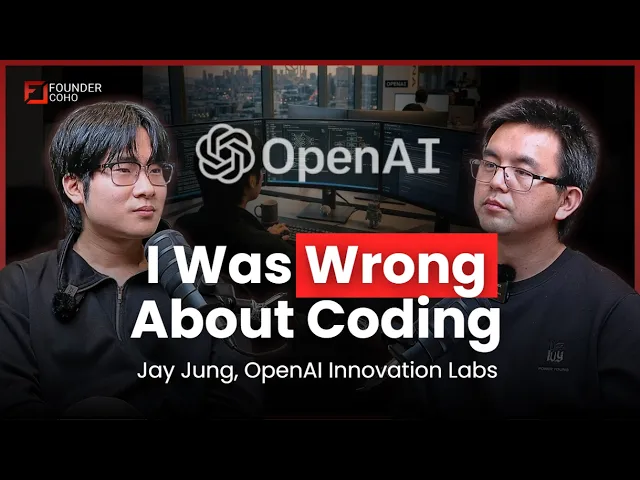
What happens when the tools we build start building themselves? In this conversation, Jay Jung pulls back the curtain on life inside a frontier AI lab, where the cycle of "recursive building" is moving at an exponential curve.
|
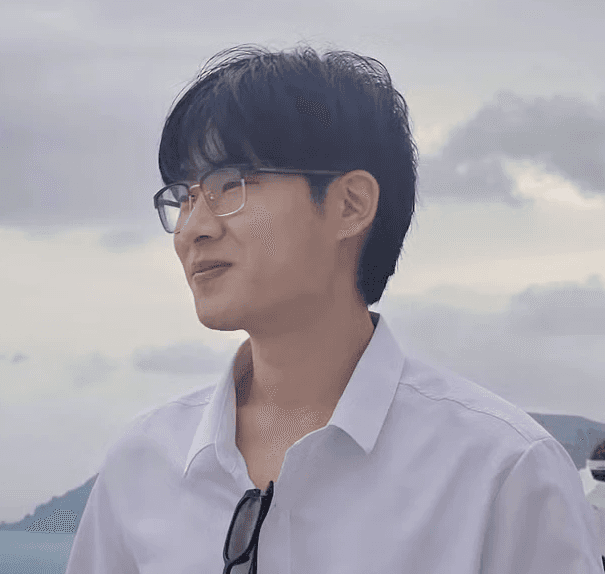
Lead of OpenAI’s GTM Innovation Labs
Jay Jung, the lead of OpenAI’s GTM Innovation Labs. From scaling world-class infrastructure at Meta, Microsoft, and AWS to pioneering the next wave of AI products, Jay has built tools used by billions. At OpenAI, he leads "OpenAI on OpenAI" initiatives, building the frontier tools that the company uses to build itself. His work on projects like DocGPT has not only disrupted industries but has redefined the relationship between frontier AI labs and traditional SaaS Beyond the code, Jay is a prominent voice for transparency in tech. Having navigated the journey from a "gate-kept" first-generation immigrant student to a lead engineer at the world’s most famous AI lab, he now focuses on breaking down those same barriers for the next generation of builders.
What happens when the tools we build start building themselves? In this conversation, Jay Jung pulls back the curtain on life inside a frontier AI lab, where the cycle of "recursive building" is moving at an exponential curve. Drawing from his unique journey of breaking into big tech through sheer persistence and deep research, Jay explains why the bar for engineers is shifting from syntax to strategy. He challenges the traditional SaaS model, explores why "vibe coding" is a legitimate high-level skill, and shares a provocative vision of a future where work itself might become optional. From the mechanics of prompt engineering to the "benevolent delusion" required to innovate, Jay provides a roadmap for staying curious in a world where AI is becoming omnipresent.
References
Jay Jung’s Linkedin – https://www.linkedin.com/in/jay1/
Jay Jung’s Instagram - https://www.instagram.com/simplifyinterviews/
Jing Conan Wang (Host) – https://www.linkedin.com/in/jingconan/
FounderCoHo – https://www.linkedin.com/company/foundercoho
Timestamps
00:00 - Highlights & Intro
02:58 - Building with OpenAI: Insights and Innovations
07:03 - Inside the Tools Powering the Frontier
11:59 - The Future of Work: Embracing Flexibility
18:31 - The Art of Prompt Engineering: Skills for the Future
24:08 - Building for Now: The Transient Nature of Apps
30:30 - Go-To-Market Strategies: The Importance of Marketing
35:41 - Learning to Code: A Personal Journey
39:07 - Breaking into Tech: Challenges and Strategies
43:03 - Sharing Knowledge: The Impact of Social Media
49:51 - The Future of Work and Automation
58:24 - Inside the Frontier: Daily Life and Work Culture at OpenAI
1:04:50 - Curiosity as a Driving Force: Learning and Growth
1:12:30 - Advice to My Younger Self: Embrace AI and Curiosity
1:14:51 - The Future of Education: Personalized Learning with AI
1:19:05 - The Future of Engineering: Redefining Roles and Skills
1:20:56 - Outro
Full Transcript
There are a lot of people asking me every day should I even learn coding? Does it even make sense? My answer a year ago was, of course you should. But I personally haven't written a line of code for a while. Even retrospectively looking at my thoughts a year ago I was wrong.
Jay Jung is a powerhouse engineer and product builder who has navigated the technical ranks of Meta, Microsoft, and AWS. Having scaled infrastructure used by billions, he is now at the absolute frontier of AI as the lead of OpenAI’s GTM Innovation Labs.
I wanted to be someone that shined light and transparency into the process so others can feel less gate-kept.
He opened an Instagram. He shared everything he learned.
In one or two months I got 40K followers and I had millions of views.
Now he's building at the frontier inside OpenAI watching entire industries shift in real time.
I think the future of work might be no work. 80% of the apps are going to be gone. Do you agree with that? 80% of apps might already be able to be, quote unquote, gone. It's just… it hasn't happened yet. The path and the approach to SaaS is ever-changing — at least probably for the rest of our lives.
Everything is shifting. The tools. The jobs. The rules. Just be curious. You don't have to be a software engineer. Just understand how AI works. And hopefully it will align with your passion.
What is the single thread that connects your entire journey?
I'm Jing. As a founder myself, I learned something about this journey. The best way to build a startup is not to read a manual, but to learn from your fellow founder stories. That is the reason why we compile those unfiltered raw founder stories and share with you in this channel. Before we dive in, I have a small favor to ask from you. If you find value in conversations in this channel, please hit subscribe button and turn on
notifications. It helps us keep the mission going. And this will be the only favor I will ever ask of you.
Please subscribe and turn on notifications so you never miss the next one.
I'm so glad that I can have you come back to continue our conversation. Last time we had a fun conversation at the AGI event.
And I want to start away with because you work in the OpenAI innovation apps and you must see a lot of things that other people haven't seen. Can you tell us like what are you doing at OpenAI innovation apps?
Yeah, so I am Jay. Right now I'm leading GTM Innovation Labs. And there we really just try to build sticky products, zero to one, see what sticks to users, and then whatever sticks, we scale it out. Right now we cater mostly to internal. Definitely a huge opportunity for us is external users as well. But.
I'd say a really public facing product that we build to something like DocGPT, which happened to end up crashing DocuSign's stock by around 20%. And we build a lot of tools like that. I would say in general, we have something called the OpenAI and OpenAI blog. And that covers a lot of the services that we've built over the past year.
Yeah, I read that blog and it's very, very fascinating. And I know that that blog just shows a part of the picture of what you do in OpenAI. And as we are all trying to use AI technology in company buildings, we definitely learn a lot of interesting learnings plus challenges.
I wonder from your perspective is what is your main learning you got while you're trying to build OpenAI using OpenAI.
I think the main learning that I've received so far is it's really cliche, but just understanding your users. Just because we're moving at such a high velocity, but we realized for us to be at the frontier of whether it's internal tools or something product facing to users, our source of truth is truly defined by what our users saying. And I've never felt that as amplified as it is now in any other company. being very front-facing as an engineer is something I think I can consider
a blessing just because if you're for example a low level engineer working on latency or optimization improvements it's hard to get the full end-to-end picture. Thankfully I'm in a product focused team and what I've learned so far is listen to your users, create a quick v0 and then iterate from there.
And I assume create a V0 also using AI coding tools.
Yes, so it's sort of like that recursive loop, right? So we build great tools, then we use those tools to make better tools. So I think our whole team is just in an iterative loop, a continuous cycle, just making sure that our products keep getting better and better for our users, which, thankfully, as a side effect, makes it better for us to use.
Exactly. Yeah. I think last time when we talked about you were talking about how you use codex and AI tools and it was very fascinating and would love to hear your usage of the AI tools in building.
So I was actually not an avid Codex user until recently. Once I joined OpenAI, Codex is definitely the most prominent way to generate code and develop apps. And the more I use it, I realized as I'm using it and as we're releasing better and better models, especially 5.3, and in this case, 5.3 with Spark, which is like...
maybe 10x faster, don't quote me, but around there, I just realized it's incredible to be able to materialize an idea that I have when I wake up in the morning and I'm brushing my teeth. I come to work, I put it in Codex, and I essentially have anything from a bare bones or a fully working product just from one prompt of Codex. that really enlightened me to all the capabilities that Codex can have and whether I use it at work, whether I use it for side building, it's becoming a big focal point in my day to day.
I know you are busy working on building OpenAI with OpenAI. Can you talk a little bit about what projects you work on in this initiative?
Yeah, so there's a lot of great projects that our team does, things like GTM Assistant or inbound sales assistant. There's the docGPT we talked about. we do have a lot of.
externally known products that a lot of companies are definitely interested in. And those are the tools that although we've sort of talked about in our blog recently, we also use internally. So we have hundreds of users just using and battle testing all these products and some of those that I've built. yeah, I'd say please go check out that blog. It goes into in depth about some of the things that I've built and OpenAI and OpenAI.
The big principle here is how can we empower everyone to 10x or 20x or 100x their workflows. And every day I use the own tools that I built to exponentially create a way better tool and it keeps going and going and our users are just sort of along with us in the ride to push the bounds of I would say either developer tools or consumer facing tools that our team's building.
Exactly. I heard you mentioned about you build a docGPT almost crash the docusign. Tell us more about this project and how this crash happens and gets a result.
Yes, so in OpenAI OpenAI there are a couple of teams and then one of our sister teams I believe in collaboration with us as well created the DocGPT and the day that we announced it
Maybe there isn't a direct correlation, maybe there is. I can't really say for sure, but DocuSign stock dropped 12% that day, and throughout the week, I believe it went up to 17 to 18% drop. So it's a really good testimony on sort of a lot of these companies are worried about the...
the current prominent state of a lot of frontier labs. What if they create the next L+1 derivative where it's something, a really cool feature on top of their amazing models that maybe a lot of companies, like their sole primitive is that feature that we might be building on the side. So it's an interesting question there, maybe an interesting debate there, but that is one example of, like DocGPT is one example of that notion I'd say.
Yeah, yeah, you mentioned about this is a fun instance that is actually under a broader trend, which everyone's talking about, which is what's the future of SaaS? And recently, there's also an interesting incident similar to this is that Anthropic released some features and then all the SaaS stock crashed by 30% from that. So there's a broader theme of like AI is killing SaaS and the tools like you mentioned form the Frontier Labs because they are so powerful, making it unnecessary for you to purchase other SaaS applications. So what would be your take on this? Like, you choose to work on SaaS companies at this point?
So yes, one of the biggest sayings that I've been hearing is eat all SaaS, and where is SaaS going? And a lot of these sayings from a lot of prominent people. I don't have too much say on this. I'm actually unsure. I just think the nature.
Like stepping back a bit, I think the nature of our work is changing and evolving. So the way that we approach SaaS, I know for sure will be different. Will SaaS be gone? I'm not too sure. But I do know the way that they're currently building,
whether it's a lot of companies trying to just change everything ground up and be AI native, the way that even consumer bases are approaching using SaaS versus maybe not, and having a more personalized solution for them based on all the great model capabilities and a lot of these great things that Frontier Labs are pushing for.
Although I can't answer where SaaS is ultimately going, I know for sure I can answer that the path and the approach to SaaS is ever-changing, at least probably for the rest of our lives.
Yeah, there's like a big change that's happening. I also know that you mentioned about that the future of work will be very different. I think you probably have some ideas about what the future of work look like. Can you describe to us what do you think the future of work will look like?
I do want to echo the sentiment of lots of big founders recently who have been saying something very similar is I believe that work will be optional. I do think at the rate at which we're going and especially with the recent advancements in robotics.
it's going to be amazing to see just so much of our work be automated. So I'm really excited for that. I think the future of work might be no work. And that's a really crazy concept to think about. But I do think it will ultimately reach that state. Robotics will keep advancing. AI will keep advancing.
Anything that can be automated will probably be automated, especially post-AGI. Whether we say AGI or super intelligence, I think we'll be part of the wave that maybe is starting now where every day we'll see a new thing in our day-to-day be automated. That's probably my educated guests of the future of work and I'm personally excited to see where that goes.
Wow, the future of the work is no work. That sounds amazing future. Could be also very scary. What do you think that means to society for every one of us when work is no longer a thing? So how would we spend our life?
I think the future where no work could be an option means more flexibility. So again, I do want to continue on this wavelength of optimism that now, hopefully, we can focus on the things that we want to focus. Maybe if you've always wanted to draw, you have much more free time. You don't have to work.
That's sort of my short synopsis. just think people will have more flexibility and the people who do want to work will work. But in terms of the general society, I will guarantee that humans are very social creatures. They do need human connection. And what's amazing about us is that we're always curious.
So I'm not too sure what that ultimate future will look like, but I do know that we'll be thirsty for knowledge no matter what, and we'll be curious, and hopefully that leads to some spectrum of innovation for the rest of history. So a long-winded answer of saying, not too sure, but I'm excited because you'll have the options to pursue what you want.
Yeah, and follow up on that because I know you spend many years to figure out your career paths and then breaking to tech to land a good job in the tech companies and giving this new trend coming and the work is shifting maybe in the future there's no work. What would be your advices to the people who want to break into either tech or something in the future? What would be your advice to them?
Yeah, there's a very, very big notion that software engineers will be automated. So there are a lot of people asking me every day, Jay, should I even learn coding? Like, does it even make sense? I don't actually have the best answer for that because my answer a year ago was, of course you should. But I personally haven't written a line of code for a while.
So even retrospectively looking at my thoughts a year ago, I was wrong. I didn't understand that it was such an exponential curve, way more than I thought it'd be, that we would automate a huge part of building. So right now, I think, again, I go back to one of the earlier things we said.
Just be curious about AI. And what that means is you don't necessarily have to learn how to code, but you should really understand how AI works and even better under the hood. Like what does post-training mean? What are transformers? What is this white paper saying? That curiosity can only help you.
And no one knows what will happen after. No one knows the rate of AI when we'll have robots in the house, of every household doing the dishes and folding laundry. But I will say, being curious and thirsty for the knowledge of AI and especially how it works under the hood will be a great benefactor into no matter what you do, whether you become a PM, a software engineer, even a mechanic probably, because AI will be everywhere.
No great answer, but just be curious. And you don't have to be a software engineer. Just understand how AI works. And hopefully, just because of the rate at which AI is growing, it will align with your passion.
Yeah, exactly. Yeah. And like you mentioned in the future, coding could possibly become optional. And like you mentioned, you hadn't written code for the past year. I'm similar, but I haven't really technically write a lot of code, but writing a lot of prompts. Even Andrew Camposi, he mentioned that he's no longer writing code. He even forgot about writing some code after a few years of using the AI to write code.
One thing I also realized through my experience of the vibe coding or using ai-write code is it definitely requires some skills. Probably not the same skills of coding and how you write for loops or something like that. But I know someone can write very good code using AI while some others cannot. So there's definitely some skills here. So what is your take? What is your summary of these skills of writing coding AI.
Yeah, it's a hard question. There are many skills, Like better prompting, understanding how AI will approach like a big feature request versus like a small fix. I will give maybe a representative example is that when you drive a car, let's say there's two types of people. There's someone who just drives a car and there's someone, there's a mechanic who drives a car.
At a certain point it's fine, but after that point, whether your car breaks down or maybe you want to give better performance to the car, the mechanic will probably know more. So I would say the best prompters or the best people who use AI, again, are people who understand how it works under the hood, the mechanics of engineering.
So in this case, software engineers who understand, if I prompt this way, it'll probably path the code to this way, to this method, and also hit this API. That gives me better precedent to make better prompts and build a better, ultimately build a better product. So that's, guess, what I would recommend is if you understand how it works.
at the mid level, not necessarily too much the low level, because that can probably, you can probably abstract that out, but someone who understands the code from the high level to mid level will be better than someone who only understands the code from a high level. although it's a bit difficult to understand large code bases, I say to be the best user of AI, it's probably something you have to do.
Yeah, exactly. Like what my takeaway from this is that you need to understand the mechanics in order to become a good prompt engineer. Yes. And I also realized that over the time, the paradigm of using prompts has changed quite a bit as well. I think two years ago when we do the problem, it was mostly like writing writing like articles. And now
using this to figure out kind of like using specs to create specs and then turn it into program. So what are the most exciting framework or technology that you are personally using for building?
So within our OpenAI ecosystem, there are skills and there are apps SDK. skills are a way to wrap up a lot of great things and just tell the model this is how you should approach this problem. So I think giving flexibility to the user and more personalization to the user is interesting. So I quickly wanted to note skills is amazing and I use it all the time. But even more interesting is our initiative of the apps SDK.
It doesn't have to be OpenAI's, but the fact that you can have something like the Amazon app.
or Zillow, or just like a full-fledged app on your mobile phone be integrated into arguably the number one most widely used product of all time, and you can just natively use all of your app features within ChatGPT, I think is brilliant. So right now, for example, there are lovable connectors. You can literally ask ChatGPT of a breakdown of your health and then use something like a lovable app slash connector to build a dashboard
of your health over time. So again, we're seeing this full end-to-end spectrum come into life real time. And I think that's so exciting. The boundless opportunities there are to have every single app in the world live in ChatGPT that has, let's say, 800 million users, I think is...
Yeah, I can't even fathom that scale. I just think it's so exciting. And I can't wait to see all the new apps or net new features that people are building in our product.
Exactly, exactly. And recently the founder of OpenClaw, he's now a very famous person in the valley, he got in one interview he mentioned about 80% of the apps are going to be gone. Do you agree with that?
It's a hard question. I'm not too sure. There are many apps in the world. And even now, leveraging Codex or ChatGPT's apps, might even say 80% of apps might already be able to be, quote unquote, gone. It's just it hasn't happened yet. So as AI advances,
I think I could see myself in the same boat as the creator.
Yeah, I know you started your career by building apps and building and learning how to coding by building a lot of mobile apps as well. I'm pretty sure there's a lot of new people nowadays are figuring out a similar path. What would it be your advice is to them if you based on what you see the future of the app ecosystem?
I'd say the best apps, even with this AI automation, are the ones that people are really passionate about. So if you feel like you are in your day-to-day job or work or life and you realize something's such an issue and you feel like this app can prove or beat this bottleneck, I say go for it. It's never been so easy to develop an app to go from zero to one.
Now, of course, the app ecosystem as a whole is a different question, just as we talked about who knows where it's going. But right now, at the rate at which AI is advancing,
You have to sort of live in the now. It's really hard to build for the future, and I feel like that's what you should do. But if you're just like an individual builder, I'd say build for the now. Build an app. Maybe someone will automate it at some point, but first mover's advantage. Right? I know there are second movers advantage as well, but first movers advantage, see if you can get traction, see if it solves a real pain point in your life, and go for it.
Yeah, I think you touched a very interesting point that software has become more informal, which like more like it used to be when people write software, they would expect software to run for 10 years, 20 years. But nowadays, if you build an app with Loveable, a lot of people would treat this as throwable app. You build it, use it, and it's gone.
What is your take about that trend? That software becomes more transient state rather than something going to run for 10 years.
Right. So you're sort of talking about this ephemeral ecosystem of like tentative apps coming out all the time. Yes. I love it.
I think out of, like first, we get people to build. People who've been gate-kept in building this whole time can now actually build on an idea. And maybe they build it and realize, eh, it's not actually that good. But now they get to live their life not thinking what if. So I actually love.
Like it's okay if it's durable. For example, many people try to do a startup and unfortunately the first few don't succeed. You can build hundreds of apps, maybe all of them won't succeed. But I just love this whole environment where all these ideas are coming together. I can even check other people's lovable app or codex app or whatever. And...
I just think it's so exciting. I don't really have too much hard thoughts about, how do I feel about...
this influx of all these different apps, all I get is just excitement from all these great ideas because I love competition and I love where ideas come together because as a consumer, it's only benefiting me. I'll get more more cooler apps that help my life, maybe that tell me about my health, that helps me track my calorie goals. So my general idea here is I love it and I hope people keep making apps because ultimately
will keep benefiting from all these great ideas and the ones that I guess quote-unquote win will ultimately impact our lives and hopefully just like propel our lives for the better.
Yeah, exactly, yeah. And I think that like you mentioned that the new, all the new AI tools enabled many people to start to build themselves. So you might be a PM, or you might be a customer success manager, and you have some ideas. Now you previously would need your engineering team to build it for you. Now you can just go to Loveable and build an app for that. And we also see a trend of there's a lot more
people starting to build and also the engineers started relying on more and more on this higher level concept and because of that some people think the quality gets worse and there's no more detailed understanding of mechanism there's no more like hands-on control. What is your take on this?
I do agree with that at some level, but it also is sort of reminiscent of when we, for example, moved from assembly, out of assembly. I think abstractions are fine. Just the nature of our work is changing. hopefully it's improving our workflows. Now there's actual 10x engineers or 100x engineers. So I actually think it's fine.
As we abstract more and more things, we get to focus on more and more higher level problems. Of course, the quality right now, it's up for debate, but it's just a matter of time until we reach that point, which could be very soon, where the quality is pretty good. And right now, yes.
Can we create a 0 to 1 app and scale to a billion users and one shot it with Codex and productionize it? Maybe not yet. But will we be able to at some point? Probably. So those are my general thoughts there.
Exactly. exactly. Yeah, I heard actually recently one quote is like someone comments on the people who are commenting about AI quality is similar to the people who think the hand washed clothes is cleaner.
That's a good one. I agree, that's a good one. For now, mean, completely in the same boat.
Yeah, I want to touch another point which is that now that it's much cheaper to build, a lot of people started to realize go-to-market is more important. How to market yourself, how to make more people know your app is more important. And as both a builder and also a content creator, what is your take on that?
Yeah, GTM is always so important for a company. And it's something that I think a lot of companies realize too late. especially now, I agree that the significance of go-to-market is just amplified with the current trends.
I think there's a lot of great answers here. There's product like growth. So for example, with Codex 5.3, we had a lot of bottom-up growth. So finally, a lot of developers are telling each other that it's a great product. I think we should really just strive for the things that we know works. So can we focus on bottom-up growth? Can we focus on the funnel? How much of, there's AI SDRs, there's AI CSMs. How much can we automate?
can look at the bigger picture. So the concept of go-to-market is changing, but the importance is only amplifying. And I think to stay at the forefront of that, you do need to leverage all these different AI tools. I'm not actually too sure if go-to-market AI is on track with all the advancements compared to like CodeGen, for example. I think there's
There's still room.
And you mentioned about you are building some assist go to market assistance. Yes, internally. Can you tell us more about that project?
So for example, GoToMarket Assistant and maybe a lot of the things that we build revolves around this concept of gathering knowledge. For GoToMarket orgs, they have so much knowledge scattered throughout so many different places. There's Ironclad, there's Gong, there's Salesforce, there's Databricks, there's Tableau. So can we ensure that we can aggregate all these sources and tie in that picture
for a go-to-market for them to actually do their job for them to actually sell or post sale Or just like help with like be a dedicated person to the customer because one of the biggest issues is they're so busy that it's hard to be for the customer to feel like they have someone 24/7 so I'd say the gathering of knowledge is something that our team focuses heavily on, and then after that the next derivative is Okay. Well, what's the story?
What are we narrating as a team? So then we can tell, go to market, how are they gonna represent the story for our users.
Gotcha. so is GoToMarket Assistant a SaaS app that you're login and authorizing with your Goal account, or is it a different form of product?
In this case, we have several surfaces in terms of our ecosystem of apps. There's ChatGPT. There's its connection to Slack. So we build a lot of MCPs and we build a lot of great things. So we actually have full autonomy of how flexible we surface these things to users. But those two are main surface points where you can use our products.
So users can use the product within chatGPT after they have connector with Gong or slack. Exactly. And that relates to another question I have is that people are using chatGPT doing many things like someone writing essays, someone asking for search information and how...
Does the ChatGPT actually determine which functionality or, like for example, how people would be able to like say, I want to use GTM assistant.
It's a great point. It really is, and if people have built with AI before, it really is just instructing the model. You have to build the model in a way that it's smart to do that smart routing. So for example, when you use ChatGPT, you don't have to connect the legal connector to ask legal questions, right? You don't have to connect the health connector to figure out some health question that you have. Similarly for our team, you don't have
to connect all these different paths because we are very explicitly telling the model exactly what they should do. And there's of course a lot of best practices here. Like how should you best instruct or prompt the model? How should you give it a few one-shot examples that are like very golden cases for how the model should behave in abstract queries? So a lot of great things that we do here and under the hood we do a lot of magic. And I would say it's a mixture of many different things like the two that I just talked about.
I want to step back to how this starts. I know that you went from being a gatekept college student all the way to be working on OpenAI's Frontier Labs. How does that happen?
We might need a longer podcast for me to go through that journey, but maybe a TLDR would be, well, first, I guess to your point of gatekept, I completely agree that I think being a first gen tech engineer in the US, I felt a lot of gatekeeping of information, and also even just revolving big tech, like how do you actually get into big tech?
So grew up in different parts of the US, right? Yes.
Yeah, so I was born in Korea and I moved here when I was really young. And I think that definitely emphasized this gatekeeping feeling of being on the other side of the wall. But just a lot of these factors coupled in together made me feel like I was gate kept from the knowledge. So I tried to focus more on what really matters.
So instead of devoting hundreds of my hours per month on things like getting better tests or focusing on better scores. I try to focus on the knowledge on the other side.
I won't get too much deeply into this yet, but I tried to break down that barrier, basically, for being a gate-kept student. And more and more, as I was really thirsty for knowledge on what the other side of the wall looked like, more and more the walls started breaking down. And then, thankfully, throughout my journey, I ended up here at OpenAI. A little abstract, but.
Yeah, wonder like when was the first time you started to write a program?
So I think in the latter half of my college, really late, think 20 or 21, 22, maybe around there, I started to realize that...
Maybe coding isn't just sitting in front of a computer, even though it sounds like it. So I was getting more more interested in how do I build? Because I've had so many great ideas, but I couldn't bring any of them into fruition. I just didn't know what to do, who to reach out to. And unfortunately, at that age and time, I liked doing everything by myself because I thought I could do everything by myself. So with that mindset, I started seeking out, okay, for me to build this app, what exact steps do I
need. And I started learning more about what Python was, what Java was. Of course, that gets into more lower level things like how does a system work. And more and more as I started to start building very primitive apps, it really painted this canvas of like knowledge. It really built up the foundation for me and
it became a point where code was just something that I can naturally use in my arsenal. And then I started building more more apps, going to more and more events, and the rest is history.
Wow, that's a fantastic journey. So you started the code in your 20s and I think you just hit 30s, right?
Yes, or 29. Almost about to hit 30.
And within 10 years, now you're working in OpenAI's frontier labs. I think the dream of every programmer or coder in the world. what was your initial feeling of the technology or any tech world feel like? What was the time that you decided that I want to break into tech?
Yeah, so while I was learning Python and using all of this, I realized things are possible. So the apps that you use on your phone, the things that you see on websites, they are buildable. And especially right now, at this point in time, a little bit different back then when AI wasn't as cool, there hasn't been a single point in history where it's been so easy to build these things. even back then when I was trying to configure
Android Studio for an iPhone app or trying to debug all these Java code it was like relatively easy to debug going through Stack Overflow and all those websites so anyways a long-winded answer of saying I just realized that
you could build an app, like you could build an idea and once you learn the tools that you need to do so, it just got more more exciting for me and that ended up just like really making me immerse myself into tech just because I realized that I can break my own limits of what I thought was possible and yeah.
That's cool, that's cool. Yeah, I think one takeaway I got from you is like, understand and believe that things are beautiful. That's very important. Because a lot of us often think it's impossible to do things. And if your belief is that it's impossible, how would you figure out a way to do that?
Yes, I'm going to give a really bad example here, but I heard that someone asked Kanye West, like, what would you do if you weren't a singer? And they said, I'll be an NBA player. And then people laughed, but I realized that's the level of belief and passion that you need to have. It's like, no matter what the world says, it is possible. And if I find beauty and if I find a lot of great things with...
my passion, whether it's sports or whether it's tech, I do think there is some path to get there. And especially being gate-kept definitely seems impossible, but it's sort of like a beneficial delusion almost. I realized that, okay, no one in my family did tech. I'm not sure how to even start, but...
after immersion, after being this like almost like state of delusion that I will be creating apps and I will be building and I will break into tech, it propelled me to sort of channel that into not distress but eustress and it made me like iterate on myself as well as an engineer.
Yeah, exactly. Well said. And I wonder what was the biggest difficulty or challenges you faced as you went through your journey of breaking to tech?
Yes, there's so many. I don't know where exactly to start. I would say it's definitely small moments all coupled together, which makes it so difficult. The thing that we've been talking about is gatekept information. I just think there's so much knowledge out there and it's so incredibly hard to find it. So like, what does RSUs really mean? How do you really break into big tech? What are recruiters looking for? There's a lot of like cliche answers out there, but
like what does it truly mean? It was so hard to find. especially in my journey, I think that was the biggest hurdle is how do I find all this information? So that's what I didn't like about.
What you want to do is devote a lot of your time to actually learning and building, not gathering information to do that. So that was, I'd say, probably one of the biggest challenges in terms of the overall journey.
How did you solve those challenges yourself?
A lot of research. I remember it was 5am for like a couple weeks straight.
where I would devote from 3am to 5am, no matter what, I'm going on every glass store, I'm going on every reddit, every blind, and just trying to understand what people at these companies who are already there are saying, just to get their perspective, their knowledge, and like think from their point of view. So that's sort of how I did it. I don't think that's the best way now. I'm sure there are hundreds of better ways, but for me, I just wanted to find out anything that these people
who are already working at what I consider my dream, were doing. So that was my approach. I'd probably do it maybe a little differently now, not waste too much time from 3 a.m. to 5 a.m. I don't think I can do that anymore, but yeah, that's one of the paths that I'd take.
Yeah, yeah. You had such a great determination and perseverance to break into tech. Like wake up at 3 a.m., spend time gathering all these pieces of information. And I can imagine how hard it is just going through the glass door, like fragmented messages about how this tech world looks, and you put your brain and create this image on top of mind.
Yes. Yeah. Back then, chatGPT wasn't like a huge thing. And people didn't just throw stuff into AI to aggregate all the information and create logical groupings. It was definitely very difficult back then. I would just throw everything into an Excel sheet and try to do my own groupings. Yeah. Like, this is what people think about Amazon or this is what people think about Microsoft. These are the 10 ways that the last 10 engineers who posted on blind got into Microsoft. And this is like their guy that they wrote.
and I just did my own aggregations and then tried to figure out my own path because of course those anecdotal evidence might not pertain to me. They might be coding since they were like 10 years old or they might be similar to me who knows but I tried to derive my own interpretation from all those different sources and yeah I still have that excel sheet.
Wow, yeah, and you mentioned about that was like 10 years ago and now things are very different. What would be your advice for people who want to do the same thing as you do?
Right. So I do have a little bit of bias when I say this, but ChatGPT's deep research, I think, is phenomenal. So all those times that I worked on that Excel sheet with hundreds of different sources, I'd probably just throw it into some AI, in this case ChatGPT, and just do a deep analysis. And even try to cover in the gaps with other sources that I'll find and figure out, again, what's happening behind the wall. Try to decipher this black box or this
abstraction of Big Tech, if I was trying to break into Big Tech and maybe use AI to give me more leverage and more information of what happens behind that wall and how can I break in. That's probably my initial approach that I take and then from there again just because one great thing is if you haven't broken in to Big Tech yet
There's like, you are, I'm going to go back to my picture, but you are a blank canvas. Everything you learn, everything you do will help you build up that foundation to either be a greater engineer, to learn more about breaking into tech. So.
Yeah, there isn't really a great answer of what's the best way to do this. It's more like start with deep research, do your own investigation, and more and more you'll start to build up your own individual way of this is my path to break into tech based on my current qualifications or my research, just because now AI is so great that it can create a personalized path for you. There is no set path for anyone. It's probably you do your research, you do your due diligence.
just have high agency throughout that process and then be able to create a curated path that hopefully works out for you at the end.
Such a fantastic advice. And I think what you mentioned is very resonating to me because I'm also spending a lot of time doing all the research. I did one similar journey as you do breaking into tech, breaking the starboard. And one side I learned is that a lot of people are talking about the risk or the like the negative effects of AI on society. But there are a lot of good effects. One good effect that is democratized powers to everyone who want to break into tech or break into or learn anything they want. Now they don't need to wake up at 3 a.m. to 5 a.m. and do hundreds of pages and put them in Excel. They can have the AI agents like Deep Research or other tools to help them to get work done so they can focus on thinking and strategizing their future.
Yes, I think that's brilliant and I will say on a side note as like a devil's advocate play, that also feels like at some level that now just the expectations are so much higher. Once it becomes normalized, maybe not as much yet Then it's a given that you should be using deep research or it's a given that you should be codexing an app in one day or one-shotting an app in one day. You'll get better and better projects on people's resumes You'll have more ungatekept knowledge which is great, but it also means that there's just an higher and higher bar.
I think we have it easy because we've been in the industry. But just talking to so many of students in Stanford, for example, I realized that they do feel this gap, this polarity just extending more and more. So to keep up with the curve, to keep up with this frontier of knowledge, I think it will become almost like a full-time job. I'm all for the democratization of knowledge. But it's also interesting to see how just the nature of work and applying and just interviewers changing real time.
Yeah, exactly. I do also hear a lot of people talking about the bars getting higher and higher. It used to be you just needed no basic programming to get a job. Now you actually need to perform on a certain level for that happen. From your perspective, what would be your advices for people who want to, who don't want to be left behind in this AI race?
No matter what you believe about AI, whether it's a bubble, whether it's not, whether you want to use it, whether you won't, I think it's a fact that it will be omnipresent throughout your life. So the best path to this is if it's going to be ever present in your life, might as well learn a lot about it. That's sort of my approach.
If AI is going to be immersed in every level of my life, whether it's soon to be robots doing the dishes, whether it's me just using codex to 10x my workflow, with Sora for videos, because it's there, I'd say the biggest tip is just be curious about AI and hopefully that curiosity will.
come into tangible outcomes, whether you learn more about AI to help your life, whether you learn about more AI to become a better engineer, I just think that it's limitless.
Right, right. I think the attitude of curiosity is really the key thing here. Like being open-minded and learn that and I think coupled with what you mentioned before is like you have to believe it's possible and you have to be curious to get information and the tools to actually get it done. I also realized that after you successfully break into tech, you not only just keep the knowledge yourself, the knowledge you get from hundreds of research. and Excel, you actually open the Instagram and share this out. Tell us about that experience.
Yes, so I did and sort of do social media and I did open an Instagram during my journey. I just thought it was so excruciating to figure out all this stuff. So might as well help others in the same boat. There are so many people trying to transition into tech, whether you've been a lawyer for 20 years, whether you're a new grad, hearing about all the tech salaries, for example.
There is an enormous amount of people that want to get into tech, and I'm sure they're hitting the same excruciating wall that I am. So I decided to document some of my journey and try to decipher a lot of what it means in terms of RSUs. What do they mean? What does it mean for tax? How does my salary actually look like while going from company to company? These are things that not...
A lot of people talk about, and I wanted to be someone that shined light and transparency into the process so others can feel less gate-kept to build up an idea or break into big tech.
and how was your sharing received by the community?
Thankfully, it did really well. I think in one or two months, I got 40K followers and I had millions of views. I think even besides all that, the most positive experience for me during my social media period was that there were students who would come up to me in cafes and say, I used to watch your videos or I watch your videos on YouTube.
And it really helped me. And I thought that was just crazy, just because I could go to a random cafe and I had people coming up to me saying that I helped them on their journey, which is exactly the reason I created this account. It was really nice. I think I'll always have a passion for breaking down the barriers to break into something. And I'm glad that I can leverage my tech skill sets to do that for others.
That's awesome, yeah. And in fact, what you mentioned is also the exact same experience happened to me as I was building FounderCoHo podcast and community. One of the reasons we keep doing this is that when we go to cafes or streets, someone say, hey, I watch your content. Exactly. I went to an event. It has been so helpful. And one thing related to that is that I would love to also learn about your tips
about to people who went through this journey and want to share the journey to others. Would you encourage everyone to share this? Would you think being a content creator is the best way to do that?
So 100%, I would love if people share it. There are a lot of benefits here. One, of course, it's because we want to make sure that barriers are broken down and people can break into tech. But even as a self sort of advancement, fact is when I was creating all these videos, I was learning how to talk. I remember the first video I took, actually the first 15 videos I took.
They were not usable. The amount of times that I stuttered, I would even use AI clippers and they can enclip the amount of times that I've stuttered because there's just too much. There'd be no video. It'd be a two minute video and then five seconds of talking and then I'm just like, hmm, the whole time. after the 15th video, I guarantee most people will see an advancement. And you can imagine at scale, imagine after the thousandth video, I also guarantee that you will be better than your first video. that sort of branched, like that benevolent impact branched itself to things like my interviews, even pitching to investors, even just talking to friends. And that's why I would say is an undervalued aspect of creating content is
Learning how to speak, no one really goes, or not a lot of people go to speaking classes and like dedicate their time to do so, which I think is a great investment. making content, now that it's so easy to do with like AI editing and just like uploading a video on TikTok, I think it's a great part and underestimated part of creating content that I really loved.
you create contents a couple of years ago and now the whole social media space also is very different. There's a lot of AI content generated as well. So what is your take on this?
I did used to do a lot of social media, not now, just because I have a lot of different things I wanna focus on. But I would say, it's actually, I think I think differently from a lot of people here in that now there's so much AI generated content and maybe there's a lot of competition with like just AI focused media and a lot of people are doing like an AI native thing where there's no people, for example, and some like TikTok variations.
I'd say making content is better now than ever.
Being yourself is such a novel and brilliant idea among this midst of just AI-generated content. I would say it's harder to get yourself out there because you're competing with lots of this AI gen. You can probably generate a Marvel's character through some open source model, and it can do a lot of great things, and people are interested in that. But people are also interested in human-to-human connection no matter what. being yourself, creating content, especially at this time where
I think a lot of content creators know this, but shooting the video is easy, editing the video is very, very hard. But now there are a lot of great AI tools to help with that. It's not perfect, but it's better than 10 years ago. So I would encourage people to make content, and I think it's a great time to do so.
Yeah, yeah. Cool, Awesome. So I want to also talk a little bit back to your personal reflection of your own journey. Looking back to your journey for a Gate-kept college student, now you are in the most prominent frontier labs. I would like to ask you, now that you are inside the door, what are things that you feel, wow, I know it, it's worth the whole effort I put.
It's definitely a different environment to be inside a Frontier Lab than just looking out from the outside. So everything that people are seeing might just be 10% of all the great things that are happening. So I think that's what is really that eye-opening moment for me is once I've joined the team and I'm seeing what the company is doing, like inside the wall, it's just amazing.
I feel like there are so many experiments going on. There are an incredible amount of just great engineers just talking about ideas all the time. And that's the sort of environment that I think I dreamed of. Work doesn't feel like work. You're dreaming. You're just trying to push.
and break the ceilings of a lot of different verticals. And ultimately, I'd say that's what's sort of the biggest change or, again, eye-opening for me is just being in that environment and being able to build something that actually pushes the frontier rather than just be a consumer.
Yeah, yeah, I would imagine now you don't need to get up 3 a.m. And 5 a.m. to get all the information now. And I think for many people it would be very interesting about what lives in a frontier lab look like and how, what are the information you will, like sources you will get in that. Like do you have a lot of meetings or is like internal blogs or how exactly this environment is helping you to learn and grow.
Yes, so I'd say three partitions in my day to day. One, I would say 40% is just building. Am I building something that users want? That's just the one question I have in my mind the whole time. And that's sort of what covers a lot of my day to day. The other part.
I would say another 50% is just talking with my team members. We're really just debating ideas. Will this make sense to the user? Before we build, does this make sense long term?
what are we actually solving for? Are we solving because it's technically fun to solve? Where are we actually solving for things that people have been asking for? And that's just a lot of just, again, meetings or maybe just debates or talks. And the other 10% is disseminating knowledge. So I spend a lot of our time, I think, once a week, once a month.
Things like OpenAI Academy, OpenAI Forum. I just want to tell people that this is a tool you can leverage or you can build your own tool. I just want to ensure that all my learnings.
people know that they can also have it within their arsenal and leverage that within their workflow as well. So similarly how I created content because I didn't want to gatekeep knowledge. I also am creating content, I guess, for internal OpenAI users to ensure that they know that they can use our tools, for example, GTM Assistant, to really increase their overall productivity. So that's sort of my day to day. Of course, as you can imagine at OpenAI every week is so different.
If you imagine AI is evolving and people are like, wow, AI is evolving so quickly. Imagine inside of AI in the actual Frontier Lab. Every single day, there's like a new inbound or just new thing that comes up, but I love it. Just having such a dynamic environment really pushes you to like break your own limits and be a greater and greater engineer. That's my day to day.
Yeah, yeah, that's pretty cool. So what I hear you say is that building, talking to great people to learn, and also actually creating and sharing. That's great tips. And I also saw some like, I assume that must be a lot of work for you. I also saw some people share their like, schedules.
all the way like to 2 a.m. 3 a.m. 9 to 6 becomes the norm. Is that true or not?
I'd say that I'll just be for myself. I work a lot, but it's the first time in my life where work didn't feel like work. It just really feels like I'm just learning. I'm getting paid to learn, basically. What is this AI really doing? If I prompt the model this way or that way, I can't believe how much.
behavior changes for our product. These sorts of questions take me hours to test and figure out an eval, but I love it. So yes, I might work a lot, but to me, just doesn't feel like work. I blink, and then it's way past 5 PM. And I think.
It's hard to have that same experience for a lot of companies. So a huge blessing and I'm always eager to learn. So personally for me, I do work a lot.
Yeah, I think what you mentioned is actually a lot of people are doing because they spend a lot of time working, but also part of that is learning. It's building but have fun. I think that's what you talk about, work might have different meaning because of the AI on that.
The next question I have is, I know because you are in this special environment of OpenAI, so there's a lot of information for you to learn and absorb in this moment. There are still a lot of people who are outside the cave right now, like not being able to access information in the frontier labs.
Or maybe just getting interested in AI or basic knowledge about technology. What would be your advice to them so that they can gather the similar level of information that you have and satisfy their curiosity for AI?
It's a great question because I have hundreds of people every day, for example, on LinkedIn asking me like, how's OpenAI? What are they building? And what's remarkable is that a lot of the big things that we're building are completely public facing. Like it might be an internal product or it might be experimental, but our blog, our developer blog actually talks about lots of these things. So.
It's really interesting to see Like I get all these inbounds and I ask them the first thing I ask them is well, have you read our blog? Because I read our own public-facing blog
They talk about everything from scaling to all these millions of users. They talked about the intricacies of how we're setting up our sequel. There's so much great content there that I would say it's a very cliche answer to say check our blog. But there are a few select companies, even when I wasn't in big tech, where I loved their engineering blog, places like Netflix, I think has an amazing engineering blog. And I will say OpenAI also has an amazing blog. So what I would encourage
is if you're ever curious about some of the things we build behind that wall, the blog is a very good way to shine light onto a big subset of that. So, OpenAI Blog, of course, the talks with Sam and a lot of the founders. I think there's just a wealth of knowledge and...
it's pretty accessible, whether it's on YouTube or our engineering blog or even events that we hold. So I might have a bias in saying it's accessible, but I do want to push for the concept that OpenAI information is actually, like engineering information is actually more public than what people might think.
Yeah, exactly. I think that actually also match my experience about learning or because a lot of people also ask me similar questions and but I realize a lot of the information has already been online. It is some blog or some people writing some articles. I realize one trend is that the gates I want to like revisit a gate keeping like ten years from now
Gatekeeping means that you will never have access to the information. It is in some document, inside a company. The only way for you to get information is go through lead code, interview, get a job over there. And fast forward now, a lot of companies, they're publishing a lot of blog, like OpenAI did, Anthropic did, I think Machine Labs, they did all these, a lot of great blogs.
Because the things are moving so fast, and there's a lot of concepts that people capture. So even the blog is available, it is very hard for people to just decipher what's going on, unless you have enough relevant knowledge. So what is your take on this situation? Do you think that will become a new gate?
that it's not like the information is not available, if it's not comprehensible to people.
Yeah, I love that question. People call it drinking from the firehose, sometimes, right, when you start a job. My answer, and unfortunately it's not the best answer, is be strategic. So I always joke that...
even keeping up with OpenAI's releases. Like not anyone else. This feels like a full-time job almost because there's so much great products that we're releasing day to day. So I just have to pick and choose my battles. What aligns to me? What makes the most sense to me to read? I have this amount of time, so I'm going to pick this one. Unfortunately, I can't absorb everything. So how do I tie in my own story of how I interpret AI? Is the principle I use to decide like what
information I take. So in this case, if you're drinking from six different firehoses of like a lot of different AI labs release, you you said thinking machines that tinker, and then maybe anthropic releases some evolution of co-work, and then OpenAI releases six other things. I'll probably pick one of those firehoses and try to understand that first and then try to scale out from there. But I agree with you the wealth of knowledge.
It's just every day is just changing so much. So what you know a year ago might not pertain now. That's why you just have to pick and choose. Be strategic. Try to pick and choose the ones that help you understand AI. And you don't have to know everything because no one will know everything. You just have to accept that. And yeah, just be smart with higher absorbing knowledge.
Well said, yes. Being strategic about absorbing the knowledge. I also like you mentioned about it's like information, Pick your information. The information is like a diet. It's like the food we have. And we choose what food we have. We should choose what information we have as well. And I want you go back to dive into your journey, your life journey, like looking back to your 10 years journey of like soul searching, breaking into tech, working frontier lab,
What is the single thread that connects your journey?
We will dive into one thing we talked about, but it's just curiosity. I'm just so curious about how to build apps, how AI works, like is it conscious, is it not conscious, like all these philosophical questions as well.
I'm just, like, I can't even define how curious I am about everything. Like, I'm just so eager to understand how everything works. And again, it has to involve me being strategic because I can't know everything. But that has been the single defining thread across my whole life, I feel like. you know, it's... Curiosity will always be...
underestimated. That's what I truly believe. So there's nothing else that sort of drive me across all these companies or my journey. Because if I didn't have curiosity, which ends up actually bleeding into passion, like helping out passion or bleeding into giving me more motivation to build apps, then none of this would have happened. So that is a single thread. I feel like without it, I wouldn't be nearly as close to where I am now.
Yeah, exactly. Yeah. Curiosity is a new superpower. It is. I totally see that like the whole journey you had is like you always keep learning, exploring and see what is outside, what is behind this gate. Like what is behind the door? What is the knowledge inside?
And what is also precious that you are willing to share with other people, inspiring other people. Yes. Yeah. Awesome. So the last question I have is that what advice now you will give to yourself 10 years ago?
I'd probably tell him to learn about AI. Because at many points, I think, in my journey, of course I'm envious that a lot of people got a head start on AI. as you can tell from our conversation, because of my curiosity, I've always wanted to narrow in on a lot of aspects. So right now, if you can call me an all-rounder, I've always wanted to do deeper research into how things work.
I've never, I never like building or like leading things that I don't fully understand. And AI is one of them. And of course, I'll never fully understand it. But I do want to know more about the low level, like things that researchers are pushing for, things that people are pushing out white papers for. I do want to be a part of this culture.
Right now, I have a lot of great experience and skill sets that pushes me towards the product side. But 10 years ago, Jay, of course, be more interested in AI. And then maybe take a step towards being more focused on something like research would be my advice to myself. But I would say even now, I actually don't retrospectively look at many moments for me because I'm actually truly happy with what I'm doing and where I am. And I also know research.
could still be an avenue for me. So yeah, I guess the main thing is keep learning about AI and don't stop.
I guess that's also the advice to yourself now, Pushing that forward in the next five, 10 years.
Yeah, yeah, I think that's a great point. Ten years from now, I'll probably say the same thing. definitely try to keep that in the back of my mind while working. And I'm excited to see where that thought pushes me, like to other frontiers or to keep building out amazing tools. It's exciting to see all the opportunities that will come, especially in such a 10 year time span.
I'm curious about your opinion about how the education will change since the, because AI has been changing so many areas, including how the information, people getting information.
For me personally, I think everything about education will change. So the way that teachers are teaching, the way that students are learning.
Because we have such great AI tools that can maybe leverage more personalized tracks for students, for example, and also with the AI wave, which probably means that we'll be pushing more STEM, I do believe that we'll have significant amount of changes in the next few years. Now, are they all good?
Probably not. There could be maybe a huge push towards STEM over liberal arts. So we might be, we might need to like think of that as we grow education, but I just feel like the way that we are evolving education is like, it's only a matter of time before.
probably the whole school system change in the way that they're teaching. Like their criteria, the way that they're evaluating students, even in college, K-12 as well, the way that they're creating more personalized tracks for students who learn in different ways. So for example, I'm a visual learner. I've written hundreds of essays and the 101th essay that I write didn't really get any better than the first essay. But when I visualize something and draw something out,
It's so easy for me to understand. So imagine that but amplified by a thousand. All these kids have different ways of learning. And we can finally be able to give them an individualized experience based on what they like. You can put your favorite character to teach you about algebra. You'll be able to put your own kid's voice into a children's book.
and be able to teach them using their own voice or their own writing style, it's going to be remarkable to see the rate at which education changes. And I'm excited to see where that goes.
Yeah, I follow up on that because a lot of the companies, including OpenAI, started hiring even high school students from that. Do you think that in the future, the degree or the university education, does that still matter or it becomes less important because people learn directly from AI?
I personally believe that it will become less important. I see, for example, the person who won XAI's hackathon. I think they were in college for a year, and then they decided to quit and join XAI full-time. Google was very famous for this long time ago, where they would hire like, I think, a 10th or 11th grader, and he ended up being a lead PM before he left Google. This, what we think is an uncommon occurrence, might become more common.
as time goes, just because the value of an all-arounder education that you might get in college, especially in your first few years
might now..like might now be outweighed by people who know what they're going to do in high school. They're really interested about AI. They've done their own side studies. Might not hire them. They have a really great amount of knowledge. We can see their work ethic. They came out of a really great high school, for example, and they have an interest in our company in AI. I don't see how.
they are very clearly distinguished from just a college grad, in my opinion. So I do think that we'll see more and more people graduate high school and actually end up joining a company because they've already shown a profound interest and they've already been building since they were very young.
Yeah, exactly. Another question I want to ask is that you mentioned about the future of work is no work. And in the future, building doesn't feel like a building. Could you tell us about what do you imagine for the future of the engineering or future of building look like?
So...The future, I agree with like when people say UBI and when people say that you don't have to work, I actually agree with that. The future of engineering will be interesting because everyone will be a 10x engineer. Once we finally have super intelligence, everyone will have...
a PhD plus level engineer in their pocket that they're able to use anytime, right? So I do think the future of engineering will get really interesting because we're going to have a large amount of scientific breakthroughs.
we're going to have a very good progression in terms of health for the overall society using AI. So I do think that we will have very, very strong verticals as we move forward in this AI wave. Now, the longer term picture, no one can say. Actually, not too sure where that'll go. Engineering as a whole, I think, will be redefined when we reach super intelligence. As to how it will be defined, no one really knows yet.
Exactly, yeah. And also the engineering concept has been changed already for the past few two centuries. And I actually had an interesting conversation with another friend who is like, the builder used to be referring for people who do construction work, who actually build a building or something like that, builders. Nowadays, when everyone talk about builders, they say coders. But in the future, I think that the definition of builder
will be very different. Person who might not write code might be write prompt or might be like doing other things but I think that's like you mentioned the definition will change a lot.
I completely agree.
cool awesome yeah thanks for sharing. Thank you.
Thanks for watching the full interview. Don't forget to subscribe to our YouTube Channel and turn on notifications so you never miss the next one.