Interviews
Ex-Meta and TikTok executive turned Sequoia-backed founder building human-AI memory systems at Tanka.ai.

|
CEO @ Tanka Entrepreneur in A
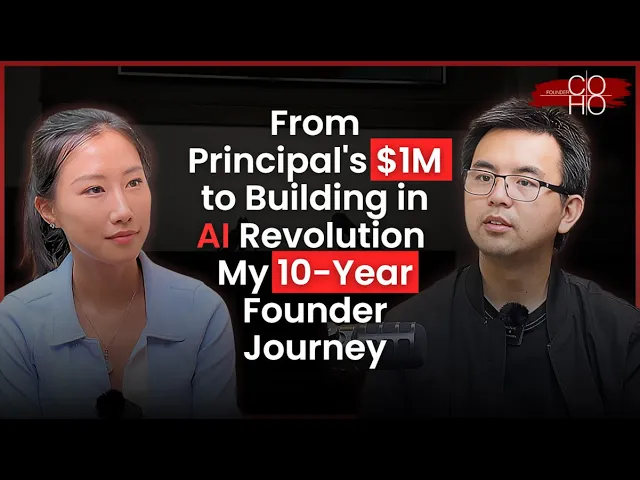
Kisson Lin is entrepreneur in AI, Sequoia-backed founder and ex-Meta & TikTok strategy director. After an early startup and a stint at JP Morgan, she joined Facebook, where her work impressed Zuckerberg and earned her a strategy role at HQ. In 2021, she bet early on AI agents. Now she's CEO of Tanka.ai, building what she calls the memory system for human-AI collaboration.
What You'll Learn:
- How a failed restaurant app taught him the #1 lesson every founder ignores
- His genius strategy to go from Facebook partner manager to HQ strategist
- Why your favorite SaaS tools are about to become obsolete
- The real cultural differences between Chinese vs. American tech giants
- Why "memory is the new data" for AI startups
References
Visit Tanka AI at : https://www.tanka.ai
Kisson Linkedin: https://www.linkedin.com/in/kisson-lin-49309516/
Jing (host) Linkedin: https://www.linkedin.com/in/jingconan/
Books mentioned: "Lean In" by Sheryl Sandberg | "Thinking, Fast and Slow" by Daniel Kahneman
Timestamp
00:00 - Highlights
00:57 - Introduction
01:36 - Interview Focus
02:20 - Kisson Lin's Founder Origins
06:17 - Why Operation is important
08:33 - Hong Kong restaurant app lessons
09:08 - Kisson's Facebook Journey
11:54 - Pitching Zuckerberg on Facebook Venture
19:41 - ByteDance Journey
30:44 - Founding Mindverse AI
41:51 - Launching MIND OS
44:54 - Building Tanka AI
52:09 - Tanka AI Features
55:17 - Ideal Customers to target
58:42 - Monetization for AI Products
1:01:28 - Why SaaS should be terrified
1:03:08 - Global teams with AI translation
1:05:30 - Key Takeaways and Advice
1:08:22 - Outro
Full Transcript
We took 1 million Hong Kong dollars from our school principal. He wasn't
expecting any return from us These big giants already built something
like that. Why do you think you can be better than them?
One day AI agents will replace apps and SaaS. LLMs
itself is basically kind of like your prefrontal cortex. I think that in
the future the AI assistant will be the one talking to you all the time
It will show you the apps the interface the SaaS by generating the interface for you on
demand personalized. You probably have enough time to build this operating system for AI era.
Just like Android started way before iOS it's actually more difficult building the platform than
building something you know niche on your own. Memory is the new data. Memory to AI is like data
to internet LLMs take all these public data and the next wave of data is basically the enterprise
data and the next wave the individual data and the next wave data that's not even digitalized
Kisson Lin is entrepreneur in AI, sequoia back founder and meta and tik tok strategist.
At 13 she wrote "I will be an entrepreneur by age 30"
in her journal She did it by 22 After struggling at JP Morgan she built a restaurant booking app in
2011 that was years ahead of its time. When it failed she joined Facebook where her brilliant
analysis caught Zuckerberg's attention and got her promoted to headquarter strategy. In 2021,
when everyone laughed at chatbots Kisson bet
everything on AI agents. Now she's CEO of Tanka.ai building what she calls the memory system for
human AI collaboration. This conversation reveals shocking insights from someone who's worked
inside both Silicon Valley and Chinese tech giants. Kisson exposes the brutal differences
between Facebook's caring culture and ByteDance's
996 environment and explains why the entire
SaaS industry is about to be disrupted.
Most importantly her contrarian vision
conversation will replace all user interfaces and memory not intelligence separates winning
AI companies from the rest. Let us get started!
Hi Kisson welcome to FounderCoHo. It's really
great pleasure to have you. I know that you started your first business in Hong Kong
Take us back to time. What happened? What made you to start your entrepreneurial journey?
In Hong Kong?
In Hong Kong
Oh yeah that was a while ago, almost like 13 years ago. When I when I was a college
graduate working for JP Morgan for a year and a half was pretty unhappy. Financial market wasn't
for me actually and also I wasn't good at maths. So I struggled at JP Morgan but that reminded me
of my dream when I was 13 years old. I had always wanted to be an entrepreneur and so I started Yeah
I I even wrote a jour I even wrote a journal at at year 13 about myself being an entrepreneur
um by the by the age of 30 and before that I had to enter a great college and work
for some good companies to gain experience.
So that had always been my dream actually and
My friends had been asking me like you know what took you be to become
an entrepreneur? and my answers had always been you know being an entrepreneur is not
a question for me it's the answer for my life
because that's really like what energizes me.
So going back to Hong Kong, I was pretty unhappy at JP Morgan but I met some really good friends
at college and they so happened to wanted to start some venture as well And so we thought about you
know back then it was 2011 and we thought that actually one of the biggest problems for us is
every time we go to the restaurants we need to queue up In Hong Kong you know it's crowded. So
we wanted to solve this problem for us We thought iPhone just came out maybe we can make some apps
for restaurant booking Um which turned out to be like really popular nowadays but back then
in Hong Kong it was not so obvious. So we built this app and um I was the CEO of the company I
started like you know talking to the restaurant owners and sending out leaflets on the on the
streets asking people to download the app We took 100 sorry 1 million Hong Kong dollars from
our school principal. Wow
as angel investor I
know how many equity he got? Very little
Very little actually. Yeah Yeah
I'm sure he wasn't expecting any return from us. He was just like
you know these students are cute and this seems to be a very interesting mission.
Let me just support them. So he's been very kind.
and we you know the venture failed but I felt very proud of ourselves being able to like pull
out the app and being able to predict like what was going to happen in the future. To me its
still quite visionary and quite interesting and it also further convinced me that I wanted to be
an entrepreneur. Because even when I failed I still felt happy because I learned from there.
Yeah Yeah That's an incredible experiences and a lot of great entrepreneurs I have talked to
they all have very similar experience. Start their first business when they in the school
even if the initial business might not succeed it plant a seed of entrepreneurship dreams
to them and help them to make a great entrepreneur in the future. And the reason I'm asking about
equity of the school principal is that a lot of the times the school fund the students.
Not because they want to make money. They take very little equity almost no equity but they want
to plant these dreams to generations of students.
That is so true That is so true Yeah We are so
grateful that our principal was able to support us. It did plant a very very nice
seed in our hearts. It it gave us really good experience being a first-time entrepreneur.
That's that's awesome.
Yeah Yeah So I recall that you learn
a lot from that ventures as well. One of the thing I heard you talk about is operation is important.
Tell us more about how you
get the learning and why you got that learning?
Yeah also it's because restaurant booking
app is really operational heavy. So
tell us more about how the restaurant
booking business work? Yeah So we built this app and we asked the restaurants to install this app
on their end and we we asked the users to download the app on their end on iOS the
thing is the users can then book restaurant seats you know reserve a table at restaurants
on the app. But what we didn't estimate is that restaurants in Hong Kong are pretty
busy at peak hours. So they usually hire a lot of part-time workers in the restaurants.
and when we sell to the founder to the owners of the restaurants the owners are like okay I will
try using it but they didn't take time to brief their part-time employees and the turnover is
really really high for for you know restaurant employees So the employees didn't know about
this app and users after they you know reserve a table at a restaurant of course this is the first
time that they tried so on an app and they didn't trust it. So they called in and then the restaurant
own the restaurant employee was like "Huh I I've never heard of this app What's going on?" And of
course they deleted the app They're like "What a scam." So this seems very obvious nowadays,
but it was it was like "Wow okay we didn't expect that when we were a student." And the lesson
learned number one is operation is definitely important. So you know you've been an tech founder
you've been someone who's really good at building product The natural tendency is that you ignore
the importance of operation the importance of like you know all the details and I think
that was the very good first lesson for for me as an entrepreneur. The story reminds me
very common things in the B2B business as well is the different different disconnected
between the users and the buyers. In these cases the owner is the buyers but the users are
actually the operators of the restaurant.
They're not necessarily the same people.
Well exactly! Exactly! And you have to understand who are the stakeholders and and make it really
you know understand all the details make it really obvious for all of them to use
your app and make them feel valuable.
I think that's incredible experience
and learnings. It was interesting
in your early part of the career.
And then I saw that after you um have that experiences you
packed all the learning had you start your corporate life and you have amazing corporate
life. You literally post a lot of internal strategy and got noticed by CPO of
Facebook, tell us more story about that.
So I joined Facebook and in 2014 as
a partner manager. If you are offered a seat at a rocket ship you know regardless of what whatever
seat you feel so good and and you know you feel so grateful joining So I so I got this chance of
joining this um you know rocket ship and of course I joined but I've always wanted to
be closer to the product side because I you know I wanted to be an entrepreneur. I still want to
and I feel like um being able to understand how product team works at Facebook, how they
build product at Facebook is very important for my learning. So I started writing case studies
I started writing blogs and published internally at Facebook Workplace about
the Asian internet companies, like how Grab acquired Uber in Asia and um and how ByteDance you
know sorry, back then musical.ly how musical.ly uh started getting so popular in Asia. And those blogs
started to catch attention from the headquarter and eventually there's one there's a time when
you know people were starting paying attention to musical.ly and they said well this analysis looks
interesting. So the strategy team in headquarter reached out to me and say so since you published
this blog you you wrote about musical.ly, Can you you write more details about it and also by
the way can you write about like Alibaba can you write about you know Tencent and all these
because we are getting more curious about the Chinese companies. I was like sure of course
so I pulled a lot of all nighters writing all the decks and stories about them and eventually
they felt like well you know you know what you can be a fit to the strategy team so they brought
me into the strategy team in the headquarter. And I started becoming a corporate strategist.
Wow! Wow! What a fascinating story.
I was lucky.
Yeah Yeah And I think that what I hear you about is not also lucky but you are actually,
you made yourself lucky through working very hard You're analyzing all the trends that headquarter
that Facebook headquarter people will be interesting and produce this analysis and results
to convey your value.
You figure out a way by
just being playing that role first.
Years ago also another mentor told
me something similar very similar like don't ask for things prove that you can
do it first and it will come to you naturally.
And I also heard that you not just like sharing
decks and uh like um sharing the what's happening in Asia but also you propose a lot of interesting
ideas even this Facebook venture idea
Yeah
Tell us more. So when I went to the US it was like 2018 and
um a lot of startups are happening including musical.ly including other other things like
you know photo taking video image editing apps or new social apps because I was working in the
corporate strategist team and part of my job is to
so did you transfer to us um because you joined
corporate strategy? Yes I did Yeah And and that team part of my part of my duties was to do this
competitive analysis for the company and to help the company understand what interesting
apps are out there and um and and what did they do right. What are the things that we can learn from
them Um and I realized that well actually there are a lot of interesting ideas that others are
doing but we are very slow to adopt them including having more filters having more editing tools for
Instagram you know like or um or something like musical.ly right having more video tools
The reason why was that
that was 2018 2018
Yeah 2018 And the reason why this big corporations are slow is because because
of the PR issue because they have to be careful if you know because of the um because because of
the innovators dilemma or or because they have to be careful that a lot of people are watching them
and they should do things more cap more and more more cautiously right So it's uh inevitable that
they are slower than startups But the thing is that kills innovation potential innovation and
um and I and and I thought you know why don't we since a lot of Facebook employees
actually departed from Facebook to start their own companies why don't we have the Facebook venture
where um the company can just like invest in those departing employees as angel investors and
and when the company gets more successful the Facebook can always like you know buy back
at discount or or keep investing at a discount I thought that was good idea So I proposed to the
management team but but then Zach said well you know we actually already started something similar.
I heard about like a great quality of entrepreneurs about impatience in the
uh you want to move fast you want to make things happen and you don't want to wait
until your managers assign the role and ask you to do the same thing Instead you proactively
come up with a plan and present in leadership
Mhm When you present your plans of the Facebook
ventures to the leadership including network that work what was the feeling back then
when you propose something to to to people who are like way you know smarter than you way much
more powerful than you you naturally feel feel like wait a minute am I doing the right thing
Am I proposing the right idea? Can like I want to think about it twice. I want to make sure that this
is right. But the thing is this is never right So yeah it is what it is Like I've been walking
into you know management team management room for like quite many times proposing competitive
landscape analysis and proposing new ideas for quite many times and every time I have to like be
like okay go and for that one second you just like make your whole mind just like so so quiet
that you don't just don't think about it, just go.
Yeah Exactly Yeah.
And the moment that you described actually I feel is
so precious moment as well as a part of the people like a person's growth journey.
I myself have a lot of experience like that super nervous because that's the high stakes
situation that high stakes situation that even make me feel, should I be here should I do this?
that's a nervousness like about that like what if I screw up this thing I feel like idiot.
Right exactly you started doubting yourself right? And that happened to me so many times
like I start every time in a boardroom, I started you know I have a question in my mind
and I always doubted myself. Am I asking the right question? Is is that a dumb question? Like
because no one asking, is that a dumb question? So I chose silence but two seconds later some other
guys would ask the same question and people were like oh that is that is a great question and
would be like I was so dumb not to ask it. Yeah like you mentioned later I realized that these
feelings of nervousness is actually indication of growth
and then the over the time you have more and more
of this nervousness moment and you become accustomed to it like it never goes away still will be
nervous but then you know what's happening and sometimes you get even excited about
this moment because you know that you'll learn something new that will be thrilling
and you start to think more and more of such moment.
And in fact that's the beauty part of the entrepreneur or startups like you experience
this like very frequently almost every day every few days like moments of learning.
Also tied back to one thing you mentioned about late early on is that you mentioned about
joining a rocket ship I think that's what Sheryl Sanberg mentioned about. Exactly.
Do you do you follow her or her
philosopher books when you were in the Facebook?
Absolutely Yeah. The first day when I joined Facebook, I got this book you know
Sheryl's book with her signature.
"Lean-in", is that..
Yes
Yeah Yeah Given given to me by my then first manager. I read that book and
I was really impressed. She set a very good example to all the female
people working in tech industry. You can be really influential you don't have to be this
soft figure you can actually be soft but powerful and influential at
the same time so yeah I do follow her.
And you mentioned very great point is
actually it's very influential I realize not just for women employees, I myself read the book and
I found incredibly helpful as well. And the reason I mention about nervousness is that when I read
a book and then trying to connect with my real life, I realize like lean-in is the action you take
And the nervousness is the moment of feeling you have.
The lean-in is basically just like
a comfortable to overcome this nervousness.
Totally
To to lean in and take the responsibility on that.
Yeah Yeah Yeah Totally No I I actually learned
a lot from from the Facebook days. People set
great examples for me and people said
great very very good things that got me a you know got me so far. So you know Sheryl, she talked about
lean-in, she also talked about crucial hard conversations and it was very hard hard for us at
the beginning to to have very hard conversations especially as part first-time managers or if
you are going to the you know the room talking to your manager and say hey I want a promotion those
are hard conversations but once you have that muscle building it's much easier here for you
to do that. I have consistently observed that you take that attitude in your career lean-in is on
your career and after several years of the working at Facebook, you decided to join
a company you have done so many research musical.ly ByteDance, so you joined ByteDance and tell us more about that.
I was lucky to get the offer when I was working at Facebook headquarter and I got this offer
of the monetization strategy director role. It took me five months to
make a decision to join and in you know in the process they called me several times saying oh if
you still don't make a decision we're going to start the hiring process again. I'm like oh great
I'm happy for you. And then a few a few more months later they're like we found this person
I'm like oh congratulations. I don't have to make a decision but they're like but we still
tailor another position for you and I was like wow okay that's actually quite
touching. So I decided to join because that's another rocket ship. You can
see the trend. You can see like it's doing all these amazing things. It was late 2019.
I think that was a time where the TikTok started really take off in US
Yeah exactly. It was renamed
TikTok from musical.ly in 2019 and
the app was taking off like everywhere in the US especially and people were paying more
people started paying a lot of attention to the app and ByteDance itself doesn't only have the
app but it has a whole other spectrum of apps that are doing amazing. So it's a it's definitely
another rocket ship you can tell. I struggled between you know staying at Facebook
staying at the job that I absolutely love and working together with the team that had
helped me so much you know. I had grown so much in this place it felt home or going
into another rocket ship which is still full of uncertainty. And I decided to go because I feel
like growth is important and I wanted to see like,
I've never actually worked for a Chinese company.
And I wanted to see like how you know I wrote a lot of stories about how how Chinese internet
companies grow and how they are different from the American companies in terms of the culture
and in terms of like the way they do but I actually haven't experienced it personally. So
the curiosity actually got me to take this job and went there. What do you think like what
you observe in TikTok is it close to what you write when you do the research? A lot of reverse
cultural shock actually. I grew up in China but I've been working for you know non-Chinese
companies for more than 10 years before I joined TikTok. So that was the first time
I worked for a real Chinese company. And the first day I went to the office I was like "Huh the
decoration is not as beautiful as Facebook's." And we don't have any as many snacks as Facebook's.
Oh wow. You have to work so hard. You have to really go like 996. Like it's one thing that
you write about 996, It's another that you are really doing it yourself. So the emotion
was really strong and I man they work so hard.
Tell us more about the day in the life in ByteDance.
It's all about work. So I remember that I I worked in Beijing and the peak hour for
getting in a taxi to go back home is usually like 11:30 p.m till midnight. That's when most people
go back home. And when I joined the company, you still have to work on the Sundays every two weeks.
And even on Saturdays on Sundays you most of the time you have to work and for like 1:00 a.m
2 p.m you get a ping from your boss you have to reply. So the the philosophy is really different
from you know Facebook or Google versus ByteDance or alike cuz one thing we do have to admit is
that China has a large population and many many great talents. And because they have many great
talents there is luxury for the Chinese company to actually hire a lot of people. So they are more
focused on operation less focused on scaling the product and they are more focused on working
hard, less focused on let's step back and really think clearly about the strategy. But I also think
there's um the lucky side of the Facebook and Google because they were so early in the internet
era and they've developed this great business model which allows them to grow without scaling
the employee. They can scale the market without scaling the employees that the workforce that
much and they can just like have a huge profit margin and not worried about you know serving
every segment of client really well. So I think there are a lot of complex factors there but in
short the cultures are very different. What part of the culture in ByteDance most energize you and
what part of culture that you don't like the most?
I think the culture that most energizes me
is at ByeDance because they scale so fast, there's no standard management style that you
scale across the company. So every team has different management style depending
on the manager. So actually you can build your mini style your mini culture within the company and you
can experiment different things like how do you manage people, what kind of
things you would like to do? And the company actually focuses more on bottom-up innovations.
Which means that if you have an idea and you can build it with your team you can call
other teams to help you build it and you can prove the result then you get promoted really fast.
You mentioned earlier on that ByteDance not just have TikTok they have like a whole set of
apps which are also very popular like Capcut. is that related to how the organization work?
it is definitely ByteDance is more about you know let's do AB testing with apps and
see whichever app that works best and we can just like put more investment pull more investment
into the app and same for employees same for teams because they have a lot of talents
that they can hire. So a lot of times there are different teams working on the same
projects and whichever team that wins will take more investment from the company. And this is
actually more a very popular culture amongst many Chinese companies internet companies like
Pinduoduo or the parent company of Temu is more extreme in that way. But
of course they are even more operation heavy. They are an e-commerce company and
people, I think that there are just like different ways to succeed eventually. There are
a lot of factors leading to success. For instance timing for instance environment or the business
models not necessarily the management style of the company. And what I observed at ByteDance is that
when you have tremendous growth it will cover all the other problems in your company. It will make
everything look good. But once the growth growth is not there then you have to deal with more of the
management problems. But back then when the company was growing so fast if I were the management team
of course I will focus more on growth as well because you have maybe 10,000 problems to fix
every day. You cannot fix every everything in them. So in short the company
especially on monetization side is more of you know decentralized or bottom-up approach meaning
every team could be very different and
people have more bottom-up innovations. There is no
set style. So it it feels like chaos at times but given the massive scale something will come
out and that's how they incubate innovations.
Yeah you mentioned a very interesting
difference between the Chinese tech giants and US Tech giants in terms of the culture. You put in the way of
that ByteDance is more bottom-up and I actually observing for many Chinese company like in fact
it becomes like Chinese internet culture that is very resource driven is very datadriven they don't
previously put any like before they do things they don't put any opinions into that and then
leverage the talent pool they have executions capability they have and to finding out the
optimal solution is really optimized for finding the optimal solution where at the same time
the US tech giant they generally will impose some culture like you think about Google as a culture
think about Facebook as a culture
it's very tight culture
it's very opinative way of building a culture and then the product and
innovation is the results of that culture.
Yeah Yeah Well I would say ByteDance also
has culture. So the interesting feeling from my side is if you partner with a Facebook
employee, you know in your work environment you hire a Facebook employee even without knowing them
you're very certain that they have certain styles.
For instance product driven talking about scale ,
spending a lot of time writing road maps all the time, and very very good at
collaborating with cross functional partners
and caring about you know caring about the team.
Because at Facebook and Google you know people manager is a thing like you have
to care about your team like and they spend a lot of time teaching you how to care about teams
and talking about diversity and talking about all these like care mission stuff like that so
you know how they work there is very very very standard way. So you know
you feel like you can make great great friends or become good colleagues with
any Facebook employee because they're the same. But for ByteDance there is also this like
very standard label. If you hire someone from ByteDance that person is definitely hardworking. Yeah
I think that the one interesting about startup or organization general is that is a
self reinforcing algorithms that will slack the talents based on a principle and then it will
basically build a talent pool like that and like you mention I have similar experiences
like when you talk to a person you kind of can guess which company they work for
Indeed. Now that you worked in both Facebook and learn about the US culture and also worked in
the ByteDance experienced the reverse culture shock and how Chinese culture work internet
culture works in firsthand. You are now impatient again and decided to do your own entrepreneurial
journe looks like and you started to found a company called Mindverse. Yeah. Tell us more
Yeah So that's actually quite interesting journey. It was in early 2021 we
had this ex Facebook employee gathering and
there were a lot of old friends. So
after going back to China for like one or two years a lot of people started
thinking about doing some side gigs or starting their own companies together.
And this old friend called Felix
shared his vision on AGI and that was early 2021
and everyone was like kind of laughing at him I was like what do you mean by AGI We've built chat
bots at Facebook. We never believed in we never believed that it will actually work.
So I think before chatGPT most people don't believe totally totally didn't believe that.
I felt like it was interesting because at Facebook I firsthandedly saw how generative AI can actually
transform the artwork and can actually make things way much more interesting for a lot of people. So
I yeah I've always been very interested in AI, in memory like all these things I
even wrote sci-fi on them. So this guy's talk got me very interested and because we knew each
other you know way before at Facebook, he was the one working at AI lab. So I was like
tell me more about AGI. And then we started talking about AGI was like damn
this is the future. But back then we were just not certain how long it will take for the
AGI to really come and we thought that's amazing.
We as a startup we can build something that lasted
for like five or 10 years or even more. Let's just keep it keep building it. So we started the company
um back in January 2022 and but before that we got investment we got the term sheet from Sequoia
in China and from two other top tier investors there and after getting the all
these term sheet we started the company and we started you know building things but pitching
investors was also some experience. The same things happened when we started pitching
investors in late 2021. Everyone was like what the hell is AGI? When do you think it will happen?
So tell me if a generalized model can actually do everything right, Is there one single thing
that it can do better than the narrow a than the narrow AI? We're like that's not really the way how
to think about it And they're like see if there was no narrow stuff that like specific stuff that
it can do way much better than the narrow AI how do you enter how do you how do you crack in the
market. So we had a lot of very interesting challenging talks with investors but we
were lucky that we got the investment from top tier investors in the end and they believe
very very interesting point and I would say that type of view still exists nowadays
like people often ask like oh if you build like a general large language models how this would perform
better than specialized model totally what is really your competitive advantages on that
Yeah. Oh my god, you and besides that there are there are questions like okay do you know why do
you think you can build AGI if no other companies like Facebook, Google of the world can
build AGI? and then after ChatGPT came out there's proof that openai could
build AGI could build something that will lead to AGI right, and the question become so these
big giants already built something like that why do you think you can you can be better than them?
it's actually hard questions heard like a lot of startup founders hear about it's like
the same like you mentioned about if no one's doing that why you can do it
they wouldn't believe it can be done if someone else does it
yeah why you
why why you're still doing it why do
why do you think you can be better than them?
yeah so that's actually one interesting point
is that a lot of my friend including including I myself talked to a lot of VC
over time but I realized that the insights from VCs are usually lacking indicators
long leading indicators because often time they would observe something and then summarize
and come up with theory which is very useful for investment because they just need to wait
at some startup to show up then put a bet on them. Yeah
but as a startup founder you really need to be pioneer. You
need have insight exactly like mentioned 2021 Nobody really like believe chatbot and you
and your team got this insight other than like you mentioned about like you have a colleague who has
this insight because he's a research scientist
Any other leading indicator got made you
have the conviction to work on mindverse?
Yeah totally so we talked about AGI and
I think that the concept of AGI is not hard to grasp. It's very obvious to
everyone that one day AI will be so smart and general purpose and it can be it
can be performing so well in all the fields but the thing is what can it do right that's that's
the thing just like touchscreen versus iPhone those are different things so thinking about what
it can do actually, we had this vision that one day AI agents will replace apps and SaaS.
When was that?
That was in 2021
Super early I think now it's 2025 everyone's talking about agent. But four years before 2021 you already
are committed to the agents.
Tell us more what made the agent so fascinating to you back then?
We think that LLM itself is basically kind of like your prefrontal cortex
It has great calculation capability but for it to
perform all these other tasks that we want them to perform you still need something that's more you
know that's more with memory um and with action capabilities and that's more human but the
thing is we basically think that you know when AI is so advanced a lot of things will change It
will definitely be another industrial revolution.
So a lot of things will change, one thing is one
thing is basically the way for distribution you know distributing apps the way for generating apps
the graphic UI, traditional graphic UI all these will change they will generate the
interface immediately so you actually don't need the pre-designed interfaces. So by the time they
generate interfaces immediately what you need is the data from the supplier side and then all
these components and then whatever you want the AI to do whatever you want to do You just tell
the AI agent your AI assistant "hey I want to go to this place show me
the map", "Hey I want to you know basically I want to correct this document and show me
this document and and let me do the editing".
And I think that in the future the AI assistant
will be the the one talking to you all the time it will show you the apps the interface the
SaaS whatever it is by generating the interface for you on demand personalized. What you
need to do is just to you know talk to the AI all the time and we think that will be
the future of operating system. Basically the operating system will have a general AI system
helping people do everything and other apps nowadays will become other agents that either make
friends with the user and user can have like probably like 10 agents 20 agents or just
like go behind the scene and collaborate with the general AI agent And back then we thought
AGI would come after 10 years So we probably have enough time to build this operating system for AI
era. Just like Android started way before iOS and they had a chance to be acquired by Google
So you want to be Android of AGI? Yes. So
that was our mission when our company
was founded. So we started building this o this operating system and we called it mind OS because
it's mind. I like this name personally.
So we so we started building it and and guess what
less than a year after we started it, ChatGPT came out and we were like oh man AGI might come earlier than
we thought. What are we going to do? We're really excited but also scared because we
probably don't have enough time to build it.
So we decided to make a bet and see how much
we can achieve with whatever we've already built by then. And we launched the
the product to the market in early 2023. Got quite some attention because it
was still very early in the days. The first agent marketplace but it's another story that
we figured well you know marketplace is actually not a good way to get into an operating
system. But that will be another story. Yeah
Thanks for sharing your vision of agent You
actually put a such an interesting way to understand of agent. You put in like a human
computer interactions.
oh that was actually in our first pitch deck to the investors human computer interface.
Oh that's awesome.
Yeah how it evolutionalized
throughout the years. Which also means you put it in a very great way easy to understand
So you touch a great point which is related to one of the recent popular article
in Bay Area is about the simplification of UI.
It used to be all the internet or internet
apps is designed for humans. So there's so many buttons, There's like whole like group of product
managers trying to understand how people's journey on the app is and then they hard code them into
an app.
But with the large language models now the agents or the AI can actually do things. So you actually don't
need a human do a lot of things now.
Then the UI doesn't need to be that
complicated It's actually the simpler version
of UI which is more compositional. Yeah my theory
is if there is 3D printing we probably don't need Lego. That's exactly true Such a great
analogy on this. And in fact that the technology about talking conversation with
AI is like a 3D printing. You mentioned about you launch a product right after Chat GPT
comes out tell us more about the launch. Like when did you do it, which users
you target for that launch? Yeah we actually we launched Mind OS in China in late 2022 just
a month after Chat GPT came out So we started building that product way much earlier than
that and when Chat GPT came out there was still no API available still. So when we
launched that product it was built upon OPT, bird all these models. So apparently the performance
wasn't that great . In early 2023 we
launched it again into the global markets with
some GPT API and the performance was much better.
So this idea is that you we built this platform.
allowing people to build AI agents on top of it. So in the beginning we have workflow you can
you can you know customize the workflow you can upload documents to train the AI agents and then
by July 2023 we even built the canvas you know interactive canvas and we called it canvas 2 So
that was way earlier than you know chat GPT
store and canvas on GPT as well.
Now looking back I think we were visionary in the very broad way in broad
sense but the things that we didn't do well is you don't start off by building a platform first
you know the platform requires economy of scale it requires network effect and you as a
startup you probably don't have that much effort that much resources to pull it off and we
thought back then if we are to build AI agents by ourselves we're gonna go into the niche market
into the verticals and we probably don't have the understanding and operational efficiency to
to make the first party AI agents on the platform.
So why don't we just build the platform so that
others others can build AI agents on top of us and it might be easier so we can just focus on
building the platform and it turned out it's the opposite It's actually more difficult building the
platform than building something you know niche on your own so that was lesson learned.
Such a great summary of the learning. When there are no big players playing this, startup is actually
good like it's actually good for startup to layout
big visions and build the platform because that
arose the maximum interest both from VC both from like employee
you get a maximum amount of resources from that.
And you can use that resource to be the first
platform and there's a play to win from that.
But when the chatGPT comes out they got
like enormous amount of resources because they become the platform. What you mentioned about is
actually great learning as a startup founders to have that will be useful for any AI startup we
do and it looks like you take that learning and started to focus more on the
analytical certain audiences as you
build your second company out
of it Tanka, tell us more about the journey about why you decided to
start tanka.
Yeah after
mindverse I think there are well actually mindverse is still running doing quite well.
They launched this new product called MeBot, which is a note-taking
app and focusing on a AI memory for individuals
and that got me into the AI memory field I feel
I find like I realize that big companies are building a lot but the mode for smaller
companies for startups are either memory so memory is the new data for you know memory to AI is like
data to internet startups mode is actually in memory and that's can you tell us a little
bit more about what do you mean by memory..
yeah so LLMs doesn't doesn't remember you
doesn't remember what you say but there are a lot of layers to memory
what do you said to me just now
you know all these as it is is memory but
the more important thing is how do we how do we compress the model? How do we build
abstract understandings towards a person towards a company and how do we connect the dots and form
patterns. And I think the abstract understanding of patterns and time sequence
and all these like updating memories is what human brains are good at doing but AI is not. But without
memory AI is just LLMs. So I think startups win by building memories for people
for teams and in my previous company we built memory for individuals but I also realized that
GPT of the world LLMs they will build memories for individuals of course.
But for the memory part just paraphrase
to make sure my understand is correct,
you mentioned about the memory for the AI
or how to add memory to the LLM
which you point out one thing that LLM have very short context window it remember yep
the things for a small amount of period and then forgets about that and that's you
just recall that thing into the context window and the way they work is very different than
our human work we can recall the memory of our friends even like after 10 years. So
we as a human species we have long-term memory
so we can store all this external knowledge
and use that as we are having the conversations
and you feel like that is the one thing
that is really missing at LLM now like there's external storage of knowledge or information
that LLM can access very easily. Yeah it's it's either you train the model or you try
to give the model an external database but training the model will sacrifice the model's
own performance as well. So usually people do you know RAG nowadays. But with regards to that there
are also a lot of issues like how do you define the time
sequence and how do you build different layers and how do you make the more recent memory
more available for the models to retrieve and there are a lot of interesting things
and depending on the situation you have to put a lot of engineering effort
to make the structure of the database more suitable for the specific use. It's
basically that there is some external databases that stored some structural information
And what one the key learning got as
you work from mindverse is that that's really the key thing for this mind OS this operation system
this is powerful external knowledge base. Yeah we thought that the mode for startups is really
memory. But I gave it enough thought I
thought that LLMs of the world will build their own
memory system for individuals but the thing is they probably wouldn't go for corporate field
building memories for enterprises. Individuals Yeah consumers and the reason why I pivoted to
you know I started Tanka was because I feel like individual mark like the individual area
the consumer market is probably the first market that the big LLMs will go into because
it's I mean no-brainer for them to build the memories and to build AI agents and to become the
operating system of the future everyone wants that so it's probably going to be very very competitive
but speaking of memory LLMs take all these public data and the next wave of data is basically the
enterprise data and the next wave the individual data and the next wave data that's not even
digitalized those are in our minds so if you take that wave of how this memory will
will actually penetrate the next wave will be enterprise data so the glean of the world.
yeah I think currently we're in the wave of public data because there's a lot of discussions about
AI search and Google is going to be overturned by Perplexity, ChatGPT because the LLM now access to search
engine which is like public data. So what you're betting on is that you're betting on the next
wave in which enterprise data
to enterprise data
Yeah So we built enterprise memory we built memories for startups and the best thing
the the best way to build memories is actually you know first of all you retrieve information
right so gleaning of the world they retrieve information by allowing the enterprises to
connect to glean a lot of different apps and then they get all these information all this
information information from the different apps but glean only does the the information retrieval
so like search within your database but actually the more important memory is how you form how
you leverage those information to form decisions the chain of thought for for enterprises for
teams that determines the team's DNA when we say like you know Facebook has product DNA
um Google has engineering DNA we actually mean how it prioritizes on things how it makes decisions
and it's not only information but the decision that's important and if you ask yourself when
are most decisions made it's actually either in offline meetings, online meetings or in messengers
so we built messenger because that's when people discuss about things and make decisions
Yeah you had a great a great call which is that a lot of the people now are focusing on
consuming the information like the glean or or the perplexity is that they are they try to like help
people to understand more of the existing content
but one important thing in the enterprise is
about making decisions and that decisions is actually the next level It's like you
digest information What are you going to do with information And you go directly to the second step
We built both We built both
We build both Okay
But the the reason why we built messenger is because that will allow us to go
further than just retrieval information
I'm very curious about in terms of the
product format you had at so this is the Tanka product you mentioned about
you focus on the messenger Tell us more about what your product look like
Yeah It's basically like Slack plus Glean for enterprises So it's basically a team
messenger like Slack but way much simpler interface because we believe that in the
future AI will generate the interface So today the interface is very very simple
It's basically like a Slack group
Slack Yeah
And then do you chat with AI Do you chat with real people Real people It's
team messenger Team everyone gets an AI assistant but primarily they chat with
their teammates. And in every chat group there's an AI assistant as well So but in the future
moderator for every conversation is that
not moderator but AI assistant that can help
you do a lot of things So anything that AI agents can do. So basically our AI is no
different from other AI in terms of the actions that they can do the answers that they can
they can you know the questions that they can answer. But the thing is long-term memory. So
so it's a chat app but you connect all these different apps including Slack WhatsApp
Gmail Outlook Telegram notion you integrate all of them and their information goes to Tanka.
and we will structure all the scattered information into a structured long-term
memory memory graph basically a knowledge graph And when you do retrieval so like when you do
search the search will be more accurate even if you're asking about things that happened
three years ago in some lost slack chats
search will be more you know accurate
and then actions will be easier So if you ask your AI to build a website for you nowadays you
have to prompt claude right but with Tanka memory you don't have to pro prompt basically it has
all the memory about your business and another thing that you can do is basically auto
reply so the reply will be very accurate as well
and the team you know basically the AI
system will be able to summarize the team chats and help you make decisions by telling you
what relevant information there is so there are a lot of things that you can do You
basically nowadays you you're just using AI to boost your productivity but the
key is it has your institutional knowledge.
Gotcha So you basically got an AI assistant
for you specialized personalized for you
that has the access of all the knowledge in the
company plus has already integrated with all the SaaS integration So it can actually like schedule
a meeting for you reply emails for you. So you can actually do things but it's like your assistant
Yeah not yet scheduling meetings for you but getting there. So we are building more
action capabilities The first step for us was to build this chat interface and
then integration and then AI memory graph and then afterwards actions so we closed the loop
So that's a very very interesting the ideas and high demand for any like workers
Totally Yeah Totally totally So what is your target uh target users Do you target mostly
on the work like workers and big companies smaller company. Tell us more like how do you
identify your like ideal customers
Yeah our ideal customers are startups
and especially like small companies startups that are just starting like 10
people 10 people team 20 people team.
Why choose those startups from
go to market perspective I think first of all enterprises require you know hosted on private
on their private servers and that basically means that we have to have big deployment
cost and also we have to use open source LLM models and open source models are great
but not as good as you know Gemini API GPT API or claude API So we want to prioritize
on performance at this moment. So also because enterprises
will have way much more complicated software for us to integrate. Every enterprise is
very different but for startups you basically use like Google suite of apps and then notion slack
you know it's more standard And the the second thing is startups with certain scale
like you know above 20 people 50 people they probably are are already getting used to slack
or these your or teams and the switching cost for messenger is really high there's ab side the
good side is that once people switch to your app it's very hard for them to switch out again
but the bad side is it's also very hard for people to switch to your app. So we target startups
because they are not using a team messenger yet and they are considering using one and
that's the best timing for us to get into them
Yeah Yeah So that's actually very interesting perspective
and also the startup founders usually are more forward looking. So they're
looking for new solutions
Yeah also more openminded
More openminded on that. I'm very curious your thoughts about the monetizations and
also the go to market because what I can see is that the startup founders also
generally easier in terms of go to market
but a lot of people when they do the B2B
they are a little bit worried about selling to startup founders because the churning is high like
they naturally go out of business like I think every year like 30 40% of startups go to out
of business like that how do you balance these two? Like if you target mostly on startup founders
how do you deal with the high latency not not because of a product but because they are
I think it depends on stage. When you're at first stage the market adoption is more important
because messenger I mean business messenger is not is not as tricky as personal messenger right
But still you need some you need some scale for people to know well there's the new
messenger called tanka that's that's way better than slack. So you need people to spread the words
adoption for us right now is more important let learn the fact that in future we're are going
to build this small model on top of LLMs to to help retrieval of memory for different
types of organizations which means that you know reinforcement learning and the
scale is much more important for us and after we reach to a certain scale I would
say the revenue and profitability would be more important and that is actually the stage where
it makes more sense to target the middle size
companies with the more stable and even enterprise
What is your take about monetization for the consumer companies or enterprise company
Monetization for AI products is generally hard regardless of like for B2B or B2C because
it depends on different stages. So like you know a year before AI the technology is not here
yet AI couldn't take actions and people didn't didn't want to pay a lot for that right it's it's
mostly like tools sorry toys from toys to tools to digital employees or digital companion
the premium is very different and I think the technology is getting there so in terms
of the monetization I actually think that the trend is actually happening in the
valley people are charging in different models so not really like monthly subscription model but
outcome based model I think we we'll get there very very soon and for AI for consumer just as I
mean ask yourself how much you are willing to pay for an companion for a partner it's actually
a lot when the technology is really really there I think a lot of people will be willing to pay
a lot for that and but yeah we're not there yet but we'll soon get there. Yeah Yeah I think
you you put it in very good way which is that we're still in the process of figuring this
out but there's a very clear trend of the the willingness to pay higher which is also there's
a leading indicator for that is that
for example the chat GPT used to be
have very is not very sticky before
the retention is very low the
amount of time people spend on chatGPT is low
but recently I think the number of
returning users for activity which they quantified by the ratio between the DAU versus
MAU uh is approaching to the traditional forum like Reddit
which means that people started develop more and more habit to use this AI assistant tools like
readily and when they start to do this
they become part of their life and the
willingness to pay will increase Yeah totally And actually one more one more reason why I think that
messenger is actually more important is because as you said when more and more people are coming
to to the LLM themselves LLMs actually engage people from the thinking process and
once they introduce canvas once they introduce the interface on their own on their own chat interface
other interfaces which is more interactive right The the SaaS of the world will actually be
in a lot of danger. So think about like when you can just edit the documents on ChatGPT
canvas rather than going to notion.
You mean the whole SaaS ecosystem
is in danger right?
Yeah it could be.
Tell us more. Tell us more about that.
It could be. So you know more and more I see
myself like editing documents on chatgpt canvas
rather than notion because because
I think with chatgpt I think with AI
Yeah Yeah
And when it has me on the thinking process it's just more natural for me to get everything done
with in the same interface without like transitioning and so I think you know
all these document tools even even building website will be quite
dangerous. But messenger is another story because I don't think LLMs will still
be interested yet to build the business messenger for teams that's another story
for them. Exactly Yeah Yeah I think I kind of agree with you mentioned about is the future of the SaaS
I think is needs to be revoluted or at least reinvented
Yeah
because a lot of the traditional
visions about SaaS is like you be specialized
You have this particular workflow
and you turn that into product.
Right and think about all these workflow
just go into ch because it has people on thinking at at the very very very beginning. Exactly and now
like everything is tied and into a very consistent interfaces like conversational interfaces
It it feels very aligned with your initial vision when you build a mindverse as well. Yeah
Conversation is the new interface. You said it
Exactly Yeah Okay Cool Awesome I'm also
curious like for people who want to try out a Tanka how they can find you?
right (www.tanka.ai). You have a rich experience both understanding how the US market work and also
China you also work yeah so you have very global perspective of how the startup works
and I'm also curious that as you bring this perspective as you're building
tanka
how do you ensure the culture is also
global how do you ensure that you hire the best talent across the global? We do we do have remote
working so one feature in tanka is you can auto translate all messages. So we hire different people
Oh so you adapt to using tanka to help build tanka.
Totally.
Look we have people speaking Chinese. We have people speaking
like English, Indians across the company.
So they do they talk in different language
and they use tanka to translate doing the everyday work? Yeah Yeah So so basically
there's auto translation You can just enable it in in your in our tool and
whatever people say it will be automatically translate translated And there's another feature
that you can do is use you speak to Tanka with your audio and then use AI to draft the text
reply for you and you can say you know draft this in Spanish or draft this in Japanese. So the text
that you send out is actually in other languages
I'm also curious as you are managing the team members across different time zone how do
you make sure they are working effectively given that a different time zone different
schedule different life? We try to set up meetings in our common available time zones
and well it definitely means that sometimes this time zone needs to work late and sometimes that
time zone and we try to like shift shuffle So it's it's fair for everyone and also
another feature is that you can let AI summarize all the on the unread messages. So again all the
times when I wake up there's the messages from China side messages from US side messages from
other countries and I can just like use my AI to summarize all the unread messages and ask my
AI what decisions do I need to make today. So
you you made Tanka to be this
facilitator between the different offices of Tanka.
Yeah it's my co-founder. Oh yeah So so you had
Tanka as your co-founder
Yes Yes
That's awesome. As you are building
both mindverse and a tanka. So
what is the biggest takeaway as you are like you learn in this journey
as an entrepreneur As an entrepreneur and also what is biggest advice you
would give to the next generation of entrepreneur?
Well, a few one is start from
something small and two is build something with passion build with purpose I think
with AI a lot of times AI you know very soon AI will be more skillful in a lot of jobs
than than a lot of people but what founders or what humans are good at is to build with purpose
Especially when you run startups you have to pivot all the time The market swings there are
there are often times that we we don't know shall we pivot or shall we continue because I mean you
are not sure all the time so the best guidance is when is that your passion is that something
that you truly want to build even for yourself because that's if that happens then you have you
know you know what to do but when you don't have the passion when you don't build with purpose you
actually don't know don't know what to do when the market is uncertain And we are going to deal with
a lot of uncertainties more and more uncertainties in future and three is basically to
realize to understand what what is your mode and with AI with a lot of like large language
model big companies building more and more things and it's easier for people to build things I think
the mode for startups is really
comes to two: One is customer relationships and
Two is people. So yeah focus on your mode
Do you have any recommendation for
our audiences that
you would recommend
Well in terms of the books like any information source you have
Oh any information source I think I just basically read very different things all the time
I like reading philosophy and history and sci-fi all the times But
I really I really like "thinking fast and slow" That was the book that I read like
yeah so so so long ago more than a decade ago like that
and it it changed a lot of my perspectives and also yeah Lean startups
yeah lean startup is great book.
Yeah Yeah I think there are a lot of interesting
books um that I that I really loved
Cool Cool
Um and in terms of podcasting you know FounderCoHo
is definitely a channel that I follow.
Thank you Thank you so much for your support and also coming to sharing with the community
is it's such a fascinating story and amazing chat really appreciate sharing community
Would love to see Tanka how it goes and how it enables mind OS and enable more knowledge workers
Thank you Thank you Great Thanks for joining us for this inspiring conversation Loved what
you heard Subscribe now to join our community of founders and innovators
Drop a comment about your favorite takeaway and stay connected for more insights from
Silicon Valley's most exciting change makers Until next time keep building keep connecting