Interviews
The hidden AI crisis and why power, not compute, may limit AI’s future.
|
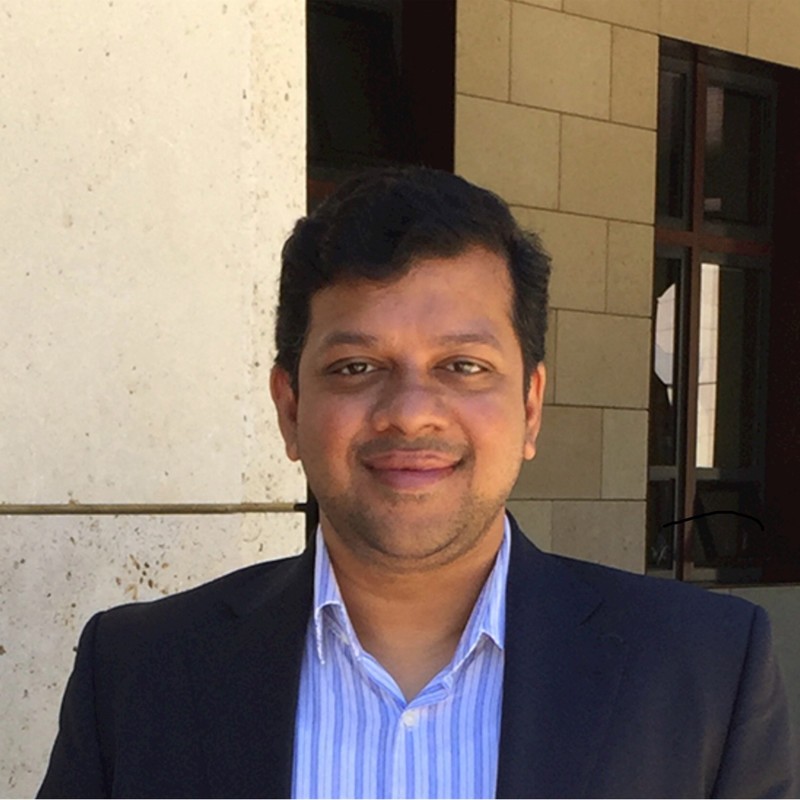
Associate Professor at Stanford | Co-founder: GridCARE.
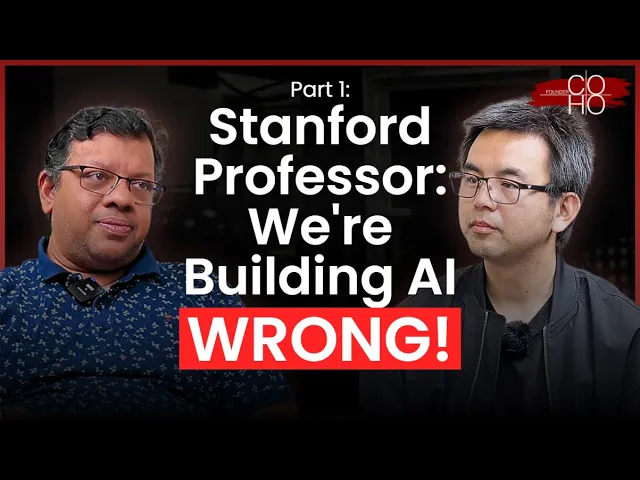
The Hidden AI Crisis: Why power, not compute, may limit AI's future. We just had the most mind-blowing conversation with Ram Rajagopal. This Stanford professor has mapped EVERY solar panel in America, discovered that "green" buses are actually dirtier than diesel, and is now warning that AI could literally crash our power grid.
Reference
Ram's Linkedin: / ram-rajagopal-2b3374
TIMESTAMPS:
00:00 - Highlights
01:16 - Ram's Introduction and Interview Focus
03:01 - Finding Passion Through Systems: From Transportation to Power Grids
08:43 - From Theory to Reality: Lessons from Wireless Sensor Networks
12:51 - Choosing Academia Over Industry: The Path After Berkeley
16:02 - Choosing Research: High-Impact Problems in Emerging Industries
21:01 - Making the Grid Smarter: Using Edge Intelligence & PowerNet Research
22:17 - How Renewable Energy Is Driving More Fluctuations in the Grid
30:18 - From Fixed Supply to Energy Marketplace: How AI Can Balance the Grid
34:43 - Fun and Impactful AI Projects in the Electric Vehicle and Power Grid Space
40:43 - Challenges and Breakthroughs in AI-Driven Data Center Optimization
44:47 - Outro
#AI #PowerGrid #Sustainability #CleanTech #DataCenters #Innovation #Stanford #Entrepreneurship #FutureOfEnergy
Full Transcript
You can think of researcher as having two domains. One is push the bleeding
edge. Try to advance that. The other is to push the scale you can reach. That's
a slightly different question. If I really want to reach scale, then I have to engage
with the outside world, I have to think about how to replace the batteries in that island.
I got the key message was from my advisor and also a mentor here
at the university. And both of them told me the following thing
first of all. You should work on problems
where the amount of effort you put into the
problem and kind of the outcome you get, the reward you get is disproportionate.
And the second one was a really clever advice and was somebody in this mentor who had done industry in communications industry. And he told me
you should look at places where in these kind of traditional industries and utility industries where the standards are not set yet. Things are starting out.
The big challenge for me today, at least from my perspective of power systems and data centers
is you don't really have a detailed view of how the data center works.
So don't know how I can control it and what's the effects of those controls.
Welcome to FounderCoHo! Today we have Ram
Rajagopal joining us. Ram is the Stanford
professor who turned childhood power outages in
Brazil into a $13 million startup solving one
of AI's biggest infrastructure crises. From
getting electric shocks as a curious kid to
directing Stanford's premier energy program,
Ram's grid optimization work powers millions
of homes and reduces emissions by 90%. He's not
just another academic entrepreneur - he's built
companies from 3 people to over 100 employees,
raised over $15 million across three exits,
and his research directly impacts how we'll power the AI revolution.
Ram’s interview has two parts. Today part one explores the hidden crisis threatening AI's future: power. While tech giants build trillion-dollar AI systems,
Ram reveals why our century-old electrical grid is the real bottleneck.
We'll dive into his breakthrough research and
jaw-dropping discoveries, like how Stanford's
"green" electric buses actually created MORE emissions than diesel ones, and how
he helped a California farmer cut energy costs
by 90% using smart sensors. Most importantly,
Ram shares his urgent warning about AI's
exponential power hunger and his radical
solution that could determine whether we achieve
an AI-powered utopia or face rolling blackouts.
Let us get Started!
You mentioned about that when you pursuing your study, you are very more about this journey of like your exploring which type of problem that make you passionate.
Yeah. In, so in the city I grew up, there wasn't a lot of engineering
jobs. So my first thing out of college was actually to work in a hedge fund
but I learned a lot about businesses and
different ways they operate. And then I
decided I really wanted to do grad school.
That's something I was passionate about.
I love studying. I love learning. And I had used all these books from professors in Berkeley.
So for some reason I thought, oh, it's a good
idea to go there without really knowing what it
was all about. But then I came to the US and my
first stop was in Austin and I worked there in
a company called National Instruments.
And the focus of my work as an engineer
was to create computer vision products
for automating industrial inspections in the
factory floor, as you produce parts and also
real time controls. For also doing tests for companies like Mercedes and so on.
And that taught me a lot about two things. The
value of sensing and also how to create products.
We had a lot of autonomy in the company when I
joined. So when I went to do my PhD, there was
already this theme of, well, I think sensing is
important. This notion of computing and computing
the data from the sensors and processing
it in different ways can be super helpful.
And I met my advisor, Pravin Varaiya
who's amazing. One of the areas for which is very famous, is transportation. And so I said
I wanna apply this and I want to create this type of feedback loops that are much
more smarter by using data and sensing and said, oh, you can do that with transportation.
That's kind of the research I've been doing. So that's where we started out
and I really worked in that area. So at that time, transportation didn't
have all these mobile phones. Data and so
on. Oh, when was that? This was like 2003
2004 or so. And then, basically we created
wireless sensors that you can embed on the road
and they can help you measure traffic flows,
traffic density, queues and traffic signals.
They make it very, very cheap to install the signal controllers,
which is quite expensive today. You
have to install these big loops and
so on. And so that was the kind of the first
application. It was super exciting. I had to
learn how to do hardware, sensing a little
bit of the intelligence and processing.
And then I wanted to do more of that intelligence. And, my advisor's also very famous for work in
electricity systems. So he said, why don't
we look at electricity? And there's this
whole desire to decarbonize the grid, so things are gonna change. But if you
don't use the data cleverly, it's gonna be very expensive to make that change.
So I started working on that in my postdoc, and
the problem turns out to be much bigger than
I initially thought about, not just in the scale
but the type of issues you need to address. And
so I carried that out when I became a faculty
at Stanford and I've been doing it till today.
Wow. What a fascinating story. I still remember the days when, like 2003, that was time Wireless sensor network was very, very hot. And there the many researchers doing Yes, that's right. Wireless sensor network and smart Grid later also become a thing. Yeah, that's right. I was, so in my
PhD I created a wireless sensor network and
a big learning of that time was there's a lot of like really fanciful research.
But the sensor networks I had to create, they
had to actually work in the real world for
an extended period of time, and so you ended up
picking a lot of like the simplest of the ideas,
putting them together. To make sure they
actually worked for the application.
And it was really a good experience for me
to see that when you work on something tech.
Sometimes we get very caught up on like the
most complex or the latest and greatest. But
really you need to understand the problem
and, and let's say your user or customer
and what he wants. And sometimes you'll figure
out that the first step of anything you want
to do is like a much more simplified system stack and putting it together.
I was part of that crowd doing wireless sensing
at sensor networks at Berkeley at the time.
to just work with the constraint of powers and the range of communications. And so
that's like a perfect research problem based on assumptions that you only want to carry over the
sensors to deploy in some places. But one thing that researcher often miss is that who is gonna
charge those batteries and how to make those
device, which is now is completely distributed
to be reliable. Who is going to be replacing that? I was even doing like research and one
of my friends is like deployed in the island.
That's perfect. But who is going to replace
Wireless Network has impact to you as a philosophy of research and also as startup founder?
Yeah. That's a great question. I think all of the work I've done. Starting from my undergraduate all
the way up to now, I always take some takeaway
lessons. Because I am constantly in the mode of
trying to learn and seeking feedback. And so I
like to get some honest perspectives from people
from the outside and what I notice for example,
in that normally in every research, this is true.
You go to the cutting edge, you're trying to
push out the cutting edge of the technology.
In some cases, the technology itself is a
solution. It can be a product you can sell.
For example, if you're using, if you're doing
biotechnology, sometimes you discover a certain,
active principle and you patent it and you can
license it and make a medication out of it.
But a lot of times the technology is a tool
which you're gonna use to then build solutions.
And when you take that perspective, I think, you know, you can think of research as having
two domains. One is push the bleeding edge. Try
to advance that. The other is to push the scale
you can reach. That's a slightly different
question. If I really want to reach scale,
then I have to engage with the outside world. I
have to think about how to replace the batteries
in that island because anybody that says, oh
yeah, I actually need monitoring in an island,
but I'm only showing up there every year once a
year, then you have to make sure your system at
least runs once a year and then you have a process
for replacing all those batteries and so on.
And normally this issue of scaling up is not a part of, traditional academic research. It's
not considered traditional academic research. And so when I was doing my PhD, then there was a stage at which we had created some of these technologies. And I wanted to go and really try
to scale them up, deploy them in some of the
real world applications I had been targeting.
It was a lot of hard work. Very little papers
were written about it. It was not very glamorous.
I was in the highway installing things, standing
by, collecting information and it was really
something that you need to do if you actually
want something to work in the real world, right?
But the outcome of that was amazing because
once we had it all set up and we had our
first experiment showing these sensors
actually work and they do what they can do,
we then started finding new ideas we can
implement. But then we also had the support of the users and they would come to us and say, Hey now can you do things like measure
the weight of trucks? You know,
not only just to track the speed and this
and that. Oh yeah. So that's another sensor you
can develop. And so that was an experience. And
I think these two fronts scale and pushing the
cutting edge, they are two different issues.
Sometimes they meet, sometimes they're
gonna push this, sometimes they're gonna
push that. So we tend to call, I tend to call the scaling up applied research. The pushing,
the cutting edge. I call it theory, even though in theory you could be building stuff in the lab, but for me that's somewhat theoretical.
It's in the lab. It's practical in the context of a lab, so theory and practice.
observed. There's a two type of research
people often angle the difference of that
one is to go deep. One is to scale it up. And scale up requires you go
to like basically connect with real world to see the real world challenging.
Yeah. After I finished my PhD, I really loved Berkeley. I loved my advisor. I loved
my colleagues and the city and everything. So I wrote some grants,
which supported the translation of my thesis into a product in a company.
So the federal government here in the US used
to have such grants. And I ended up winning. I
think a total of like $2 million. So for me,
that was an insane amount of money. I was a
postdoc and so I had that money. And then at that time I was also experimenting with some of my
colleagues and friends on a company trying to build sensors for power.
Because I had built sensors for transportation.
I was applying the same principle to electricity
of okay processing and so on. And I saw, oh, there's some measurements that are not there. That'll be great to have. So we built a small company around that. So I was having a really good time and in my perspective, that was just gonna last forever.
And one day my advisor called me up and said, you know, Ram
I was just looking at your CV now and just looking at Reappointments and so on. He said,
you have way too many papers. You have
this, you have that. You have a grant.
You're already like a professor. You know, it might be a good idea for you to apply now.
And I said, but I wanna stay in Berkeley. He said, well, normally Berkeley doesn't hire their own
people. So I decided, okay, so what should I do? Because I was in doubt about industry. I
really love the ability to work on practical problems and academia. I love to study,
I love students. I love like the interaction with them.
I said, you know what, it's, it's easy to move the industry later
if I want to. So let me give it a shot. And when I gave it a shot,
then I got hired by Stanford, the best place to be for a researcher.
I think, you know, anywhere where you're
a faculty, you look at the professors,
if you look at academia, I always say this to my students, take the top 50,
top 60 universities in the us. You're gonna have amazing faculty everywhere.
The difference is a place like Stanford can also afford to recruit the best students. They can
make better financial offers. And more attractive packages and so on. But where we are right now,
the cost of research, surprisingly has come down on the equipment side,
on the material side for certain areas like my area.
So pretty much you can replicate what we do
at Stanford anywhere. But you just need the
right mindset for that. But anyway, so I ended up as a faculty after my postdoc.
I was happy I ended up at Stanford.
Awesome. And I saw that you end up choosing a research focus to make the grid,
to be human centric. Can you tell us a little bit more about your research?
Yeah, when I started at Stanford, one of the things that I understood immediately was there
was a very good match between how I see research and how kind of the university, the principles
by which it guides to, for the university, what it has as a principle for research.
So one of the, foundational principles of the university is that "the work we do,
is meant to impact human lives outside and society". So this translation to practice has always been an important part of Stanford. You can really do that and get tenure and get, you know, ahead in the university. So when I was there, then I started looking at the grid and I had figured out that has to be the main area to focus on.
You wanna pick one hard problem, not multiple, if you wanna get tenure or something like that. And
the question then was, well, there's many, many different problems and I knew data. Using the data in the grid has always been a challenge. They use it in a limited way,
and you can, that is a, at the time I was looking
at this, there's very little are people doing it.
There may be nobody other than a couple a handful of people. So you could find
these type of problems all in the different locations in the grid,
scale of the grid. And so I said, okay, where do I wanna do my research? And I
went and talked to a few people. You know, how did you decide about that?
And really the key, I got, the key message was from my advisor and also a mentor here
at the university. And both of them told me the following thing. First of all, you should work on problems where. The amount of effort you put into the
problem and kind of the outcome you get,
the reward you get is disproportionate.
So you put a little work and you get a big reward because there's many
good problems that have a huge effort and small reward. So meaning the scale of the
problem has to be there. And the second one was a really clever advice and was somebody in this mentor who had done
industry and communications industry.
And he told me. You should look at places where in these kind of traditional industries
and utility industries where the standards are not set yet. Things are starting out.
And so where is that happening? Well, that was happening on the edge of the grid. Which means,
you know how our homes, businesses, campuses,
they're all adopting new technologies.
These technologies will interact with each other. They will have
intelligence. And there is the whole element of the human being in the
loop. You in your household or in your office or let's say you're working for
the bus transportation company and you're
charging a bus, you are part of that loop.
And so that was really, the vision was starting to understand that there's
a whole revolution happening at the grid edge where you're having solar,
you're having storage, you're having a lot of
technologies that utilities are not adopting,
but customers are adopting. Now for everything, if I want to get some sort of
optimization or optimal behavior from a system
that has a lot of customer owned things.
Well, the customer preferences and his behavior need to be part of the equation.
And that's where the data becomes really critical because it's very
easy to have an economic model. If I say, okay, the cost of electricity is this much,
I have a battery, I'm gonna minimize the cost of electricity.
But if I now try to optimize your air conditioning, well,
it depends on your preferences. And your preferences are not just
based on the cost and so we started taking a completely a data-driven,
more iterative approach to these problems. And
it really went against the grain at the time.
Everything was optimization based and purely optimization based. And
data driven. It has its own logic running, but as
we have more and more devices and sensors coming
we actually get more data about how people
is consuming the energy at a home and like
in edge the power grid. So the edge of power grid becomes more intelligent than before
and you are very passionate about how to leverage that you doing a power net. Can you tell us a little bit more about the project?
Yeah. Maybe even before addressing Power Net, I can kind of give you the, the vision that tie all the projects together. When you look at the edge of the grid, it starts with the substation of electricity and that's where it connects the big transmission network, the big generators, and so on. And then it comes all the way down to the wall socket in your bedroom. That's, that all is considered the edge of the grid. And really, there's a few important questions. As the edge of the grid becomes more sophisticated, what is the goal? Well, the goal is there's a certain amount of flexibility and coordination I can have between all of this energy consumption so that the impact and the amount of generation that you need is much lower.
And as we move to renewables and other strategies in our transmission grid, in our bulk grid, electricity power becomes a lot more variable. It fluctuates a lot. If the edge can follow those fluctuations
system set up that essentially it's not exactly what's happening, but essentially
measures the power that you're consuming and then you set the generator to follow that.
And these generators are extremely reliable. But they use a lot of fossil fuel. They're quite expensive as well. Once I start moving towards renewables
meaning I add wind and solar, wind and solar, they produce according to nature, right?
The wind has to be available and those amounts fluctuate. As they fluctuate. The
traditional strategy has been, I'm still gonna follow the load, whatever the load
wants. But I'll compensate the fluctuation of the renewable by fluctuating my fossil fuel
or my traditional generation. Okay. So that,
kind of like using fossil fuel as a backup.
So the most re like traditionally when even if they have the renewable energy, it still has to use the fossil fuels as a backup.
As a backup, because every second of the day, I have to match the supply and demand.
So if wind comes down this minute, some other generation has to go up to compensate.
So traditionally you couldn't be like a hundred percent renewable because of that reason. Because of that reason.
Exactly. And there's no storage of energy
was very complicated before. There's only a few. Few methods, but they don't really scale up. Now we have battery storage,
partially cures some of the problems, but still all of that has a cost. This backup
reserves, they're called reserves. They incur a cost. Ultimately, you could end up basically
paying for two systems, all the wind and solar for the capacity of energy, that power that you need
and then the equal amount it back up. Because of, you have to be ready for any fluctuation.
A new vision emerged because see initially we thought, oh, loads are not very responsive. They,
we don't have any visibility. We only have a meter at the home level. Now we are getting, we don't really have a lot of data. We don't really have a lot of control, but the emergence of the cloud, the emergence of sensing, the emergence of very cheap communications. And the, you know, putting all of this together with
data science or machine learning and AI means that now I could potentially start looking at
the consumption in a lot more granular detail. Control it in a much smarter way, which means,
instead of the whole generation having to follow the load, these two can match with each other.
And then you can get rid of the backup by enhancing this capability. And in order to do
that, you have really four major challenges. This is what we identified when we start
I started out my lab at Stanford. The first one is you have a lot of these small units,
like, you know, a small air conditioner, small ev.
These generators and loads we're talking
about in the transmission grid. They're in several megawatts. One home is eight kilowatt peak. You know, so megawatt
two kilowatt, that's a thousand times, right? So you can say maybe 300 homes is like one node in the grid or something like that.
So, when you're going at the scale, you really have to deal with a lot of small loads or small devices. How, how do you do that? The second thing that's very important is unlike
you know, generators, that is purely an economic problem. You know,
motivation. All of the stuff in that we use depends on our preferences and our choices.
So the human choice element. Is there, so you have to take that into account. The third one is that generators in the grid are extremely reliable. We have very, very high reliability. But this whole grid edge,
it's not that reliable because you have to go through the distribution system, you have outages.
There's all kinds of issues with the distribution
so you need to make that a lot more reliable. So that was the third challenge. And then the
the fourth challenge is really, how do you, if you are able to address all these things,
how do you make it scale up really? So those are the four challenges.
And we have done projects, so our initial lab was all focused on this. And what we saw, what was the
opportunity, because if you have a challenge, you have to have an opportunity. At the time we saw four opportunities.
One was really the ability to do sensing. And take existing data from the grid. And do analytics on that. So the data.
The second was the rise of power electronics, really cheap power electronics. You can now enhance the ability to control things through power electronics. Third I think was, uh, AI machine learning and you know, the rise of cloud computing. Which allows you to create the methods to do all of this because,
if you wanna scale in the transmission system, everything is curated by a system operator. He has the grid model
and they have a person who maintains every line parameter and so on. This is not feasible
for distribution. It's something like 10 or a hundred x more elements to maintain in magnitude.
Yeah. So that was kind of the philosophy we started with that. we worked, the first project we did, the major one was really understanding customer smart
meter data. Smart meters existed, the data was not used. That was a project called Wisdom. Then we started looking at two things in parallel.
One was power net, which was the coordinating many, many small devices and energy resources
distributed energy resources. Through the cloud
how to do it scalably. There were a lot of publications in academia that push pushed the
cutting edge of algorithms, but they were not ever implemented on a real platform.
And quickly, we learned very complex algorithms are very hard to maintain and debug and scale.
So we needed simpler strategies that exchanged less information. So that became power net. And
then we had a program called Vader, which was all about, visualization analytics of DRS that
was about strengthening and making the distribution grid more reliable.
That was pretty much the first phase of my lab. Was kind of this looking at fixed buying system before, so everything is planned ahead of time now because of the fluctuation caused by renewable energy and also the demand is also be more fluctuating than before, It become like supply and demand problem, making it more like a marketplace. That requires more intelligence to smart match that the supply and demand, which has turned out to be the strong thing for AI to do.
Yeah, this is a great question. I think we are entering into this era of starting to
think about these marketplaces that are dynamic. With true dynamic prices and dynamic matching,
we have had experiments like what are called virtual power plants,
where you enroll various assets by giving them some financial incentive into a cloud platform that allows you to signal to them using open protocols.
It's a very famous company doing that auto grid. And I advised that company for a few years. It really exploded when they,
instead of selling the platform, they said,
I'll sell you this virtual power plant, the generator. Was just gonna control all these loads
and resources. And generate power, or even the load reductions, which is kind of negative power.
As if it's a traditional generator. And utilities really love that because they know how to deal
with traditional generators. They don't know how to deal with this disaggregated huge volume of devices as we moved. So you asked about the role of ai, one of the things that we
started facing, so, and this was kind of around 2016, 2017, we entered a second stage of our lab was really starting to look into massification of certain trends. So for example,
the first trend that became cleared will explode
is electric vehicles. So initially it is, you know, small number of electric vehicles are deployed, install chargers, operate the
grid as you always did. Everything works.
Mm-hmm. Because there's such a small number.
But what happens when you have 50% of the vehicles
out there are electric. So we ask this question,
we create a program called EV 50. That
looked at like the massive amount of
electric vehicles and we looked boat at planning operations, the economics and
policy of a group of 10 faculty. Mm-hmm. And we found there AI became essential in many ways.
Mm-hmm. On one side. AI was able to create the
scenarios of what 50% looks like. Where people
will charge, how the charging will happen, how the grid will behave, and that allowed us to
identify what engineering problems need
to be solved. The second thing is AI was
creating new things like, my colleague Marco Pavone and myself looked into
autonomous Vehicle fleets doing ride sharing services.
How would you deploy them? Where would you charge the fact they're autonomous means there's no human
preference involved now other than the rider,
which simplifies surprisingly many other things.
So you could look into that. So AI played a role
there, and so this idea that AI could serve two
roles, one is project future scenarios, understand where the technologies are being deployed. 'cause
there was also this, the, the adoption has been so quick. People don't know where
where are people installing solar? Where is EVs? So we did a whole series of projects
and using AI and mapping, doing major maps of where the resources are for planning.
And then on the control and optimization itself
you can use ai for that as well because of the data and rely a little less on models.
But what we have seen so far is you don't always need the most complex AI for the
controls and optimization, even though we do that in the bleeding edge of research.
What you really need is a combination of what people already use, like existing physics based
models, and then some machine learning to close the gap between the physics and
fun project to work? And can you share us an example?
In electric vehicles or generally? Generally, like currently. So electric vehicles is a lot of fun. The most fun thing we did was we took the Stanford electric bus system. There's 38 electric buses at Stanford. We discovered that they were creating more emissions than the diesel fleet that they replaced because of the moments they were charging.
So we added battery storage, solar, and a lot of intelligence of the scheduling of when the buses need to charge and got the buy-in from the operator to then change
and be brought down the emissions by like 90% or something like that on that. Another fun project for me was,
On the DR side, we went in power net.
We actually wanted to apply to something that is really at a bigger scale than just homes, even though we have a platform with like 20 homes in Fremont that run Power Net. So we found one of my students he likes to go to Central Valley in California and he
found this farm. And found out farms use these huge fans to cool all their cows.
Oh, they cool the cow. It consumes a lot of power, a lot. And it was also being run in a
way that was extremely costly and also generating a lot of emissions. And then we added sensors
wind speed, sensors, and cameras to monitor where the cows are. We had a battery storage, we added some power controls, and then we were able to reduce all of the cost by like 80 to 90%.
Wow. 80 to 90%. Yes. Because you can, when it's windy, you don't need to run the fans
for example. And there's a lot of intelligence you can add at the edge. And the more surprising thing to us was the farmer initially was very skeptical
even though he allowed us to experiment with one of his barns.
He said, oh, this all looks like toys for him. But then when he
realized that with this system, now he knows which fans are running
he can control the fans remotely. Then he came and asked us, can you install it in
all the different barns that we have here? Because it's pretty, it's very, very useful.
So those two are examples that I like because they actually are impacting the real world
system day to day. But there's others using ai.
Deep solar where we mapped all of the solar in
the United States. Using satellite imagery. That
really came from my students. They were pretty,
we, we went and talked to utility one day and they said, oh, we don't know where all the solar is.
Three months later, your student shows up in my office and says, professor,
I have a big problem. Said What happened, Jafan? He says, oh, you know, um, I racked
up $30,000 debt in my credit card. I said,
oh, what, what are you doing? He said, well,
I, well. Put all of my Google Cloud credits on there. I said, for what?
Well, here's a map of all the solar in the United States. We took like a
deep learning model, ran it, and it worked. And so of course we helped
pay off the cost of that. And that became a whole area for the group.
But currently my passion is on two areas. One is really on how to power ai itself, AI consumes a
lot of power. It creates a ton of issues. And, uh
I'm particularly interested in three questions.
One is, well, if I want to grow AI and how
much, AI is deployed, I need to have more
data centers. To do that, I need to connect more data centers to the grid, how to accelerate that.
And that has become an industry project for us as a startup. Second is,
as the AI data centers are processing information,
there's a lot of fluctuation in power. Which
was never seen before. There's no load that
looks like these AI data centers. And you
need to create certain, power electronics
electrical engineering solutions to kind of buffer some of that so that you don't create problems.
And third, I really am very, very interested
in understanding and exploring a little bit.
If you look and anticipate all the trends that are happening, it's gonna become
non-viable because I cannot find a site in the grid that gives me 10 gigawatts of power
right? Which is where they want to go in 10
years or something like gigantic data centers.
So can you break down data centers into smaller data centers? How can you now create an energy or
power layer that serves as an interface between
data centers and the grid? And I think this is
an important question because today we are looking at data centers. I think this is gonna happen for
manufacturing, this is gonna happen for all
of the EVs when we move into large fleets.
The whole electrification of energy consumption, which is moving other fossil
fuels into electricity will create a lot of demand and then you have to now take that demand and make it grid aware. So I think that whole area is, is ripe for a lot of innovations pretty exciting.
Yeah. Those are very exciting area, especially because the boom of large language models,
the need for data center or computing power for AI is exploding. And for example, OpenAI is starting the start gate project, like raising 500 building just for building the data center. What, what is the biggest challenge you say about optimizing the energy usage in the data center?
Yeah, so we are not doing that ourselves because I think the biggest challenge is
that you don't really know how real world data centers are operating.
And what are their constraints? What do I mean by that? You can actually replicate their hardware
you can put that rack at Stanford. Put all of the power and the same,
but really the way the software is being run is gonna determine your energy efficiency. And the way the software is run depends on the way the business is structured.
So, for example, if you, you know, we spend a lot of time
we have partnered with Azure for some of these projects, spent time with them
and we learn things that are super interesting. One part of Azure Cloud, it sells cloud access
to customers. Those customers buy a virtual machine, Well, whatever goes on inside that
virtual machine, Azure has no visibility. It's not allowed to know, is it computing
is it not computing? What's happening? So you can't really control it. And if I can't control
it, then I can't create my energy efficiency.
Right? So there's a lot of limitations like that.
And then each company of these hyperscalers,
they set up their kind of data center control and optimization in a different way. So unless you have worked in those teams
or you have seen this up and close, it's very hard to create a sort of optimization
that will apply that one of these, at least major three vendors, AWS, Google, and Azure.
Any one of them would adopt. So I think that is the biggest challenge when you think about energy
efficiency of the data center from a systems perspective. Now, there's a lot of colleagues
of mine that work at a hardware and chip level trying to create new alternatives to GPUs, which are much more energy efficient, chips that are much more energy efficient, or even change
the compute in the GPU to use quantization and other techniques to reduce the energy consumption.
I think that is, In some ways more accessible. But even there, if I create a GPU that's less
consuming, a lot less power than an Nvidia, a100 or something like that, it is arguable that it would be very hard for me to go and displace Nvidia and have,
'cause there's many other services and Nvidia is offering on top of their hardware.
It's not just, I can go and replace their hardware by mine and it'll just execute
all the software that was written for the Nvidia GPU. So I think we
are still at the very start of this curve. There's gonna be an emergence
of various platforms or compute like it was in the PC era but for AI compute.
But I think. The big challenge for me today,
at least from my perspective of a power systems and data centers,
is you don't really have a detailed view of how the data center works. So I don't know how
little bit contrarian, but it is actually true that you have very limited observability of the data center, even if this is completely in the manmade structures and you made it
but what happens, like you mentioned, is everything runs in virtual node.
And then as the operator of the data center, which is separate entity than the actually the people who are using the GPU inside, there's a disconnect between the two. So it's hard for them to, both know what's happening and also as a consequence, it's hard for them to control what's happening. So that's very, very fascinating, challenging
area. I think there's a lot of interesting research, uh, that will happen on that.